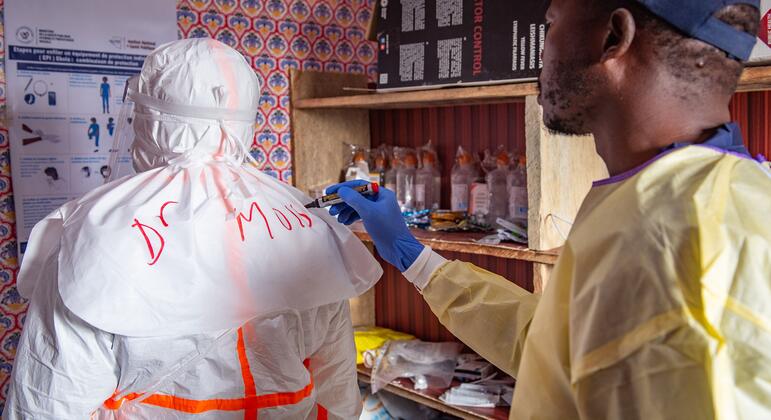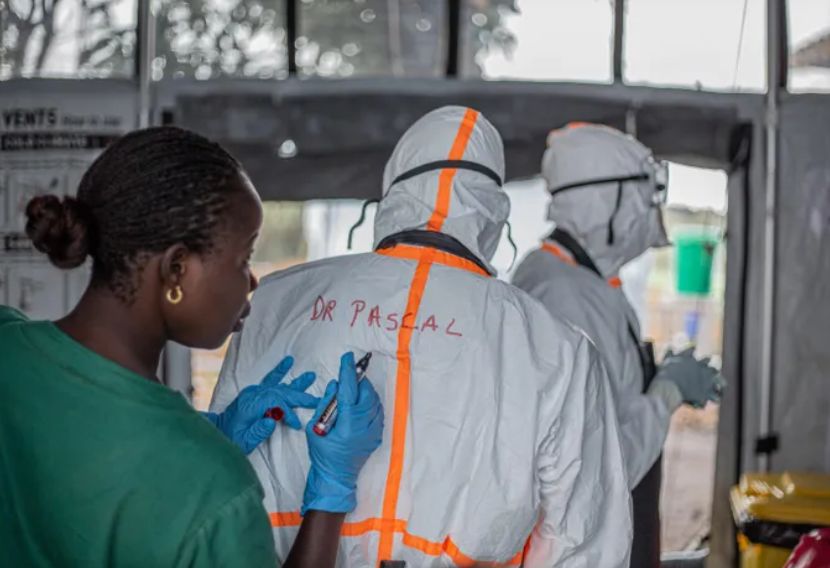
A hygiene worker writes a doctor's name on the back of his personal protective equipment suit before entering the Rwampara Ebola Treatment Centre to care for patients with Ebola virus disease in Bunia, Ituri, in the east of the Democratic Republic of Congo.
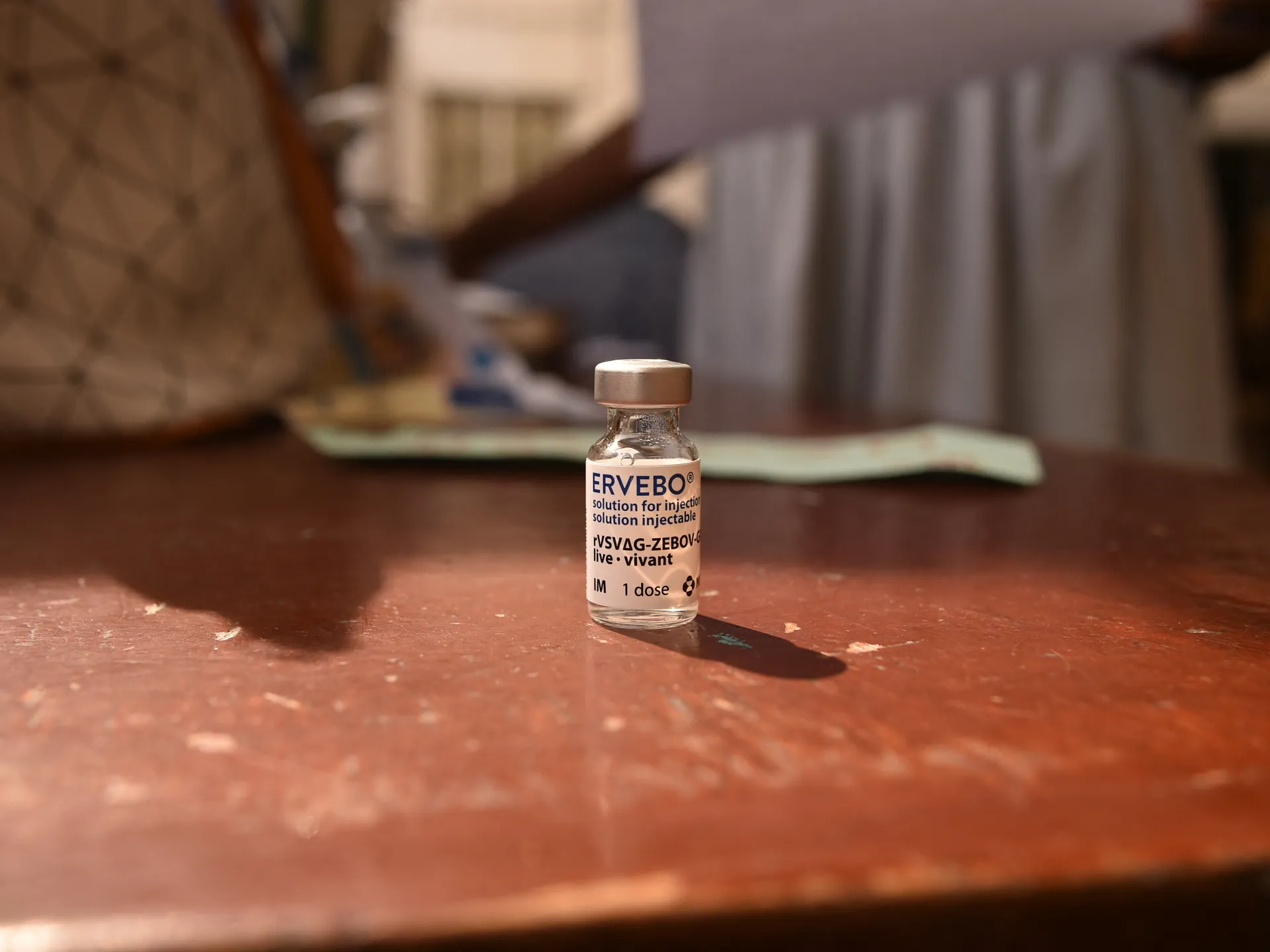
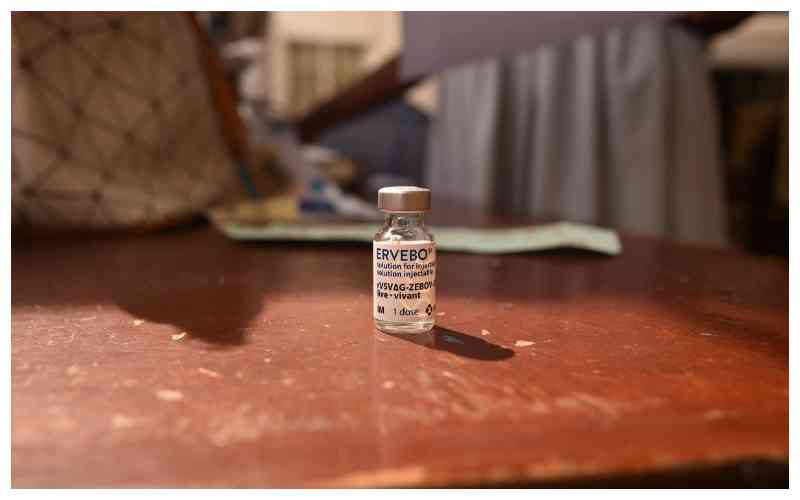
The current outbreak is caused by the Bundibugyo virus, while Ervebo is licensed and recommended for outbreaks caused by the Zaire species of Ebola. WHO and its partners have therefore had to develop emergency guidance for using the vaccine in the current outbreak rather than relying on an established, routinely approved vaccine specifically for Bundibugyo.
That distinction captures the challenge facing the DRC. The world has become much better at fighting Ebola, but the virus is still capable of exploiting gaps in scientific research, healthcare systems and emergency preparedness.
The arrival of vaccines is important, but it does not mean the outbreak is under control.
The Bundibugyo outbreak has become the largest Ebola outbreak ever recorded in the DRC, surpassing the 2018 to 2020 outbreak. WHO has described transmission as intense, with the virus spreading across multiple provinces and health zones. Uganda has also recorded cases, demonstrating that the outbreak is already a regional concern.