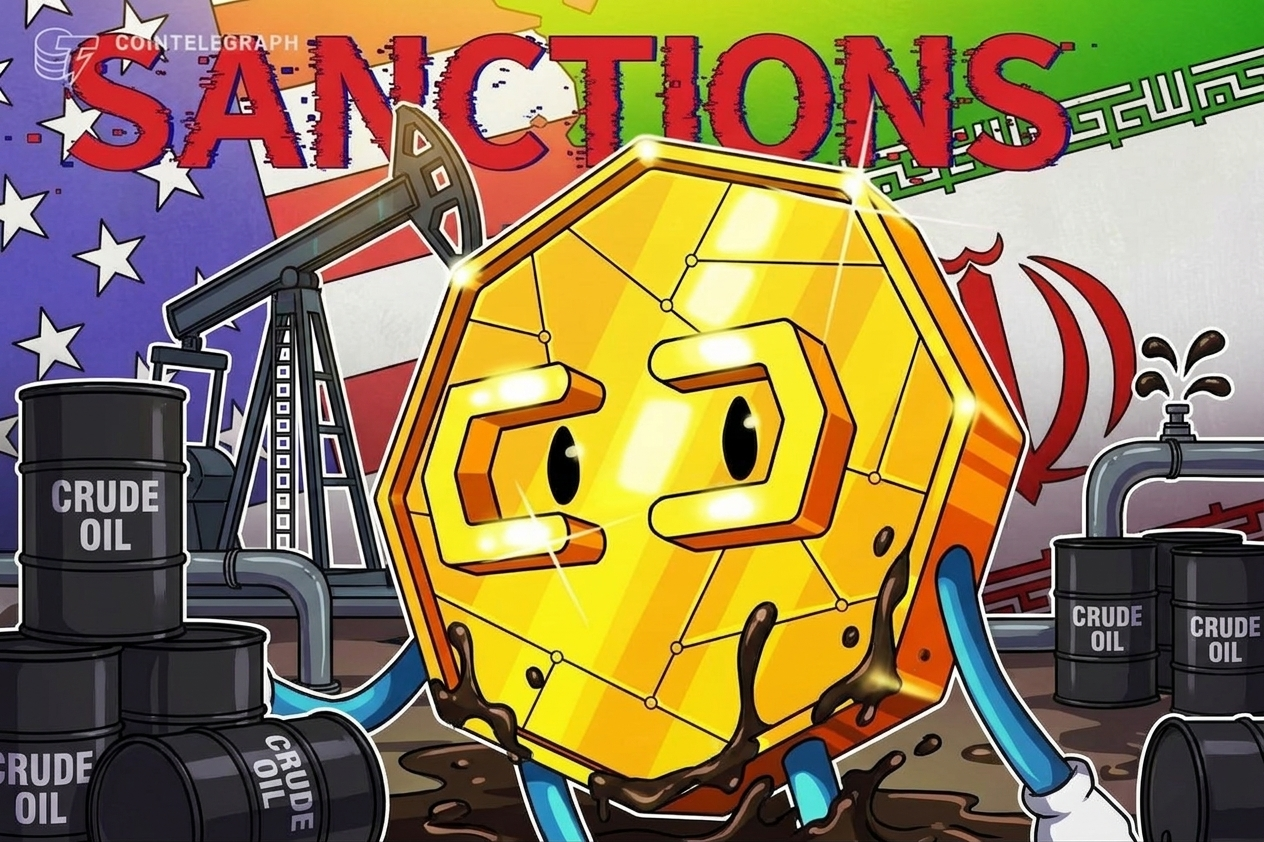
13 min ago2 min readThe US Treasury has widened its crackdown on Iran to now include its crypto industrySummaryOFAC can now sanction anyone it determines operates in Iran’s digital-asset sector, regardless of location.Treasury says Ivan Obukhov processed over $100 million in crypto for IRGC-QF oil sales since 2023.Crypto was one of five sectors targeted under Operation Economic Outcast, alongside nearly 60 designations.The U.S. Treasury has added Iran’s cryptocurrency industry to the sectors it can sanction, opening foreign exchanges, brokers and service providers to potential blacklisting as Washington expands financial pressure on Tehran.The Office of Foreign Assets Control (OFAC) issued a determination allowing it to sanction any person, regardless of location, it determines operates in Iran’s cryptocurrency sector.“The Iranian regime increasingly turns to cryptocurrency as a tool of choice for sanctions evasion, supporting transactions linked to the Islamic Revolutionary Guard Corps (IRGC) and Iranian regime insiders,” a Treasury announcement reads.Iran’s crypto ecosystem reached $7.78 billion in 2025, according to Chainalysis data. IRGC-linked wallets received more than $3 billion during the year and accounted for over half of Iranian crypto inflows in the fourth quarter, though the estimates cover only wallets publicly tied to sanctions listings.Crypto was one of five sectors named under Operation Economic Outcast, which Treasury Secretary Scott Bessent described as an economic “D–Day.” Technology, gold, aviation and shipping were the other included sectors.The change does not automatically blacklist every Iranian crypto company or prohibit all activity involving the country’s digital asset industry. Instead, it gives OFAC a standing basis for future designations, widening a campaign that had previously focused on named exchanges, wallets and individuals.Alongside nearly 60 entities, the Treasury sanctioned UAE-based Ukrainian vessel broker Ivan Obukhov, alleging he processed more than $100 million in crypto payments since 2023 to facilitate Iranian oil sales on behalf of the Islamic Revolutionary Guard Corps-Qods Force.The move follows a series of actions against individual Iranian crypto firms. Earlier this month, OFAC sanctioned exchanges Shelbit and Aban Tether, saying they processed millions of dollars connected to sanctioned Iranian exchanges and the IRGC.Tether previously froze about $131 million held in four wallets linked to Iran’s central bank following another OFAC action.AI Disclaimer: Parts of this article were generated with the assistance from AI tools and reviewed by our editorial team to ensure accuracy and adherence to our standards. For more information, see CoinDesk's full AI Policy.12345678910Anvil: The Missing Collateral LayerAnvil: The Missing Collateral LayerAnvil is a shared on-chain collateral layer built on a programmable letter of credit: reserve assets as a guarantee -no loan, no interest, keep custody & yield.Jul 29, 2026Anvil is a shared on-chain collateral layer built on a programmable letter of credit: reserve assets as a guarantee -no loan, no interest, keep custody & yield.Why it matters:Anvil is a shared on-chain collateral layer built on a programmable letter of credit: reserve assets as a guarantee -no loan, no interest, keep custody & yield.View Full Report
U.S. widens Iran crackdown to encompass crypto, gold, shipping and technology
Treasury says Ivan Obukhov processed over $100 million in crypto for IRGC-QF oil sales since 2023.
484 words~2 min read