The Power of Compounding Functions
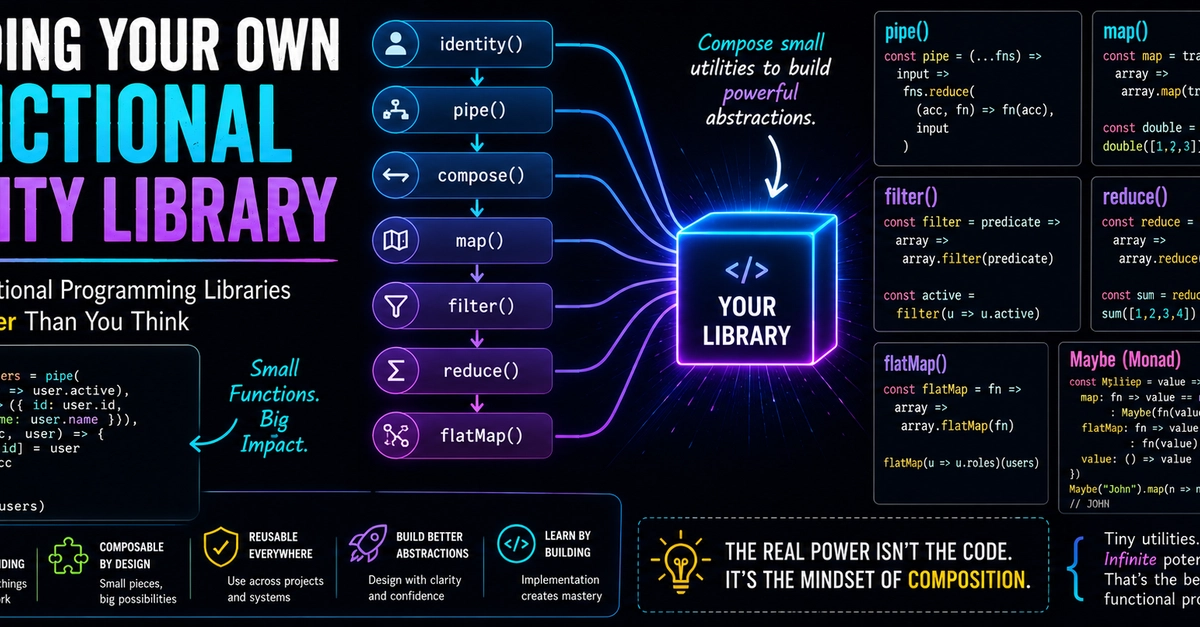
When I first started writing code, I treated functions like isolated tasks: parse this input, format that output, save this record. Each function worked, but the codebase became a tangled mess of duplicated logic and hidden side effects. The turning point was learning to design functions that compound: small, pure, and composable units that build on each other like Lego bricks.
Compounding functions aren't just about reuse. They make reasoning easier, testing trivial, and refactoring safe. Here's how I approach it.
Start With Pure Functions
A pure function is one that always returns the same output for the same input and has no side effects (no I/O, no mutation of external state). Purity is the foundation of composability because you can trust it. If a function mutates something, you can't safely combine it with others without worrying about order and hidden dependencies.