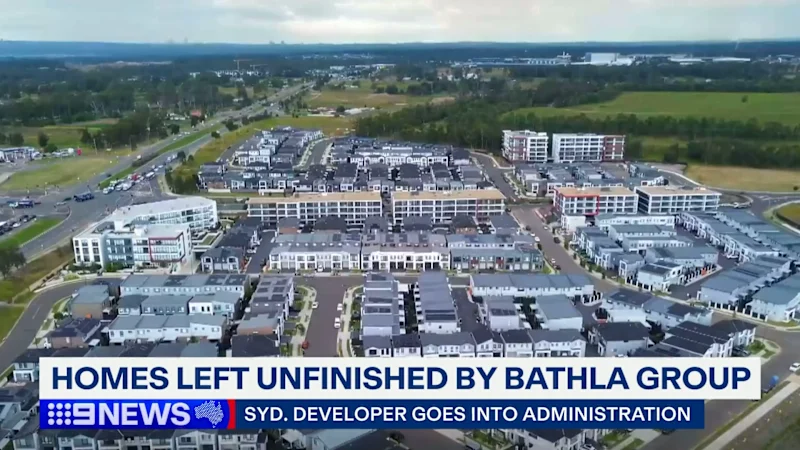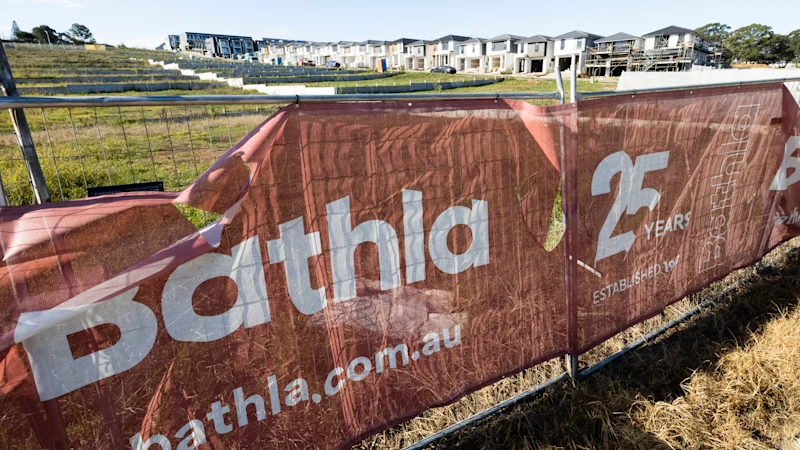
Updated August 25, 2026 — 4:25pm,first published 10:46amHundreds of apartment buyers have been left in limbo over the collapse of a major Australian developer, further derailing the NSW government’s ambitions for hundreds of thousands of new homes.Bathla Group entered voluntary administration on Tuesday and corporate restructuring agency Teneo was appointed to oversee the company and its hundreds of related entities, including Universal Property Group and Raj & Jai Construction.Bathla Group has collapsed.Louie DouvisThe collapse of the group, which last week boasted of 3500 homes, apartments or subdivision lots being under construction, will be felt the hardest in north- and south-western Sydney, which has been reshaped by the developer’s prolific greenfield builds.The collapse has left buyers who purchased off the plan in limbo, after major developments in Box Hill and Castle Hill were plagued by delays. Work on some western Sydney Bathla projects stalled in recent months, with tradesmen walking off sites and some claiming they had not been paid.Bathla, which has built more than 15,000 homes since 1997, has expanded into regional NSW, Victoria and South Australia. Its collapse adds further pressure to the state government’s housing agenda, already struggling amid concerns about the feasibility of apartment construction west of Parramatta.Developers have warned for more than a year that rising construction and material costs, combined with high government taxes and sluggish growth in the west of the city, were making the development of new homes unviable. Bathla founder and director Bhart Bhushan said the “orderly restructure of business” was due to “a perfect storm” of declining sales, rising construction costs and the federal government’s budget.“Our first thoughts are with our employees and the customers who have put their faith in us to deliver their dream of home ownership,” he said in a post on social media. “It is my sincere hope this process can allow that to happen by working collaboratively with the administrators, our suppliers, contractors and lending partners.”Bathla has faced significant financial problems for the past year: it had more than $3 billion in debt and was in the sights of the state’s building regulator, which had inspected its properties more than 40 times over recent months.Building Commission NSW last week issued its associated entity, Raj & Jai Construction, and its director two fines worth $54,000 over improper conduct in working on two Schofields properties without the required insurance. Bathla chief executive Robert Loader said in a statement the company recognised it was a “difficult situation” and the appointment of administrators was “in the best interest of all stakeholders”.“The business has been through a period of declining sales and falling property prices, while construction costs have increased,” he said. “We will work constructively with the administrators to support the continued delivery of much-needed housing for western Sydney.”Industry sources said Bathla had about 43 lenders, none of which were major banks, making it reliant on private credit. That sector has been subject to intense regulatory and commercial scrutiny after it surged into areas that banks vacated following the global financial crisis, lured by the prospect of charging riskier clients high interest rates for loans.But this year several major private credit funds have had to pause or limit withdrawals from their own financial backers amid fears the companies they had loaned money to were at risk of failing to make repayments.Marie Sinclair (left) with her mother, Sue Mancuso, and Janice Cahill, who all purchased off-the-plan units at Bathla Group’s Kembla Grange property.Wolter Peeters“The concentration of Australia’s private credit market in higher-risk real estate construction and development is where we see the greatest area for improvement for investor protection and market integrity,” warned two experts commissioned to write a report on the area last year for the Australian Securities and Investments Commission.In Box Hill, a greenfield suburb on Sydney’s north-western fringe, a $19 million apartment block was due to be built by December 2024, but buyers who had purchased units off the plan in 2022 were still waiting for it to be finished.In Castle Hill, a major apartment development languished as an abandoned partly flooded hole in the ground, which a spokesperson said was due to delays in getting a “further staged construction certificate” for the site.Further south, in the Illawarra suburb of Kembla Grange, Building Commission NSW identified defects in a series of under-construction units which were meant to be finished by December 2025. That extension date had been extended four times, and a Bathla spokesperson last week said the project was expected to be completed by October or November.Janice Cahill, who bought an apartment at the development off the plan, said last week the delays had affected her mental health. On Tuesday morning she called her real estate agent, asking what the collapse meant, and was assured the project was continuing.Marie Sinclair, whose elderly parents bought an apartment in the same building, visited the site in September and found doors with keys left unattended, graffitied walls, half-finished copper piping and multiple broken surfaces.A NSW government spokesperson said it would work with Bathla’s administrators to understand the implications of the appointment.Be the first to know when major news happens. Sign up for breaking news alerts on email or turn on notifications in the app.From our partners
Hundreds of buyers in limbo as major Sydney developer Bathla Group collapses
The western Sydney developer and its hundreds of entities had been in financial peril for more than 12 months.
866 words~4 min read