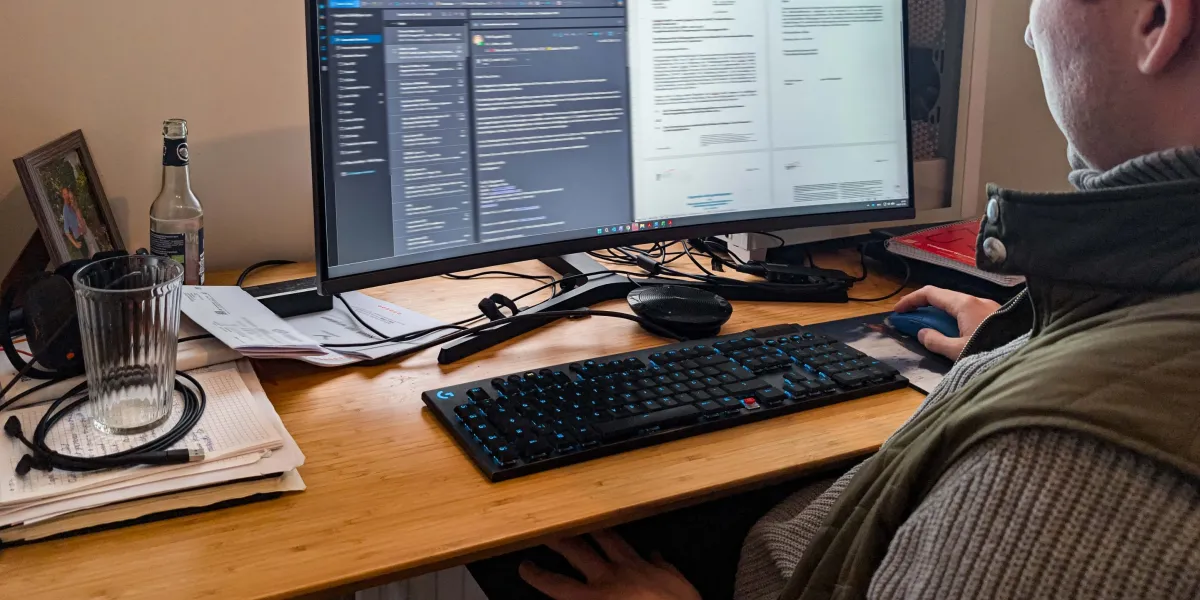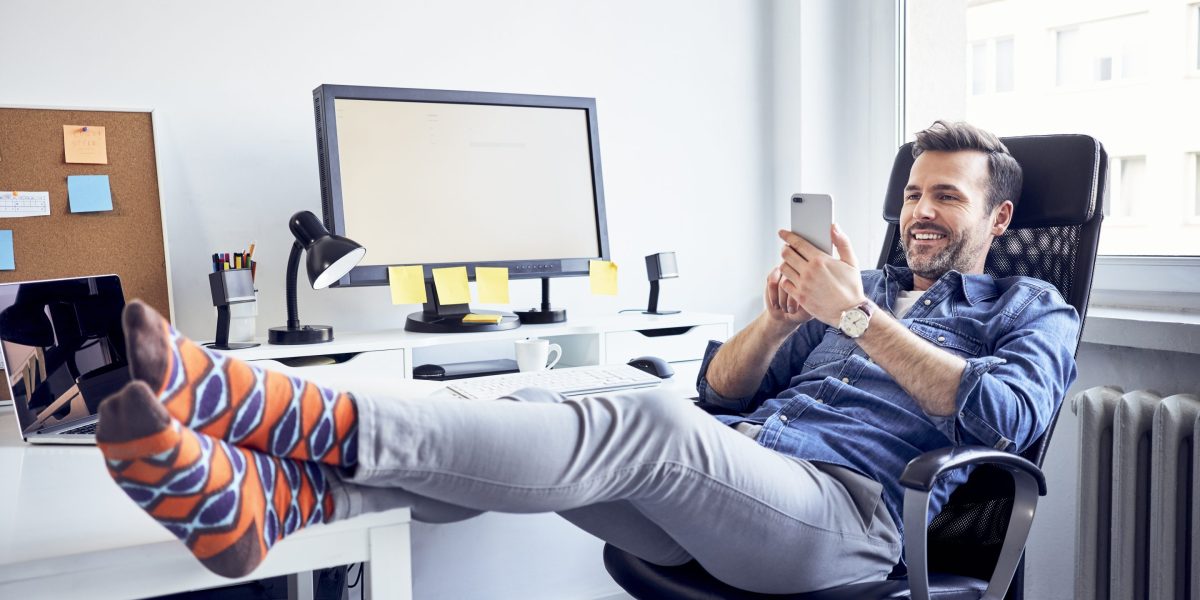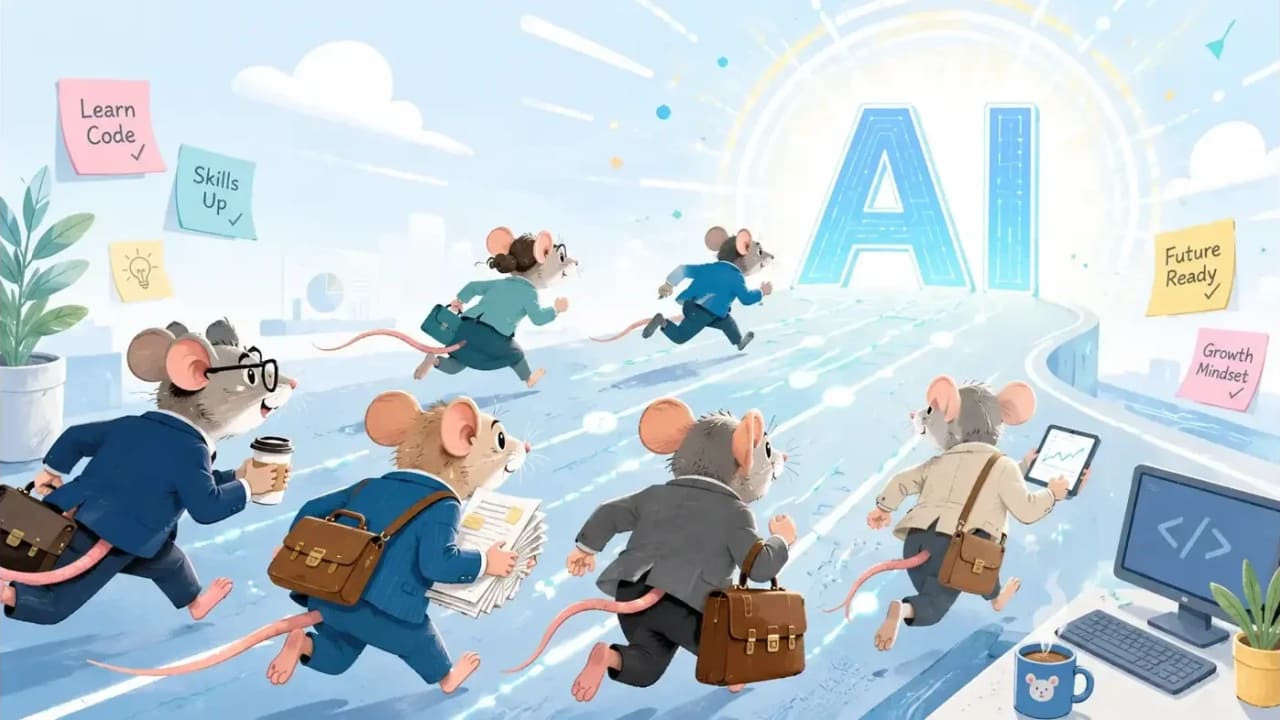
A century after becoming the norm, the five-day, eight-hour workweek is under strain as hybrid work blurs boundaries, Gen Z redefines careers and AI adds 'workers' that never sleep; companies must rethink what a worker and work itself meanMaya Nahum Shahl, Calcalist|This year marks 100 years since one of the moves that helped shape the modern world of work. In 1926, Henry Ford introduced a five-day workweek at his factories, with eight-hour days and a 40-hour week, a model that later became a standard around the world.Today, that standard is steadily eroding. Technology, the coronavirus pandemic, hybrid work, a new generation of employees and now AI are dismantling the boundaries on which it was built: when people work, where they work, how many hours they work and even who, or what, does the work.Gallery'Punched the clock? No, I worked from home today' (Photo: Debrocke/ClassicStock/Getty Images)Materials published around the world ahead of the model’s centennial describe the breakup of the workday into “micro-shifts” — short blocks of work spread throughout the day and tailored to the task, family needs and the hours when the employee is most focused. But that flexibility cuts both ways: It gives workers more freedom to choose when and where to work and to fit work around their lives, while at the same time blurring the boundary between the two.Now artificial intelligence is entering that transformation and challenging an even more basic assumption: not only when and where humans work, but how much of the work needs to be done by a person at all. AI tools can already take over some routine tasks, while agents can continue working after the human employee goes home. If Ford tried a century ago to set a limit on how long a person works, the technology of 2026 allows the work itself to continue without stopping.Sharon Steiner, chief human resources officer at Fiverr, has watched this change almost from the beginning. She started her career at IBM, moved on to Galileo and startups, and joined Fiverr in 2012.“The change doesn’t happen in a day. It sounds as if 9-to-5 has given way to something very amorphous because of technology and after COVID. First of all, there are still many places that keep those working hours, and beyond that, a lot of young people even work fewer hours a day and tend to create several jobs for themselves.“People today are looking for multiple sources of employment, and many workers, not only young people, have a job and another project on the side, freelance work or ventures and projects of their own. So they limit their work hours to very clearly defined periods.”Sharon Steiner, CHRO at Fiverr (Photo: Shay Franco)According to Steiner, the rise in multiple jobs stems from the insecurity that characterizes today’s labor market.“People are looking for employment stability. The world today is very unstable, not only in high tech. Workers can arrange their work at different hours. It is common for an employee to come in, work from 9 a.m. to 3 p.m., go home to the family and open the computer again at 8 p.m. to finish a few more hours. That is also natural because of globalization. When you work with other countries, you need to work in the evening and that comes at the expense of the afternoon.If the goal was once to create work-life balance, Steiner argues that the separation itself no longer reflects reality.“In our world there is no longer life balance. Everything is mixed together. I call it life blend. You have to reach the goal, and the employer cares less about when and how that happens. At the same time, we are very strict about in-person meetings and we do not work fully hybrid. We believe people are social animals and that ideas and things happen through meeting — hallway conversations, meetings — and not everything can happen over Zoom.“Since the COVID era, everything really got disrupted, and now it is starting to balance out. Nine-to-five has become flexible. If the mix, like ours, is 70% to 80% in the office and the rest at home, that’s excellent.”Hybrid work and flexible hours are already almost yesterday’s news. The big change now underway is the arrival of a new type of “employee” in the organization: the machine.“We are lucky to be living through a change in which resources are becoming not only human resources but machine resources. AI is coming in, and this is no longer human resources management but resource management.”Steiner describes the evolution of human resources as a reflection of changes in the labor market: from salaries and working conditions a century ago, through workers’ rights, talent management and employee experience, to the hybrid work and flexibility brought by the pandemic. Now, she says, another stage is beginning.“I am a chief human resources officer, and lately I have been calling myself chief resource officer, because now there is the agent, and suddenly an employee has someone working for them 24/7. AI never rests, and for developers, the person has become the weak link because they need to eat, sleep and take time off, but the agent keeps working. The developer or analyst can go home and the agents keep working all night. What remains for the person is to manage and coordinate those resources. Human judgment is not redundant — it has to remain part of the process — and there are new professions. The change is that the work continues 24/7 under the employee’s management.”Efforts to break up the rigid full-time job long predated Zoom and AI. Steiner points to the job-pairing model, in which two people share one position and joint responsibility for the role.“In England in the 1960s, job pairing emerged because women on maternity leave who did not want to lose their jobs would share a position and salary with another woman so they would not be fired. In other words, they would effectively bring in a freelancer.”Today, she says, an agent can to some extent take the place of that human partner.“If you do it correctly, and if the architecture of the resources is right, you can do wonders. It’s magic. We are a bit of a transitional generation because we have not finished moving into the future and a lot is still rooted in the past. But the AI-native generation that enters the labor market in two years will completely affect work. I expect that in less than a decade, robots will also enter the picture.”At Fiverr, the company already tried applying this idea to one of the most human processes in an organization — the job interview — using AI, but for now it has set the effort aside until the technology reaches maximum accuracy.“I think that in the future, a candidate will have an agent that they train to speak in their language, and the beginning of the process will be agent-to-agent. Obviously there will be a face-to-face meeting at the end, but the initial questions can be made more efficient. The agent learns our style.”“It would not be right for a company to employ only freelancers. There are legal and financial issues, the need for knowledge and experience and an understanding of product capabilities. A company wants talent that serves as its anchor. Most companies have the core and the project-based layer.“Especially now with agents, it is important to have very experienced company employees, very strong 10x performers — people who are significantly more effective or productive than the average employee — and talented people who can learn on their own, move from one subject to another and work across areas. What matters today is less the employee’s experience or title and more the output. I need an employee to reach a certain level of output. I care less about how that happens. If an employee decides to hire freelancers or use agents to reach the goal, I have no problem with that.”Research is already beginning to put numbers to the shift. A 2025 OECD review of experimental studies on the impact of generative AI at work found average productivity gains ranging from 5% to more than 25% in areas including customer service, software development and consulting.The biggest gains were recorded among less experienced or lower-skilled workers. In one study, for example, the use of AI increased the output of customer service employees by an average of 14%, while the improvement among new and less-skilled workers reached 34%.But while organizations are shifting toward measuring output, adopting flexibility and using agents that work around the clock, employment contracts and much of the regulation are still built around human working time.“I assume it will take time for those things to change as well. In practice, companies are flexible. People no longer punch a clock.”Attorney Hadas Raccah-Dvir, head of the Labor and Employment practice at Shibolet & Co. law firm, sees that gap as part of a long history in which the law has repeatedly had to adapt to changes in the way people work.Attorney Hadas Raccah-Dvir, head of the labor and employment practice at Shibolet & Co. law firm (Photo: Oren Dai)“If you look at the past 100 years through labor law, you can identify four main milestones, each reflecting a profound change in the labor market.“The first milestone was the recognition that working time also needs limits, with the establishment of the eight-hour workday model in the industrial world. The second was the shift from protecting the worker in the narrow sense to recognizing family life, parenthood and the need to enable broader and more equal participation in the labor market.“The third milestone was the recognition that flexibility is no longer exceptional but part of the way the labor market operates. Labor law therefore had to deal with more complex and flexible structures of working time, alongside the continuing process of reducing the overall number of working hours.“The fourth milestone, where we are today, is the transition to a digital, hybrid and data-driven world of work. Here, changes in the market are far ahead of legislation, so the law is developing mainly by adapting existing principles to new technologies, alongside regulatory guidance and legislative updates.“For example, Amendment 13 to the Privacy Protection Law, which took effect in August 2025, strengthened the framework for protecting personal information and, among other things, required a range of organizations to appoint a privacy protection officer.“In that sense, labor law does not develop in a straight line, and in most cases the regulator is not the one leading the change. Usually, the market changes first and the law has to catch up. That is especially clear today, when technology, particularly AI tools, is advancing faster than regulation.“In the European Union, a first step has already been taken with the AI Act, enacted in early August 2026, which provides the first comprehensive regulatory framework governing the development, deployment and use of artificial intelligence systems. It defines AI systems used, among other things, for hiring, promotion, dismissal, task allocation, monitoring and performance assessment as high-risk systems because of their potential impact on careers, livelihoods and workers’ rights.“The legal questions in the new labor market are no longer limited to how many hours a person works, but also who — or what — makes decisions about them, how much an employer may monitor them, what information may be collected about them and how equality, fairness and privacy are preserved in a rapidly changing work environment. That is why labor courts and regulators today play a significant role in adapting longstanding legal principles to a new reality.”Even without waiting for regulation, flexibility has not necessarily made workers more efficient.“Personal discipline is important,” Steiner said. “Once there is too much flexibility, a lot of people lose focus and that causes harm. I don’t like people working from home. I prefer that they come in, work and then go about their lives. Parents, for example, get through the day very efficiently because when there is a deadline, you do what needs to be done. That doesn’t mean they don’t open the computer again in the evening to finish things.”The major change is no longer only when and where the employee does the work, but who, or what, should perform it in the first place. Fiverr decided to turn that question into a working tool.In recent months, Fiverr’s human resources team has worked on a tool that has become part of the company’s hiring processes. The Hiring Intelligence Platform, or HIP, is designed to answer the question troubling many senior managers in the AI era as the labor market changes: What is the best way to get the work done?The system gives every manager three main resources for managing work: permanent employees, who form the organizational base and carry institutional knowledge and company culture; freelancers and external experts; and AI and automation systems.The platform takes any process, project or position and breaks it down into the building blocks needed to provide the optimal solution for it in “AI time,” while providing a cost framework, recommendations for suitable outside experts and details of the best AI tools for the tasks that have been defined.“You enter what you are looking for and the system builds the right mix of freelancers, full-time employees and AI tools, and it also tells you how much it will cost and where savings can be made,” Steiner said.“The platform was developed with Fiverr’s recruiting team together with external freelancers and AI systems, and that was not by chance. A direct connection to Fiverr’s marketplace infrastructure is built into the platform, so hiring freelancers becomes a natural stage in workforce planning rather than a one-off solution. That makes HIP a decision-making tool that speaks both the language of the CHRO and the CFO, generating significant cost savings while improving the way work itself is done.”Into this changing labor market comes Generation Z, which Steiner says has a different view of careers, education and advancement.“They are an incredibly talented generation that grew up in a technological world. They very much want to have an impact and be part of contributing, and they are not satisfied with one job. In the past, you would study, go to work and retire from the same place. Generation Z today wants to do one role and then move to the next. They have a lot of tools, and I think they will invent amazing new jobs.“This is a generation that will care less about titles and be less interested in moving upward into management, and more interested in moving laterally. Degrees and formal studies will matter less. They are self-taught and academia is not closing the gap.“Seniority and experience are still very important, but there are roles where Generation Z will actually bring something unique. The companies that succeed will be those that build the right and precise architecture between human and machine, headcount and freelancers, the previous generation and the next generation. That is the formula.“Operational and mental flexibility is the name of the game. I think that in the end, you cannot do without people. A company that wants to thrive cannot do without interpersonal contact, conversation and being together. Even though this generation grew up with computers, you still need diversity. Everyone thinks differently. People are not a template. An agent is a template because it is data, but different people can move everything forward and will be more focused on leadership and coordination while using the tools.”After a century in which the world of work tried to formulate rules, the current era is characterized by the fact that there is still no new rule to replace them.“If I have someone who studied at university and has 15 years of experience in the role, versus someone who studied at university or taught themselves, has zero years of experience but is an AI expert, I don’t know who can bring more value to the company — the person who knows how to work with the tools or the person with experience.“You need to combine them. You need both. There is no playbook for this. We are writing the playbook now, and it is fascinating to see where we go.”
‘The agent keeps working all night’: AI and Gen Z are rewriting the 9-to-5
A century after becoming the norm, the five-day, eight-hour workweek is under strain as hybrid work blurs boundaries, Gen Z redefines careers and AI adds 'workers' that never sleep; companies must rethink what a worker and work itself mean
2,693 words~12 min read