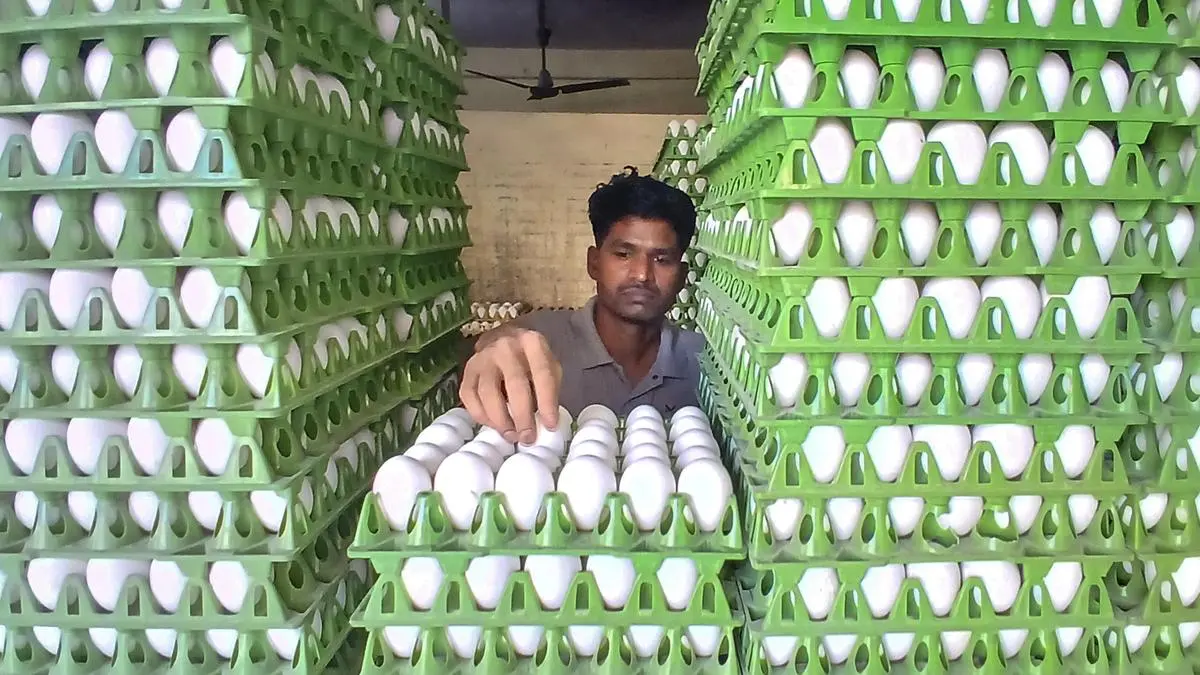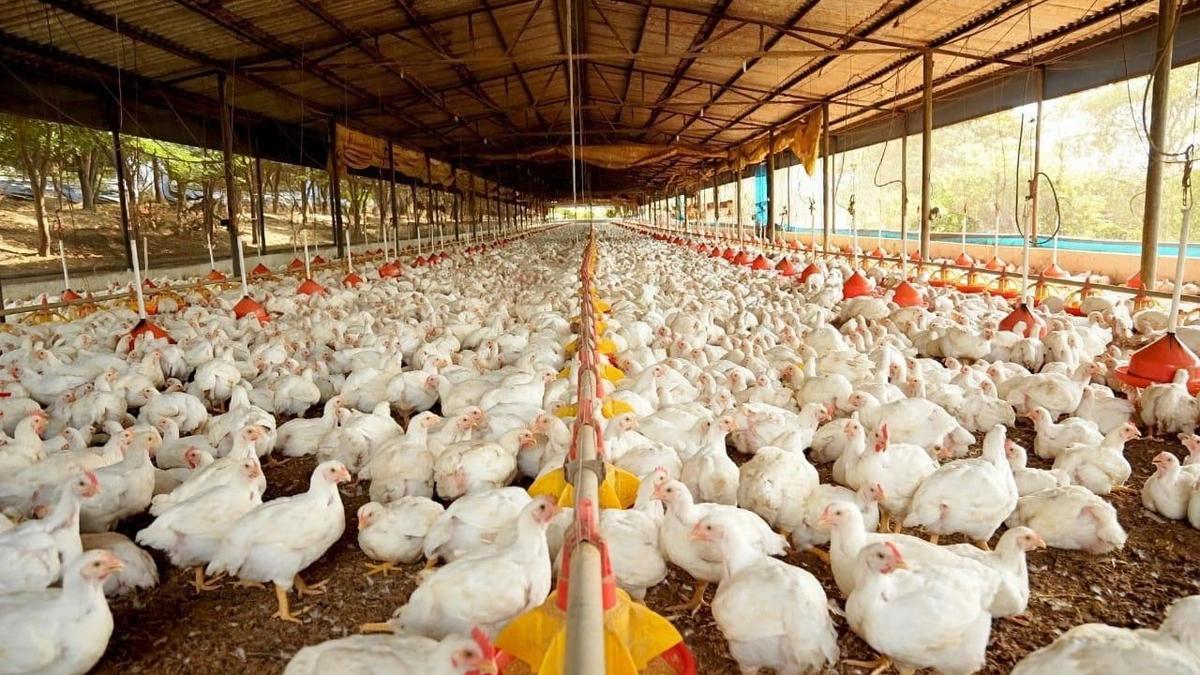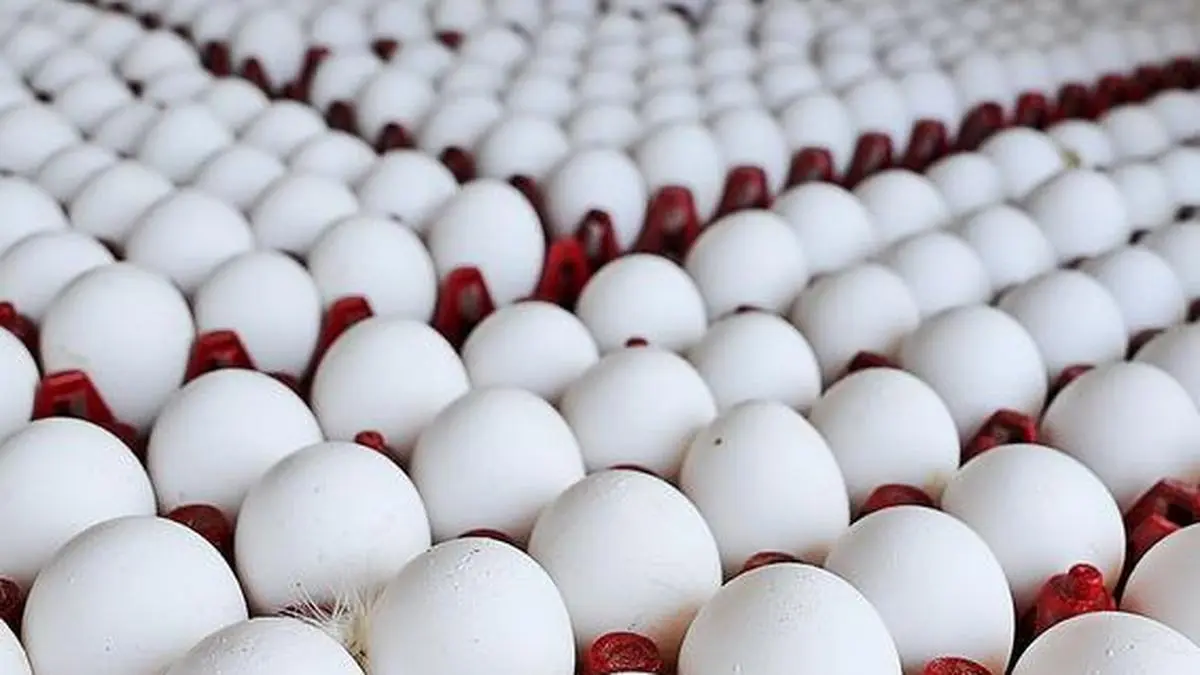
Egg and chicken prices have eased from recent highs as Shravan curbs demand, but rising feed costs and supply pressures continue to squeeze poultry farmers.
| Photo Credit:
E. LAKSHMI NARAYANAN
Egg and chicken prices have declined from the highs seen a month ago on account of lower demand in the auspicious month of Shravan. But the trend will likely change once the austere period gets over. “Due to Shravan, broiler chickens are selling at ₹90-95 a kg and eggs at ₹6 -6.50 per piece, wholesale ex-farm rate depending upon location,” said Ricky Thaper, joint secretary, Poultry Federation of India.Egg prices are still ruling above the level of last year’s prices, said Suresh Chitturi, Chairman and Managing Director of Srinivasa Farms.Supply-side pressuresPrices have remained elevated even during Shravan, when consumption traditionally tends to moderate. This indicates that supply-side pressures are currently outweighing the seasonal demand correction, said Divya Kumar Gulati, Chairman, CLFMA of India.On Monday, the price of an egg at Namakkal, the country’s poultry hub, was ₹5.20 compared with ₹5.90 at the beginning of this month and ₹6.80 in mid-July. “Prices have dropped because export demand also declined,” said Vangili Subramanian, President of the Tamil Nadu Poultry Farmers’ Cooperative Society. Farmers still losingThaper said the rates will increase once Shravan gets over. Other stakeholders concurred with the view.Despite prices being elevated, farmers are losing about ₹0.50-0.60 on every egg. “Feed costs have gone up by 40-60 per cent, increasing the overall cost of production sharply,” said Chitturi.Though broiler prices were down until last week, they have increased this week due to Onam festivities, said a Chennai-based industry source, who did not wish to be identified.Soaring feed costsGulati said the rise in egg prices in July should be viewed against the escalation in poultry feed costs and tightening supply conditions. “Feed accounts for around 65–70 per cent of poultry production costs, making movements in key ingredients such as maize and soybean meal a significant factor in egg prices. Soybean meal prices, for instance, rose by around 25 per cent in a single month earlier this year, adding considerable pressure on layer farmers,” said Gulati, adding that this cost pressure is now being reflected across the value chain. “Poultry farmers are actually underselling eggs. If you compare the egg prices in 1980 and now, the actual price should have been ₹12 a piece. But still we are at the level of ₹6-7, far below the real cost,” said Chitturi.With major feed components becoming costlier, the Maharashtra industry estimates the farm-level cost of producing an egg has increased to ₹5.20-5.50, from ₹4-4.50 earlier.Key challengeGulati said the industry is feeling the pressure on feed ingredient availability. “With feed demand continuing to grow, ensuring adequate domestic availability of maize and soybean meal at competitive prices will be critical to maintaining stability in egg prices,” he said. Thaper said ensuring sustainable feed supplies in the coming years would be a key challenge for the sector. “By ensuring cost-effective supply of animal feed ingredients, the government can directly address the challenge of feed inflation,” he said.Industry sources in Maharashtra said the impact on the poultry sector extends beyond rising feed costs. Farmers struggling with months of thin margins have culled older hens prematurely and reduced chick placements, constraining future egg supplies, they said. “We expect prices to moderate as supply conditions improve, but sustained stability will depend on addressing feed-cost pressures and strengthening the availability of key raw materials,” Gulati said.Another austere periodThe Chennai-based source said poultry demand would be hit again during the austere month of Purattasi in the Tamil lunar calendar. “People don’t take any non-vegetarian food during the month,” the source said.However, Subramanian said the Shravan period is more testing since it is observed in more States in the north and south, compared with Purattasi,which is observed mainly in Tamil Nadu only.The Indian poultry Industry is valued at $30 billion and employs over 6 million people, directly or indirectly. At 11 million tonnes, India is the fourth largest producer of poultry meat. The country produces 149 billion eggs annually from 400 million layer birds. It is the second-largest producer of eggs. However, the per capita consumption of eggs is a low 106 per person per year, while chicken consumption is 7.4 kg per person a year. With inputs from Vishwanath Kulkarni, Bengaluru; KV Kurmanath, Hyderabad; Amit Vijay Mohile, Mumbai, and Subramani Ra Mancombu, ChennaiPublished on August 25, 2026