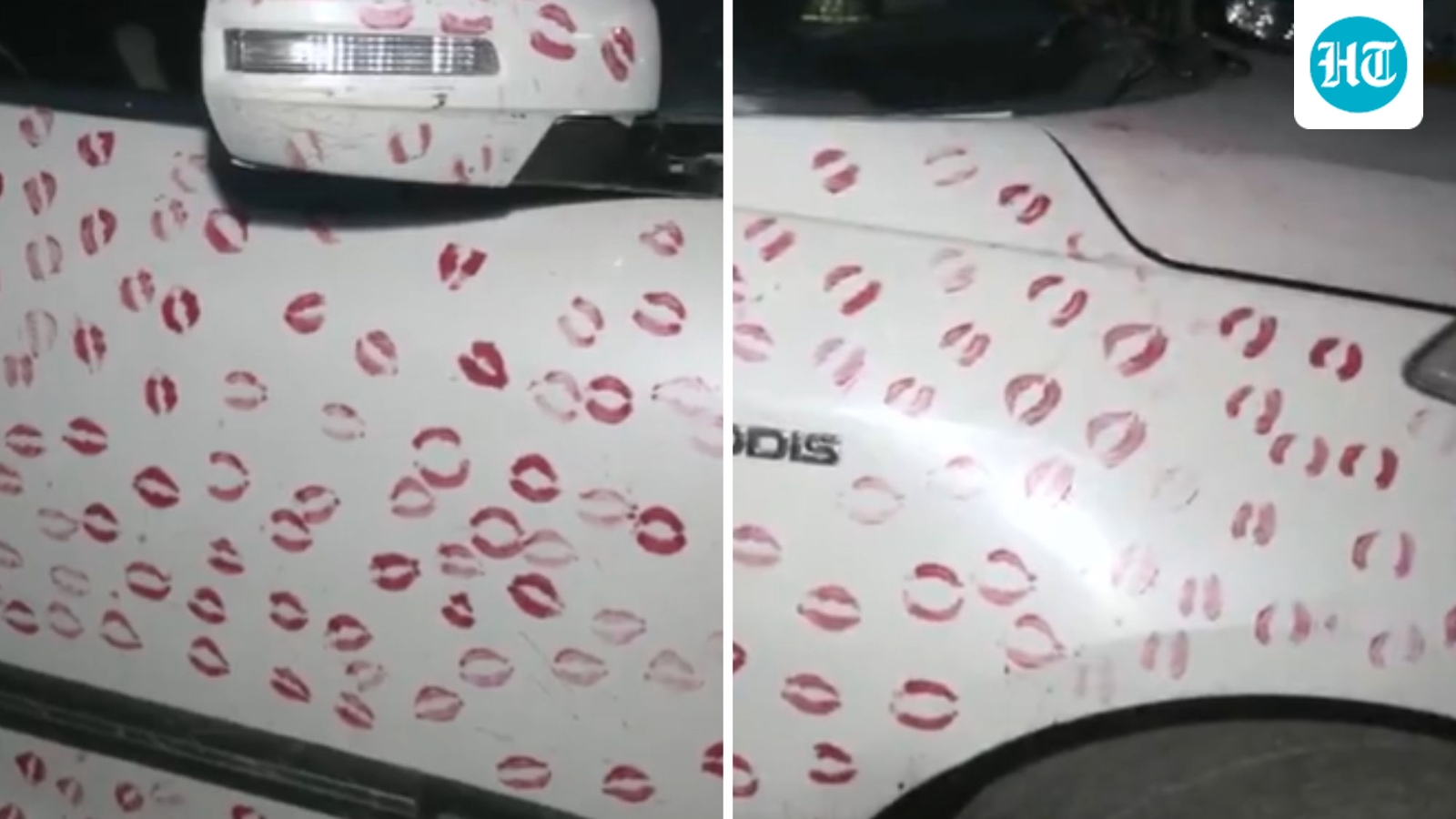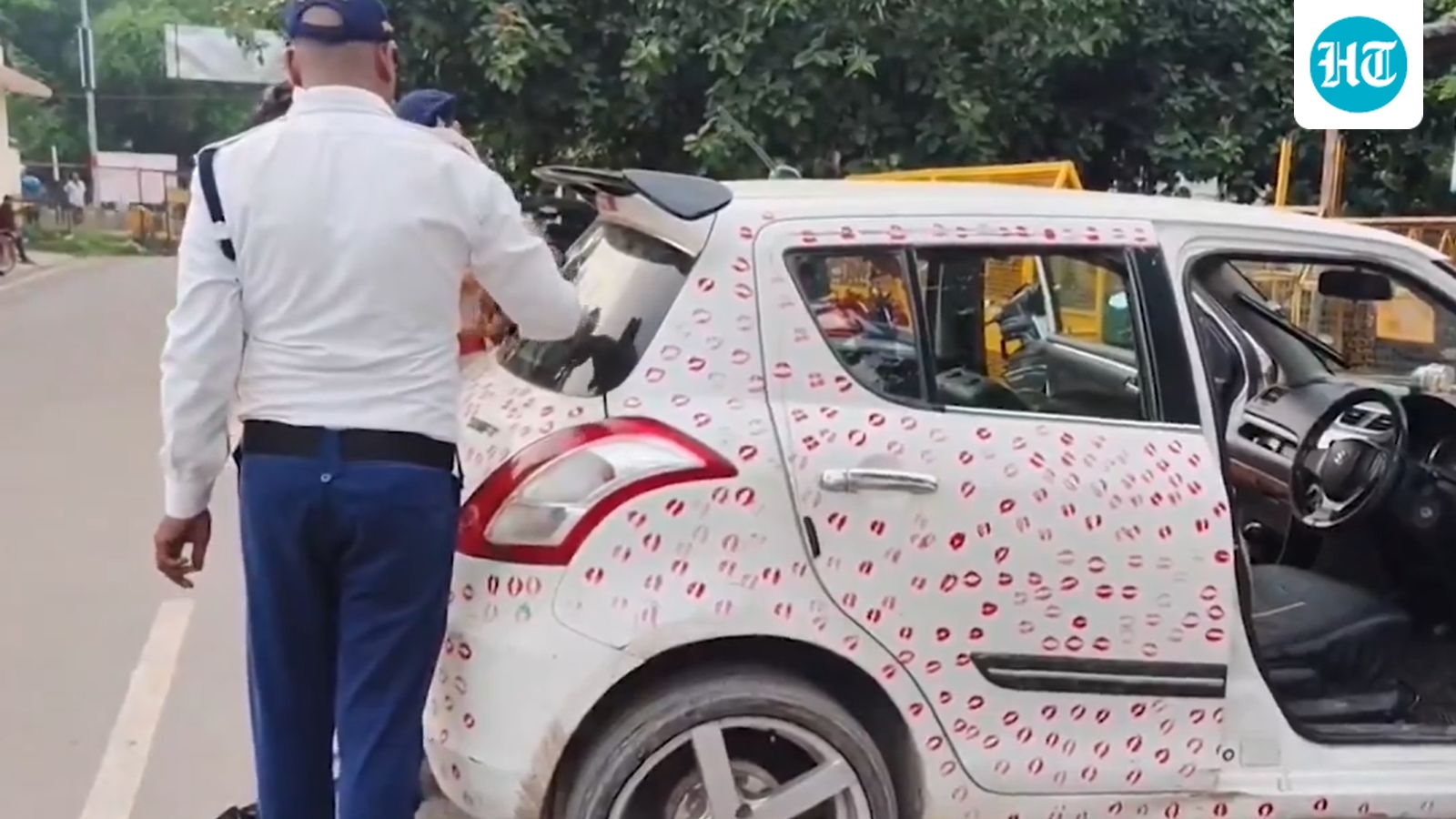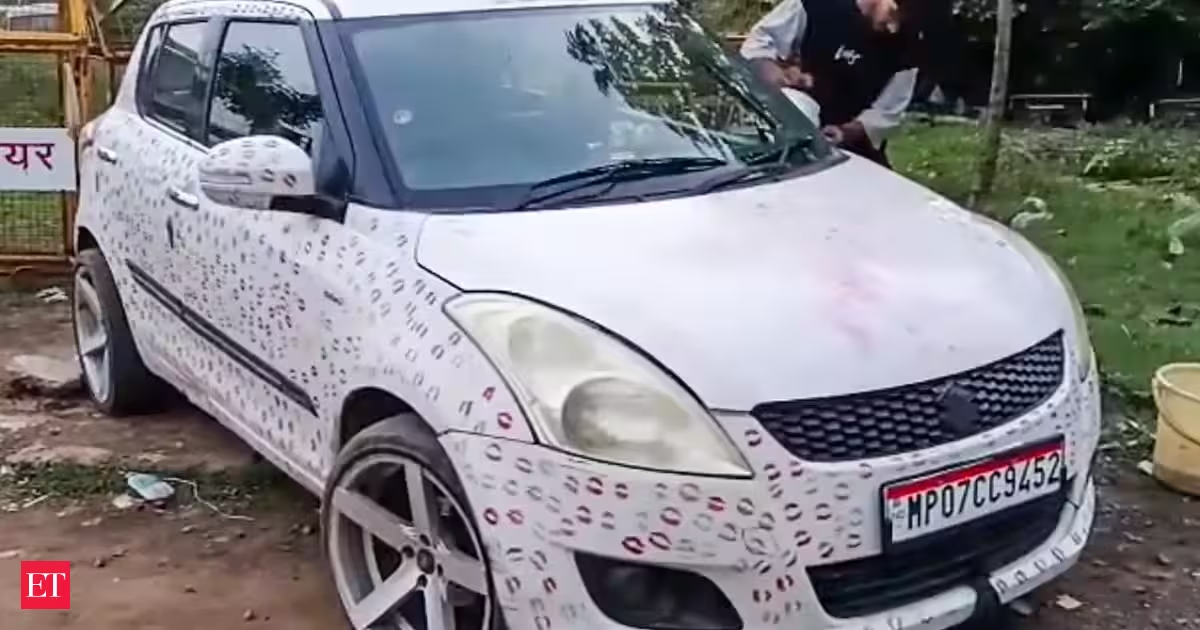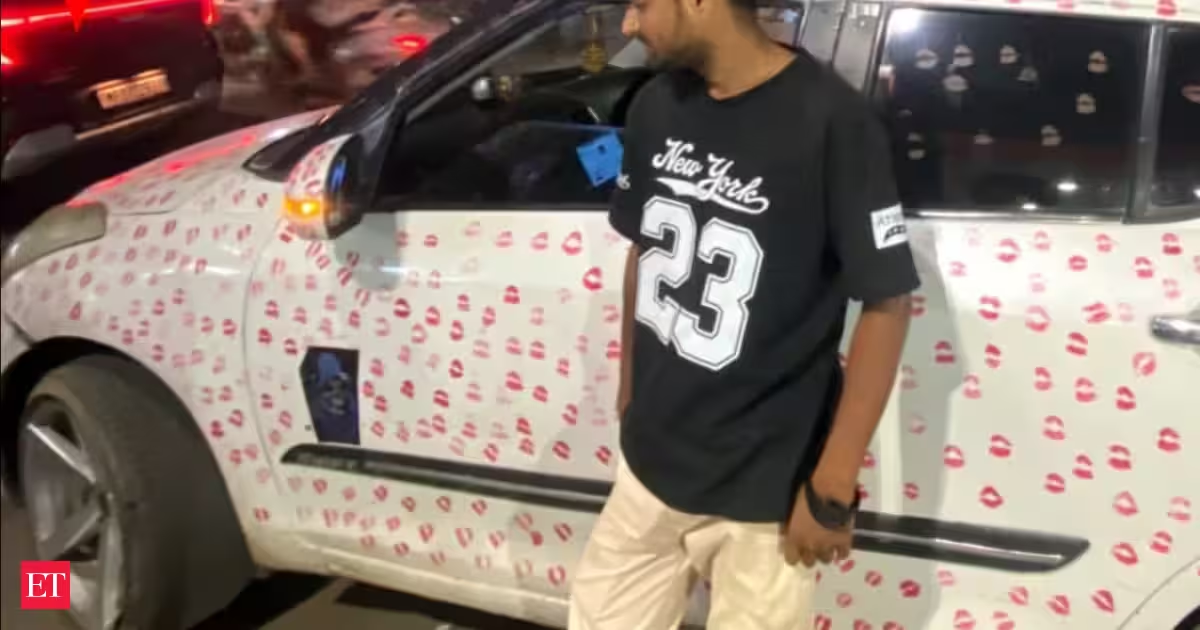
A quirky social media stunt in Gwalior has ended not with more likes and shares, but with a police seizure, a cash penalty, and a mandatory car wash. It started as a bit of fun inspired by a trend doing the rounds online: cover a car from bumper to bumper in lipstick kiss marks, a PTI report stated. A young Gwalior resident, Aditya Sikarwar, became the unwitting face of the local version of this trend after his girlfriend decided to give his car a makeover.Girlfriend spent four hours to cover car with kiss-shaped imprintsShe spent close to four hours pressing kiss-shaped imprints across every visible panel of the vehicle, door, bonnet, boot, even the pillars, until the car was covered in an estimated 3,400 individual lip marks. The result looked less like a car and more like a moving canvas.When the Internet Fame Reached the Wrong AudienceWhat the couple probably didn't anticipate was that their viral moment would also catch the attention of Gwalior's traffic police. Officers spotted the widely circulated image online, zoomed in on the number plate, and traced the car back to its owner without much difficulty.By the time the vehicle was located in the Thatipur area, it was already something of a local celebrity, for all the wrong reasons, as far as law enforcement was concerned. According to police, plastering a vehicle so extensively with any material that alters its original factory appearance runs afoul of Motor Vehicle Act provisions and standard road-safety norms. A car, in the eyes of traffic regulations, isn't meant to double as an art installation. Sikarwar was called in, and rather than contest the matter, he reportedly acknowledged the modification.The Price of Going Viral: ₹5,500 and a WashPolice slapped a fine of ₹5,500 on the car owner, and, perhaps the more symbolic part of the punishment, the vehicle was hosed down right there, with every last lipstick mark scrubbed away under the watch of officers.Beyond the fine, the episode has become something of a cautionary tale doing its own rounds online: trends that look harmless on a screen don't always translate smoothly onto Indian roads, where traffic law has little patience for viral ambition.
3,400 kiss marks in four hours: Girlfriend covers Gwalior man's car in lipstick, then cops show up with ₹5,500 fine and a car wash
A viral car makeover in Gwalior has landed its owner in trouble after his girlfriend covered the vehicle with around 3,400 lipstick kiss marks. Traffic police traced the car through its viral image, seized it and imposed a ₹5,500 fine, while also ordering the lipstick marks to be removed. The incident has sparked attention online over the risks of following social media trends on public roads.
363 words~2 min read