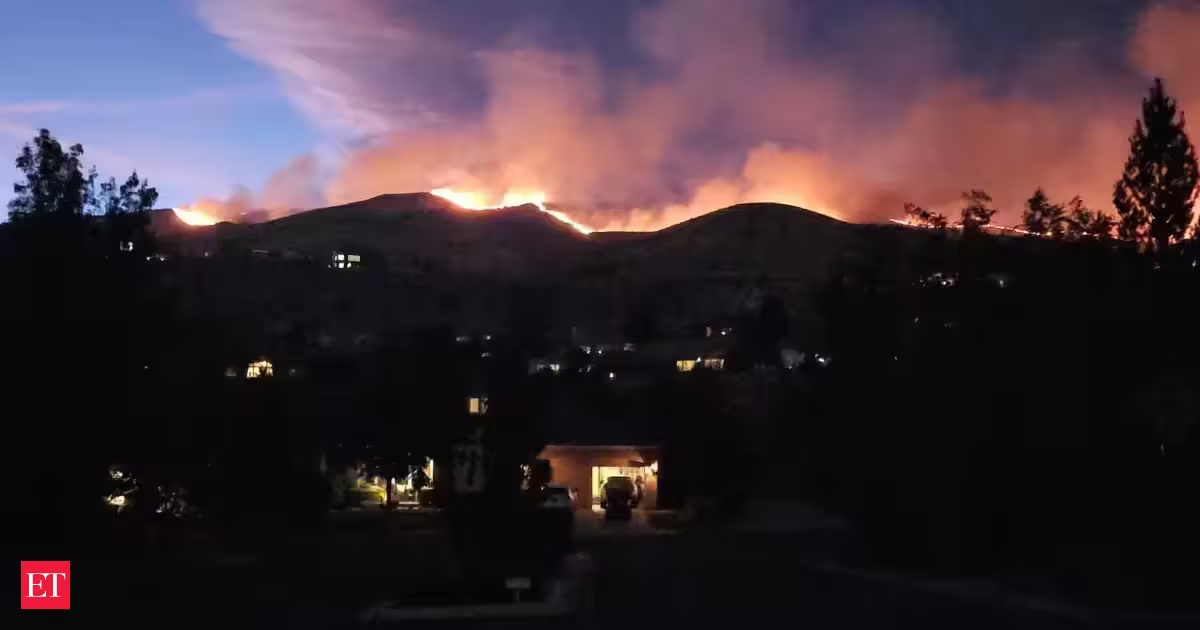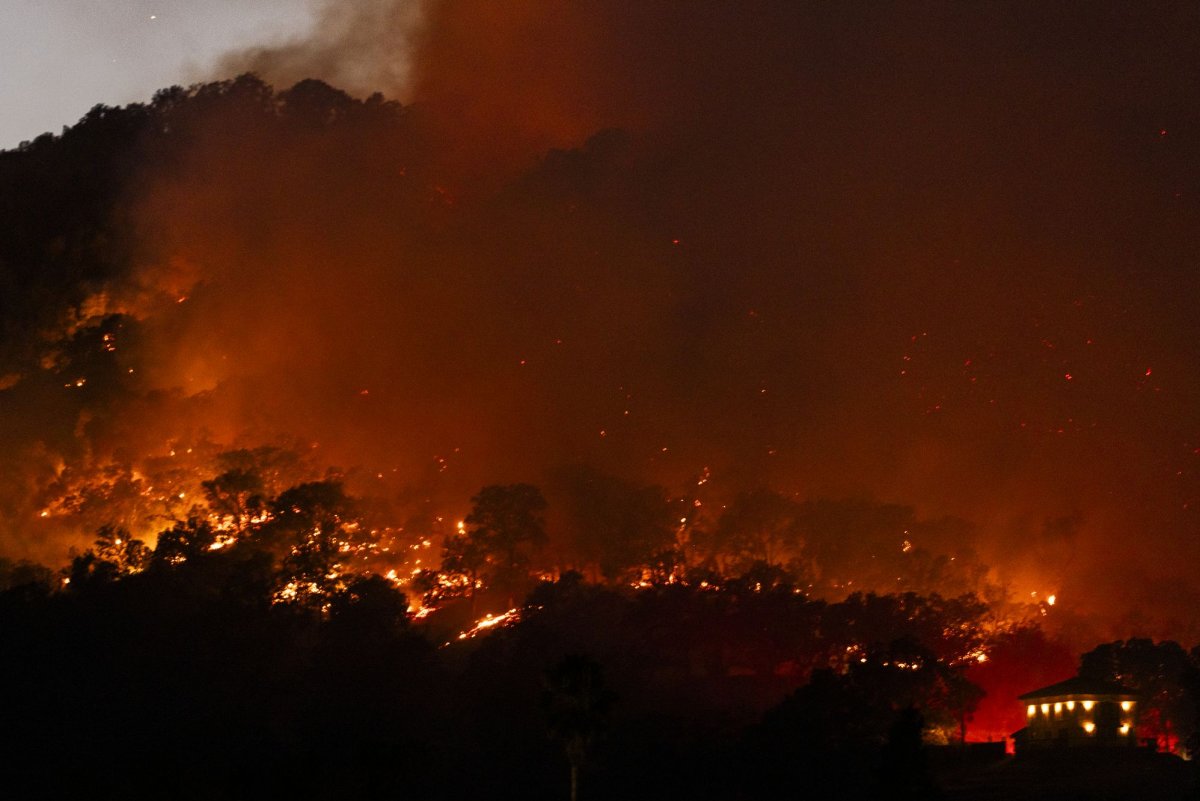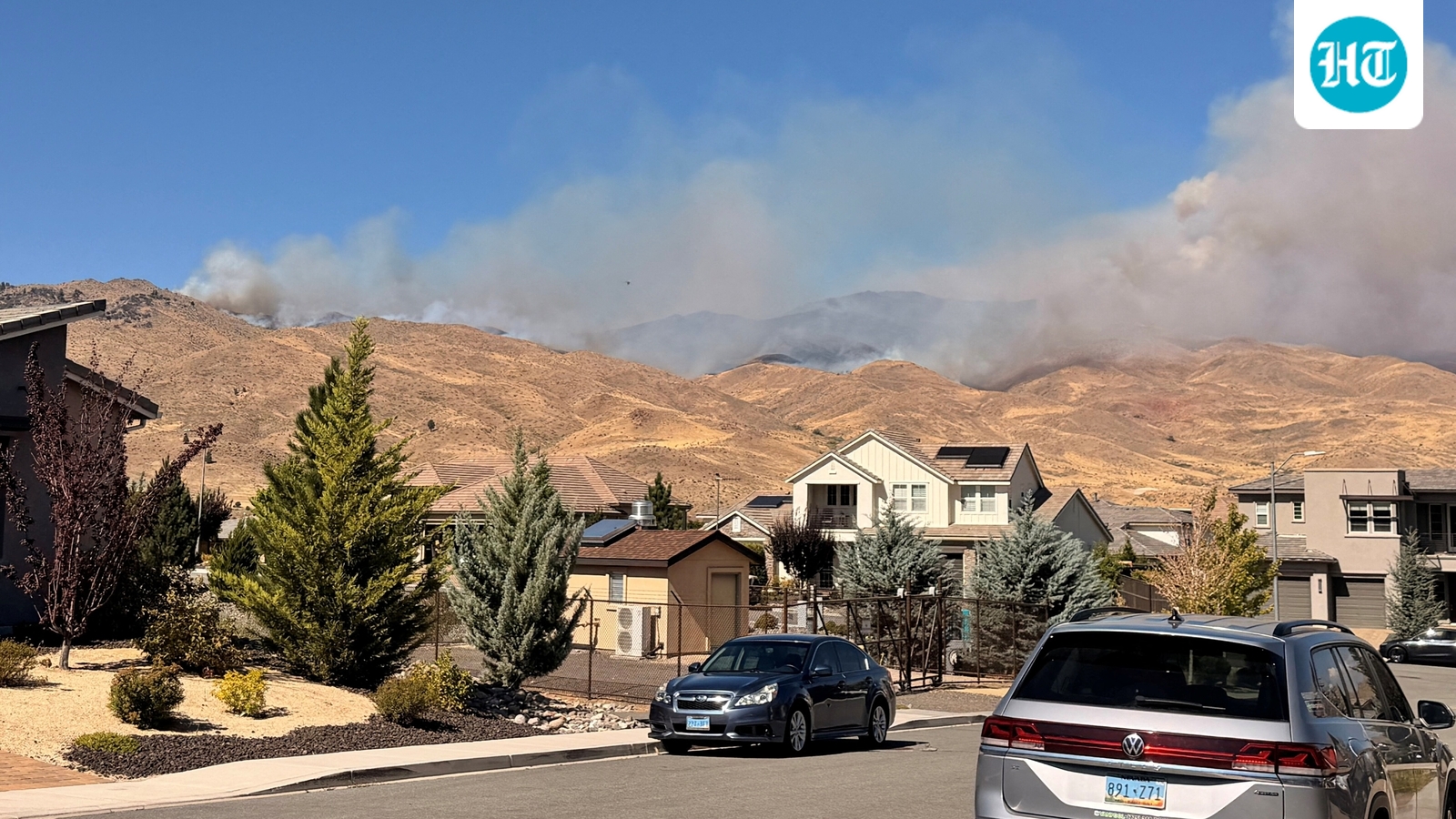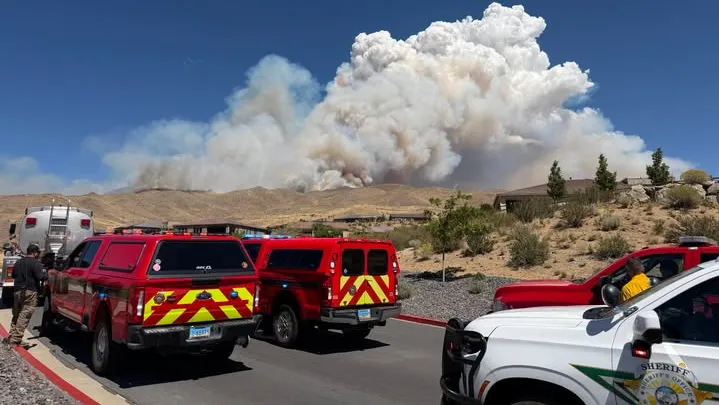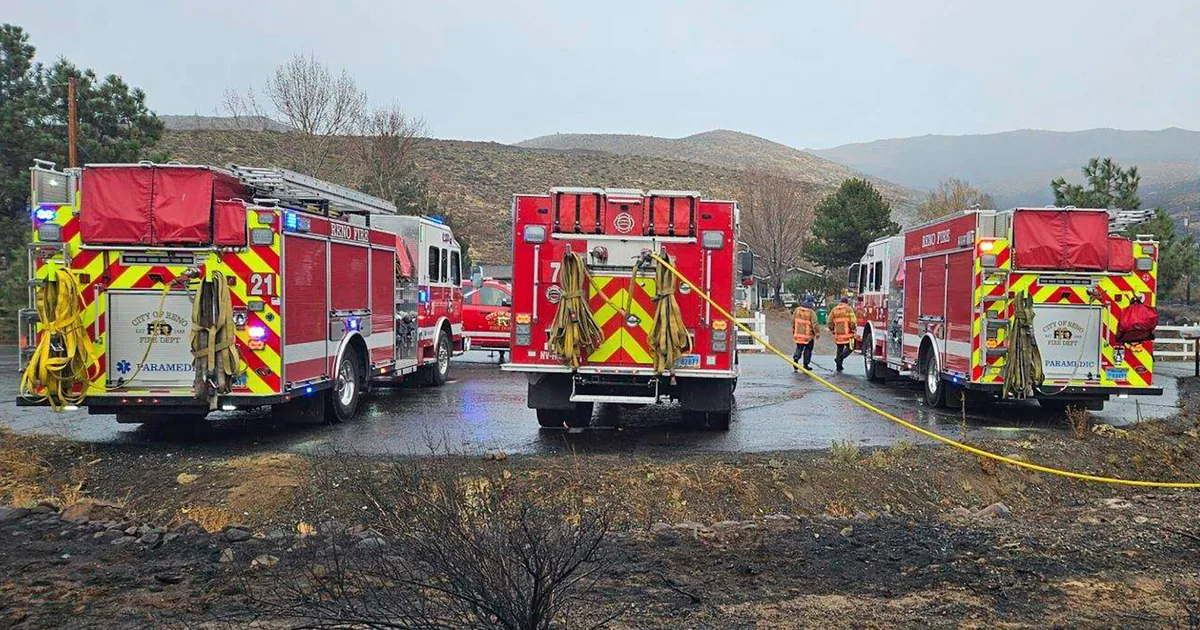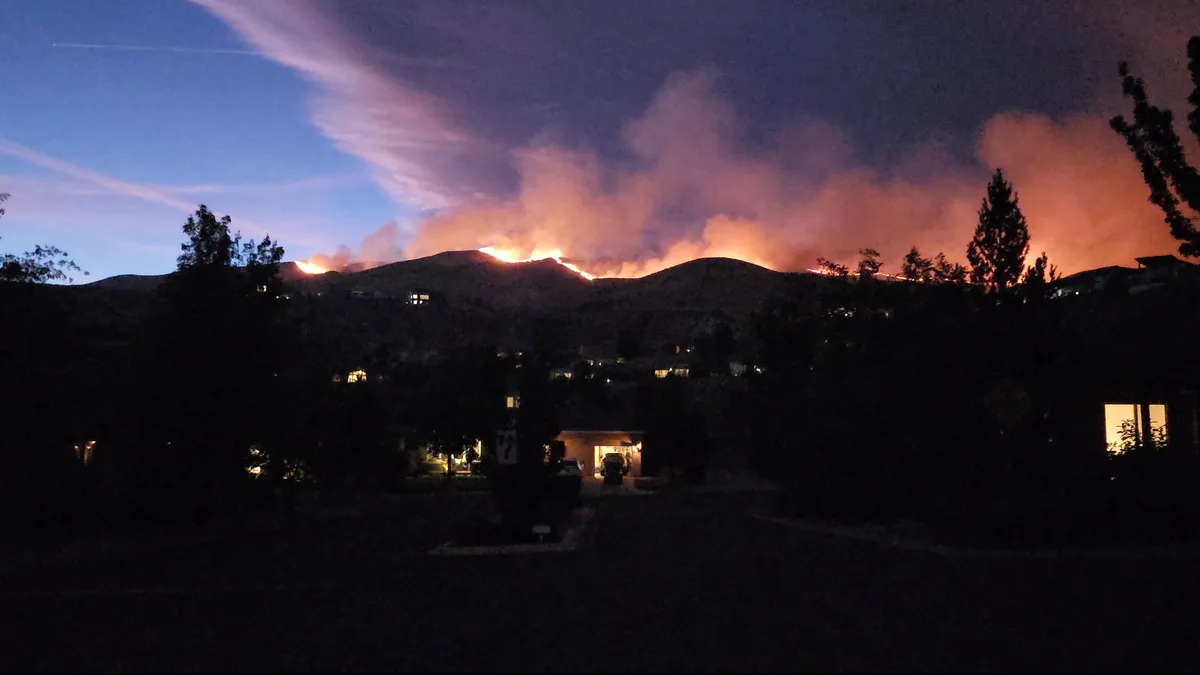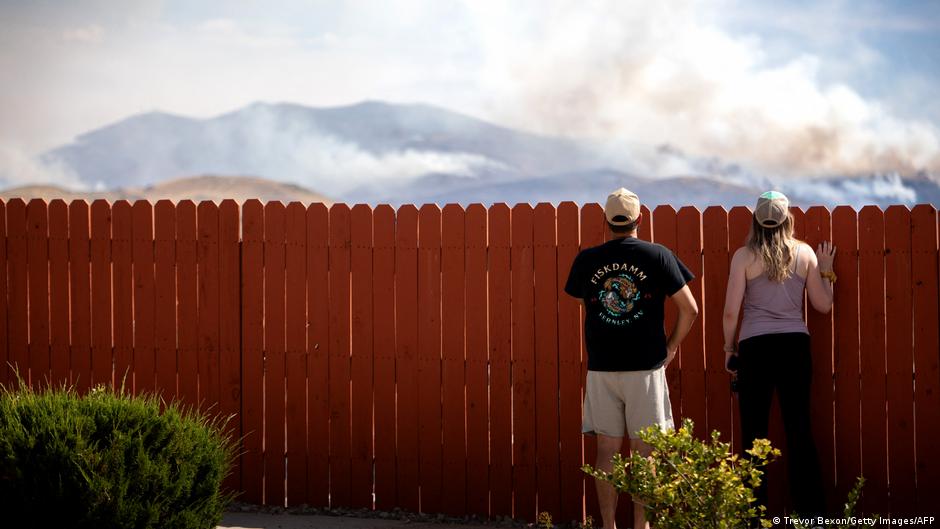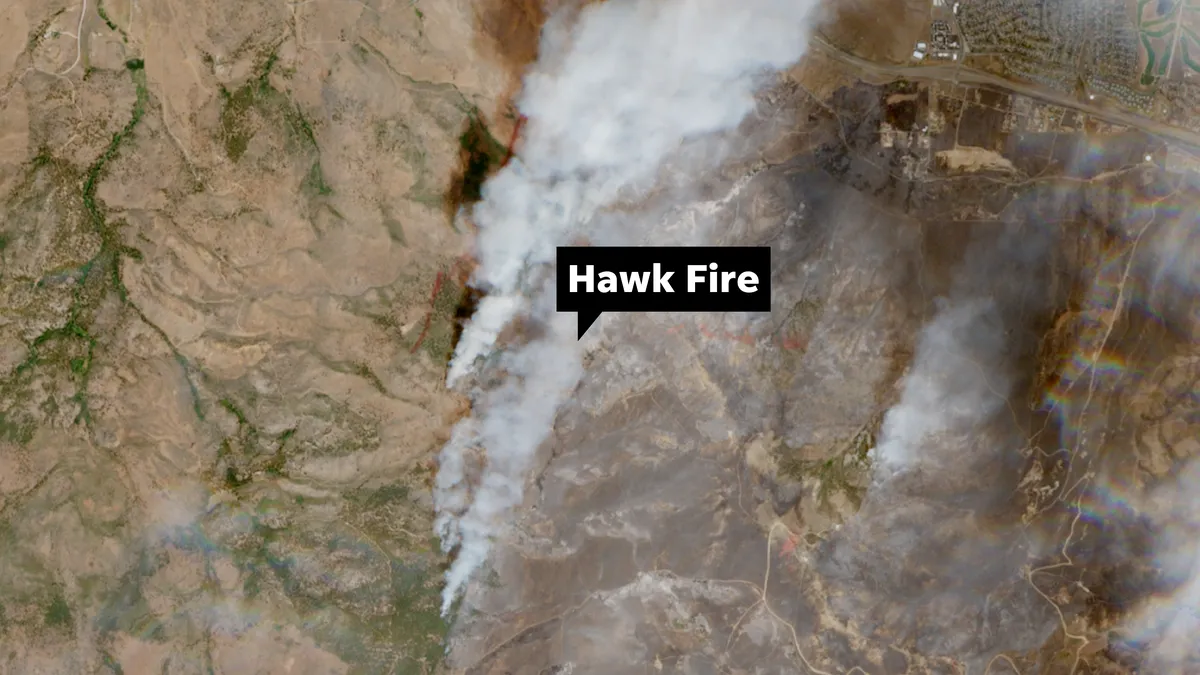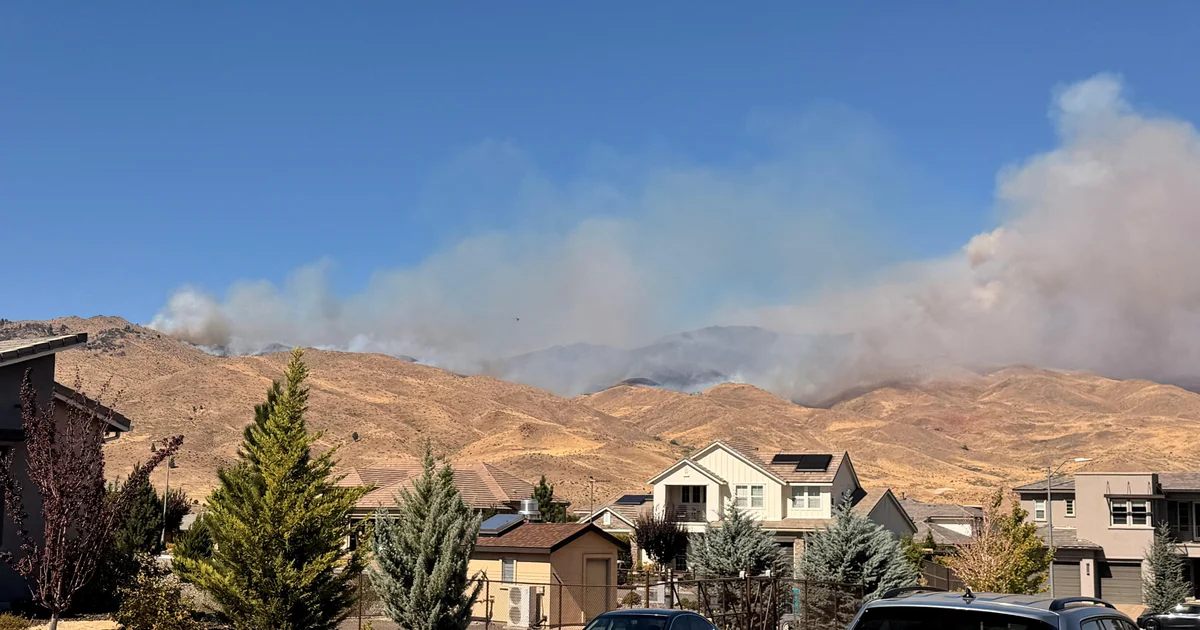
In Nevada, 23,000 people remained under evacuation orders around Reno on Monday as the Hawk Fire burned more than 15,000 acres. (GIF: @HotshotWake)In Nevada, 23,000 people remained under evacuation orders around Reno on Monday as the Hawk Fire burned more than 15,000 acres, while California lawmakers weighed utility wildfire liability and scientists warned that up to 40% of western conifer forests could turn to shrubland by 2100.Another 40,000 residents had been told to be ready to leave around Reno, while at least 32 homes had been destroyed. The number of residents either displaced or preparing to flee had fallen to about 63,000 from an estimated 90,000 over the weekend.Firefighters had contained 27% of the blaze, while six more homes were damaged. Four civilians and three emergency personnel suffered minor burns, but no deaths have been reported.Evacuation notices covered parts of northwest Reno between the Sierra Nevada foothills and the University of Nevada. Television footage showed fire nearing roads, while verified eyewitness video captured smoke spreading from the hills over residential areas, according to news agency Reuters.Families flee as Hawk Fire reaches Reno homesFor some families, evacuation meant taking whatever they could before the fire arrived. Luke Opperman, 47, was camping when flames reached the Reno neighbourhood where his family had lived for nearly 20 years.His wife and two teenage daughters loaded clothes and important possessions into three cars and two trailers. They also took the family’s chickens, goats, dog and cats.Their home was destroyed along with six neighbouring houses. Opperman estimated that as many as 20 homes had burned in his immediate community adjoining the Humboldt-Toiyabe National Forest.“It’s more than just a house; it’s your neighborhood, it’s your community,” he said. The uncertainty did not end with the evacuation, with Opperman adding: “I think it’s baby steps. I don’t know what’s happening at the end of this week.”Fire threat eases, but 23,000 remain displacedFirefighters had contained 27% of the Hawk Fire by Monday, while officials said the blaze had stopped expanding and remained at roughly 23 square miles.Authorities had reduced the number of people covered by evacuation orders or warnings to about 63,000. Of them, 23,000 remained under “go-now” orders and another 40,000 were told to stay ready to leave at short notice.Easing winds gave crews some relief, though heat and low humidity continued to complicate firefighting. Officials remained wary of fresh gusts carrying the fire across dry vegetation towards residential development.At least 32 homes had been destroyed and six damaged. Officials said the property toll was expected to rise as assessment teams surveyed more of the burned area.Evacuations also closed Washoe County schools on Monday, helping keep roads clear for emergency crews. Some residents complained after being prevented from returning home, but Sheriff Darin Balaam said the danger had not passed and warned about the risk posed by even a light breeze and a single ember, according to news agency Associated Press.More than 900 firefighters were working on the Hawk Fire by Monday. Crews came from 15 US states, while firefighters from Australia and New Zealand were also deployed as international teams helped tackle blazes across the western US.Nevada governor Joe Lombardo declared a state of emergency in Washoe County. Lombardo authorised two National Guard helicopters to help fight the fire and 60 Guard personnel to support the Washoe County Sheriff’s Office.Officials said the fire was human-caused, though investigators had not determined whether it was started deliberately or accidentally. It follows another major fire in the Truckee River valley in recent weeks.The evacuation perimeter did not reach Reno-Tahoe International Airport, where commercial flights continued normally on Sunday.California weighs liability for utility-linked wildfiresThe destruction around Reno raises another question that California has been confronting for years: who bears the financial burden when utility equipment starts a wildfire? California law makes utilities responsible for damage from fires caused by their equipment even if a court does not find them negligent. Insurers that pay homeowners for rebuilding can later seek reimbursement from the utility involved.California governor Gavin Newsom is trying to change how those costs are divided.His proposal could reduce the financial exposure of electricity and gas companies, get money to survivors sooner and shift a greater share of property losses to insurers, according to news agency Associated Press. Newsom says another goal is to stabilize electricity prices, with California’s power rates among the highest in the country and continuing to rise as utilities spend more on wildfire prevention and recovery.A $21 billion wildfire fund created under legislation Newsom signed in 2019 is part of the existing system. Utility shareholders and ratepayers finance the fund, which helps companies meet wildfire liabilities if they fulfil specified safety requirements, but Newsom says the fund could soon run out.A Northern California fire that began two days after Newsom won the governorship in 2018 killed 85 people and destroyed more than 18,000 buildings. Investigators traced the fire to Pacific Gas & Electric equipment, and the utility later filed for bankruptcy while facing tens of billions of dollars in liabilities.Another fire outside Los Angeles in 2025 killed 19 people and became the state’s second-most destructive wildfire. Investigators this month found that a Southern California Edison transmission tower started the blaze, while utility equipment has caused six of California’s 10 most destructive wildfires.Under Newsom’s proposal, insurers could have to cover a larger share of property losses, while limits could be placed on what utilities pay victims and attorneys. Utility executives could lose bonuses if their company’s equipment causes more than $1 billion in wildfire damage, while shareholders could also face penalties of up to $10 million for violating wildfire-prevention requirements.The governor’s office has not yet released the proposal in full. Fire survivors and property insurers have opposed parts of the plan, arguing that it would shift too much responsibility away from utilities.California Professional Firefighters has backed the proposal, saying financial stability must be balanced with the ability of affected communities to recover and rebuild. Lawmakers have until August 31 to act, while Newsom could call a special session if no agreement is reached. The Legislature also approved another $18 billion last year after Newsom proposed supplementing the wildfire fund. The latest debate comes as California continues to grapple with the financial consequences of increasingly destructive wildfires.Some western forests may never returnThe immediate question for Reno’s evacuees is whether they will have homes to return to. Scientists across the West are confronting a longer-term concern: some forests destroyed by increasingly severe fires may not return at all. Recent studies estimate that as much as 40% of conifer forests in the western US could turn into shrubland by 2100 as hotter fires and a warmer climate interfere with natural regeneration, according to The New York Times.In some western states, snowmelt accounts for as much as three-quarters of the water supply. Without tree cover, snow can melt earlier, while hotter and drier conditions can also remove moisture from soil and vegetation. That can leave plants more vulnerable to fire. Mature forests also store substantial amounts of carbon. Large, older trees hold more carbon than younger trees and shrubs, meaning the conversion of forest into lower vegetation reduces that storage capacity.Wildfires have turned roughly 1,700 acres once covered by centuries-old ponderosa pines into shrubland. Scientists say the forest is unlikely to return. Researchers examining land burned by the 2022 Oak Fire found no new ponderosa pine seedlings. Under more typical conditions, young trees emerge after a fire and can rebuild a forest over one or two decades.About one-fifth of conifers across the Sierra Nevada are already poorly suited to the region’s warmer climate. Forest ecologist Winslow Hansen remembers a different kind of recovery after his family evacuated their home near Bozeman, Montana, during a wildfire in 2000, when he was 13.Firefighters saved the house, and young tree seedlings appeared in the burned forest the following year. Some fire-damaged forests today are responding differently, with natural regeneration failing altogether.Researchers found a more favourable outcome at land burned by California’s 2013 Rim Fire. Ponderosa pines survived there and new trees are growing among shrubs. The Rim Fire site and the Oak Fire site receive similar rainfall and sit at about the same elevation, but their soils differ sharply. Testing found fungus levels at the Rim site were about 6.5 times higher, bacteria levels about four times higher and organic matter about 1.5 times greater. The Rim Fire soil also had high levels of nitrogen and phosphorus, both important for plant growth. The risk of failed regeneration is particularly severe in the drier Southwest.Northern New Mexico’s Jemez Mountains have burned twice since the 1970s, leaving much of the former forest nearly without trees. Researchers also examined nearly 3,500 wildfires that burned conifer forests in Canada and the western US between 2012 and 2023.Their study found that some fires are becoming so large and spreading so quickly that pine seeds can no longer successfully regenerate forests. The findings add to concerns that repeated fires may permanently alter some western landscapes.Scientists test ways to help forests recoverIn Montana, scientists moved western larch seedlings from warmer, lower elevations into higher areas damaged by fire. Those seedlings performed better in warmer conditions than seedlings taken from higher elevations.Researchers in California and Washington are conducting similar assisted-migration experiments, using plants from warmer conditions to help burned forests recover. Scientists say predicting which forests will survive remains difficult despite advances in remote sensing, genetic analysis and climate modelling.Temperature, moisture and soil conditions can point towards an outcome, but researchers say the biological response remains uncertain. That uncertainty continues to complicate efforts to determine where forests can recover naturally and where intervention may be needed.
US wildfire crisis: Hawk Fire burns more than 15,000 acres, forcing mass evacuations in Nevada
In Nevada, 23,000 people remained under evacuation orders around Reno on Monday as the Hawk Fire burned more than 15,000 acres, while California lawmakers weighed utility wildfire liability and scientists warned that up to 40% of western conifer forests could turn to shrubland by 2100.
1,603 words~7 min read