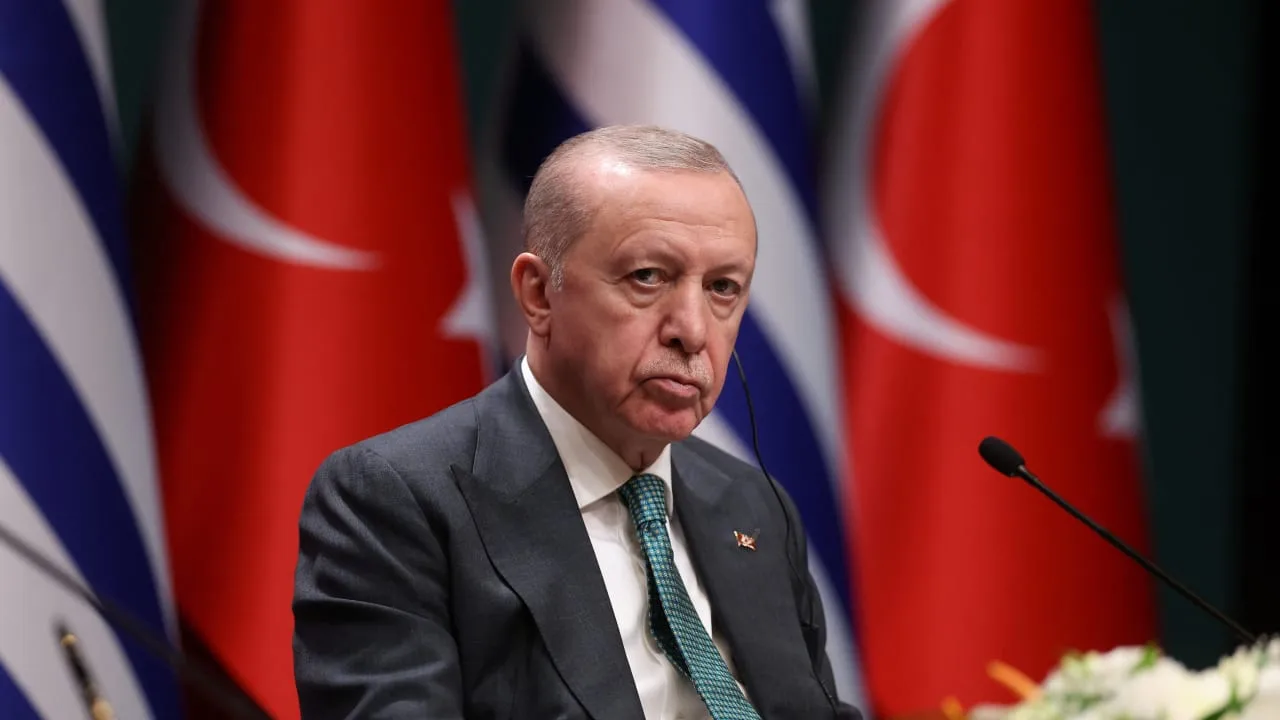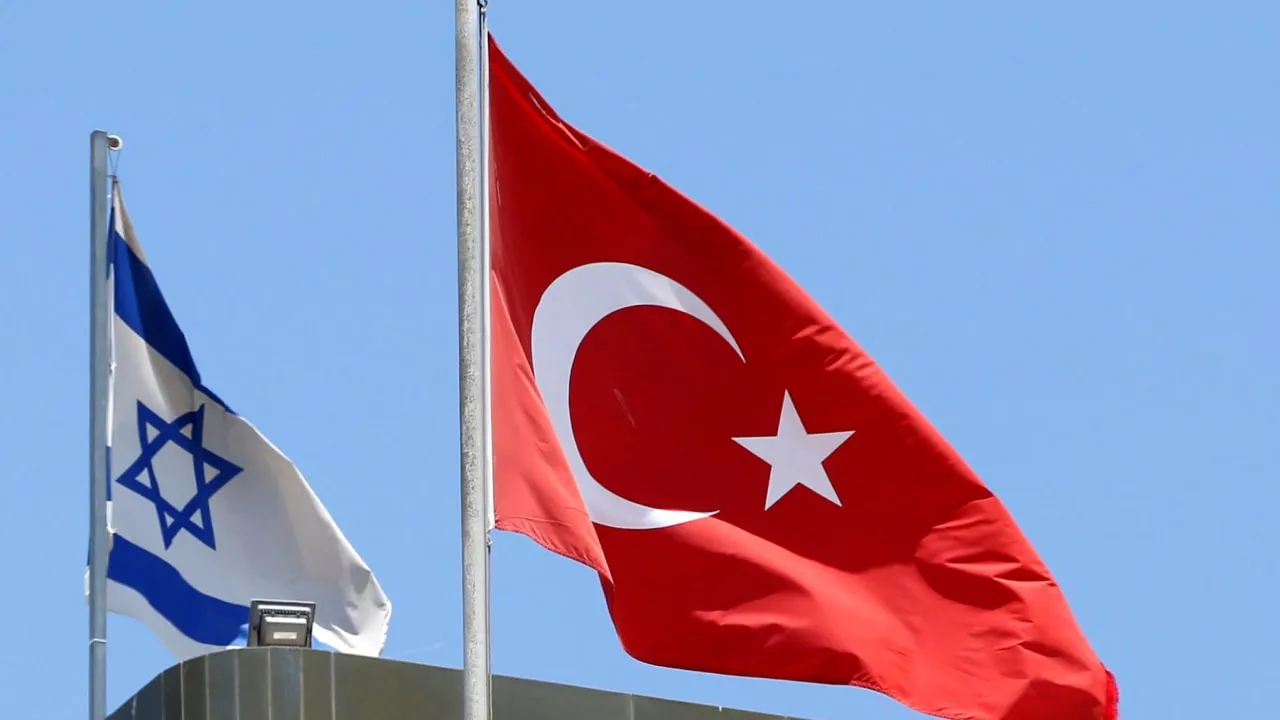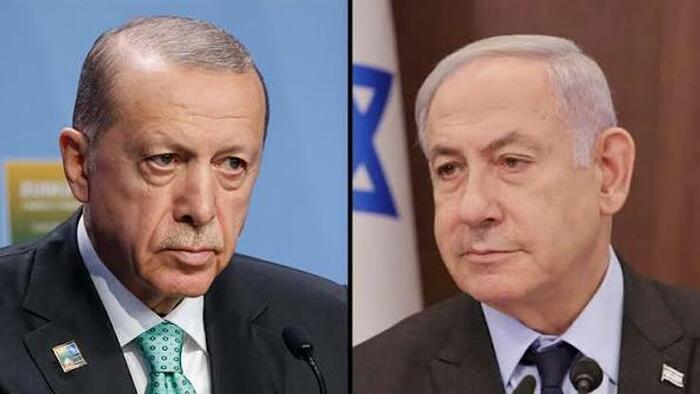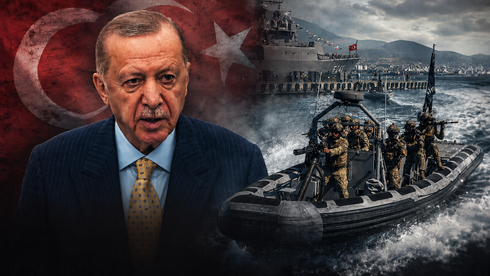
Turkey ranks ninth in the world in the Global Firepower index, one of the most widely cited measures of military strength. Israel ranks 15th, with Iran at No. 16. We are told that Turkey, a regional power with a formidable military, must therefore be handled with kid gloves. Israel already has enough fronts and does not need another one. That much is true.But Iran, it should be remembered, also had, and probably still has, formidable military power. So does strength necessarily require excessive caution, or can such caution sometimes be interpreted by these regimes as weakness, encouraging the next move?Turkish military and President Recep Tayyip Erdoğan (Photo: Burak Kara/Getty Images, Achmad Ibrahim/AP)There have been claims here and there that Israel’s strike in Syria was an election-driven provocation. There are plenty of legitimate arguments to make against Prime Minister Benjamin Netanyahu and his failed strategic record. But this time, the action was probably justified.Turkey had planned to expand its presence in Syria while introducing weapons systems that could constrain Israel’s freedom of action or pose a direct threat to the country. Yet there is one trap Israel repeatedly falls into: ignoring ideology.Israel repeatedly disregarded explicit statements by Hamas leaders about an approaching assault on the “Zionist entity.” It ignored educational materials used in schools under Hamas control. Those materials did not merely cultivate deep hostility toward Israel, Zionism and Jews. They also glorified sacrifice in pursuit of Israel’s destruction. Children as young as 14 were already carrying weapons.Turkey is not Hamas. Far from it.But there is a common ideological denominator. Both are rooted in the Muslim Brotherhood movement, and Turkey today is the most powerful Muslim Brotherhood-aligned state in the world.Under President Recep Tayyip Erdoğan, this ideology is backed by enormous military power. Turkey has not reached the fanaticism of Iran’s regime. But the direction of travel over the past two decades has been clear. And if one listens carefully, Ankara is beginning, at times, to sound increasingly like Tehran.The most powerful figure in Turkey after Erdoğan, and perhaps his eventual successor, is Foreign Minister Hakan Fidan.Ahead of a NATO leaders’ gathering in Ankara, Fidan recently described Israel as “a burden humanity can no longer carry.”That is not merely an anti-Israel statement. It echoes a far darker tradition in which Jews themselves were portrayed as a burden or threat to humanity. It bears an unsettling resemblance to the language of the Nazi propaganda “big lie,” which portrayed Jews as a danger to world peace.Versions of this refrain have been heard repeatedly in recent years. According to this worldview, Islamist movements engaged in violence and destruction are not the central problem. Neither are Iran and its terrorist proxies. The Jewish state itself becomes the problem.Israel has, of course, experienced much better periods in its relations with Turkey. Those came most clearly when the secular, anti-Islamist legacy of Mustafa Kemal Atatürk still dominated the country. There have also been calmer periods under Erdoğan, including meetings with President Isaac Herzog and Netanyahu.And no, Israel should not seek confrontation. Things can always get worse.A significant share of Israel’s oil supplies, particularly crude originating in Azerbaijan and Kazakhstan, passes through Turkey and reaches Israel from the Turkish port of Ceyhan. Erdoğan and Fidan therefore have a hand on an important part of Israel’s energy lifeline.Is Israel prepared with an alternative to the Turkish energy corridor? The answer is no.Israel is therefore engaged in a delicate balancing act between a dangerous ideology, not far removed in important respects from those promoted by Hamas and Qatar, and critical national interests ranging from Turkey’s growing presence in Syria to energy supplies.That makes a security agreement with Syria important. According to reports, most of its details have already been agreed. Israel should also enlist U.S. President Donald Trump to help restrain Erdoğan and Fidan.So no, Israel does not need a direct confrontation with Turkey. It does not need another front.But neither does it need blindness.Turkey’s ideology is not merely Islamist. It is also imperialist.Turkey already maintains 133 military bases or installations outside its borders and is deeply involved in Libya, Somalia, Sudan, Syria and Lebanon. Erdoğan enjoys a strong relationship with Trump, while Turkey also maintains close ties with Iran, which Ankara has been trying to bring into a broader regional alignment alongside Saudi Arabia and Pakistan.Turkey is also a member of NATO. It may harbor profound ideological hostility toward Israel, but that does not mean it is eager for war. A military confrontation with Israel would not necessarily be welcomed even by countries deeply critical of the Jewish state.Israel therefore has strategic reasons to halt the deterioration of its relations with European countries. And that is why there is also a connection between extremist violence and looting in the West Bank, decisions to expand farms and unauthorized outposts, particularly construction in the E1 area east of Jerusalem, and Israel’s broader international position in confronting Erdoğan’s government.Deepening Israel’s conflict with Europe will only increase Turkey’s appetite.Yes, in this strategic chess game, everything is connected. Israel does not need silk gloves. Nor does it need iron gloves. It needs gloves of wisdom.The problem is that Israel does not currently have a responsible government capable of wearing them. One can only hope that very soon, it will.
Erdogan’s Turkey is no Iran, but Israel cannot ignore the warning signs
Opinion: Turkey is now the Muslim Brotherhood’s most powerful state, pairing Erdogan’s Islamist ideology with formidable military power; it is not Iran, but its rhetoric is increasingly beginning to sound like it
875 words~4 min read