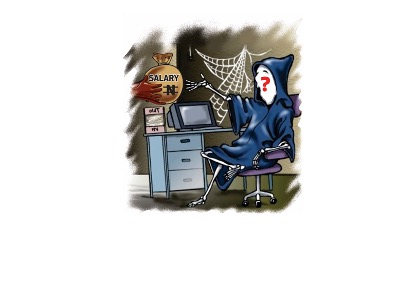
Ghosts. Fake, Fraudulent, Dubious Things are not new in Nigeria. The crisis of transparency in Nigeria’s public sector payroll system began, for example, as far back as the 70s, and became even more problematic in the 80s, with the expansion of the public service, and the reliance on cash and paper records for payment of civil servants. The records were poorly kept, cash was paid physically by many government agencies, and this made it easy for unscrupulous officials to insert fake names into the list. With the creation of additional Ministries, Departments and Agencies of government, and in the absence of computerization, and a central data base for workers and payments, ghost workers found their way into the payroll. At both the Federal and state levels, non-existent persons collected salaries that they never worked for, but of course the beneficiaries were the corrupt government officials who created the ghosts in the first place. When people retired or died, there was no oversight system to clean up the books. This ghost phenomenon would soon become a scandal with the discovery of wastages and leakages running into billions siphoned out of state coffers. There were just as many ghosts as there were living persons working for the Nigerian government.
The Menace Of Fake Agencies
Ghosts. Fake, Fraudulent, Dubious Things are not new in Nigeria. The crisis of transparency in Nigeria’s public sector payroll system began, for example, as far back as the 70s, and became even more problematic in the 80s, with the expansion of the public service, and the reliance on cash and paper records for payment of civil servants. The records were poorly kept, cash was paid physically by many government agencies, and this made it easy for unscrupulous officials to insert fake names into the list. With the creation of additional Ministries, Departments and Agencies of government, and in the absence of computerization, and a central data base for workers and payments, ghost workers found their way into the payroll. At both the Federal and state levels, non-existent persons collected salaries that they never worked for, but of course the beneficiaries were the corrupt government officials who created the ghosts in the first place. When people retired or died, there was no oversight system to clean up the books. This ghost phenomenon would soon become a scandal with the discovery of wastages and leakages running into billions siphoned out of state coffers. There were just as many ghosts as there were living persons working for the Nigerian government.