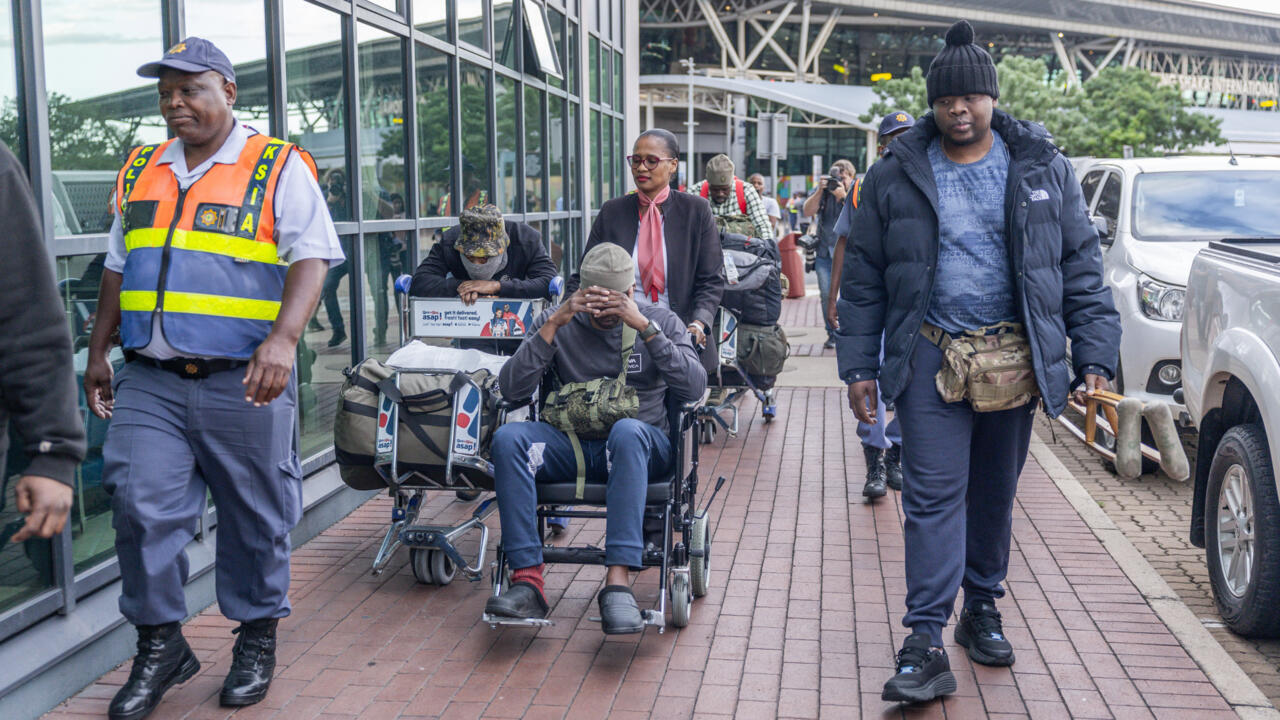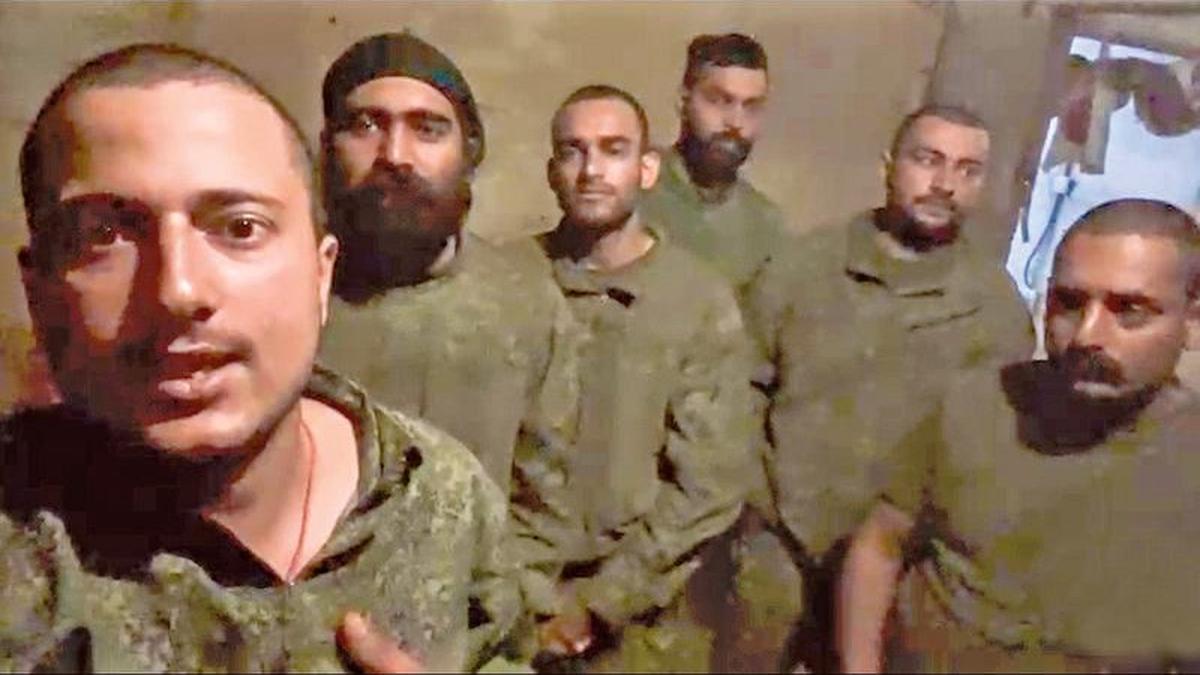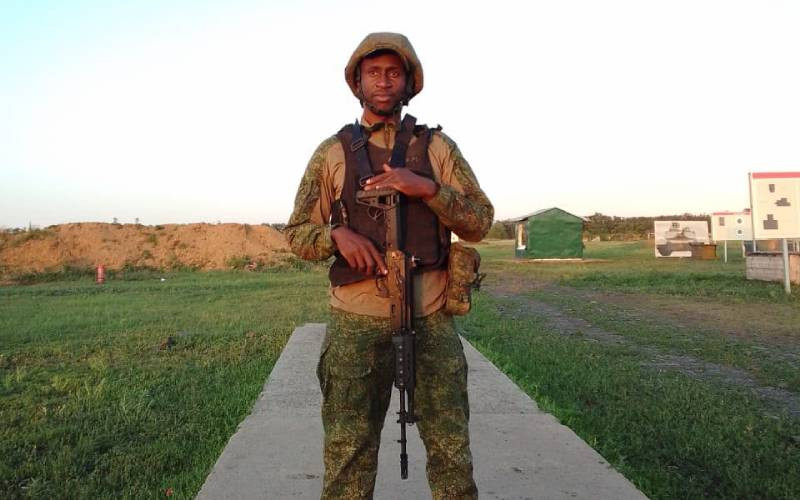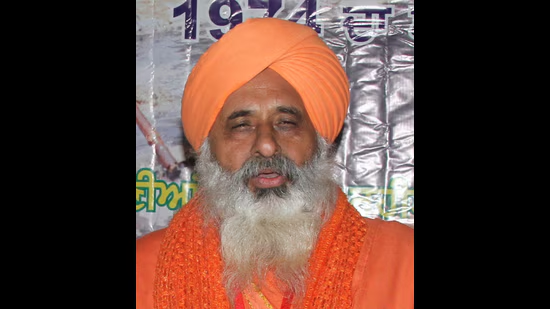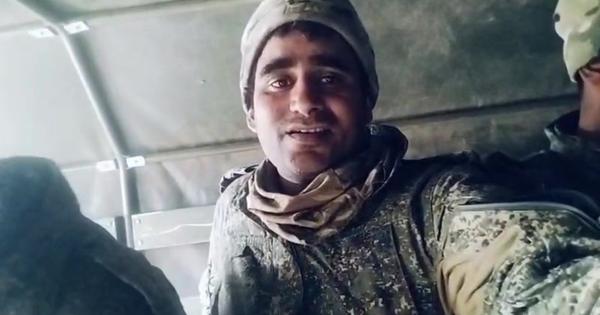
From the frontlines of the Russia-Ukraine border, Manoj Singh Shekhawat sent a 21-second audio message to his family in Rajasthan on October 15.“If you don’t hear from me for three days, consider that I am no more,” the 33-year-old cab driver from Jaipur told his family.Ten months later, however, his family has not given up hope that he is alive.“We hope that maybe they are making him work at some place where there is no internet connectivity,” said Ajay Singh Rathore, a cousin.Shekhawat’s family is among 26 Indian families who moved the Supreme Court in March to direct the Union government to trace and repatriate their loved ones from the active conflict zone on the Russia-Ukraine border.Since the outbreak of war between Russia and Ukraine in 2022, hundreds of Indians have found themselves fighting along the Russian Armed Forces. Many claimed to have been lured there by recruitment agents. It is illegal for Indian citizens to fight for another country.Shekhawat was recruited by a local agent in Jaipur early last year on the promise of a high-paying job, his family said.On July 31, the Supreme Court directed the Centre to “continue its efforts” to trace the missing Indian nationals. The court also directed the Ministry of External Affairs to appoint a nodal officer in Delhi who will serve as a single point of contact for the family members of Indian nationals trapped in Russia. It also directed the ministry to arrange DNA tests of family members so that they could be matched with bodies of soldiers lying in Russian morgues.For 14 of the families, the interventions came too late. Their sons had already been killed in the conflict, some of them in 2025. Six of the bodies were handed over to their families after the petition was filed, according to a status report filed by the Centre in the court in May. The evacuation of some of the bodies “was not possible from an active combat zone”, the Indian government said.There is no information on 11 of the men, while one of them is in a Russian prison serving a sentence.“Authorities keep assuring us but the fact is that we haven’t heard from my brother since October last year,” said Dheeraj Kumar, whose brother is also among those still missing in Russia. “We just want my brother to be brought back to us safely. Everything else comes later.”But with almost no information from the frontline, the families of Indian men lured or tricked into fighting Russia’s war are caught in a limbo, they told Scroll. Seeking justice or punishment for unscrupulous agents for entrapping their kin has also been a lonely, hard struggle.An advertising board in St Petersburg calling for volunteers to join the Russian army, in an image from April 2023. REUTERS/Anton Vaganov.‘Go to war or get killed’Before he went to Russia, Shekhawat earned a living as a cab driver, taking groups of tourists to different parts of North India.Every year, he also tried to find work in foreign countries to supplement his income. “He had travelled to Poland and Thailand as well in search of work and a chance to settle down there,” said Rathore, his cousin. “Each time he had come back home after working for some time.”But his attempt to settle down abroad failed and drained him financially as well as emotionally.When he was offered a job in an egg factory in Russia, Shekhawat kept his decision a secret from everyone except his immediate family. “Had I known he was planning to, I would have never let him go because I knew what was happening with Indians in Russia,” said Rathore, a mechanical engineer with a United States-based company.But after working for a few months in the egg factory, Shekhawat was not paid any wages.The travel agents in India had sent Shekhawat to Russia on an e-visa, according to a first information report filed by the family. An e-visa allows a visitor to enter the Russian Federation for business visits or as a tourist for a maximum period of 16 days. It does not allow him or her to earn a living.Shekhawat’s second job was at a tomato plucking factory. “Again, he was not paid any salary after working there for 15 days,” said Rathore.It was in this dire situation that Shekhawat and several other Indians with him came in touch with an Indian agent in Russia who recruited them into Russian Armed Forces.This agent, Rathore alleged, was part of the network of travel agents who had lured Shekhawat to Russia in the first place.“They told Shekhawat and others that since relations between India and Russia are good, they won’t be sent to frontlines to do the actual fighting and would be engaged in other duties like digging bunkers, taking supplies and other non-combative activities,” said Rathore, recalling his conversations with Shekhawat.Family members of missing Indian nationals in Russia and their lawyers blamed a web of travel agents in India and Russia for drawing them with the promise of better pay.Subsequently, most of these men found themselves in difficult situations from which the only escape was serving with Russian Armed Forces under a contract.“Many of them were first told that the Russian Army will hire them on a temporary basis for non-combative roles like constructing some tents or laying bricks or labourers who help in carrying goods,” said Supreme Court lawyer Ritwik Bhanot, who serves as the legal counsel for the families.Once they were in the custody of the Russian Army, however, their passports were confiscated. “They were told to sign such and such agreements. After that, they were told to go to war or get killed,” Bhanot added.In September 2025, Shekhawat eventually joined the Army by undergoing a 15-day formal training. By mid-October, he was on the frontlines of the Russia-Ukraine border near Kupyansk, sending panic messages home to save him. “Since October 15, we haven’t heard from him,” said Rathore.Russian volunteers queue up to join the front after military training in Chechnya. Russia has been criticised for recruiting civilians from other countries to its military campaign in Ukraine. REUTERS/Chingis Kondarov.A labour marketIn recent years, Russia has looked to South Asian countries like India, Bangladesh and Sri Lanka as it struggles with a labour crisis.According to the Russian labour ministry, the country will need nearly 11 million new workers by 2030.Aleksei Zakharov, a fellow at Observer Research Foundation, said Indian workers have filled positions in various sectors like construction, warehousing, packaging, textile, and agriculture. “There are currently around 70,000-80,000 Indian nationals working in Russia,” he said. The footprint of Indian labour is expected to grow further in the coming years. “Last year, India and Russia signed a labour mobility agreement.”The number of those lured into the battlefield with Ukraine is relatively small, Zakharov said. “As media reports and official investigations have shown, it is largely the result of fraudulent schemes by unscrupulous visa consultancy firms and agents,” he added.However, Russia’s use of civilians in military operations have been criticised by several countries.Russian armed forces are known to have recruited men from more than two dozen countries to fight its war with Ukraine.In March, the European Parliament passed a resolution addressing the grave human rights violations linked to the recruitment of non-Russian nationals in the Russia-Ukraine war. It also convened a public hearing that looked at evidence of civilians from other countries being coerced, deceived, and trafficked into fighting in Russia’s war against Ukraine.According to the Indian government’s status report filed before the Supreme Court, several Indians were drawn to working in Russia after being promised “attractive salary packages”, hefty signing bonuses and Russian citizenship. Some of them “voluntarily” signed contracts to join the Russian Armed Forces.The recruits to the Army were promised a monthly salary of US $2,500 or Rs 2.38 lakh, with a signing bonus of $5,000 or Rs 4.76 lakh.In case they died, they were promised compensation amounting to $1,68,000 dollars or Rs 1.60 crore.Official figures suggest at least 217 Indian nationals had joined the Russian military, of which 139 were already discharged from their contracts following diplomatic engagement between the Indian government and the Russian Federation.Agreeing to joining Russian military service comes with a number of incentives for both the locals as well as foreign nationals."For foreigners, beyond financial compensation, salaries and other bonuses, these include Russian residence permits for the family members of those who join the armed forces,” Zakharov told Scroll.Bait: Permanent resident statusThe promise of a permanent residency convinced Himachal Pradesh’s Dinesh Kumar to sign up as a Russian fighter.He had been working in Russia for several years, running a chain of Indian cuisine restaurants in partnership with some fellow Indians. “My brother always wanted a permanent residency,” said Dheeraj Kumar, Dinesh’s younger brother.It was this hope that Dinesh Kumar had agreed to join the Russian forces last year, said Kumar. “One of his colleagues had guided him to join the Army as a cook,” recalled Kumar. “He was promised a good salary and permanent resident status if he completed a one-year-long contract.”Last August, Dinesh Kumar signed a contract with the Russian Armed Forces. After a month-long training, he was sent to the frontline. “During training, he would speak to us twice or thrice a week, saying that he won’t be fighting as a soldier but work as a cook in the Army,” Kumar added.All of that turned out to be fake. On September 14, 2025, Dinesh Kumar made a last video call to his brother. “He said he had been misguided and that they are taking him to the frontline,” said Kumar. “He was in a truck.”Since then, there has been no contact from his side even though the family received multiple calls from unknown individuals in Russia claiming that Dinesh Kumar had been found.Kumar’s family is one of the 26 families who have moved the Supreme Court for intervention.In desperation to find their son, the Kumar family even fell into a trap. “My brother had shared contact details of a Pakistani man, Ahmad Bhatti, in Russia who was known to him,” recalled Dheeraj Kumar. “He had asked me to get in touch with him in case we needed anything.”When Kumar contacted Bhatti, he asked him to come to Russia to seek compensation for his brother, claiming that his brother had been declared “missing dead”. “I transferred Rs 1.6 lakh to him to book tickets and arrange my stay in Russia but after that he stopped answering my messages and calls,” said Dheeraj Kumar, who works as a movie director.The difficulty of finding justiceThe petition by families also seeks action against agents in India who are part of the international networks that lure young men to Russia. But the path to justice or any accountability has been an uphill one.In November last year, Shekhawat’s family filed a first information report against three travel agents in Rajasthan who allegedly lured him to Russia.But nearly ten months later, they have not been arrested. “We even visited the Chief Minister’s office to seek a strong action against them,” said Rathore.Instead, the agents have been urging the family to drop the case and promised to return their money. “But what about Manoj?” he asked.Scroll contacted the station house officer of Kardhani police station in Jaipur where the case has been lodged, asking about the progress in the case. However, there was no response to the calls and messages. We also wrote to the Jaipur police commissioner. The story will be updated if they respond.“It has been brought to the notice of the Supreme Court that so and so travel agents are behind this,” said Bhanot, the advocate. “I have made a verbal submission before the Chief Justice of India along with the names of those who are involved. But, till now, there have been no directions with regard to these agents.”A peculiar feature of Indian law stands in the way of prosecuting recruitment agents.Under the provisions of the Emigration Act, prior sanction of the central government is mandatory to prosecute a recruitment agent accused of illegal migration unless the complaint against that individual is filed directly by the affected emigrant or their close family members.“Let’s say an FIR is filed against an illegal agent in Rajasthan under the Emigration Act,” said Vasanth Adithya, an advocate at the High Court of Karnataka. “Once they start the investigation, they have to seek permission from the Ministry of External Affairs because the state police cannot launch a probe in a foreign country. Once the investigation is completed, a sanction from the MEA is mandatory to prosecute the accused."The process takes a lot of time. “The procedure is lengthy and by the time the sanctions come through, either it is too late or the person has returned home,” said Adhitya.Moreover, the punishment for cheating under the Emigration Act is imprisonment up to two years and a paltry fine of Rs 2,000.According to official figures tabled in Parliament in February, a total of 3,925 complaints regarding unauthorised or illegal recruiting agents were received between 2023 and 2025. Of these, only one-fourth or 955 complaints translated into FIRs in different states.Once investigations were completed, only 39 cases qualified for seeking of sanction for prosecution from the Centre.Adhitya called for the government to overhaul and update the Emigration Act and educate people about emigration frauds. “The ones who fall into these traps are mostly people who want to somehow succeed in life,” he added. “They are often very gullible.”
The desperate wait of families of Indian men tricked into fighting Russia’s war
Family members blamed a web of travel agents in India and Russia for entrapping their relatives.
2,250 words~10 min read