Most agent frameworks treat the runtime as scaffolding. You write tool definitions, wire up a prompt loop, and ship the agent. The harness is invisible infrastructure.
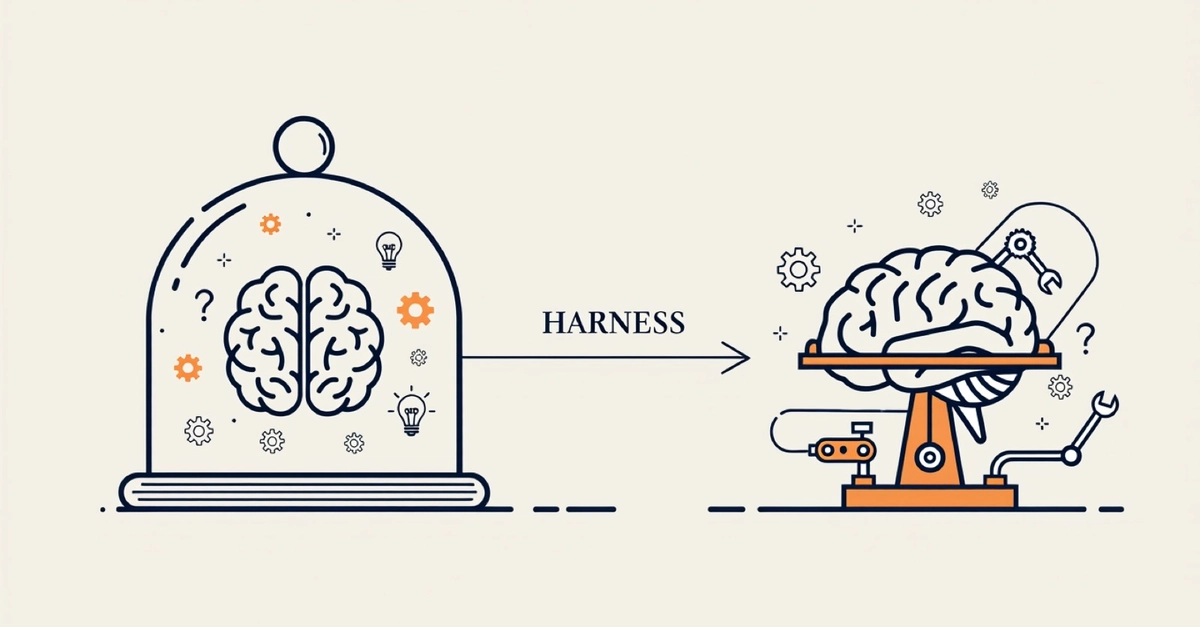
DeepSeek Harness (dsh) flips that model. It treats the runtime itself as the product surface, exposing orchestration primitives, plugin boundaries, and execution state as first-class user-facing concepts. The result is an architecture where "everything is a plugin," including the parts you'd normally hard-code into the framework.
This is not a new LLM. It's a runtime that makes agent execution legible and composable at the infrastructure layer.
What Makes a Harness Different from a Framework
Most agent frameworks give you a loop: call the model, parse tool requests, execute tools, feed results back. The framework owns the loop. You own the tools.