Ask an agent to ship a feature and watch what it does. It reads some files, decides on an order of operations, writes code, runs tests, fixes what broke, and declares itself done. Somewhere inside that run there was a plan. It had steps, the steps had dependencies, and some steps mattered more than others. You never saw it. It lived in the model's context window for the length of the session and evaporated when the session ended.
That plan was a graph. Every agent harness (the program that runs the model in a loop, manages tools, and enforces policy) builds one, privately, in its own shape, and throws it away. The one artifact that determines whether the tokens you are about to spend are spent well is the one artifact nobody writes down.
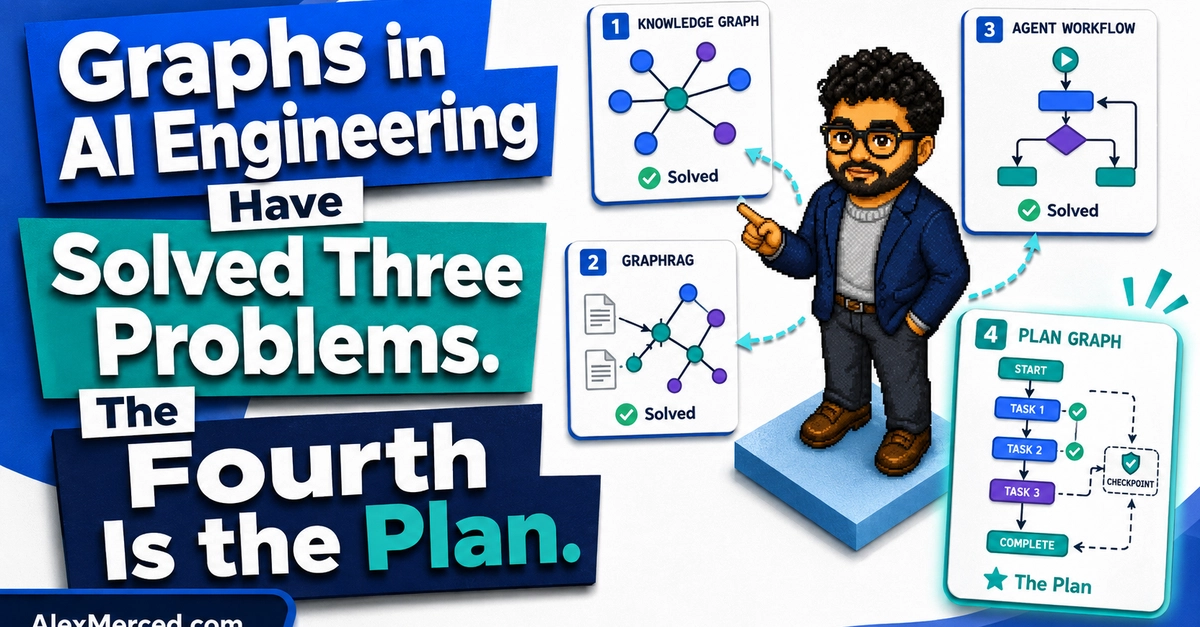
This is strange, because AI engineering has been reaching for graphs for fifteen years and has gotten real value each time. Knowledge graphs gave symbolic structure to search. GraphRAG gave retrieval a way to answer questions about a whole corpus instead of a single chunk. LangGraph and its cousins gave agent control flow a shape. My own MagGraph gives agent memory a shape a human can read. Each of these took a fuzzy problem and made it a graph, and each got something reviewable in return.