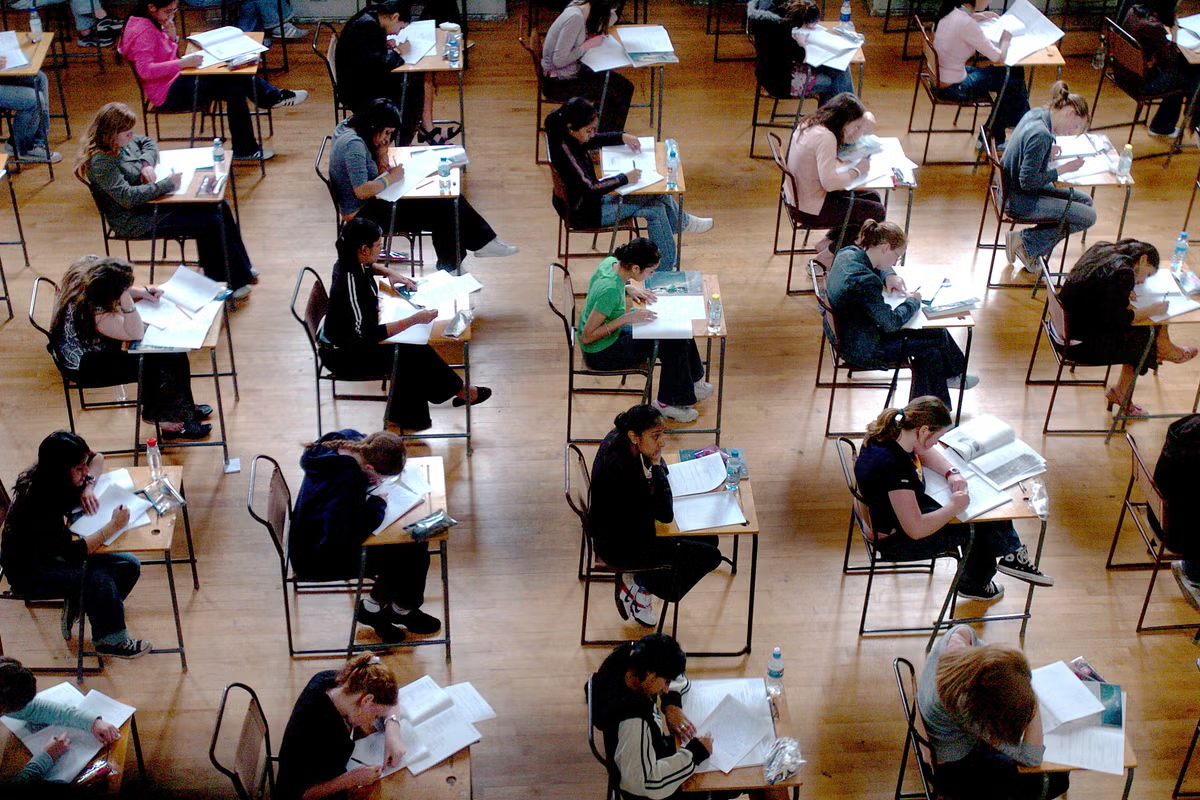
They are offering the New Zealand Certificate of Foundation Skills, a qualification originally provided by polytechnics and other tertiary institutes.Teachers from the Aotearoa Foundation Skills and Pathways Association adapted the certificate for school use and the association last year won Education Ministry funding to help more schools take it on.They told RNZ it could slash the 19 percent of teens leaving school with no qualifications by providing an alternative for those who struggled with the regular school qualification.Esther Williams from Pukekohe High School said like NCEA, the certificate was a 60-credit qualification at levels 1, 2 and 3.It covered literacy and numeracy, but also skills like self-management, resilience, communication, and leadership.Williams said the certificate offered an alternative for teens struggling to pass NCEA's literacy and numeracy tests."There's a group of students who either for cognitive reasons or high neurodiversity or maybe other reasons are unable to engage with the curriculum level that is required for those literacy and numeracy exams and they simply need more time to develop their literacy and numeracy skills," she said."We feel every student deserves a successful pathway through school. We want to keep these kids at school and allow them to finish school with a qualification and so that's why we've brought in these qualifications."Students studying the certificate might also complete NCEA standards and some might achieve an NCEA qualification, but the foundation certificate itself set students up for tertiary study and employment.Liz Carrick from Ashburton College said students who achieved the certificate were going into apprenticeships and even degree-level study."We have a class of 30 at level 2 and the motto in the classroom is nobody leaves without a job or a pathway into education," she said."So we don't have students leave with no qualification and we certainly don't have them leave to go and sit on a couch. We have them leave to go into really good jobs."Carrick said students studying the certificate were more likely to turn up for class and more likely to stay in school."Attendance is improving remarkably, actually, across all the schools that we've been working with and that are working within the programme," she said."Anecdotally what we're finding is that the students that we are putting into this programme are now starting to gain confidence and so much so that rather than leave the day they turn 16, they're now wanting to come back to school at level 2 to do the level 2 qualification."Some schools are adopting an alternative to NCEA for students who need it.123RFWilliams said the certificate could put a huge dent in the number of students leaving school with no qualifications."If all schools offered this to even five pecent of their school, then that's five percent that are not going to be leaving without a qualification," she said."But in most schools it's about 10 percent of students that are in these programmes, the ones that are offering it, so literally we could be halving that number of students that are leaving school without a qualification in the first couple of years."She said the certificate would become even more important when the government replaced NCEA with a less flexible qualification and even tougher literacy and numeracy settings from 2028.Williams said the government expected its reforms would improve children's literacy and numeracy, but students now in Years 9-10 would not get the full benefit of those changes and some would struggle to get the new qualification.Carrick said about 40 schools were at various stages of implementing the certificate.Putting success within reachAt Taita College in Hutt Valley, Year 12 student Brooklyn said he was enjoying the school's New Zealand Certificate of Foundation Studies class."I really like this programme, it actually helps me," he told RNZ.The keen sportsman (he's a sprinter and rugby player) said he would return to school for Year 13 and hoped to get an NCEA certificate as well as the foundation qualification.Year 12 Taita College student Brooklyn says he'll return to school for Year 13.RNZ Pacific / Eleisha FoonNearby a teacher aide is encouraging a student to write a few more paragraphs for an assignment on leadership. Other students are working quietly.Teacher Jenny Wooding said the class was taught parallel to NCEA but with more explicit teaching, pitched at the right level for its students."It means these guys get to share success because the goalposts are within reach to them. Which is so important because otherwise they'd be alienated from school because no matter how hard they tried NCEA would be just out of reach," she said.Wooding said the class helped to ensure more teens stayed at school long enough to earn a qualification."We've kept them at school. These kids would be early leavers if they didn't have this stepping stone."The class included neurodiverse students, refugees, and students who simply struggled with learning.Wooding said the students also studied regular NCEA subjects and with the right support they experienced success."They get lots of support, relationships are really important, and they're succeeding," she said.
Schools adopt NCEA alternative as number of unqualified school leavers soars
As the number of school leavers with no qualifications soars, some schools are adopting an alternative to NCEA for students who need it.
828 words~4 min read