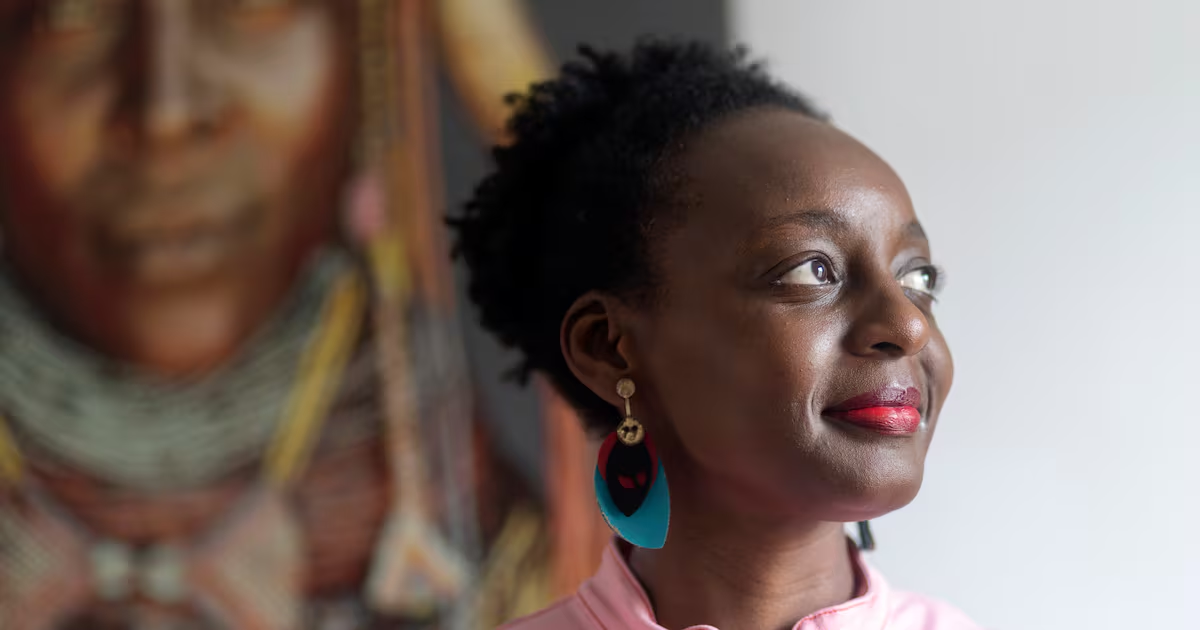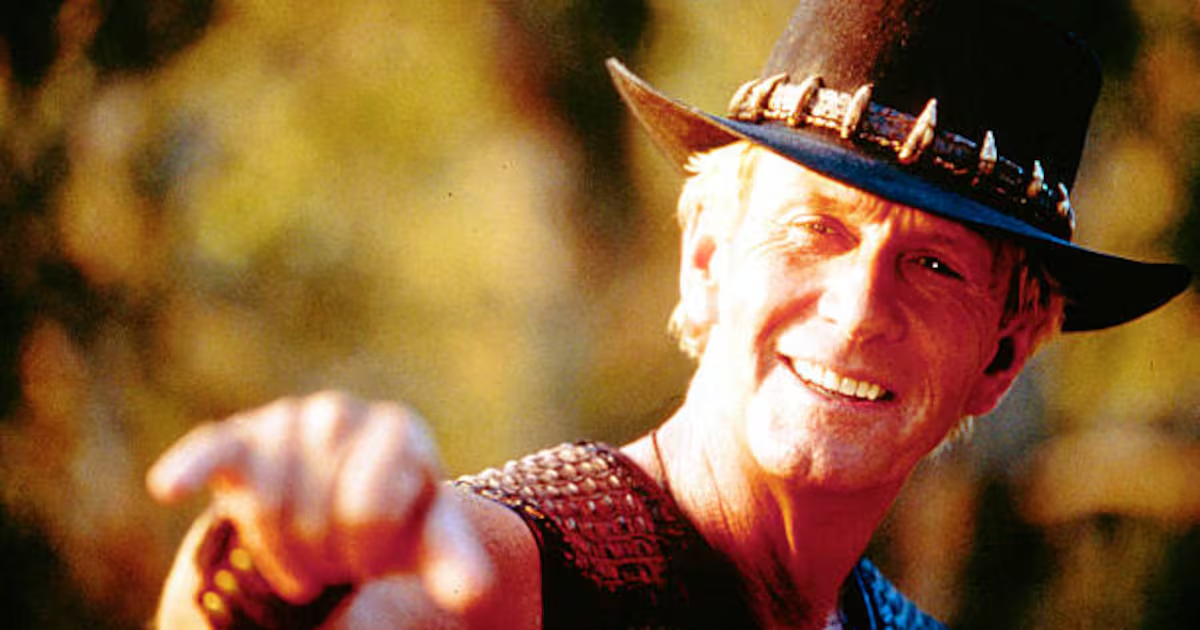
For those of us with a friendly disposition, it is easy to feel for Senegalese native Fatima Johnson after she was spurned for her friendly handshake to the people sitting opposite her on a Paris metro (Fatima Johnson, New to the Parish). She had just landed off a plane from home, having moved to the French capital to study at the Sorbonne, and was following a native custom.One aspect of this cultural etiquette is to warmly shake hands with strangers and, in this particular case, those sitting opposite you on public transport. It is an expression of respect during which last names are exchanged and inquiries are made about your family, work and health. What a heart-warming and friendly gesture. Clearly, an expression of an openness to a new world that this young woman was about to embrace. It wasn’t a ruse to rob the people, cajole them out of their credit card details, hit on them for a secret recipe for an almond croissant. Never mind the ritual of shaking hands, hasn’t eye-contact with strangers become anathema to us sophisticates of the western world? Metropolitanism means anonymity. Cosmopolitanism is all about bowing to the corporate culture of consumerism and its diktats. Being cool and chic means embracing the tactility of earplugs, remote conversations and stony-faced unfriendliness. We sit on our trains and buses and immerse ourselves in the ethereal worlds of our laptops or scroll incessantly on our phones checking the sugar content of Meghan Markle’s jam or Donald Trump’s latest Truth Social diatribe. Can you imagine if you got on the Luas or Dublin Bus and decided to press your nose and forehead against the person sitting beside you, as is a Maori tradition? It is based on the concept of sharing the breath of life. How affirming. Well, as long as you’ve used a good mouthwash.Unfortunately, though, as our western world, in particular, becomes more homogenised, such traditions have become material for heritage and interpretative centres.Or they are played out in such movies as the hilarious Crocodile Dundee (1986). Remember that scene when Dundee lands in New York and is told that the city is home to 7 million people?“That’s incredible. Imagine 7 million people all wanting to live together. Yeah, New York must be the friendliest place on earth,” he naively opines. Then when Gus, his chauffeur, pulls up at traffic lights, Mick Dundee rolls down the window, leans out to the hordes on the teeming Manhattan street and proffers his hand to a random guy who is in the middle of a conversation. “G’day mate, Mick Dundee from Australia. How are you?”“I’m fine,” the baffled New Yorker replies.“I’m in town for a couple of days, probably see you around,” he quips as your man’s jaw drops even further.I may not be quite as naive as Mick Dundee, but more than once I have greeted random strangers with a friendly “Hello,” or “Great Day” to be met with blank faces and silence. The irony is that it often happens on the Co Mayo island to which I escape for some of the summer months. Frankly, the impact of the blank-faced silence more often than not leaves me muttering “Assholes” to myself as I continue on my odyssey through the island’s so-called green road. Here the only sounds are the music of the ocean melding with a soft summer breeze and the chomping of recently sheared sheep. There’s no beeping of car horns or the frantic nee-naw of ambulances. Road rage rarely happens and is usually related to an obstruction caused by a sheep having an afternoon siesta or two tractors sputtering idly as their drivers lean out of their cabs chatting about the weather or some such issue of importance.Coincidentally, Clare Island, on the edge of Clew Bay, is where Fatima Johnson now spends her summer breaks with her islander fiance. Over a recent chat, I asked her about her experience around the culture of greeting on Clare Island. [ ‘Irish people can say something, but you’re never sure it’s exactly what they’re thinking’Opens in new window ]“I love how people on Clare Island still shake your hand on the pier after your arrival and say: ‘You are welcome’. Even during my first visits as a stranger, I was acknowledged and welcomed,” she says. This practice reminds Johnson of her own culture where, she says, “you just acknowledge and greet people as humans, without any distinction based on their socio-economic class and other considerations”. “In big cities where I have lived, in both Paris and Dublin, you only acknowledge people who are in the same circle as you. These are circles you build based on personal and professional affinities. On the island, I get the feeling those barriers are not there, and you also just acknowledge and greet people as humans, without distinction of the class and circle they belong to,” she says.
Global greetings: Áine Ryan laments fading custom of greeting people you don’t know
Being cool means embracing the tactility of earplugs, remote conversations and stony-faced unfriendliness
817 words~4 min read