SEBI: Warning investors
| Photo Credit:
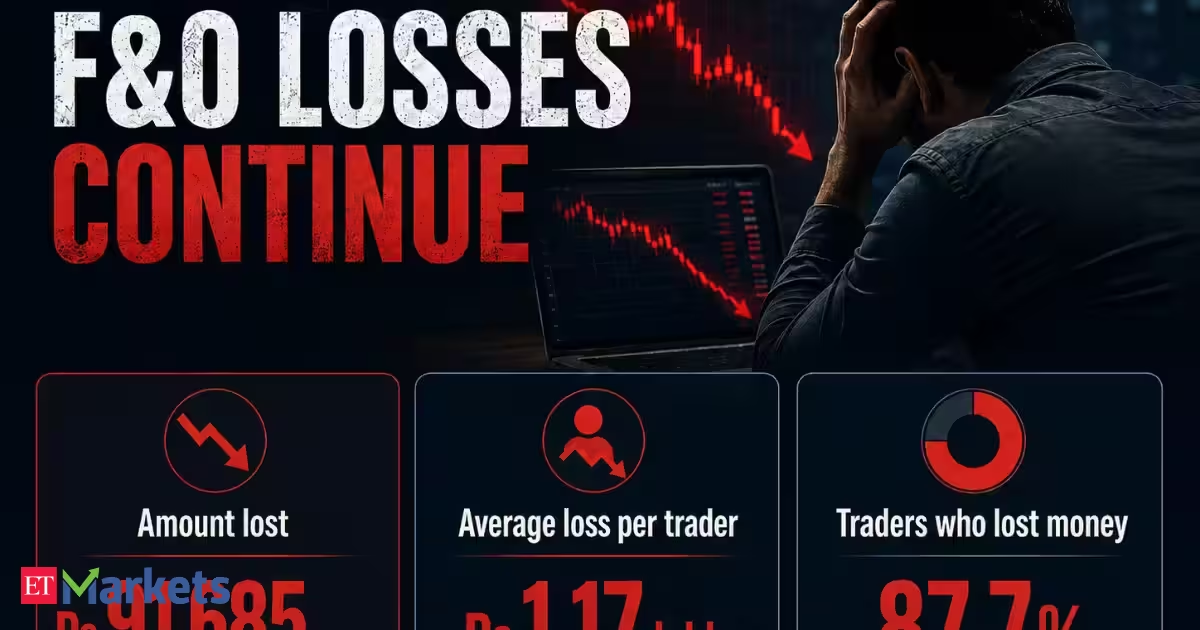
The Securities and Exchange Board of India’s (SEBI) report on the trading behaviour of individual investors in the equity derivatives segment paints a sombre picture. That aggregate net losses for retail traders dipped to ₹91,685 crore in FY26 — down from ₹1.12 lakh crore — offers no real comfort. F&Os have been viewed as a problem for good reasons. They corrode retail investors’ wealth; these are often young, working age individuals who chase a mirage of exceptional return. The negative wealth effect of these losses — on consumption — cannot be disregarded.What is clear now is that the efforts — like raising minimum contract values — by SEBI to contain this rash pursuit have not delivered the desired results. The sheer volume of derivatives relative to the cash market leaves the door wide open for large players to manipulate cash prices on expiry days. SEBI’s recent ex-parte order against Copthall Mauritius Investment and Mansi Share and Stockbroking is a clear case in point. Meanwhile, as much as 97 per cent of index options are traded within a week of expiry, and a staggering 75 per cent are executed essentially on the eve of expiration. Besides, 97 per cent of individual traders are option buyers — a segment where, as per SEBI’s analysis, nearly 90 per cent end up as loss-makers. The incidence of these losses is highest among traders with low capital. Trading intensity peaks among the youngest (under 30) and lowest-income (below ₹5 lakh annually) demographics.A parallel ecosystem thrives on this speculative frenzy. Foreign and domestic institutional traders consistently corner the profits, while Indian stock exchanges and brokerages boast operating margins that rival or exceed global peers. SEBI’s nudges have not been effective enough in curbing speculation. While the F&O-to-cash volume ratio (for NSE and BSE combined) declined from its 487x peak in October 2023, it still stood at a highly excessive 343x in July 2026. The 372x average for the first seven months of this year is actually higher than the 318x seen in the same period in 2025.This zero-sum game acts as a wealth transfer to foreign traders, draining forex reserves at a time when the highest offices in the country are proactively urging citizens to limit gold and fuel consumption. The solution perhaps lies in taking stronger steps on F&O speculation. A targeted increase in the Securities Transaction Tax (STT) only on options trading is perhaps worth looking at. While the “ideal” ratio of F&Os to cash is up for debate, a system where India leads the world by such a massive margin needs to be dismantled. Simultaneously, regulators should introduce policies to deepen the over-the-counter (OTC) derivatives market, giving institutions a wholesale venue to trade amongst themselves and away from retail exchanges. True success on this front will not be marked by regulatory warnings alone. The data should tell a different story, sooner than later.Published on August 24, 2026