BJP spokesperson Pradeep Bhandari. Photo Credit: X@pradip103
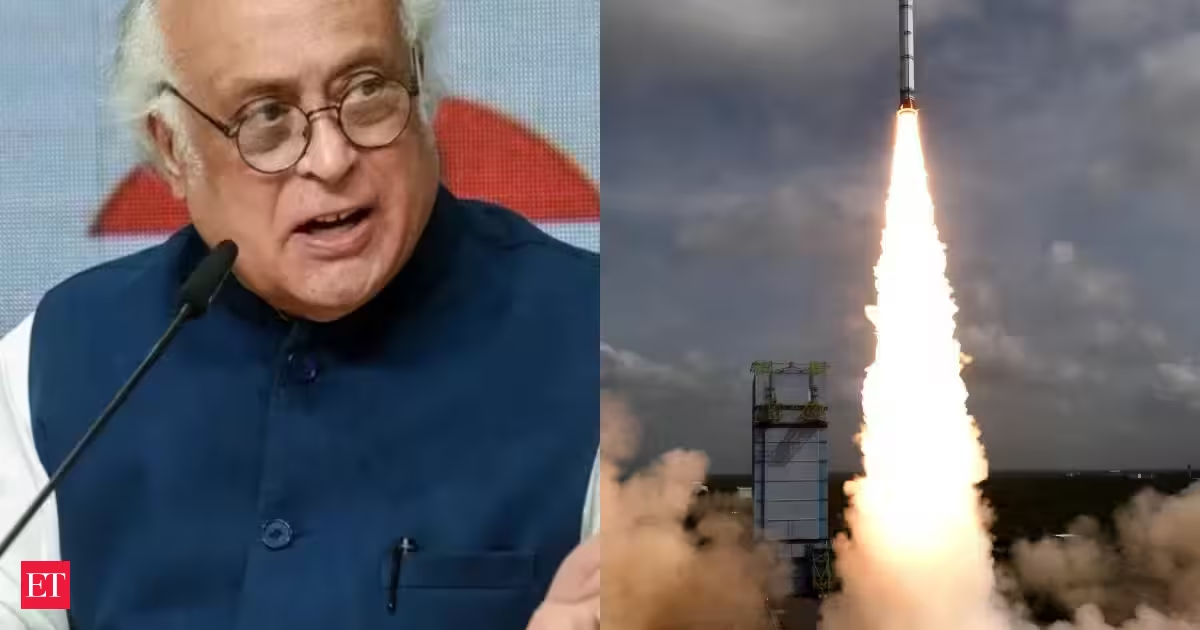
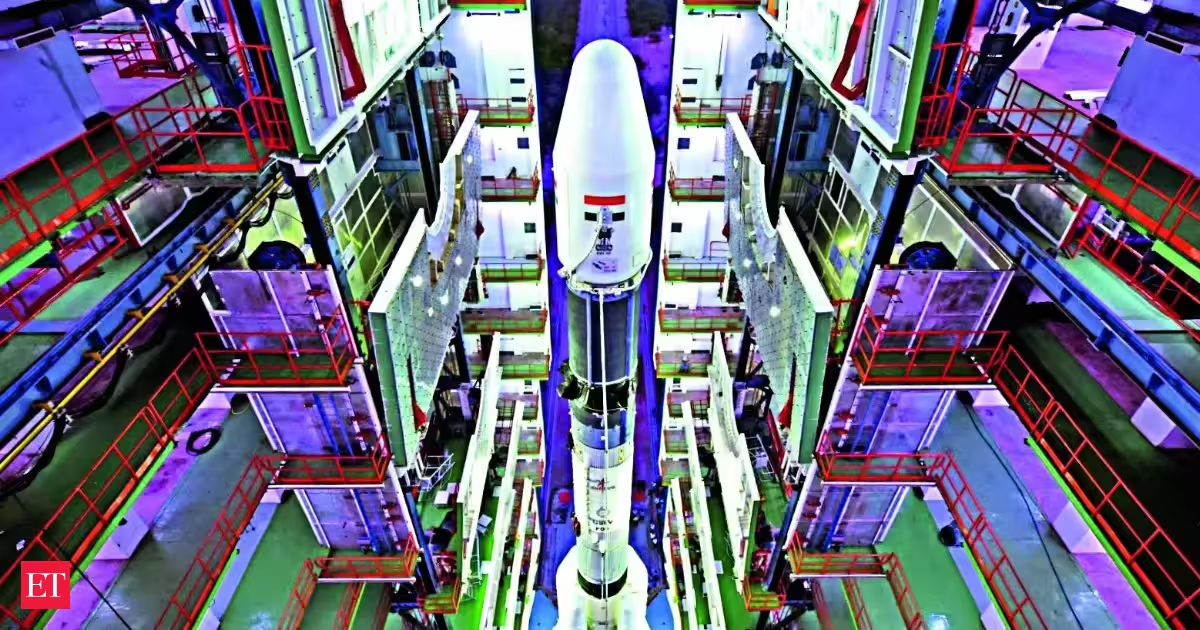
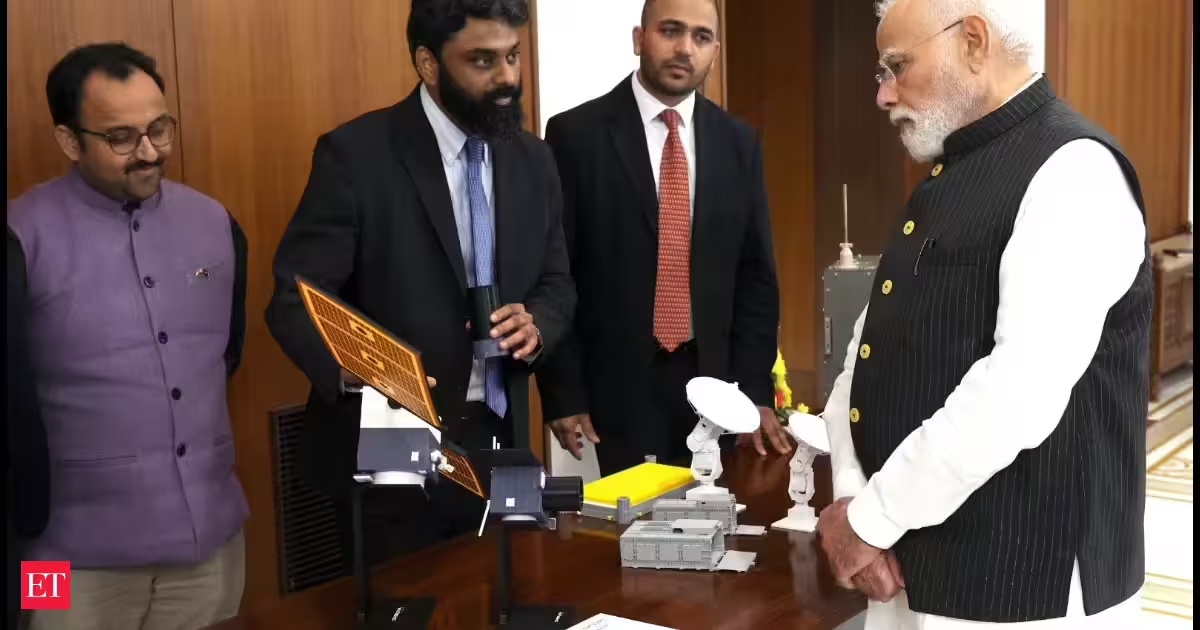
The Bharatiya Janata Party (BJP) on Monday (August 24, 2026) rejected the Congress’ assertion that the Narendra Modi government was pursuing an “aggressive privatisation agenda” in the space sector, stating that the space programme had expanded from a predominantly government-led initiative into a broader ecosystem involving the Indian Space Research Organisation (ISRO), private players, and startups.In an X post, Congress MP and in-charge of communications Jairam Ramesh said, “...It is abundantly clear that like in nuclear energy, the Modi Govt. has an aggressive privatisation agenda for the space programme as well...”Responding to the charge, BJP spokesperson Pradeep Bhandari said: “I understand your frustration with India’s remarkable journey in space. But the numbers tell a story that is difficult to ignore. Under PM @narendramodi, India’s space sector has expanded from a predominantly government-led programme into a growing ecosystem of ISRO, Indian industry, and hundreds of space startups.”Sharing data, he said 35 foreign satellites were launched by ISRO before 2014, and the figure had shot up to 399 by January 2026. There was only one space startup in 2014, whereas the number had increased to 440 by August 2026. In 2021-22, private investment in the sector was about $100.5 million, and it had grown nearly six-fold by March 2026, he said.The revenue of NewSpace India Limited (NSIL), the commercial arm of ISRO, had risen more than eight-fold, from ₹321.77 crore in 2021-22 to about ₹3,000 crore in 2024-25, Mr. Bhandari said. “India became the first country to soft-land near the Moon’s south polar region; India has progressed from its SLV/ASLV legacy and PSLV/GSLV to LVM3/GSLV Mk-III, SSLV and next-generation launch technologies,” he said.On technology development, he said reusable launch vehicle technology, scramjet propulsion and future heavy-lift capabilities were being pursued.“And one of the biggest changes is happening outside ISRO. The opening of India’s space sector has allowed private companies and startups to move from being suppliers to becoming developers of rockets, satellites and complete space systems. Skyroot Aerospace’s Vikram-1, which reached orbit in July 2026 as India’s first privately developed orbital rocket, is a powerful example of this new era,” he said.Stating that ISRO had given India a formidable technological foundation over decades, Mr. Bhandari said the Modi government’s reforms had sought to build on that legacy by enabling ISRO, private industry, startups, and investment to grow together. He said the emerging national space ecosystem was not a weakening of ISRO’s legacy, but an expansion of India’s space ambitions. Published - August 24, 2026 09:41 pm IST