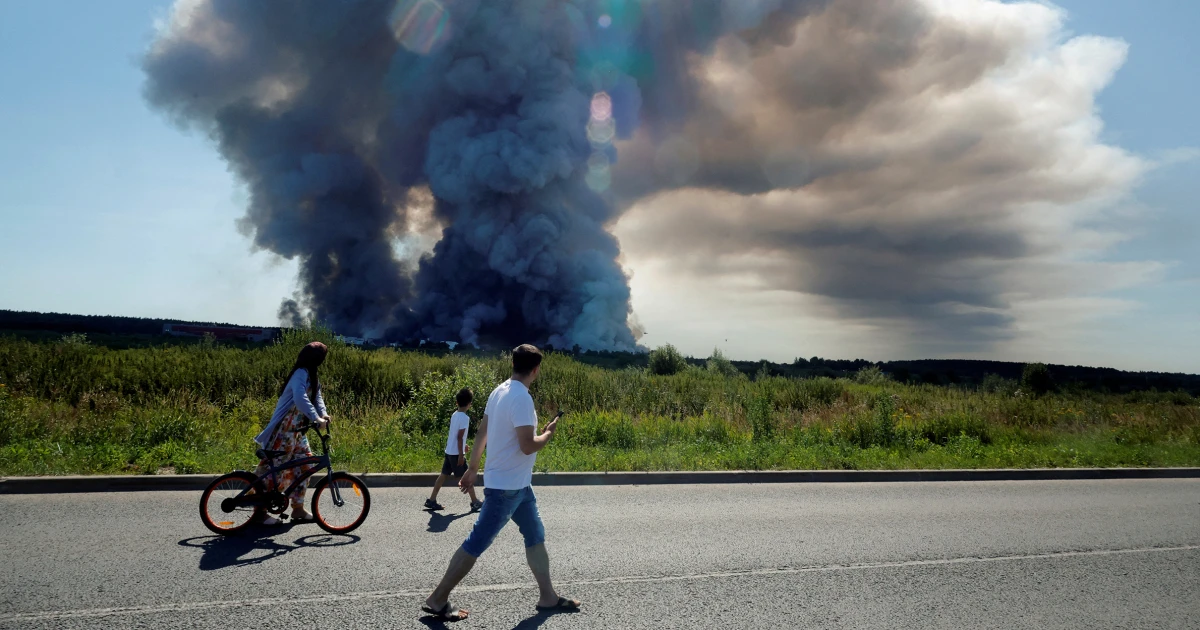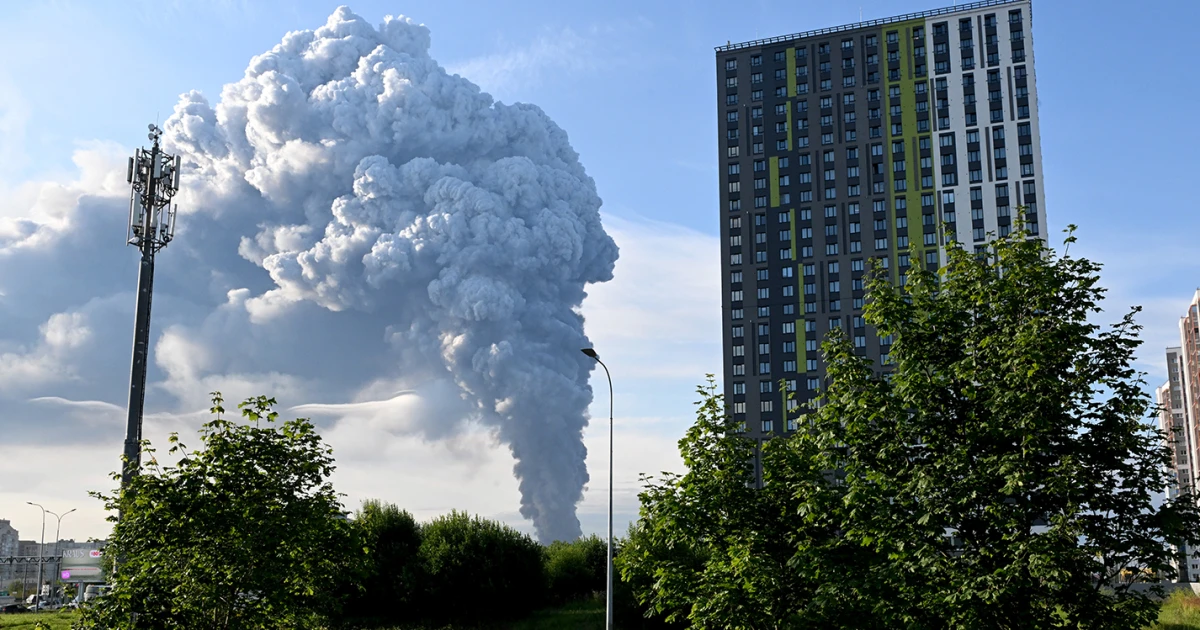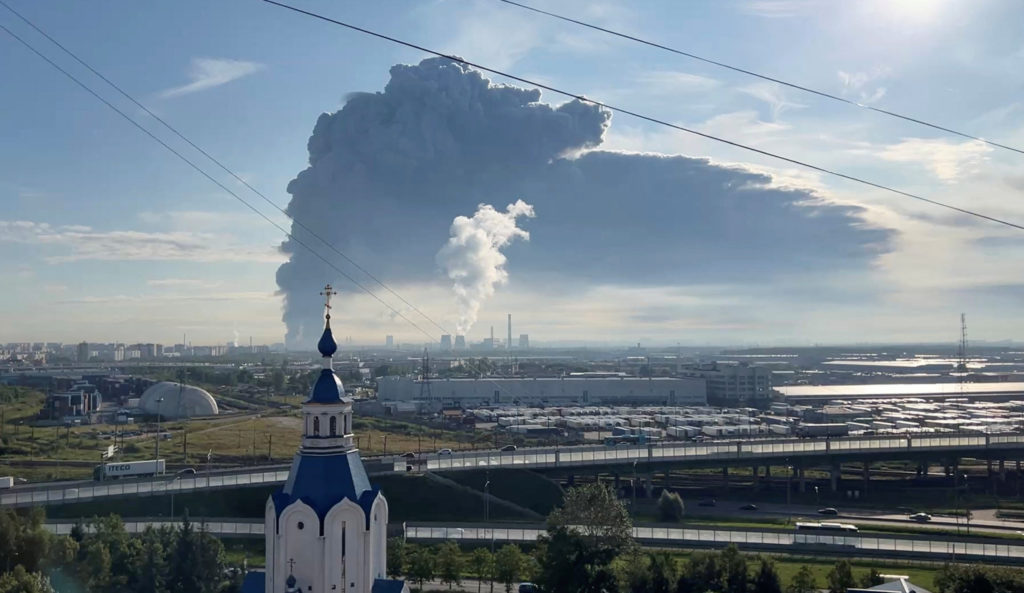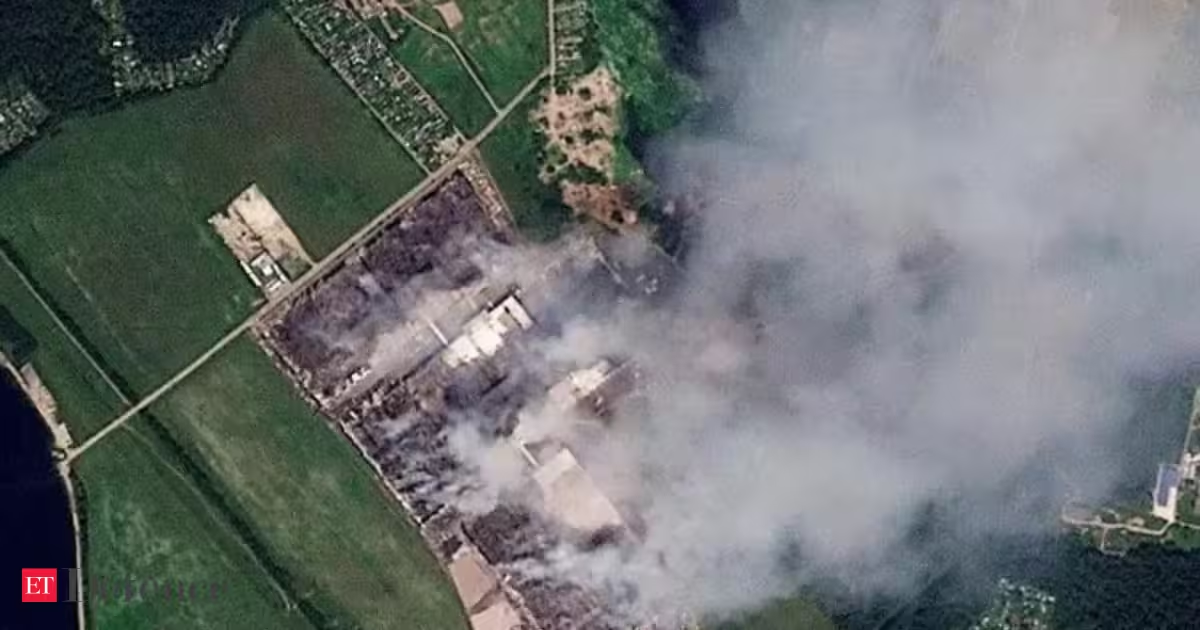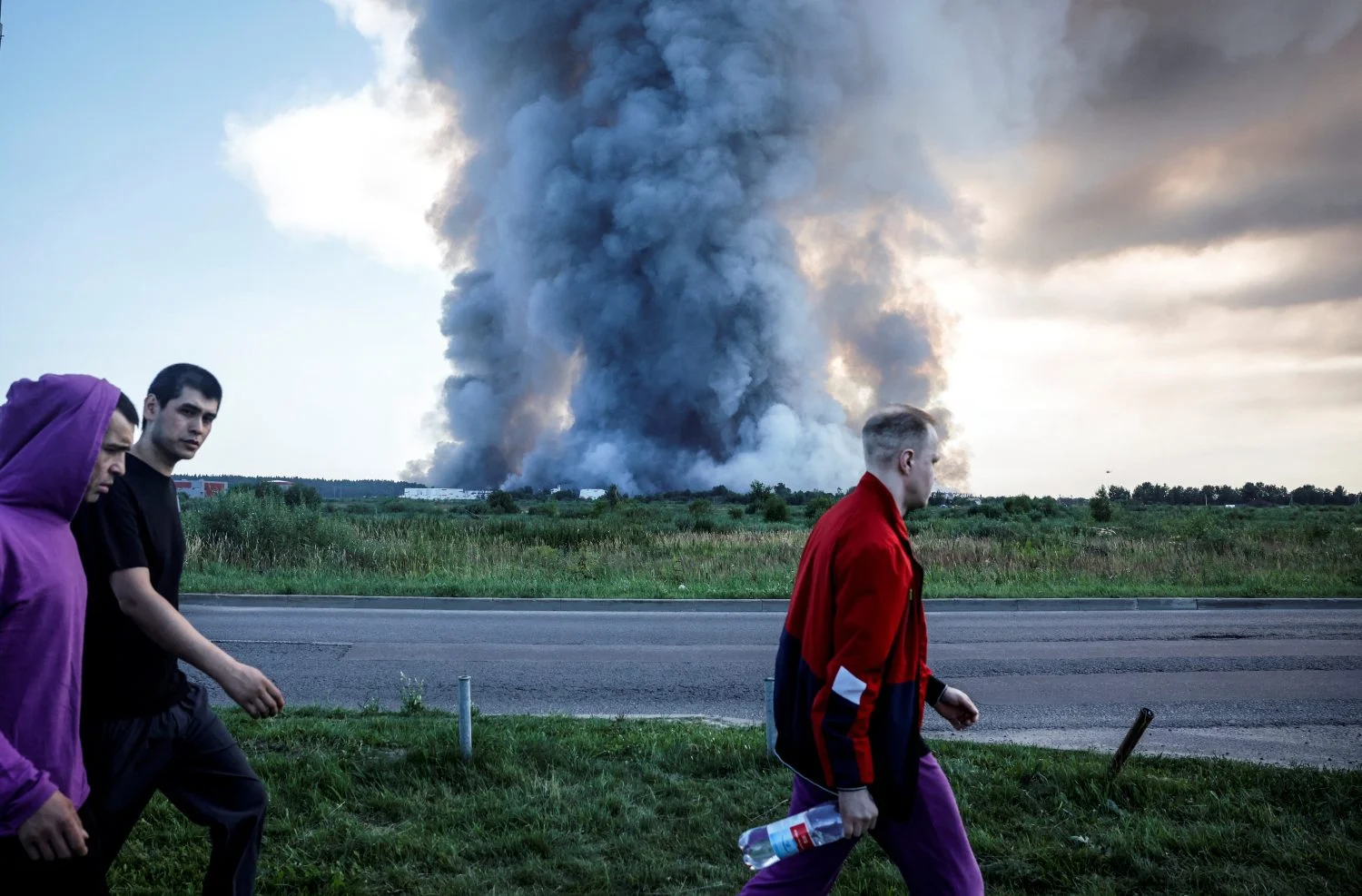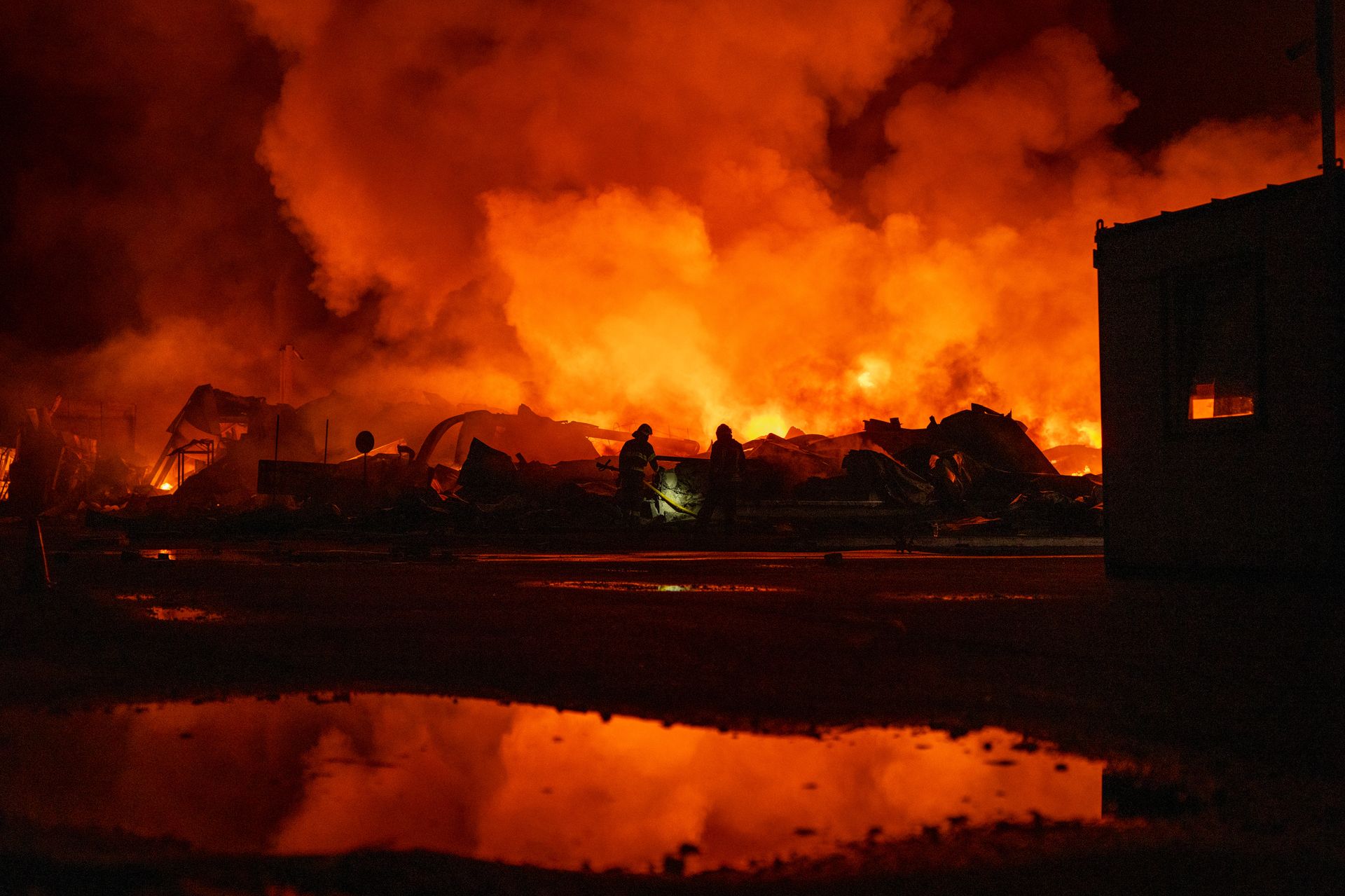
Firefighters put out a fire after Russian missiles hit a warehouse in Kyiv, Ukraine, on Aug. 5, 2026. (Dan Bashakov / AP)
Ukraine Business Roundup
Walk through a supermarket in Kyiv, and you will find rows of empty shelves. Drive your car to a gas station in Kharkiv, and a Russian drone may have gotten there first. Across Ukraine, packages are at risk of being turned to ash as Russian missiles pummel post offices. Once bustling ports sit empty, as ships stay clear of Ukraine.As Ukraine captures global attention with dramatic strikes on Russia’s oil infrastructure and e-commerce giants Wildberries and Ozon, Russia has unleashed its most devastating campaign yet against Ukraine’s economic infrastructure.Over the last few months, Moscow’s relentless bombardment has torn apart postal services, supermarkets, factories, warehouses, gas stations, ports, civilian vessels, and railway infrastructure.As a result, ships are no longer docking in Black Sea ports, slashing Ukraine’s exports. Retailers are laying off staff, mining companies have shut operations, and there are growing fuel shortages in southern and eastern regions. The short- and long-term consequences look bleak, with the National Bank estimating it could cost Ukraine 0.9% of gross domestic product (GDP) this year.Flames rise on a gas station following a Russian UAV attack in Kharkiv, Ukraine, on July 3, 2026. (Serhii Masin / Anadolu via Getty Images)"Russia is using more and more drones and missiles to hurt Ukraine’s economy, to make it weaker, and psychologically push the population towards peace talks," Oleksandra Betliy, leading research fellow at the Institute for Economic Research and Policy Consulting, told the Kyiv Independent. And Russia currently has more drones and missiles than in previous years, meaning attacks are likely to continue, Betliy said."The Russians have no other answer but to escalate even further. They are utilizing everything they have except nukes," Bogdan Kostetskyi, an operating partner at consulting service Barva Invest that provides insights into how the war is impacting Ukraine’s agricultural trade, told the Kyiv Independent."It’s like a fight without rules. Unfortunately, this is the new normal," he added.As blows intensify, Ukraine is desperately seeking ways to keep its economy afloat. While Kyiv’s strikes are alarming the Kremlin and inhibiting its war machine, Russia’s multi-trillion-dollar economy is unlikely to collapse any time soon, Konstantin Sonin, an exiled Russian economist and professor at the University of Chicago Harris School of Public Policy, told the Kyiv Independent.Ukraine, with a much smaller and weaker economy, is reaching out to international partners for support, while expanding financial programs to support affected businesses. But many companies are still having to adapt to Russia’s attacks at their own expense.Agents of chaosRussia launched a record 389 missiles at Ukraine last month, taking advantage of Ukraine’s Patriot air defense shortage. For comparison, Russia fired 244 missiles in July 2025. In May this year, Moscow launched 8,150 drones, more than double the 4,003 drones launched in May last year.The attacks are costing war-damaged cities. In Kyiv alone, which has suffered several major strikes and numerous smaller attacks over the summer, each ballistic missile strike costs the city Hr 300-500 million ($7-12 million) to repair shelters and homes, the head of the Kyiv City State Administration, Petro Panteleev, told Ukrainian media, Liga.