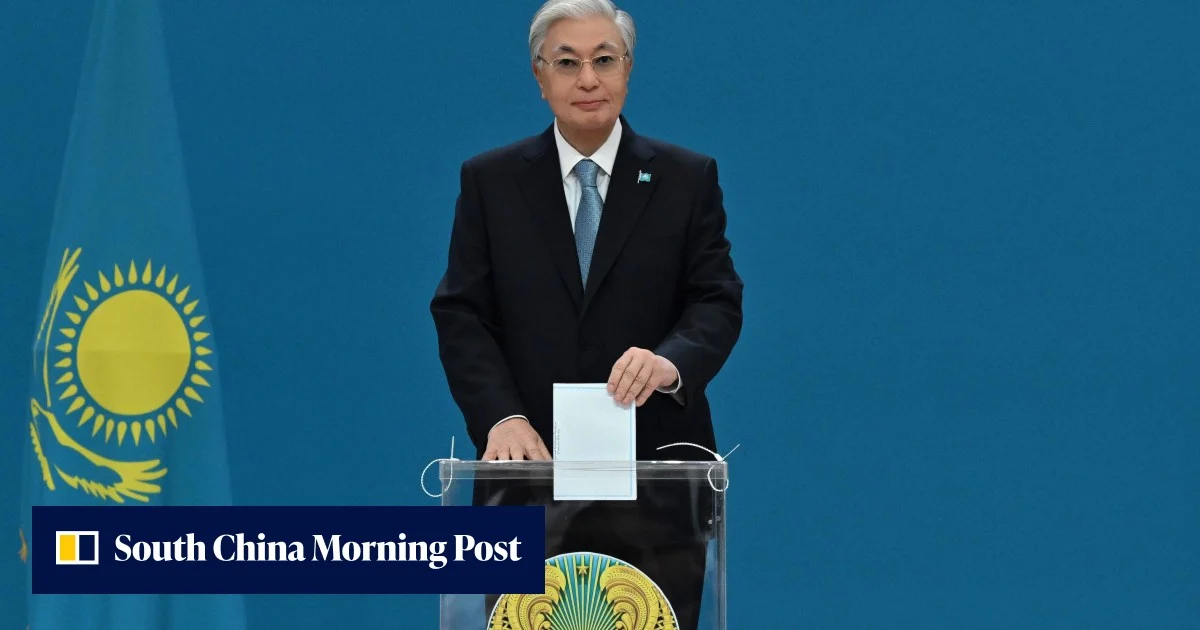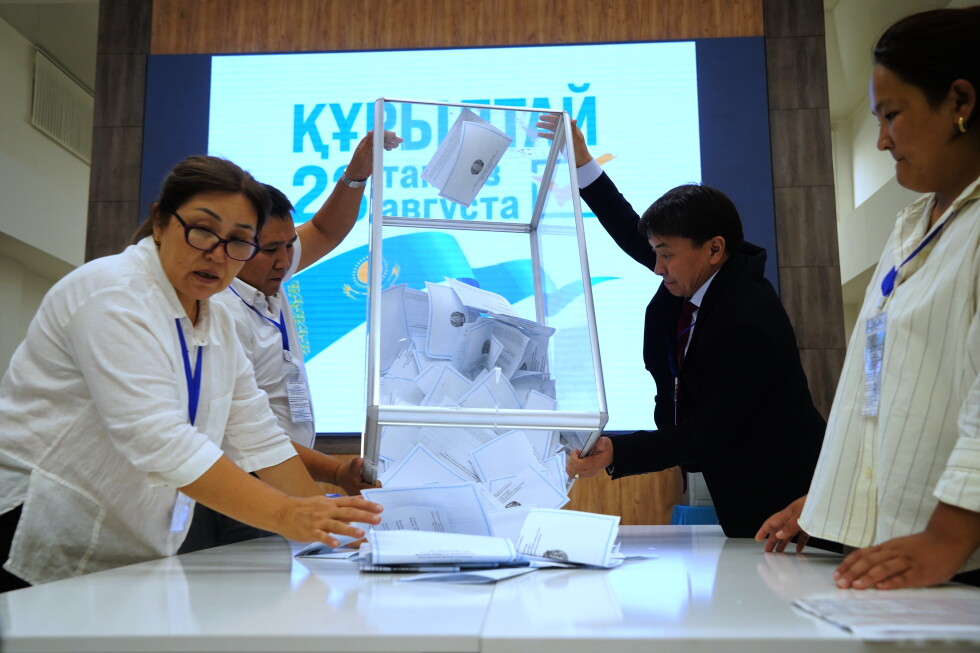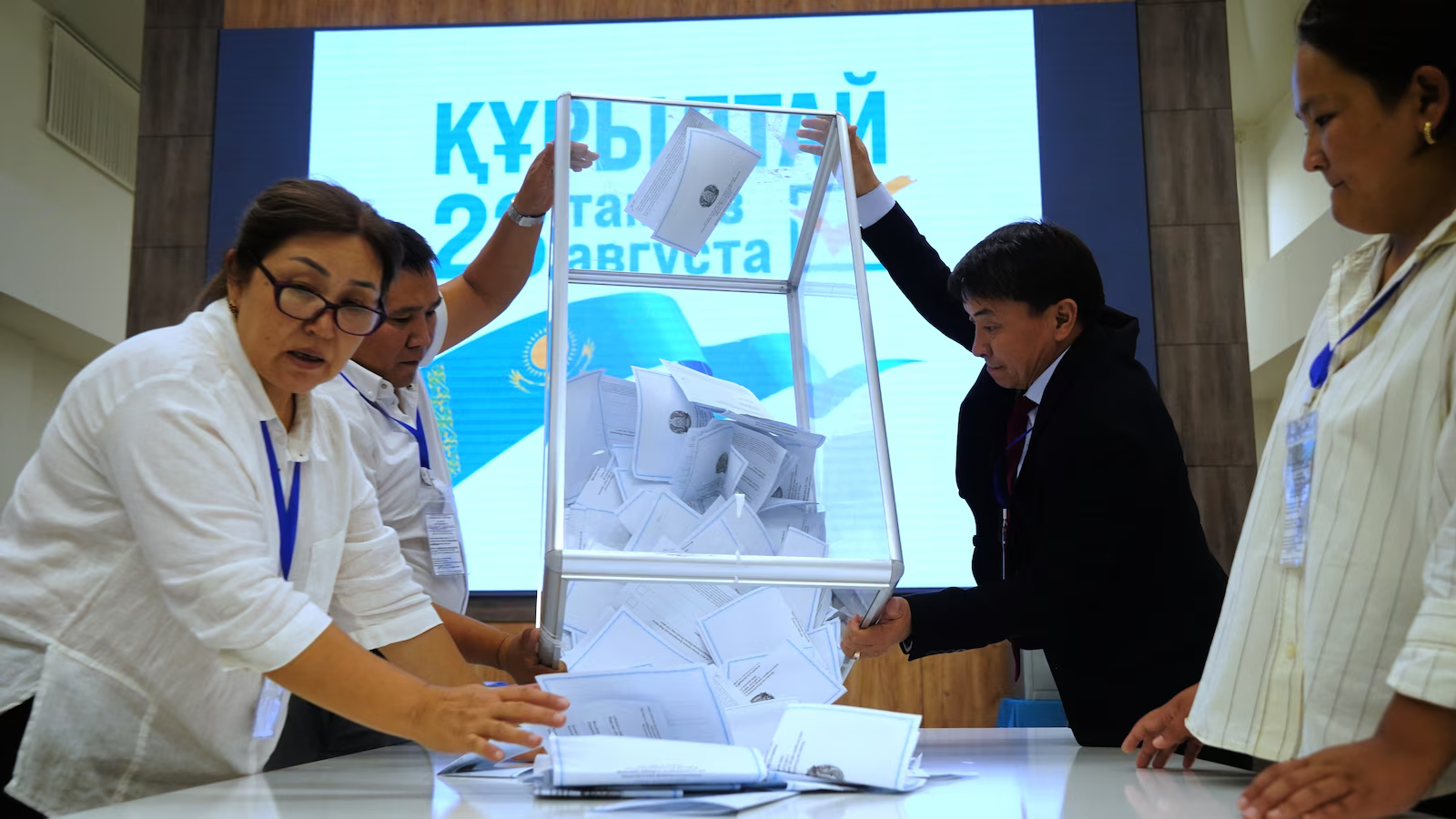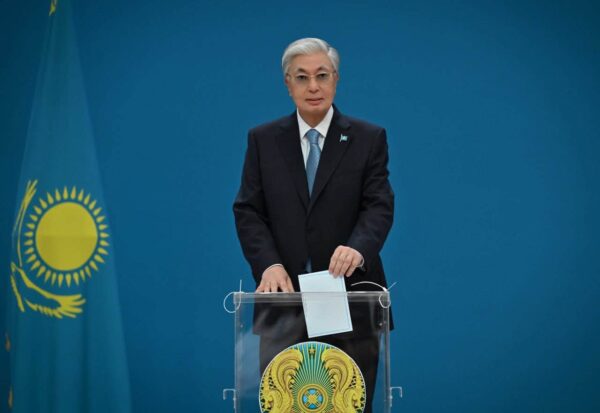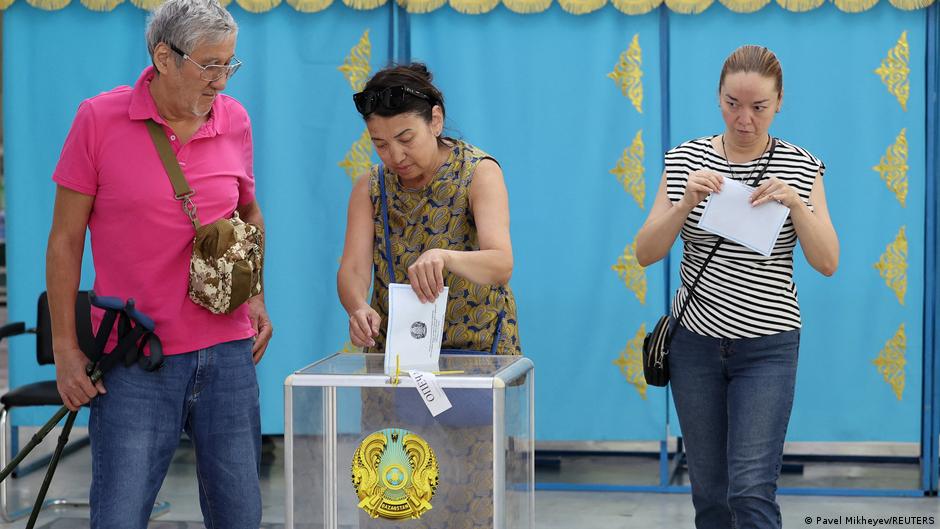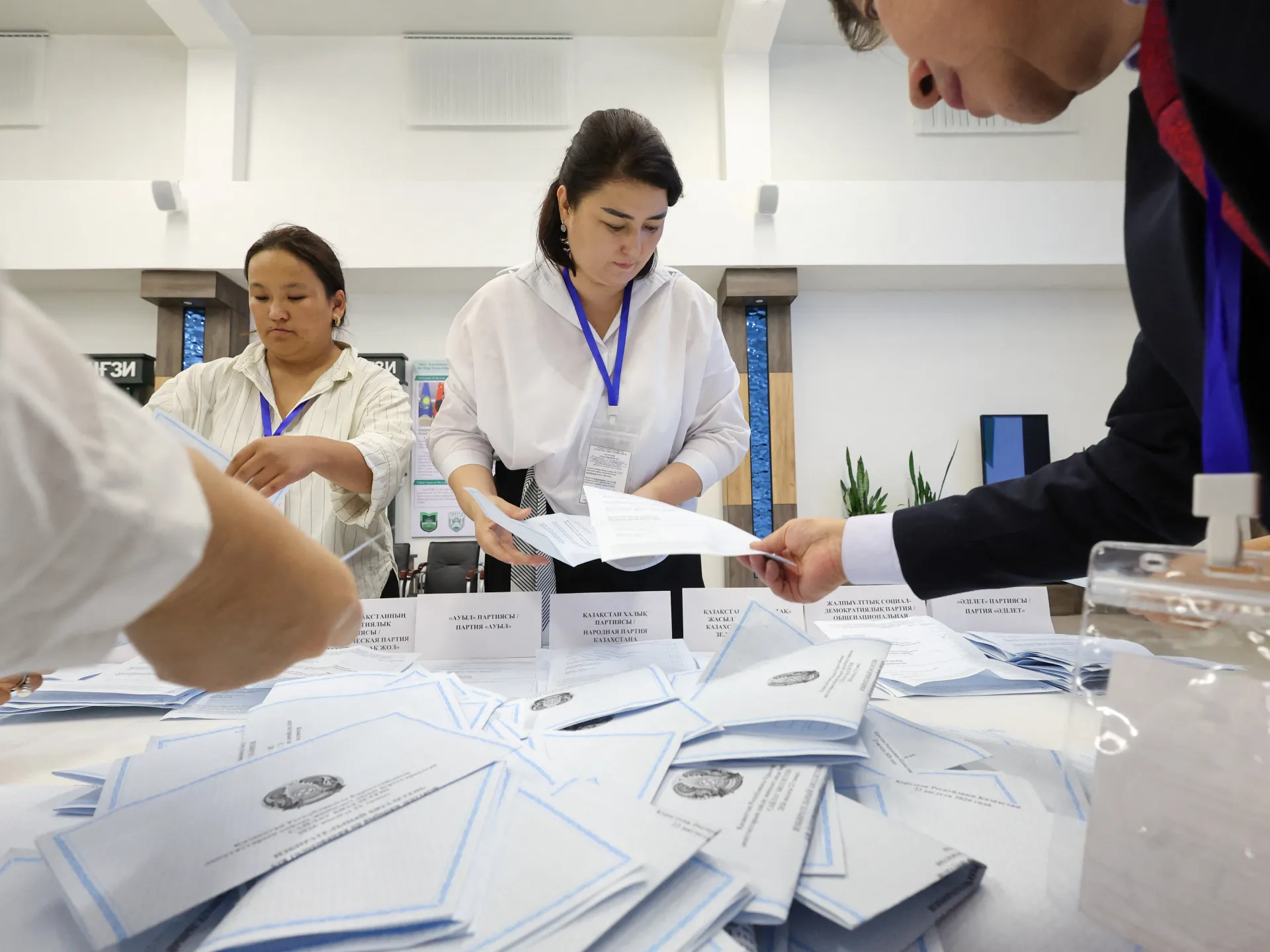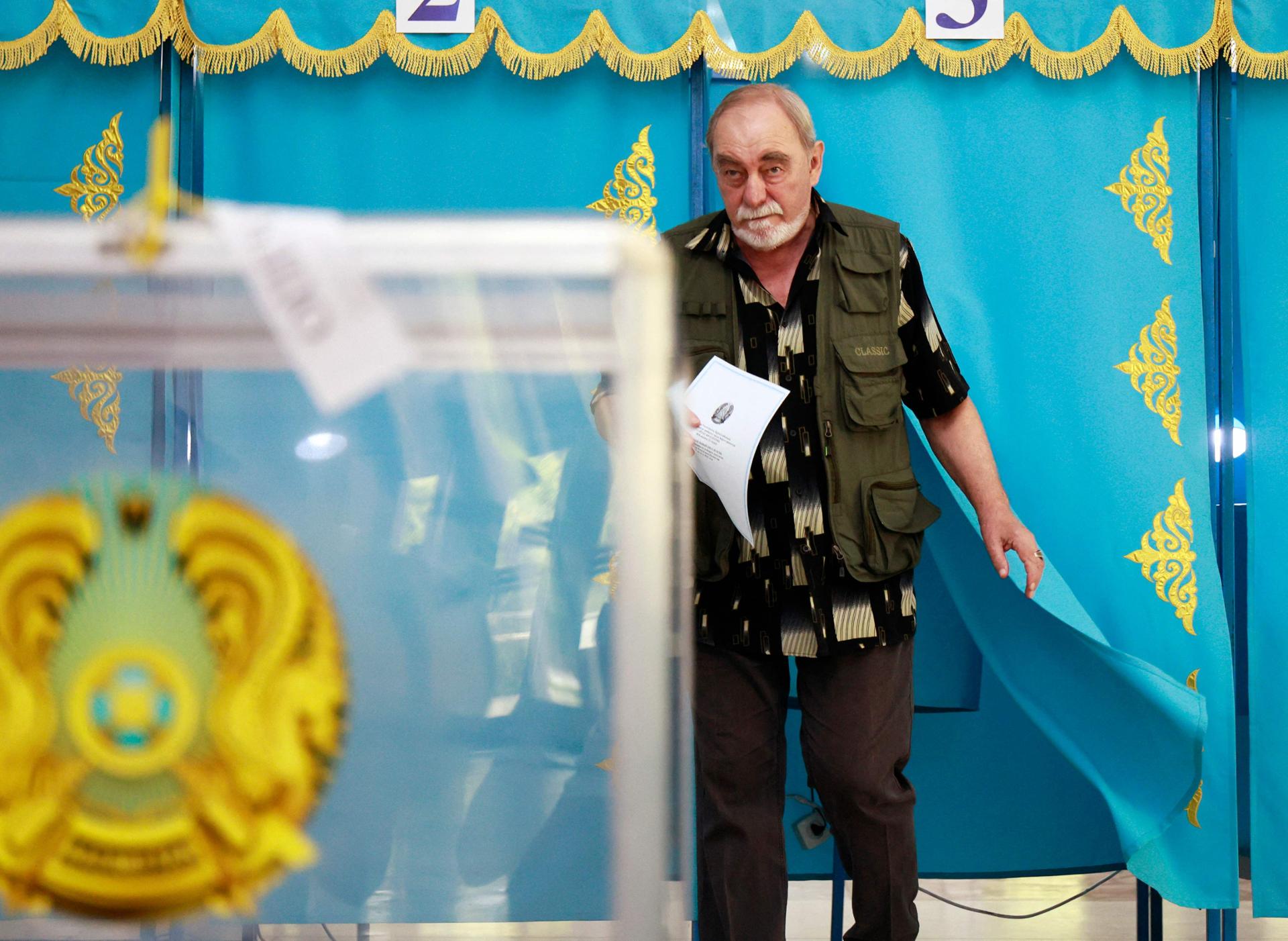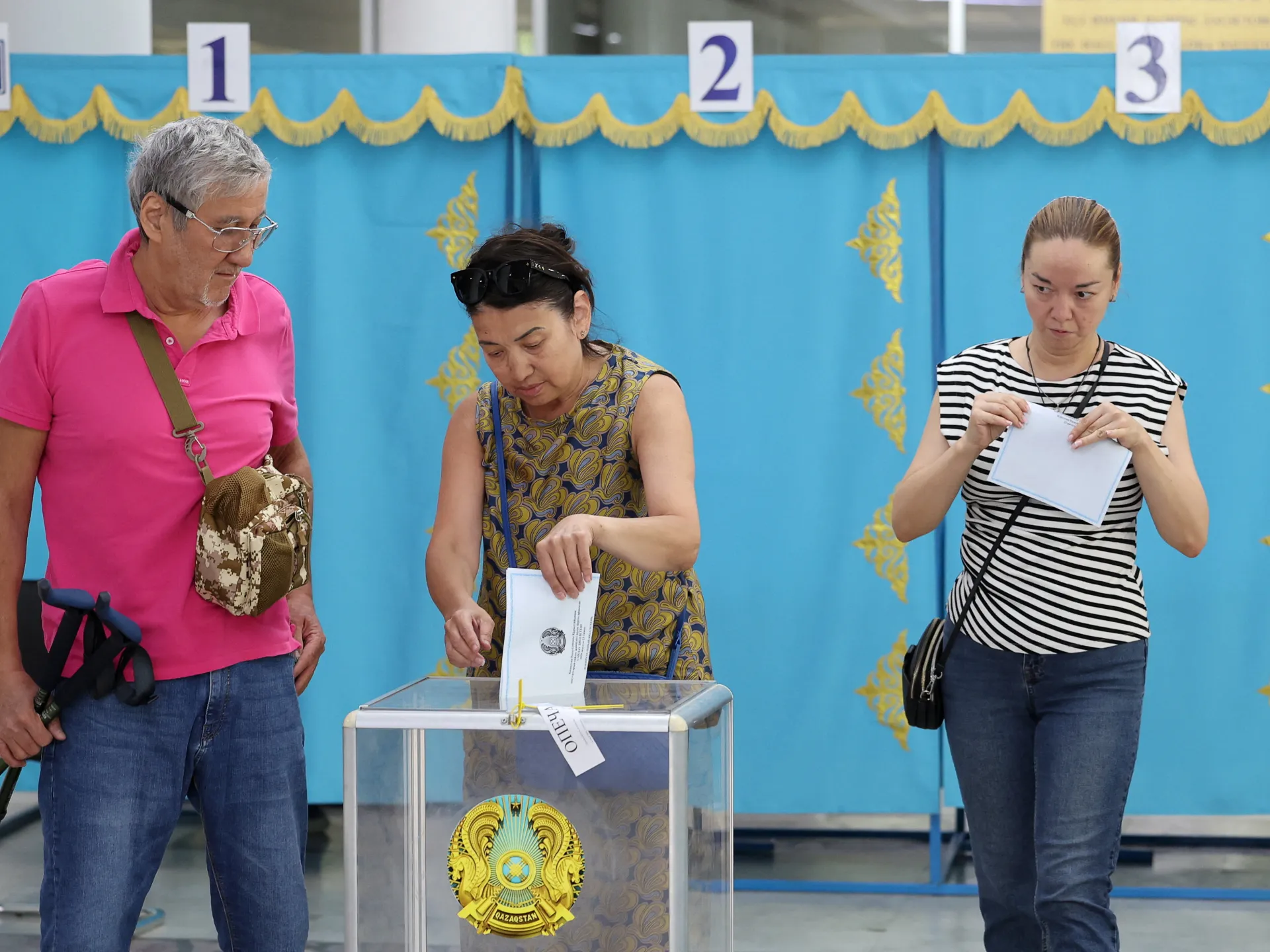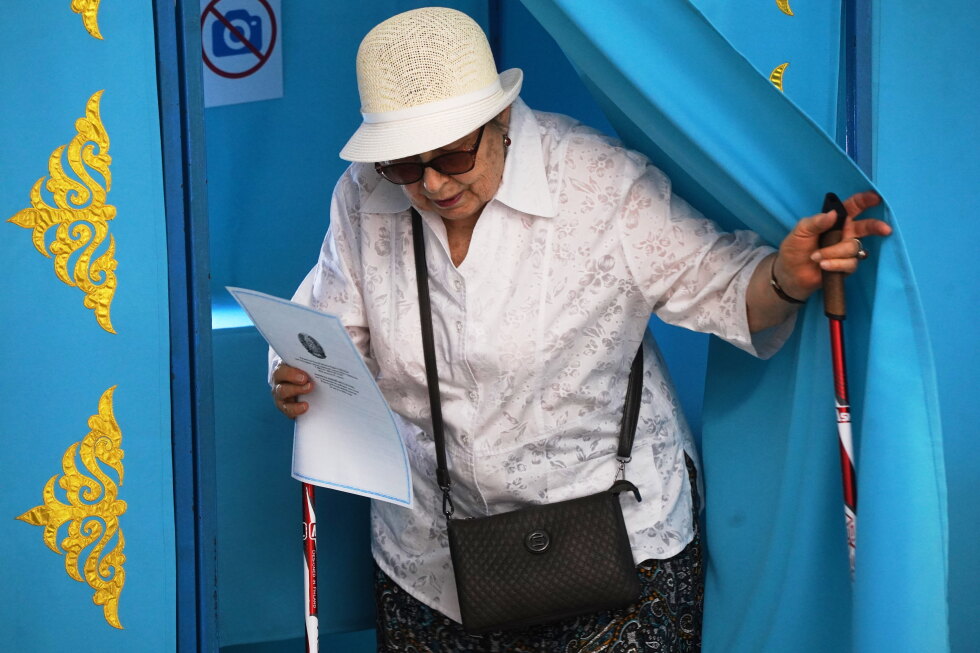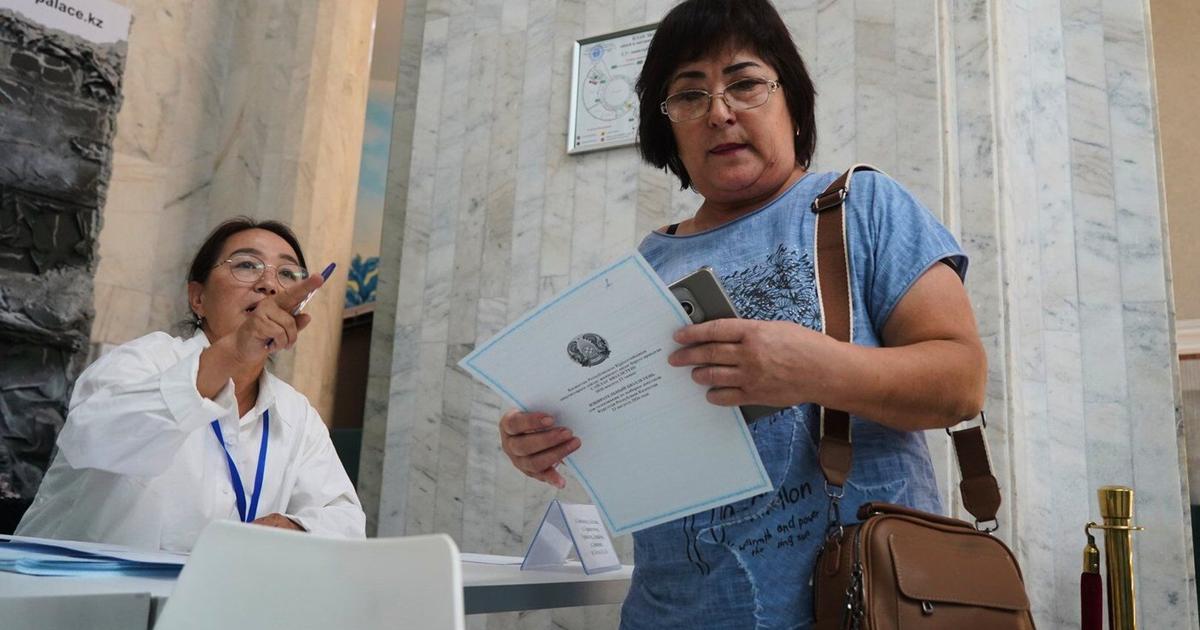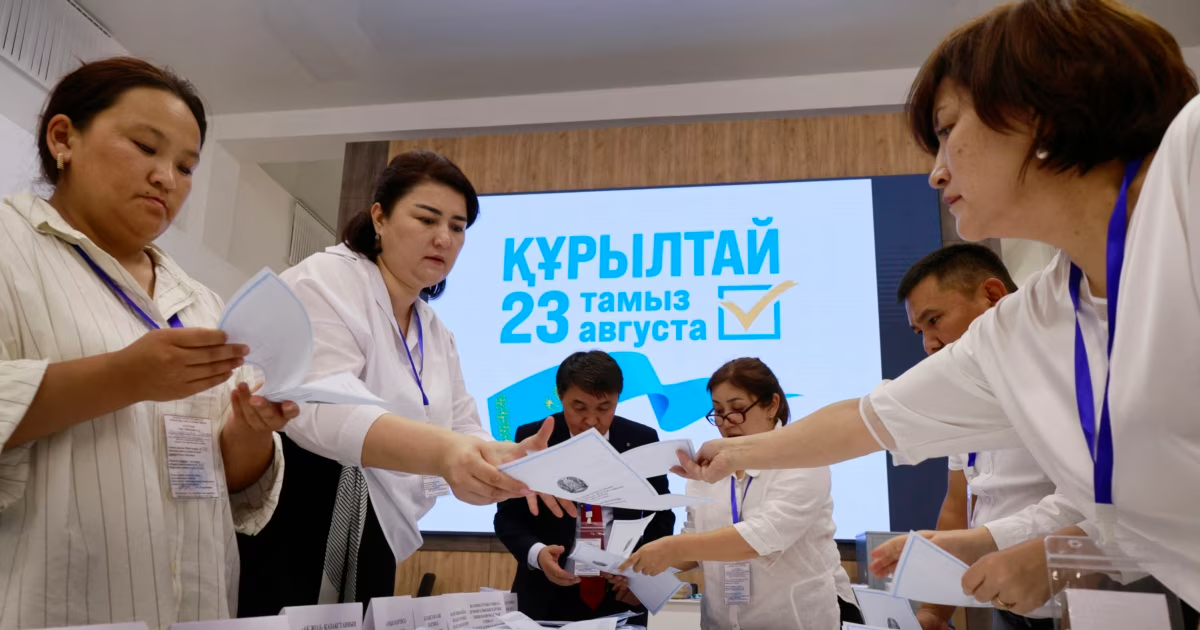
Four months ago, the Adilet party did not exist.Today, it dominates Kazakhstan’s political landscape, following an election in which it gained 71.17 percent of the vote according to results announced on August 24.The vote marks a further tightening of President Qasym-Zhomart Toqaev's grip on power -- and was roundly criticized by international election observers from the Organization for Security and Cooperation in Europe (OSCE).“The 23 August early parliamentary elections, while technically well prepared, took place in an environment lacking political pluralism. Political choice was reduced by the lack of distinct political alternatives, with all contesting parties supporting the incumbent President’s policies,” an OSCE statement said.In the August 24 statement, issued a day after the vote itself, the OSCE reported misuse of public resources, including public-sector employees being mobilized to attend campaign events, and concluded that Adilet had "an undue advantage that blurred the line between state and party.”The OSCE noted that independent candidates had been excluded from the election, a factor which “limited political participation and electoral competitiveness.”Observers also cast doubt on the results themselves, stating that discrepancies between what they saw at polling stations and official turnout data “raised questions about the integrity of the voter turnout reporting and the counting process.”OSCE missions have made similar criticisms of all previous elections held in Kazakhstan since it became independent after the fall of the Soviet Union in 1991, noting a lack of genuine political competition in an authoritarian country dominated for decades by presidents Nursultan Nazarbaev (1991-2019) and his successor, Toqaev.
Election Observers Say Kazakh President's Party Had 'Undue Advantage' As It Grabs 70 Percent Of Vote
A party formed just four months ago has swept Kazakhstan’s parliamentary election, tightening President Qasym-Zhomart Toqaev’s grip on power amid international criticism over a lack of political competition, media pressure, and questions about the vote count.
496 words~2 min read