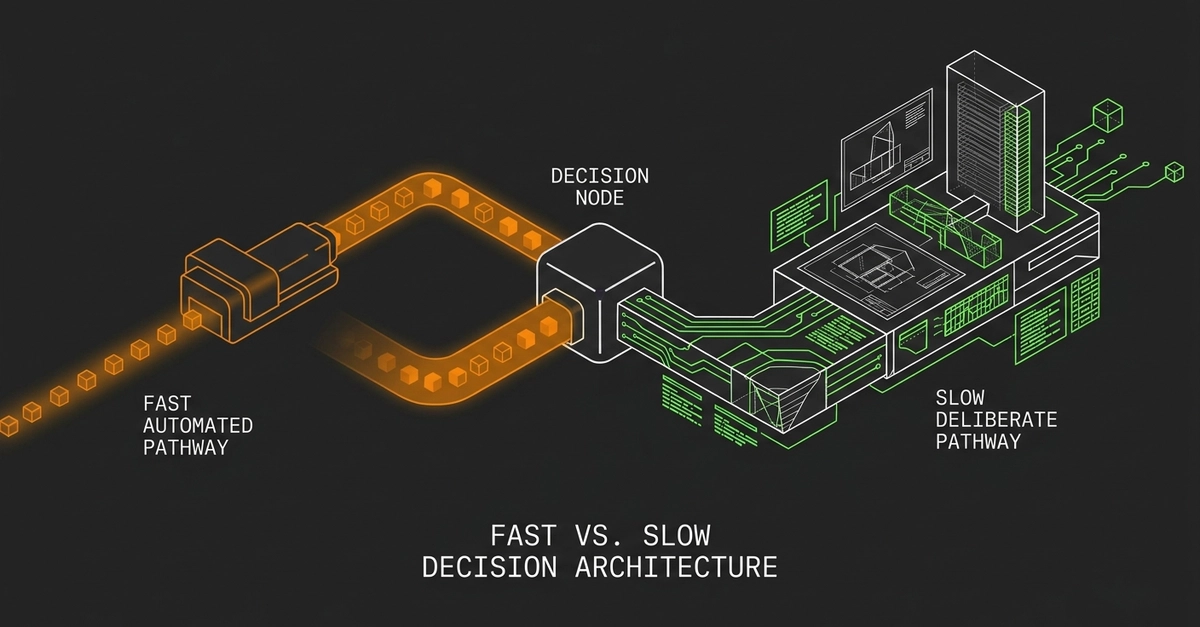
AI is shifting the software engineering landscape by taking over "fast decisions"—the automatic, high-context but low-complexity tasks like running tests and catching syntax errors. This frees up developers to focus entirely on "slow decisions" like system architecture, API boundaries, and product design.
I’ve been thinking a lot about the book Thinking, Fast and Slow lately. The core point of the book is that your brain operates in two distinct modes. When you're walking down the street, your brain is in a fast, automatic mode. You're navigating around other people on autopilot, making decisions without even realizing you're making them. But then you have slow decisions—like choosing which barbecue to buy for your garden. That takes deliberate, conscious thought.
When I think about how we interact with AI, this is exactly where I see things heading. AI is starting to pick up the fast, automatic decisions we make in our day-to-day engineering jobs, and that is going to fundamentally change how we spend our time.
How does Kahneman’s theory apply to writing code?
In software engineering, fast decisions are the low-friction, repetitive tasks we execute on autopilot, like running a test suite or fixing a syntax error. Slow decisions are the deliberate, strategic choices, like architecting a system or deciding on a test coverage strategy. AI is stepping in to run the fast decisions so we can focus entirely on the slow ones.