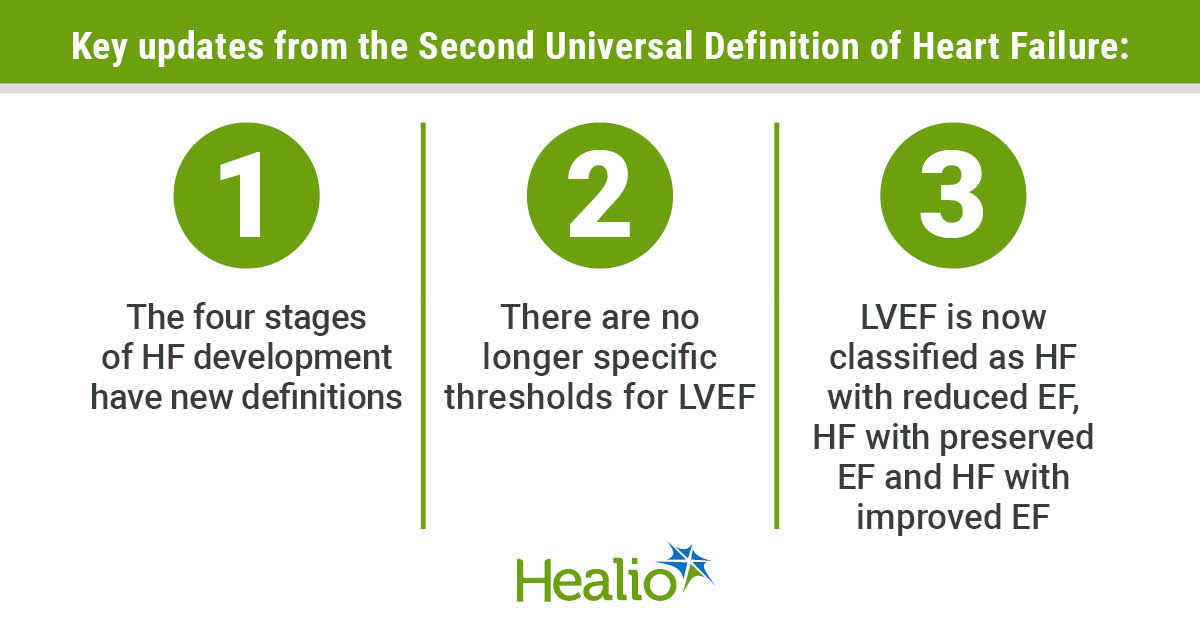
Leading cardiology organizations around the world are having a change of heart.Just five years after the first universal definition of heart failure was published, they are proposing a big update.Experts from the American Heart Association, the World Heart Federation, the American College of Cardiology, and the European Society of Cardiology have now put forward a new understanding of heart failure to the international community.Their consensus document, published in Circulation, argues that a 'normal' measure of the heart's pumping ability may not rule out heart failure after all.What's more, figuring out the true underlying cause could reveal opportunities for prevention, treatment, and even remission."I think the definitions are really, really important to patients," co-chair of the consensus document, cardiologist Mary Norine Walsh, told Circulation in an accompanying podcast.The updated definition of heart failure, she and her co-authors argue in their review, "provides a clearer, more consistent framework" for physicians and patients alike.Heart failure isn't a rigid or simple condition, the cardiologists explain; it is malleable and presents very differently from person to person.Technically, heart failure is a clinical condition caused by a structural or functional abnormality that impairs the heart's ability to pump or fill with blood.It is the world's leading cause of hospitalization, impacting more than 55 million people.Despite this enormous burden, however, the way that heart failure is defined and classified has varied widely among countries and medical organizations."Lack of awareness about heart failure has recurrently been identified as a major stumbling block for patients… and their families, communities at large, healthcare workers at all levels of care, and policymakers," reads the World Heart Federation website.The new international consensus is the second attempt in five years to get us all on the same page.It argues that current definitions rely too heavily on a single measurement to define heart failure.This measurement is called the 'ejection fraction' (EF), and it records the percentage of blood pumped out of the heart with each beat.
Cardiologists Just Changed The Universal Definition of Heart Failure
Leading cardiology organizations around the world are having a change of heart.
874 words~4 min read