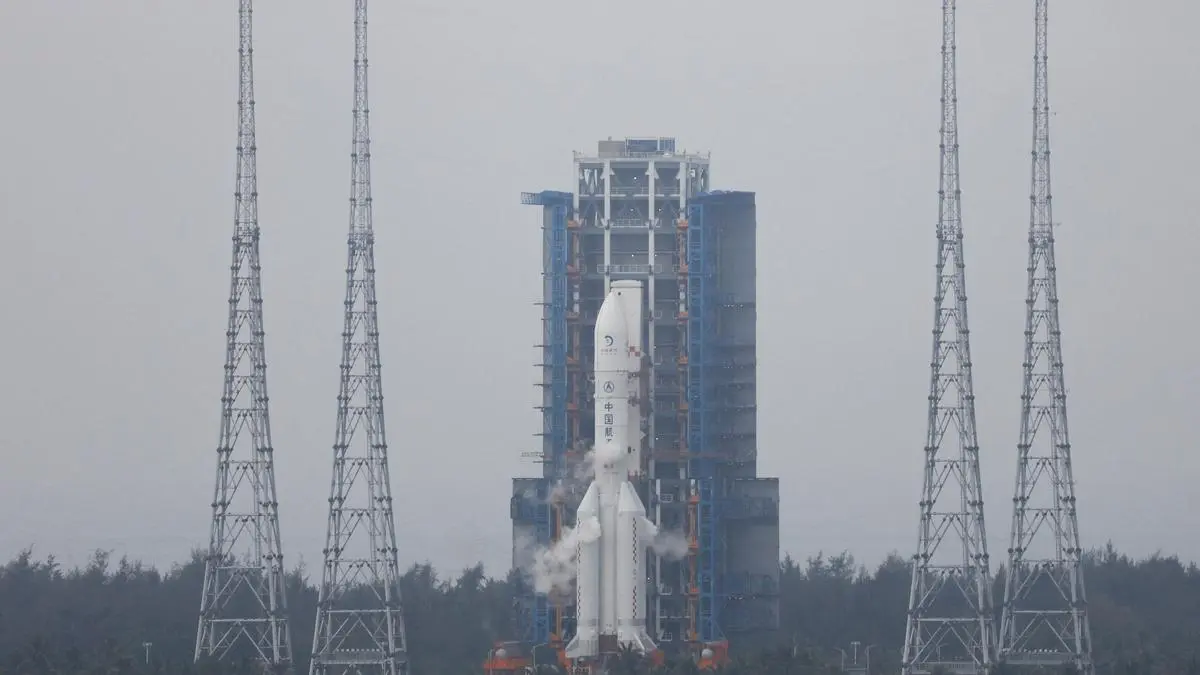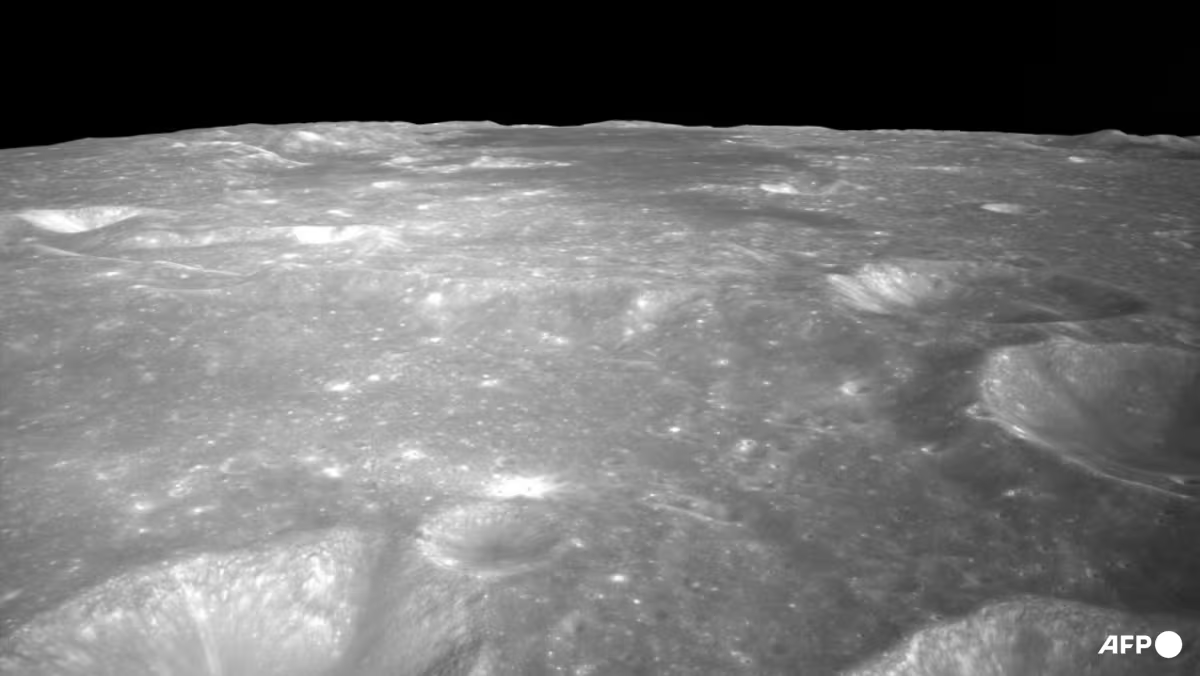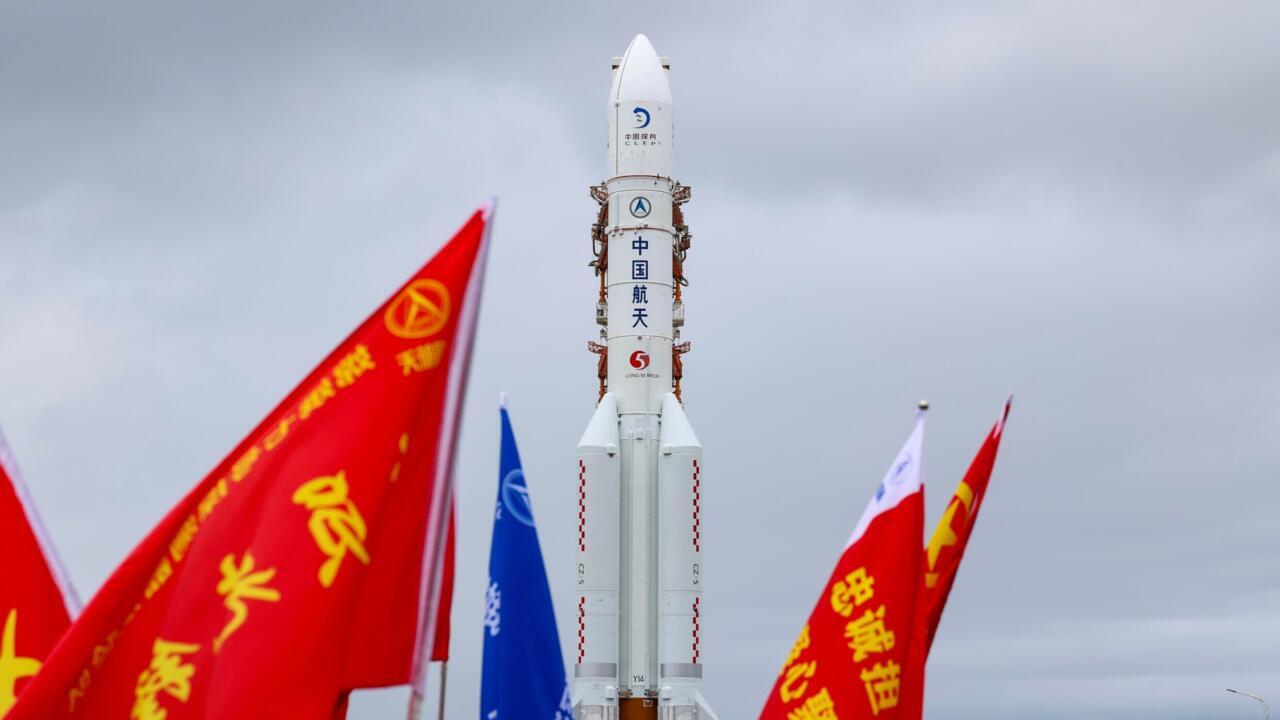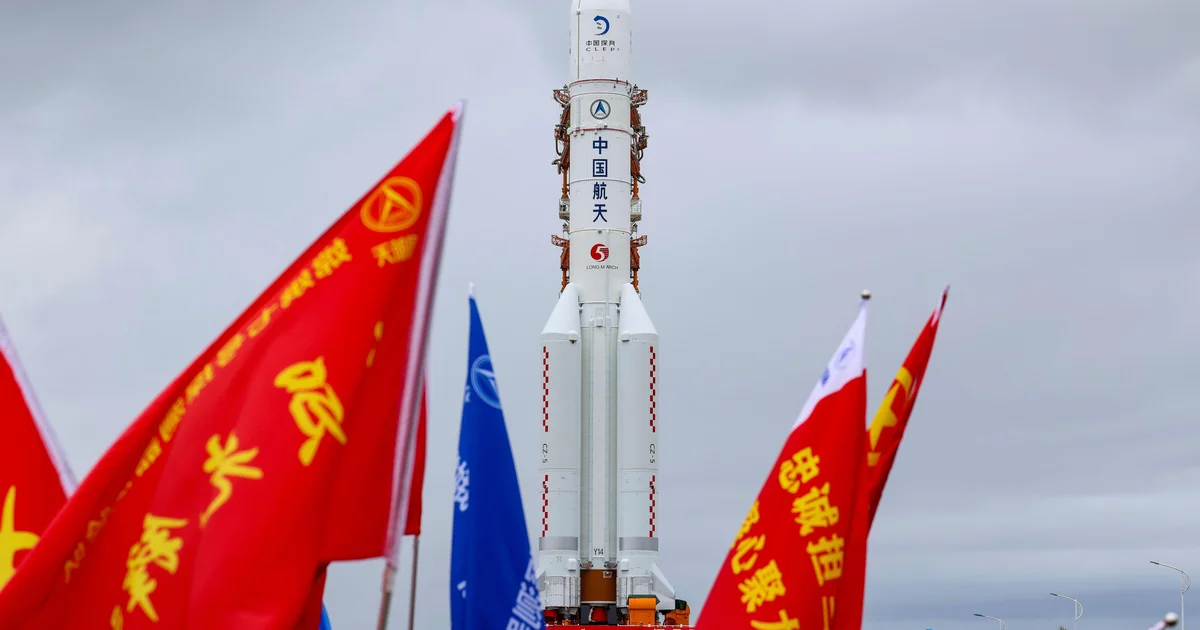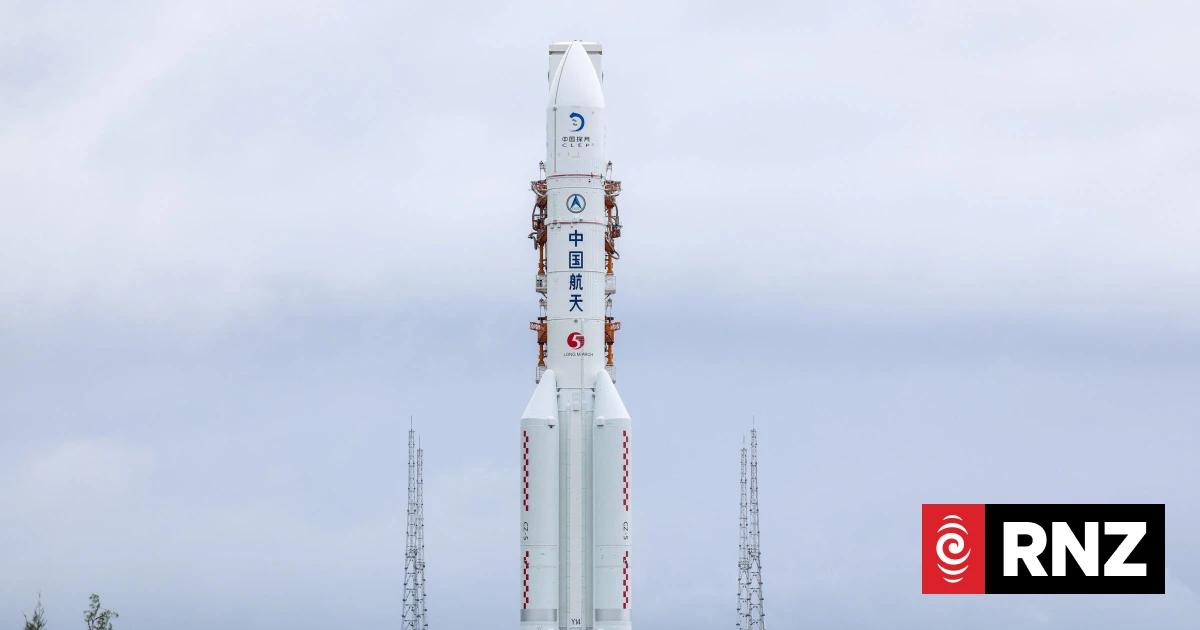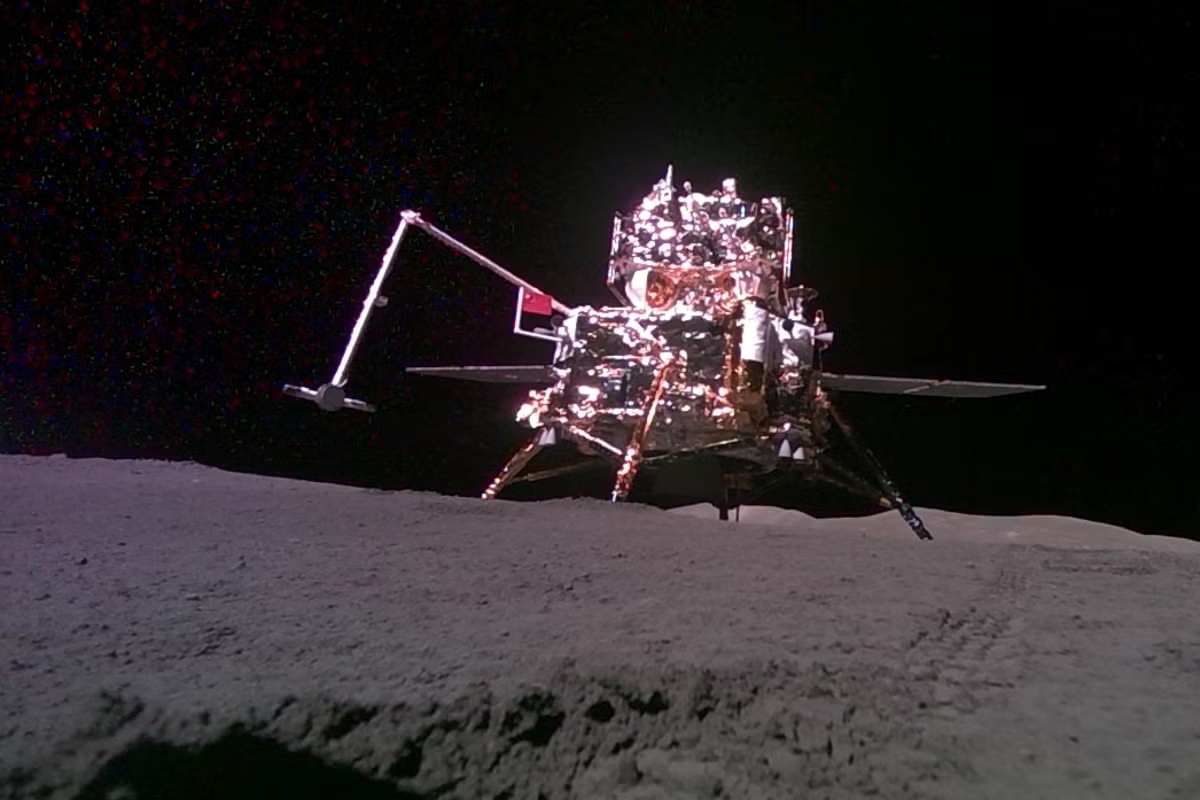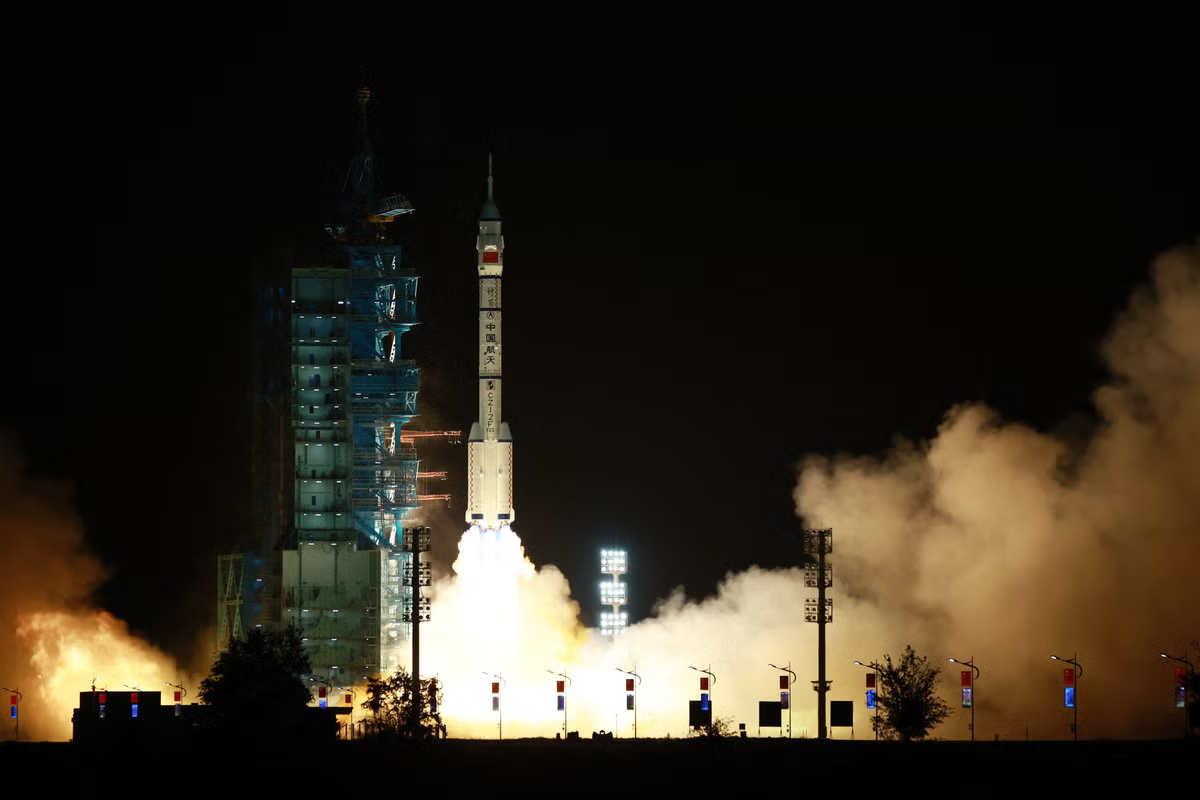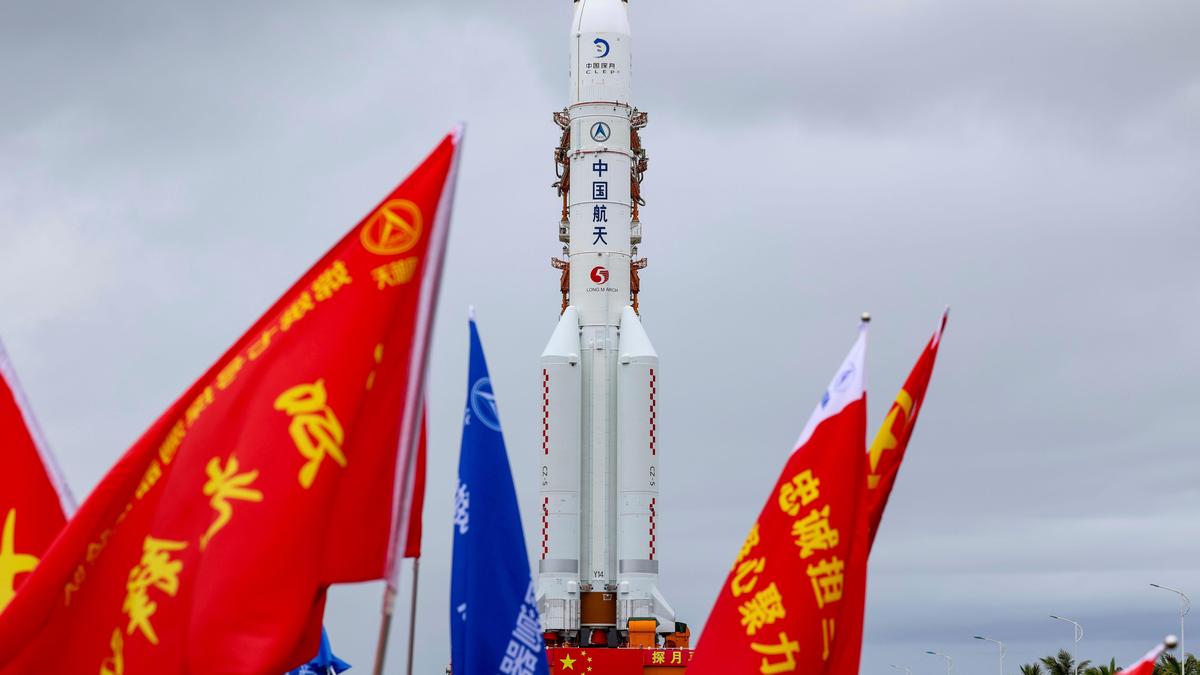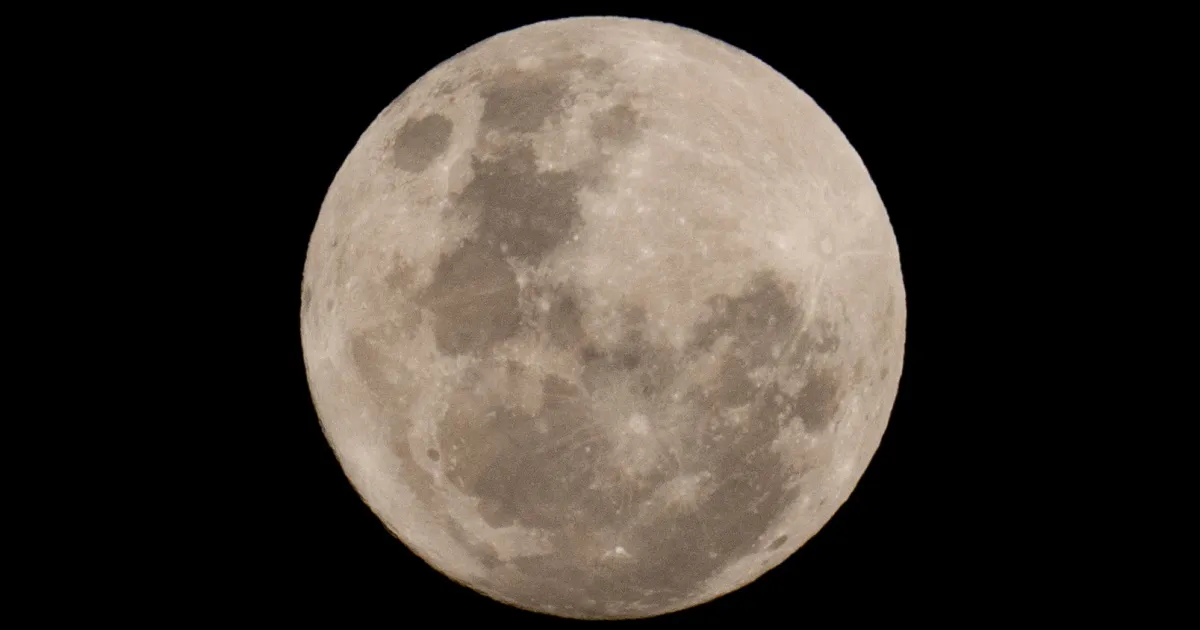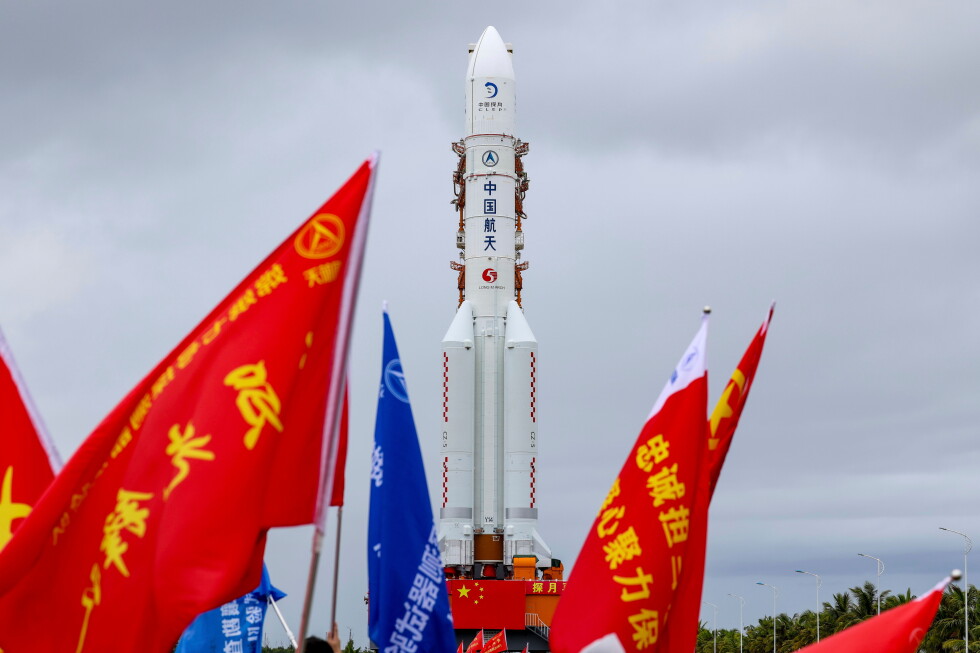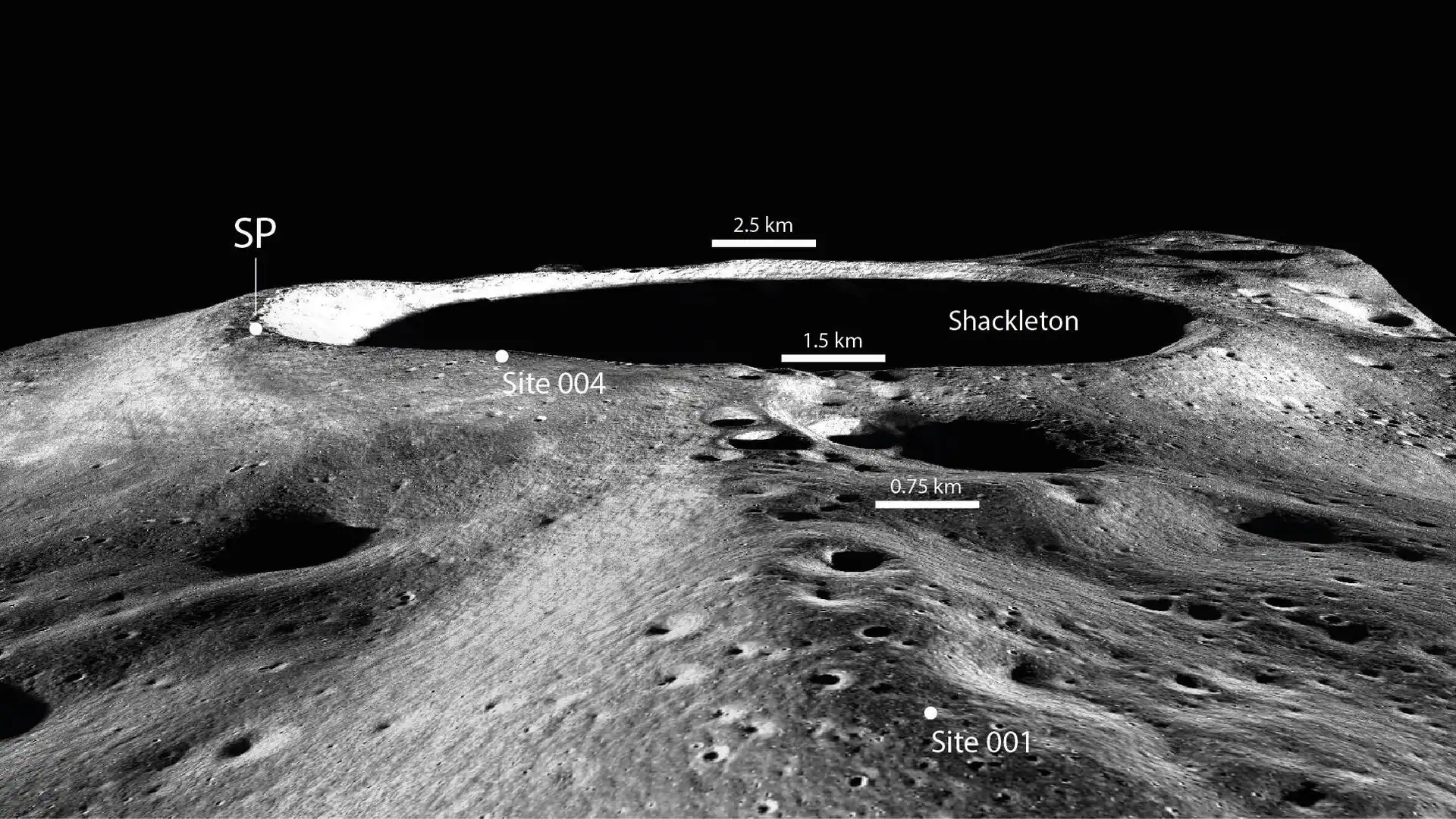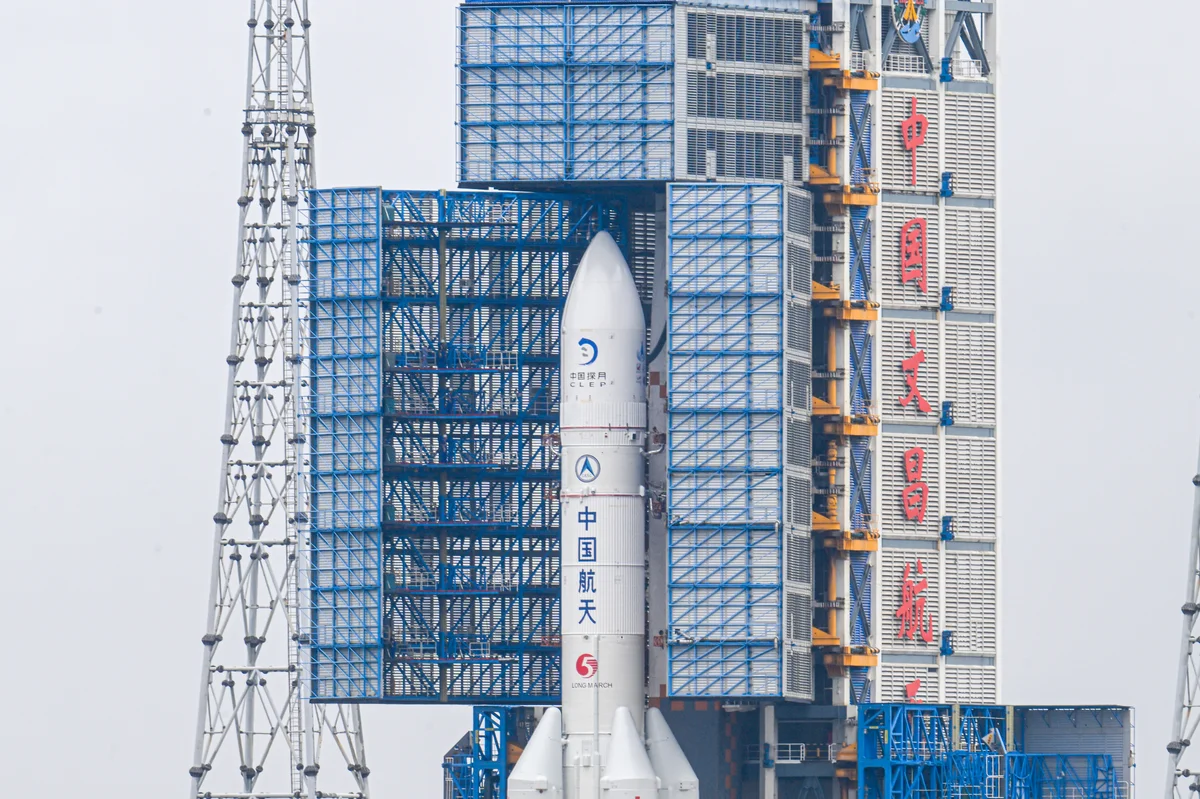
August 24, 20262 min read Add Us On GoogleAdd SciAmThe search for frozen water is crucial to both China and NASA's plans to establish permanent moon basesBy Adam Kovac edited by Claire CameronThe combination of the Chang'e-7 lunar probe and the Long March-5 Y14 carrier rocket is transferred vertically to the launching area at the Wenchang Spacecraft Launch Site on August 19, 2026 in Wenchang, Hainan Province of China. Photo by VCG/VCG via Getty ImagesJoin Our Community of Science Lovers!China's lunar ambitions have taken a hit after the country called off the launch of a spacecraft aimed to be the first to ever land on the moon’s south pole.Chang’e 7 was supposed to launch aboard a Long March 5 rocket on August 24, but the launch was scrubbed on Sunday evening due to poor weather conditions, China’s Manned Space Agency (CMSA) said in a statement. As a result, the mission will be put on ice until at least 2027, the CMSA said.The decision to delay the mission was reached after extensive review, the CMSA said, and reflects the need for “absolute safety” according to the space agency.On supporting science journalismIf you're enjoying this article, consider supporting our award-winning journalism by subscribing. By purchasing a subscription you are helping to ensure the future of impactful stories about the discoveries and ideas shaping our world today.China and the U.S. are in a race to send humans back to the moon, a feat that that U.S. accomplished in the 1960s and which has never been achieved by any other country. Chang’e 7 is to play to a crucial part in China's ambitions: The probe is designed to search for frozen water in the Shackleton Crater, a pit that spans some 21 kilometers (13 miles) and sits beside the lunar south pole.No spacecraft has ever landed in that region, which scientists consider to be among the likeliest places to find water on the moon. Locating water that can be used by humans is vital to establishing any long-term lunar presence. NASA and China are eyeing the region to establish a crewed base—and because this real estate is so precious, it matters who gets their first.NASA plans to establish a lunar colony by 2036, while China hopes to begin construction of the International Lunar Research Station in collaboration with Russia in 2031. The CMSA has stated it aims to put humans on the surface no later than 2030, while NASA’s Artemis IV mission to land humans on the moon for the first time in more than half a century is tentatively scheduled for early 2028.It’s Time to Stand Up for ScienceIf you enjoyed this article, I’d like to ask for your support. Scientific American has served as an advocate for science and industry for 180 years, and right now may be the most critical moment in that two-century history.SciAm always educates and delights me, and inspires a sense of awe for our vast, beautiful universe. I hope it does that for you, too.If you subscribe to Scientific American, you help ensure that our coverage is centered on meaningful research and discovery; that we have the resources to report on the decisions that threaten labs across the U.S.; and that we support both budding and working scientists at a time when the value of science itself too often goes unrecognized.In return, you get essential news, captivating podcasts, brilliant infographics, can't-miss newsletters, must-watch videos, challenging games, and the science world's best writing and reporting. You can even gift someone a subscription.There has never been a more important time for us to stand up and show why science matters. I hope you’ll support us in that mission.
China delays ambitious Chang'e 7 mission to find water on the moon until 2027
The search for frozen water is crucial to both China and NASA's plans to establish permanent moon bases
609 words~3 min read