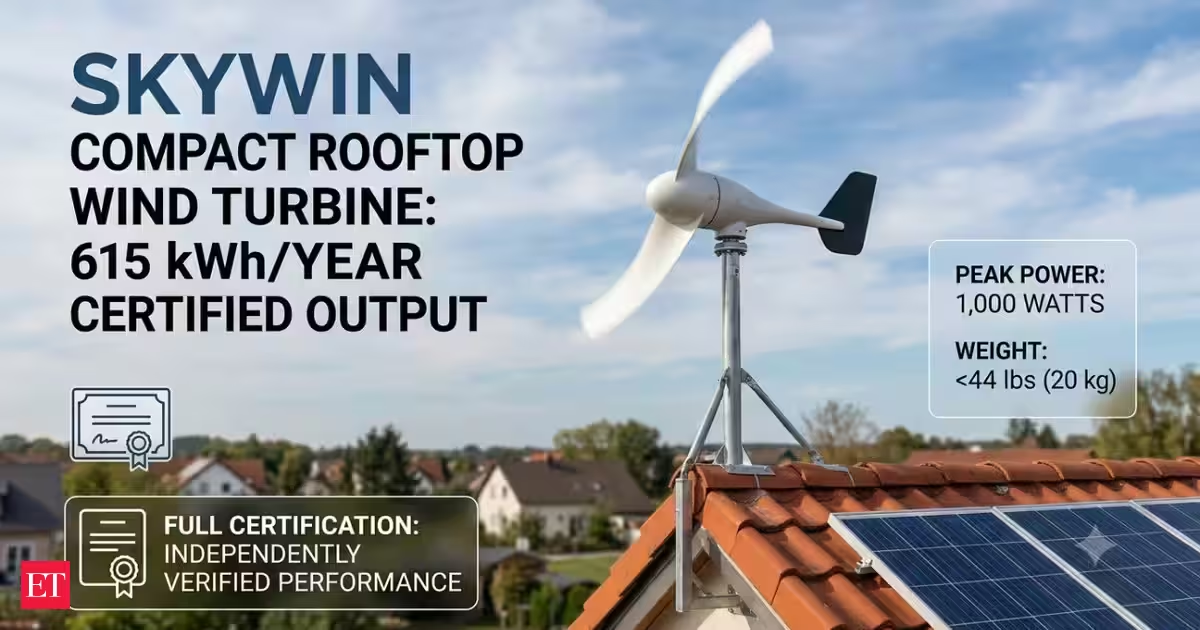
In 2009, German startup SkyWind first showed its rooftop micro turbine design. 17 years later, the machine has secured certification, with Utah testing verifying roughly 615 kWh of electricity per yearSynopsisSkyWind's rooftop wind turbine has secured full certification after two years of testing. This compact machine produces about 1,000 watts of peak power annually. The turbine is small enough for a rooftop and weighs less than 44 pounds. Its certified output is around 615 kilowatt hours per year.Rooftop wind turbine (Photo: AI/Gemini)A rooftop wind turbine first shown by German company SkyWind in 2009 has now secured full certification after two years of testing in Utah, as per a report. The certification came from an independent small wind council and provides independently verified performance figures for the compact machine.The turbine can produce about 1,000 watts of peak power and around 615 kilowatt hours of electricity per year, as per The Pulse report. While that is a modest amount compared with the electricity needs of a typical home, it gives homeowners a clearer picture of what the small rooftop system can actually deliver.A wind turbine small enough for a rooftopThe machine is roughly the size of a satellite dish and weighs less than 44 pounds, making it light enough for one person to lift. It uses a single curved white blade balanced by a counterweight and can operate in light breezes. An onboard computer can brake and park the blade during storms.The turbine is supplied as a kit with a mast, a grid inverter for connecting it to a home's wiring and built-in storm protection.Why the output stays relatively lowThe amount of electricity a wind turbine generates depends on the area swept by its blades and the speed of the wind.You Might Also Like:SkyWind's five-foot blade covers a relatively small area. The air above a roof can also be slower and more turbulent than wind in an open area.Those limitations mean the turbine's annual output is measured in hundreds of kilowatt hours rather than thousands. Its certified figure is around 615 kWh per year.What the certification addsThe two-year Utah testing gives the turbine independently verified performance figures rather than relying solely on manufacturer claims.SkyWind says it has sold more than 10,000 units, while the design itself dates back to its first showing in 2009, as per The Pulse report. The certification therefore marks an important step for a machine designed to generate electricity from the relatively limited wind available around rooftops.You Might Also Like:Is 615 kWh enough to power a homeAround 615 kWh per year is roughly 6% of the electricity used by a typical American home. The turbine costs roughly €2,949, or about $3,450. Given the purchase price and annual output, the simple payback can stretch across decades.The figures show that the machine is not intended to replace a home's main electricity supply or quickly recover its purchase price through electricity savings.Where the turbine could fitA more realistic role is alongside solar panels and a battery.Solar panels do not produce electricity at night and can generate less when sunlight is limited. A wind turbine can generate electricity when wind conditions are suitable, including periods when solar production is low.You Might Also Like:That makes the SkyWind machine a supplementary source rather than a replacement for solar or a home's main power supply.Read More News on(Catch all the US News, UK News, Canada News, International Breaking News Events, and Latest News Updates on The Economic Times.) Download The Economic Times News App to get Daily International News Updates....moreless
In 2009, German startup SkyWind first showed its rooftop micro turbine design. 17 years later, the machine has secured certification, with Utah testing verifying roughly 615 kWh of electricity per year
German startup SkyWind's rooftop wind turbine, initially unveiled in 2009, has officially secured certification after extensive testing, showcasing its ability to produce around 615 kWh of electricity annually—enough to power 6% of a typical American home. Discover how this innovative design can complement solar energy.
585 words~3 min read