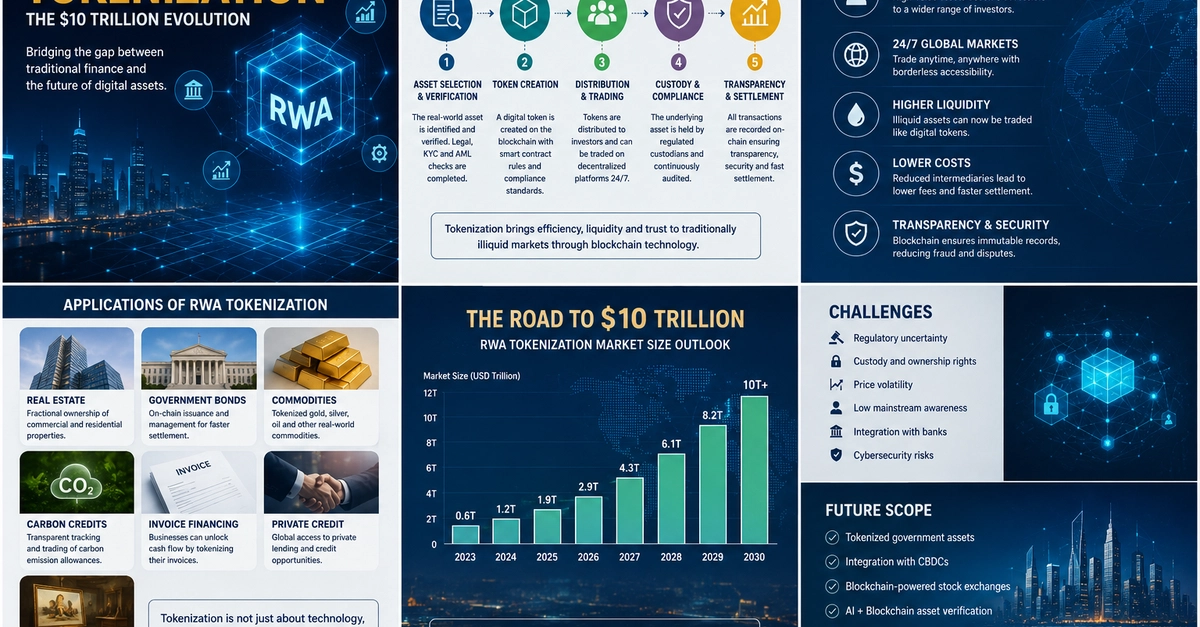
Ivan Kan, global investor and entrepreneur at the intersection of capital markets, tokenization and emerging tech. Investor in HackIndia.gettyThe problem in capital markets is not always technology, but who gets left out, and how few people the industry lets in.For decades, access to private capital has been gatekept by accredited investor rules. As of the SEC's most recent data, only 18.5% of American households qualify as accredited investors, with disclosure standards often treating quarterly filings to a handful of institutions as sufficient oversight.Tokenization was supposed to change that, but most of the industry took the easier path: wrapping an asset in a token and calling it access. Building a security that is publicly solicited, fully disclosed, audited and native to the chain is hard, requiring legal work, SEC review and ongoing reporting.That gap shows up in the numbers. Standard Chartered has projected the tokenized real-world assets (RWA) market will reach $30.1 trillion by 2034, and Robinhood CEO Vlad Tenev told CNBC that tokenized RWAs will "eat the entire financial system." Yet of the 593 tokenized assets Pantera Capital tracked across 11 asset classes, against all that projected money, 77.6% turn out to be digital receipts, what they call "digital wrappers around traditional infrastructure," not real securities.A receipt is not an asset. It is a claim wrapped around one, dependent on an intermediary to honor it. When that intermediary hesitates, or a company disavows the arrangement, the receipt is worth exactly what someone else says it is worth.I wrote about this failure mode in a recent article about when synthetic "PreStocks" tied to SpaceX and Anthropic collapsed. Neither company had authorized the transfers, meaning the tokens were never valid claims. Anthropic has since made the point official, stating that any sale of its stock lacking board approval is void and will not be recognized on its books and records.As someone building in this space professionally, I mean something specific by "the real version of this technology": a security issued natively on-chain, where the token is the legal instrument at creation, not a synthetic pointer to one traded elsewhere. No wrapper. No intermediary standing between the investor and the asset. Compliance and oversight are built into the instrument itself, not layered on after the fact. This is not a single company or product, but a structural model already used across the market.I call this model RWA+, a term I coined to describe real-world assets paired with real regulatory compliance layered onto a framework built to carry it. My company operates in this space, but the term describes a broader trend of tokenized assets built around a compliance layer. While Reg A+ is one framework that gets there today, it will not be the only one.Other providers will find other paths to the same standard. For instance, models exist to provide compliance and transfer-agent infrastructure used across multiple tokenized offerings. There are also SEC-regulated alternative trading systems for digital securities. Finally, others embed compliance controls directly into their blockchain protocol.That is the point: The plus is not one specific regulation, but the requirement that compliance and oversight are real, not retrofitted after the fact.The Wall RWA+ Walks ThroughThe SEC's Regulation D private placements are the default structure for almost every tokenized asset today, but it carries that accredited-investor wall I mentioned above. Regulation A+, on the other hand, allows public solicitation and non-accredited participation, under SEC-mandated disclosure and audit requirements that Reg D deals were never built to meet. Tier 2 specifically requires audited financials in the offering itself, plus ongoing annual, semiannual and current reports afterward, an accountability structure closer to a public reporting company than a private placement.The Channel This Framework OpensRegistered investment advisors work with tens of millions of clients under a fiduciary standard that can often make private placements functionally off-limits, since an unregistered, illiquid, accredited-only security is not something an RIA can recommend under that standard. A Reg A+ security issued natively on-chain is structurally different: public, disclosed, audited and settled on a ledger the advisor and client can both see. That structural difference is what determines which channels a security can move through.Access under Reg A+ also works differently from access under Reg D. Reg D caps participation at accredited households. Reg A+ opens the same disclosure and audit standard to a much larger pool of eligible participants, without lowering the standard itself. That is a structural expansion of who a compliant offering can legally reach, not a change in how any individual investor should evaluate risk.Where This GoesThis is no longer theoretical. The SEC has already qualified Regulation A+ offerings built on tokenized, natively-issued structures, establishing precedent that this model works within the existing exemption pathway, not as a future regulatory promise. That precedent potentially lands alongside regulatory clarity, as The Digital Asset Market Clarity Act cleared the Senate Banking Committee in a bipartisan 15–9 vote in May 2026, though it missed a floor vote before the Senate's August recess and now awaits action when Congress returns in September.In short, the tokenization market does not have a technology problem, but a compliance problem based on the same reluctance to build oversight into the instrument itself instead of engineering around it. The real opportunity was never the wrapper. It was building the instrument correctly the first time, so ownership, compliance and settlement are the same fact, not three systems fighting each other.RWA+ describes what that looks like once it is built. The technology is ready. Reg A+ shows the compliance path already exists. If the market drops its reluctance instead of working around it, tokenization may finally reach the potential it promised. RWA+ is not the only path to that future, but it is a path already shown to work.Forbes Technology Council is an invitation-only community for world-class CIOs, CTOs and technology executives. Do I qualify?
RWA+: How A New Asset Class Can Shape The Tokenization Market
The tokenization market does not have a technology problem, but a compliance problem.
969 words~4 min read