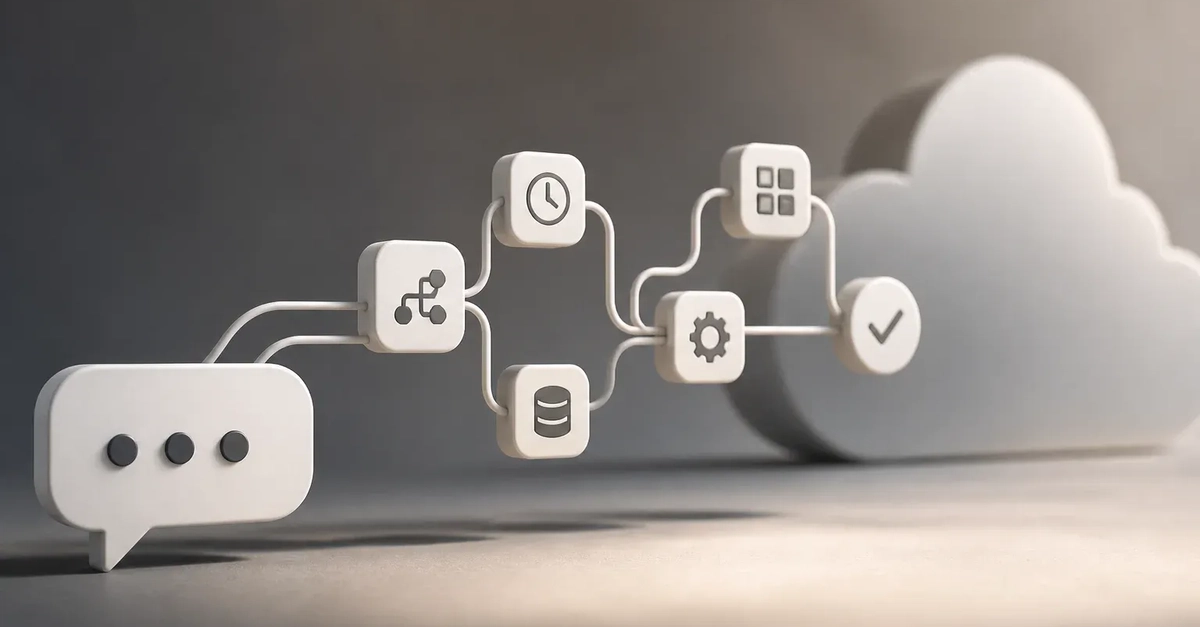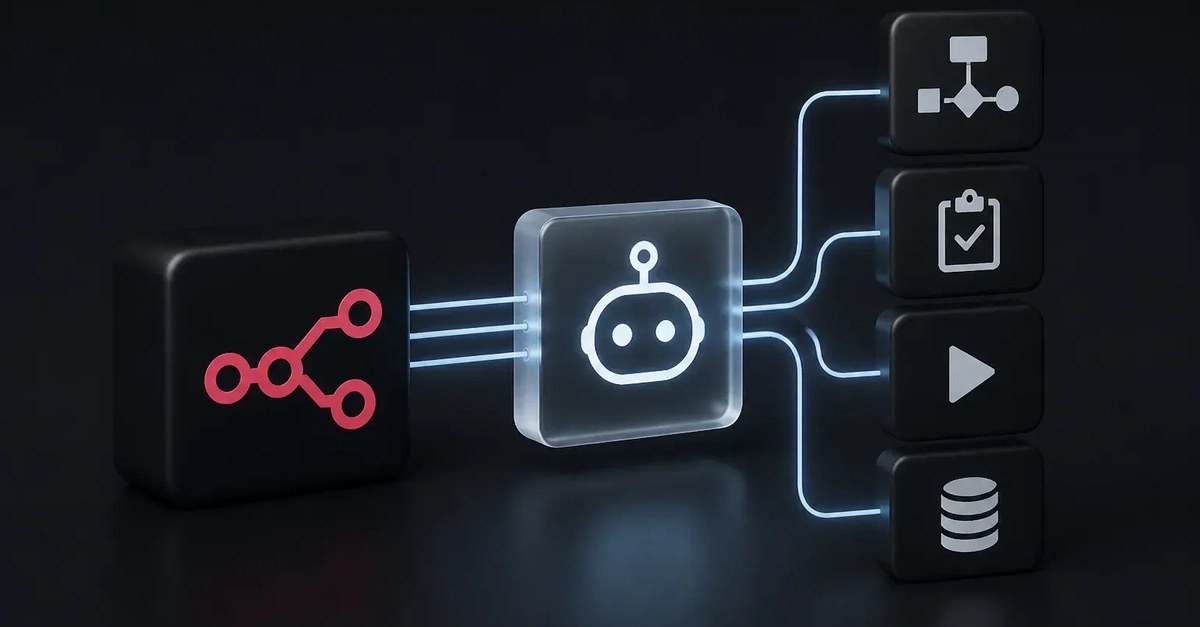
n8n is expanding its approach to agent-based automation with a native Model Context Protocol (MCP) architecture that connects AI clients to workflow building and operations. Its MCP Server can generate and update workflows from natural-language prompts, validate and test them, and execute them from within an n8n instance. The development moves n8n beyond treating AI solely as a step within an automation, toward allowing AI systems to work with the automation environment itself.
The platform's official n8n MCP Server announcement describes the feature as first-party and in public preview for n8n Cloud, Enterprise, and Community editions. In practical terms, an external MCP client can connect to n8n to search, trigger, test, and extend workflows. That makes the MCP Server the central development, while companion client tooling, skills, memory capabilities, scheduling tools, and chat integrations provide the broader foundation for agent-led work.
What n8n's MCP architecture changes
MCP uses a client-server model. In n8n's implementation, the MCP Server runs in n8n and exposes capabilities that connected clients can use. The supported ecosystem includes external AI clients such as Claude, ChatGPT, Cursor, and Windsurf, according to n8n's documentation and examples. Rather than manually translating an automation request into nodes and connections, a user can direct a compatible client to work against the n8n environment.