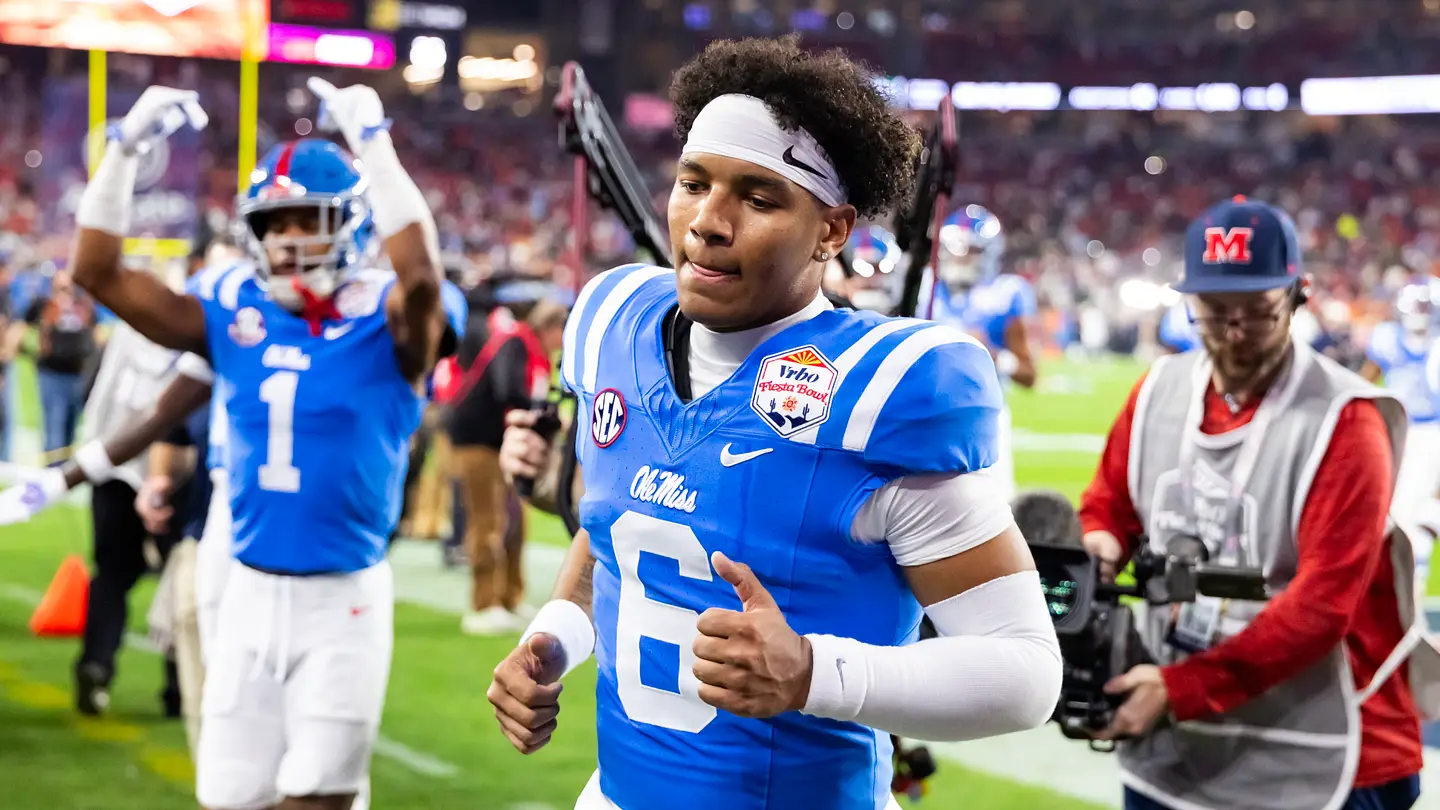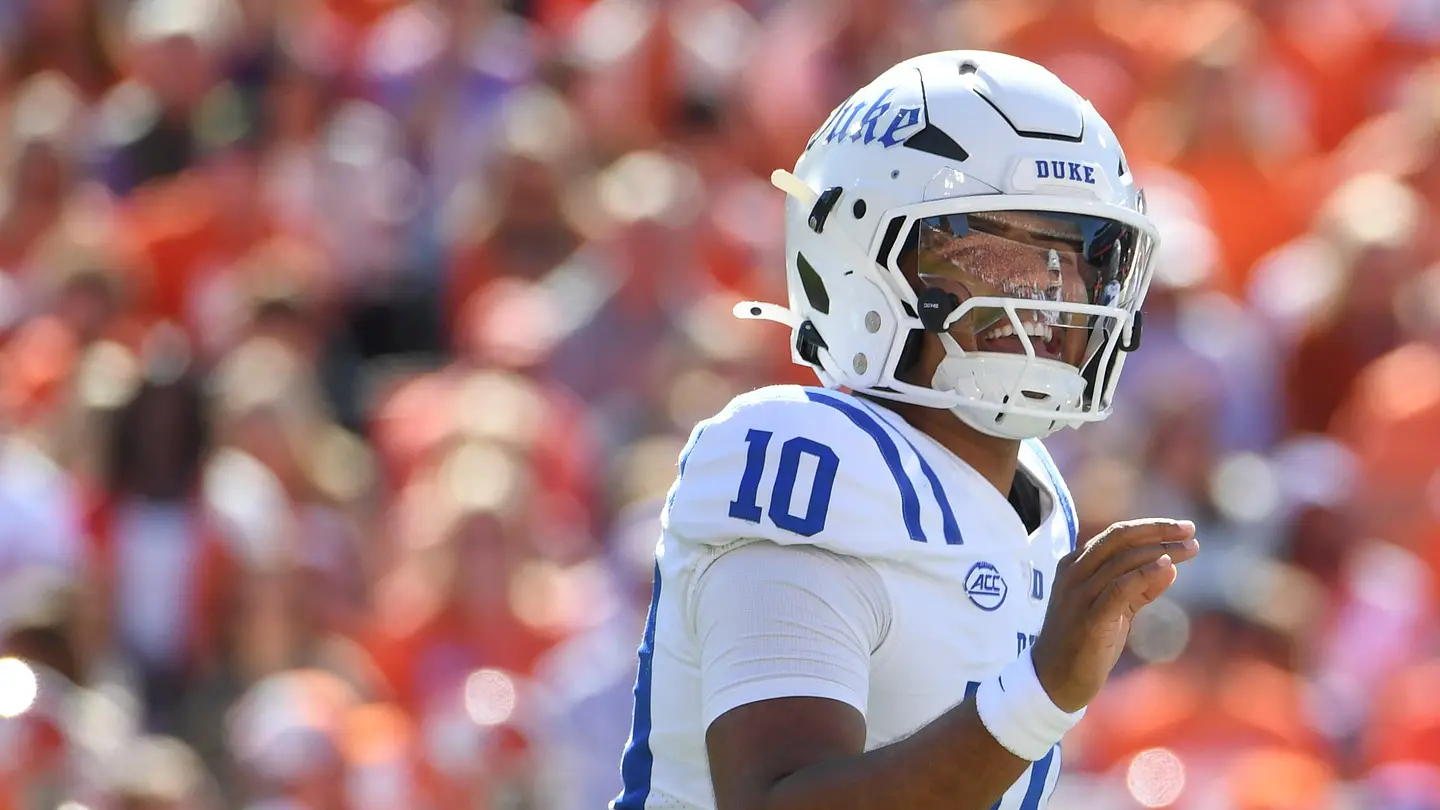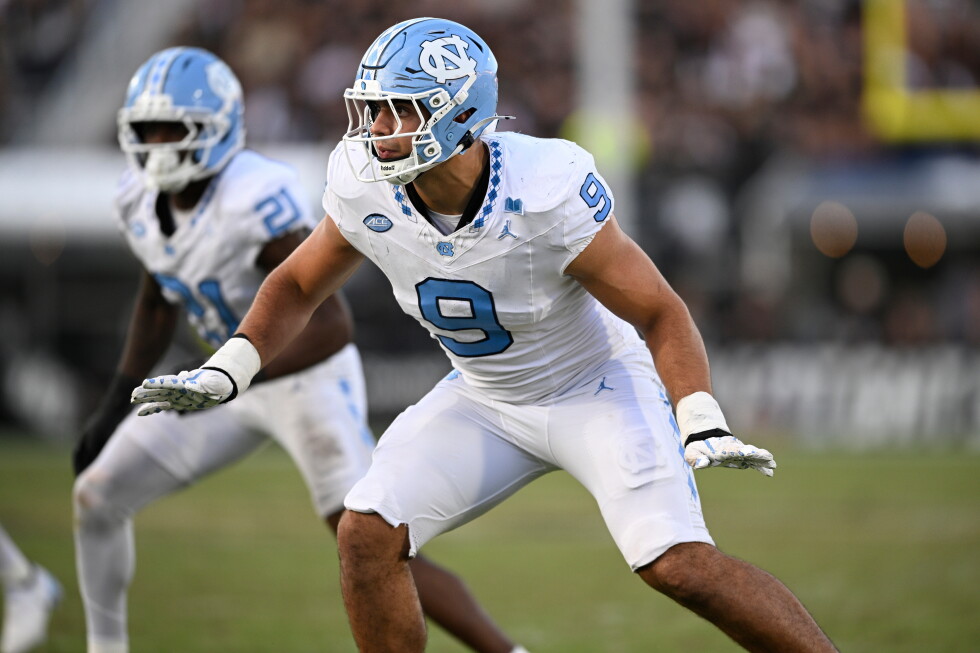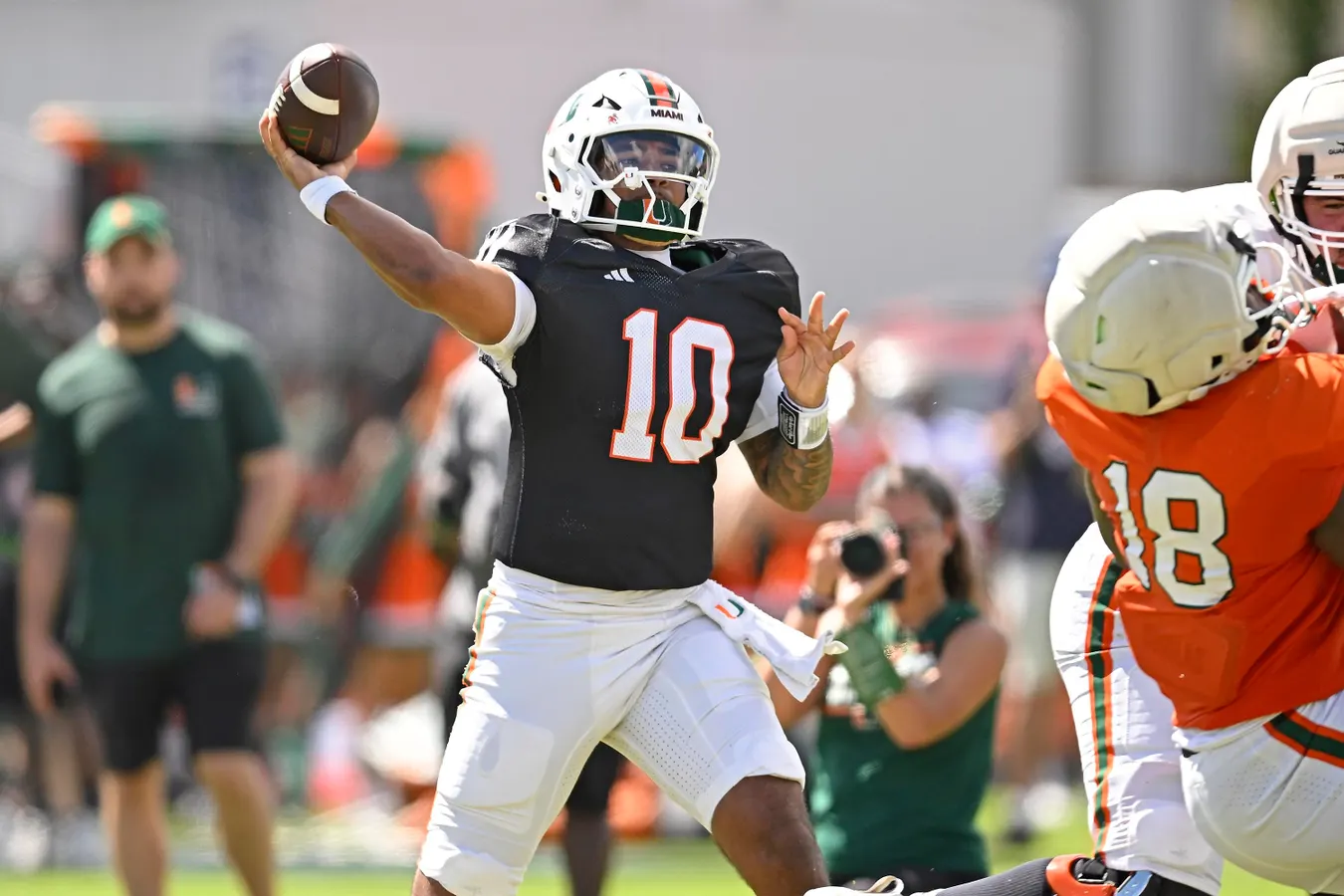
Miami quarterback Darian MensahIcon Sportswire via Getty ImagesLast year, Texas Quarterback Arch Manning topped On3’s estimated NIL valuation list at $6.8 million, yielding $2.47 million alone in federal income tax liability. This year, college football has a new NIL king in Miami Hurricanes signal caller, Darian Mensah, a transfer from Duke University. While NIL earnings continue to surge, student-athletes are taking home far less than this amount due to income tax liabilities. In fact, a student athlete like Oregon’s Dante Moore makes the same as Washington’s Demond Williams Jr. on an after-tax basis even though his NIL valuation is much higher. The reason: a large difference in state income taxes owed.ForbesBreaking Down The Top 20 College Football Stars’ 2025 NIL Tax BillsBy Nathan GoldmanHow NIL Income Gets TaxedFollowing the Supreme Court's unanimous ruling in NCAA v. Alston and the earlier O'Bannon v. NCAA litigation, the NCAA began allowing athletes to profit from their name, image and likeness. While athletes rejoiced at their newfound freedom to earn money while maintaining their amateur status, they also are now meeting a new challenge – income taxes. Under Internal Revenue Code Section 61, NIL payments — cash, merchandise, free use of a car, whatever form they take — are gross income, and are subject to tax at the federal, state, and local level.Complicating their tax payments is the notion that the NIL income is not treated as wages. For tax purposes. student athletes are treated as independent contractors. This means their income is self-employment earnings, triggering a second layer of tax tend to overlook (15.3% self-employment tax for Social Security and Medicare). Student athletes must make estimated tax payments on a quarterly basis and the money earned on a calendar basis (rather than the school year basis) is what drives these payments. This means that the student athletes must clearly document all NIL received as well as all business expenses, which may serve as deductions for their self-employment. MORE FOR YOUTop 25 College Football Stars' 2026 NIL Tax BillsNIL income cannot be precisely estimated broadly across collegiate athletes using conventional methods. However, TheNILStandard and On3 independently provide NIL estimates. For many players, there is uniformity in their estimates. However, disagreement does arise. The average of the two estimates forms a starting point for determining NIL tax liability of the 2026 college football season.ForbesNIL Changed The Transfer Portal — Now Taxes May Decide Where Stars GoBy Nathan GoldmanIn addition to income taxes, student athletes will also be subject to the aforementioned self-employment tax (12.4% Social Security tax capped at the 2026 taxable maximum of $184,500) plus 2.9% Medicare tax on 92.35% of net NIL profit. Half of that combined 15.3% is deductible against income tax, exactly as it would be for any other independent contractor. They will also be subject to an additional 0.9% Medicare tax for self-employment earnings over $200,000. All student athletes will be subject to both federal and state income tax regulations. However, the state income tax rates can vary from 0% all the way to 13.3%. Some student athletes, such as those who play for Ohio State University, Indiana University, University of Notre Dame, and the University of Pittsburgh, will even be subject to county or city income taxes on top of those federal and state obligations. However, as the student athletes are independent contractors, they can deduct businesses expenses, such as agent and advisor fees, travel, and marketing costs. While these costs can be difficult to estimate, a 5% of total estimated NIL reasonably captures the likely presence of these expenses, and they can vary from student athlete to student athlete. As always, these are estimates that assume the student athletes are single filers with no dependents, no withholding, and all income is collected in a single year. The estimates also does not account for property taxes and sales taxes, nor does it include a “jock tax”, which student athletes are not expected to pay. Self-employment tax includes the 0.9% Additional Medicare Tax surtax where applicable. Federal Income Tax reflects the deduction for half of regular SE tax. Business Expenses is a 5% allowance for agent/advisor fees, travel, and marketing, subtracted from the Blended Valuation before any tax line is calculated — that net figure, not the gross valuation, is what Self-Employment Tax, Federal Income Tax, and State & Local Tax are actually computed on. The blended Valuation is the average of TheNILStandard and On3 as of 8/21/2026. Figures assume a single filer and no dependents. State & Local Tax combines each player's state income tax with local city/county tax where one applies. Five players — Ohio State's Jeremiah Smith and Julian Sayin, Indiana's Josh Hoover, Notre Dame's CJ Carr, and Pittsburgh's Mason Heintschel include a local tax on top of state tax.NIL 2026 FootballAdding up the NIL valuations for the top 25 earners in College Football 2026, and there is an estimated $88.5 million being earned from these star student athletes alone. However, an estimated $35.9 million will go to the taxing authorities across the IRS, state, and in some cases, local jurisdictions. ForbesThe NIL Tax Edge Behind Miami And Indiana’s Football Championship RunBy Nathan GoldmanThe top student athletes this year continue to be quarterbacks (20 out of the top 25), with wide receiver, offensive tackle, and edge rusher being the other positions represented. The list displays student athletes from 20 different schools with only Texas (3), Miami (2), LSU (2), and Ohio State (2) having more than one listed. The State Tax Wedge Accounts For Significant Variation In NIL TaxesA staggering high number of student athletes (9) in the top 25 of compensation play for a school that does not levy income taxes. Six alone play in Texas (Manning, Coleman, Jennings at SMU, Reed at Texas A&M, Weigman at Houston, and Simmons), plus two at Miami and one at Washington. Their effective tax rates cluster tightly in the 36.4%–37.5% range. This tax is comprised of federal tax and self-employment tax with nothing else added. These effective tax rates seem small compared to the two California-based student athletes Cal's Jaron-Keawe Sagapolutele and USC's Jayden Maiava. California has a top effective tax rate of 13.3%, which leads these student athletes to have an effective tax rate around 49% -- almost half of their estimated income goes to pay taxes. Oregon's 9.9% top bracket does something similar to University of Oregon star quarterback Dante Moore, whose 46.8% effective rate is the third-highest.For Moore, the impacts are staggering. He has the same NIL valuation ($5 million) as Ohio State wide receiver Jeremiah Smith. However, due to Oregon’s high state income tax rates, Moore has over $200 thousand less in after-tax earnings. In fact, Moore’s NIL valuation is $750 thousand more than Washington quarterback Demond Williams Jr. However, their after-tax incomes are nearly identical. NIL Is Paid On A School Year, Taxable Income Is Determined AnnuallyMany student-athletes listed in the top 25 highest paid football athletes for the 2026 season also were ranked highly for the 2025 season. Important to the student athletes is that they need to breakout their income based on the calendar-year, rather than the school year.A player's 2026 Form 1040 covers everything actually collected between January 1 and December 31, 2026, rather than what is tied to this year's on-field production. Thus, if a player earned some of their 2025 NIL in January of 2026 for bowl games or the playoffs, or later in the year, then that money will be added to their 2026 tax liability.In practice, that means the figures above are a reasonable proxy but not a precise one. A player who signed a big deal during the spring transfer portal window, shot a national commercial in the offseason, or is still collecting installment payments from a 2025-season deal that runs into early 2026 will owe tax on all of that in addition to whatever this season's valuation represents pushing their actual 2026 liability above what is shown above.Conversely, a player paid mostly in early 2027 for work performed this season could see part of the 2026 season’s money land on next year's return as the IRS cares about the date the money is received. For anyone using this table to actually plan a quarterly estimated payment, the calendar-year date matters more than the season.States Are Racing To Cut Student Athletes Out Of Their Own NIL Tax BaseThe tax wedge described above has not gone unnoticed by state lawmakers. A handful of states are now treating it as a recruiting problem rather than just a revenue question. ForbesArkansas Makes NIL Income Tax-Exempt. Will Other States Follow?By Nathan GoldmanArkansas moved first, becoming the initial income-tax state to exempt NIL earnings entirely. Mississippi lawmakers introduced their own version. The Mississippi bill cleared the state House 76-32 before stalling in the Senate Finance Committee, which declined to bring it to a floor vote. This leaves Arkansas as the only state that taxes income to offer student athletes this carve-out.ForbesMississippi Sparks New NIL Tax Race In College SportsBy Nathan GoldmanMississippi wasn't alone in trying. Similar exemption bills surfaced in Alabama, Louisiana, Georgia, Illinois, New Jersey, and South Carolina this year. While none reached a governor's desk, progress has been made to help student athletes (and their athletic departments that are trying to recruit these student athletes) avoid taxes on NIL income.Given the size of the gap this analysis finds between a Texas-based quarterback and a California-based one, and given that valuations that are themselves still climbing, the pressure is unlikely to fade. Consequently, Arkansas's head start may not last as hoped.The After-Tax NIL ValuationRegardless of the NIL valuation, the country's top college football players are learning what other independent contractors must learn: gross earnings and take-home pay are two very different numbers, and the gap between them is decided as much by geography as by talent. A student athletes zip code can be worth just as much to their after-tax bank account than a gap in market value, and a school's tax address is increasingly a line item in its recruiting pitch. As NIL valuations keep climbing and states keep experimenting with carving athletes out of their tax base, that gap is a more useful aspect to watch each year.
Breaking Down The Top 25 College Football Stars' 2026 NIL Tax Bills
College football's top 25 NIL earners are set to owe over $35.9 million combined in federal, state, and local taxes in 2026 — a 40% average tax bite. See who owes what.
1,700 words~8 min read