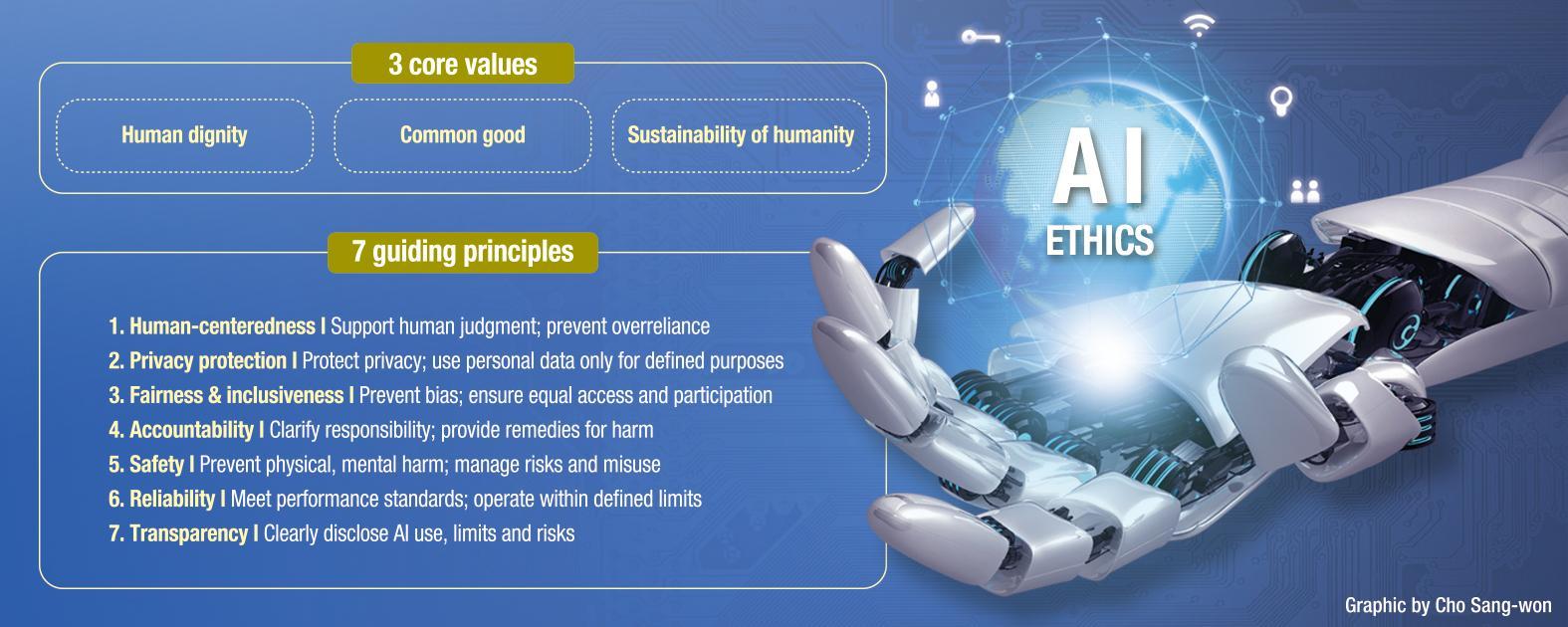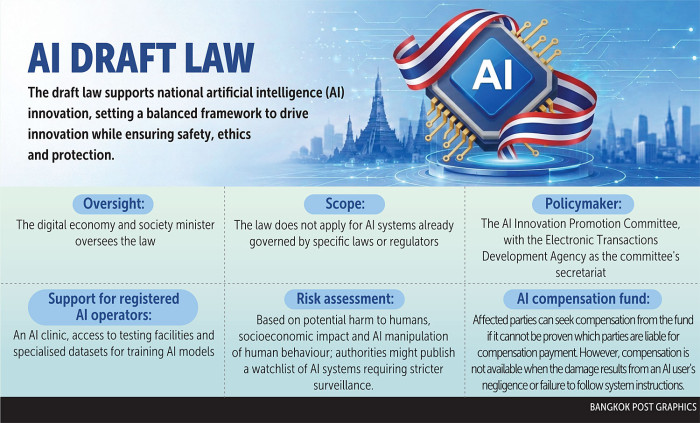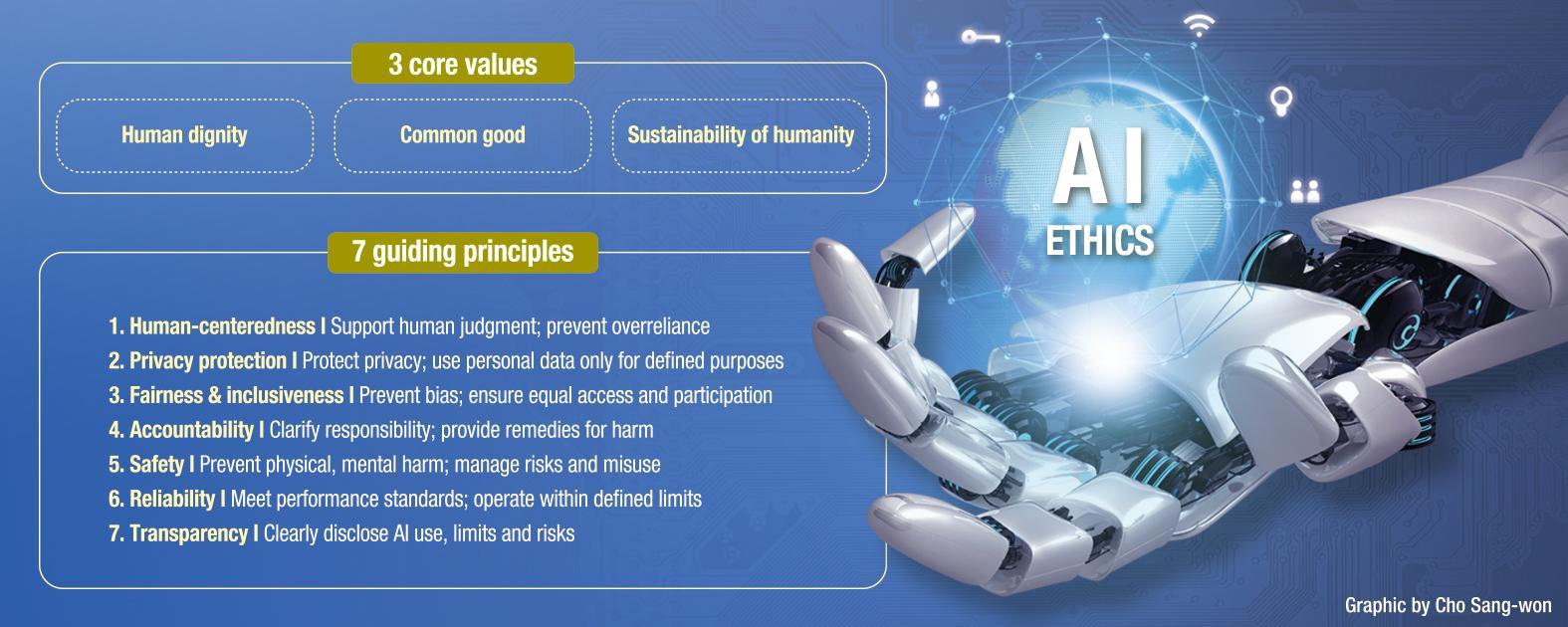
The government announced national AI ethics principles on Monday, but experts said they lack legal force and specific implementation standards. The framework sets three core values and seven guidelines for AI use across industries and everyday life. Experts said the principles are more like a broad declaration of values than enforceable rules, and their impact will depend on sector-specific practices. The government said it will later develop case-based guidance and sector-specific self-guided checklists.
The government's new artificial intelligence (AI) ethics principles provide a broad framework for responsible AI use but lack legal force and specific implementation standards, experts noted, raising questions about their practical impact.
The government announced national principles for the ethical development and use of AI on Monday, setting out three core values and seven guidelines for AI use across industries and everyday life. The principles provide a common but nonbinding reference for developers, providers, users, government agencies and civil society, the Ministry of Science and ICT said.
Choi Kyoung-jin, director of the Center for AI, Data and Policy at Gachon University, said the principles should be viewed as a broad declaration of values rather than a set of enforceable rules, with their effectiveness ultimately depending on how they are translated into sector-specific practices.