Why a talking chatbot and a real voice agent are not the same thing
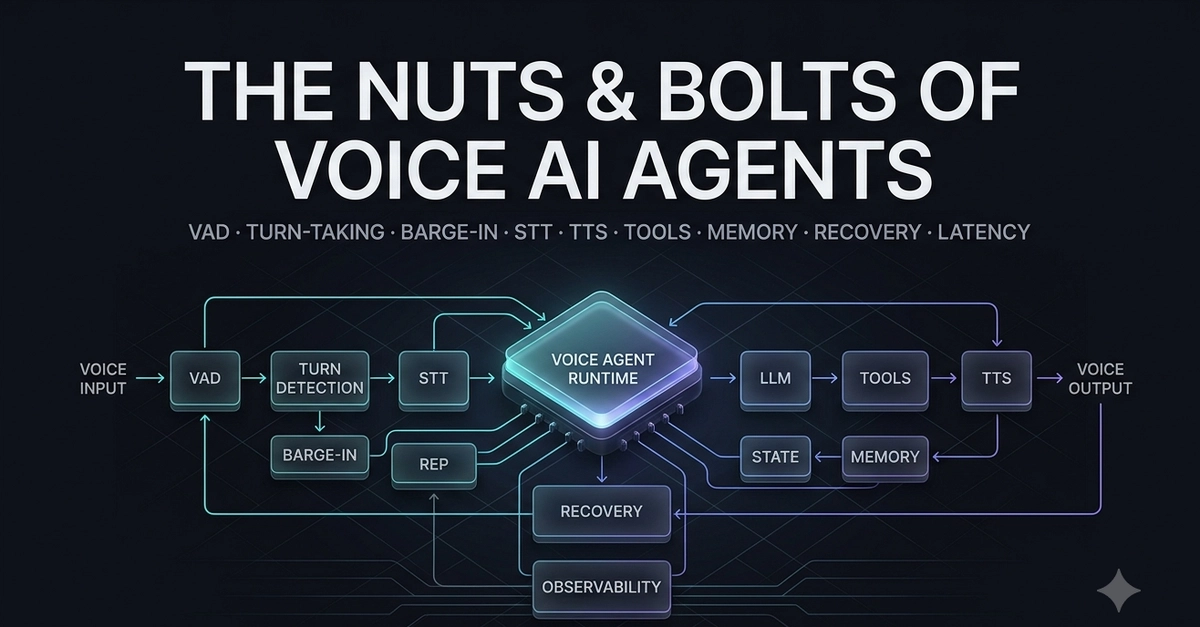
A voice AI agent looks deceptively simple from the outside. You speak. It listens. It thinks. It responds. But underneath that simple exchange sits a real-time distributed system juggling audio streams, speech detection, transcription, reasoning, tool execution, state, speech synthesis, interruptions, latency budgets, and — sometimes — a handoff to a human.
This post breaks down what's actually happening under the hood, and why the hardest problems in voice AI today have less to do with the language model and more to do with the runtime around it.
Not a chatbot with a microphone
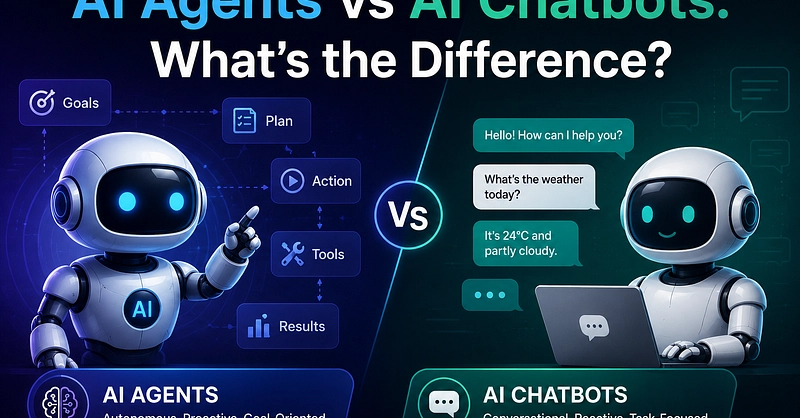
A text chatbot is fundamentally a request-response system: a message comes in, the model reasons, a response goes out. A voice agent has to operate continuously in time. Audio comes in as a stream, and the system must detect speech, figure out whether the user is actually finished talking, transcribe, reason, possibly call a tool, generate a response, synthesize it into audio, and play it back — all while still listening.