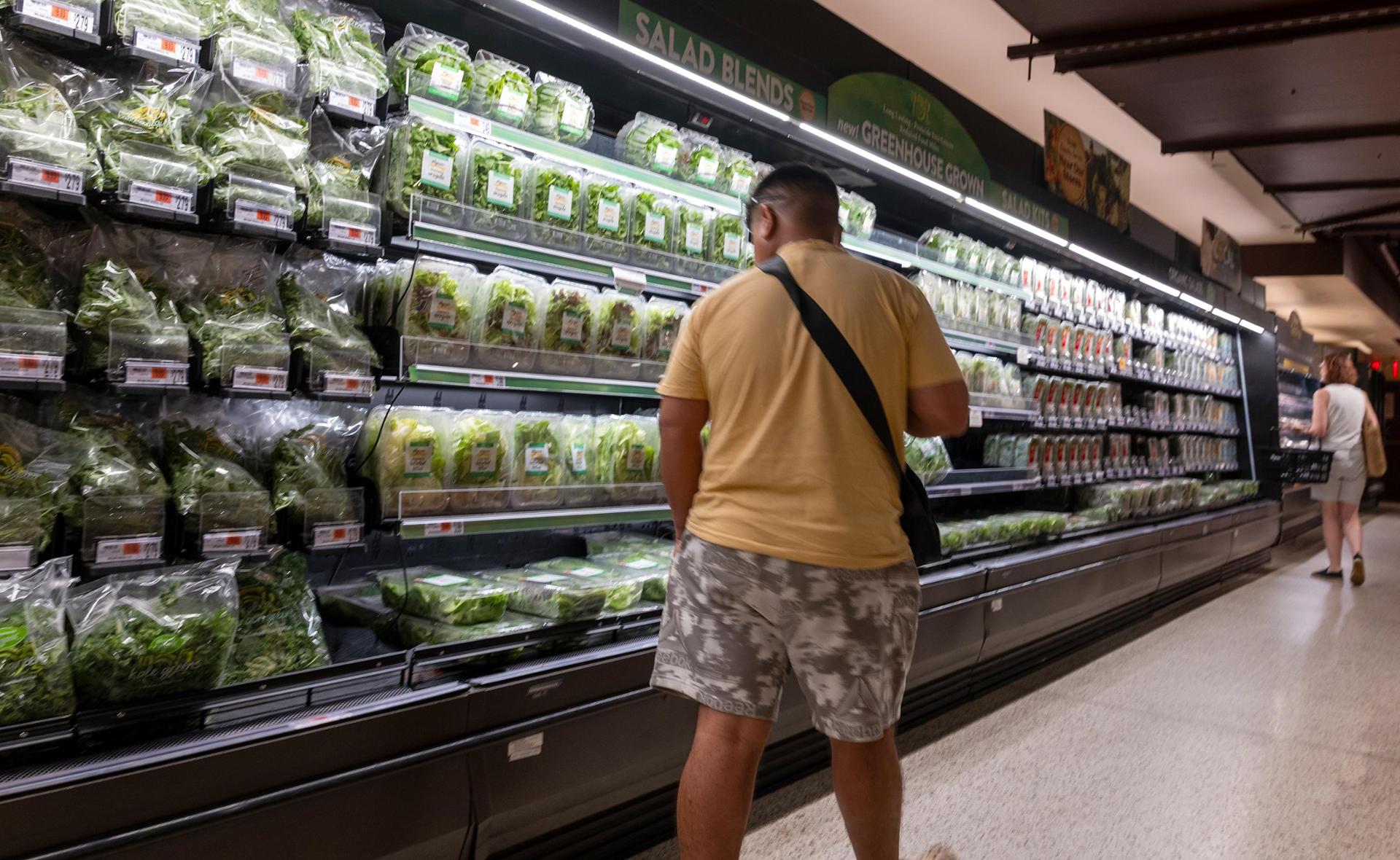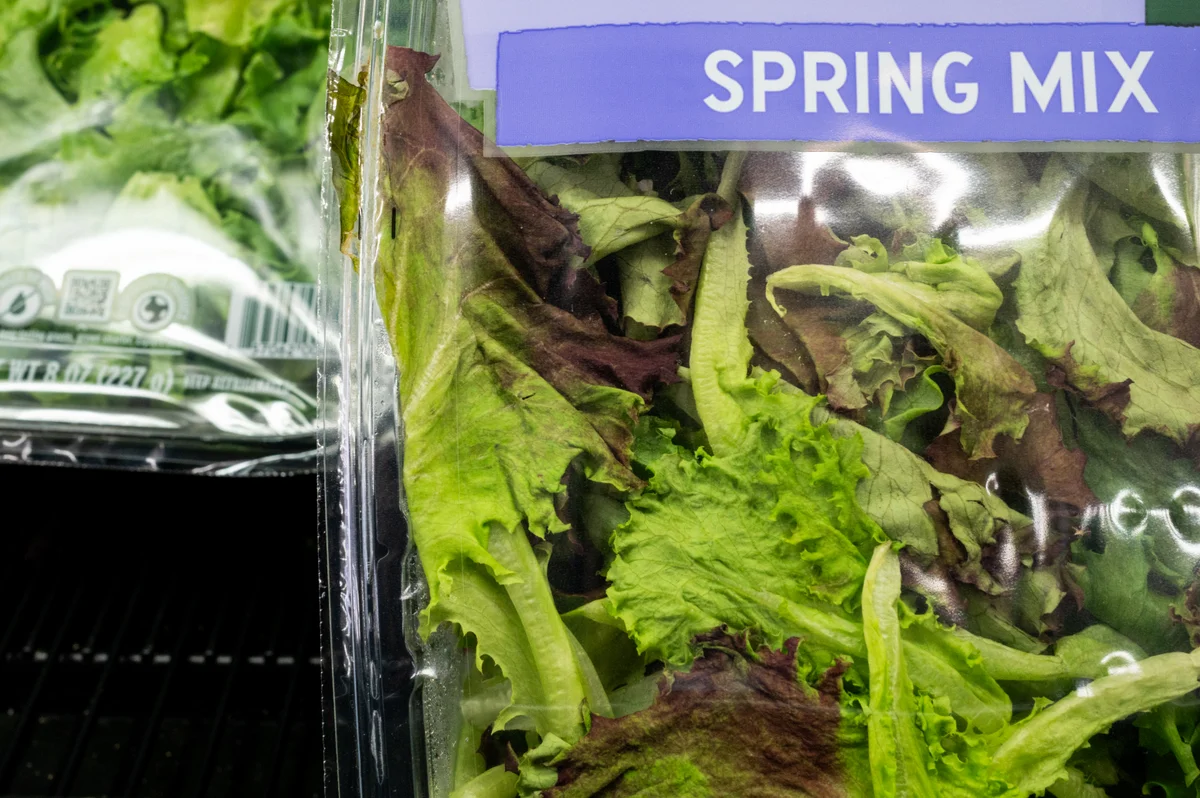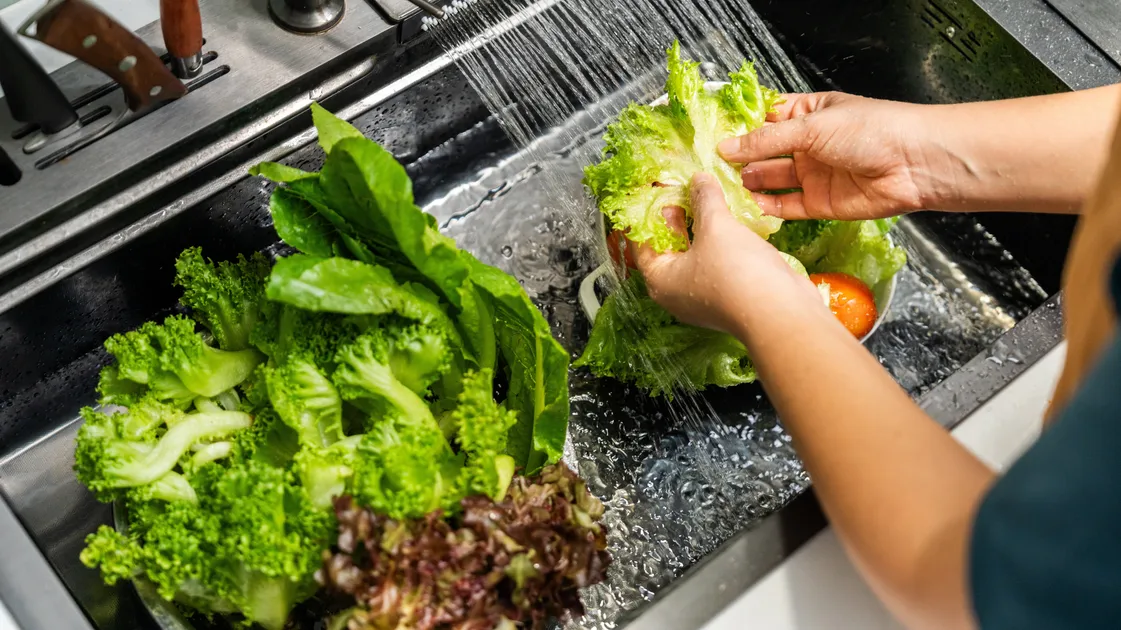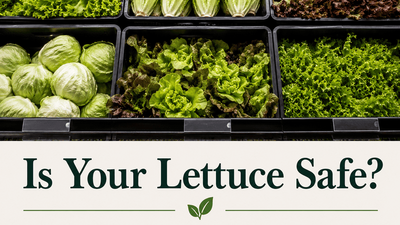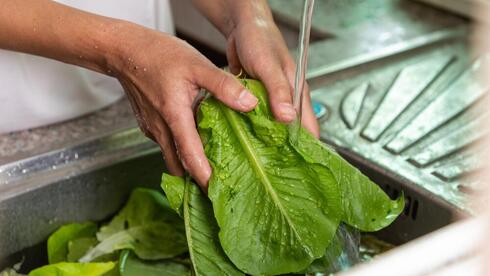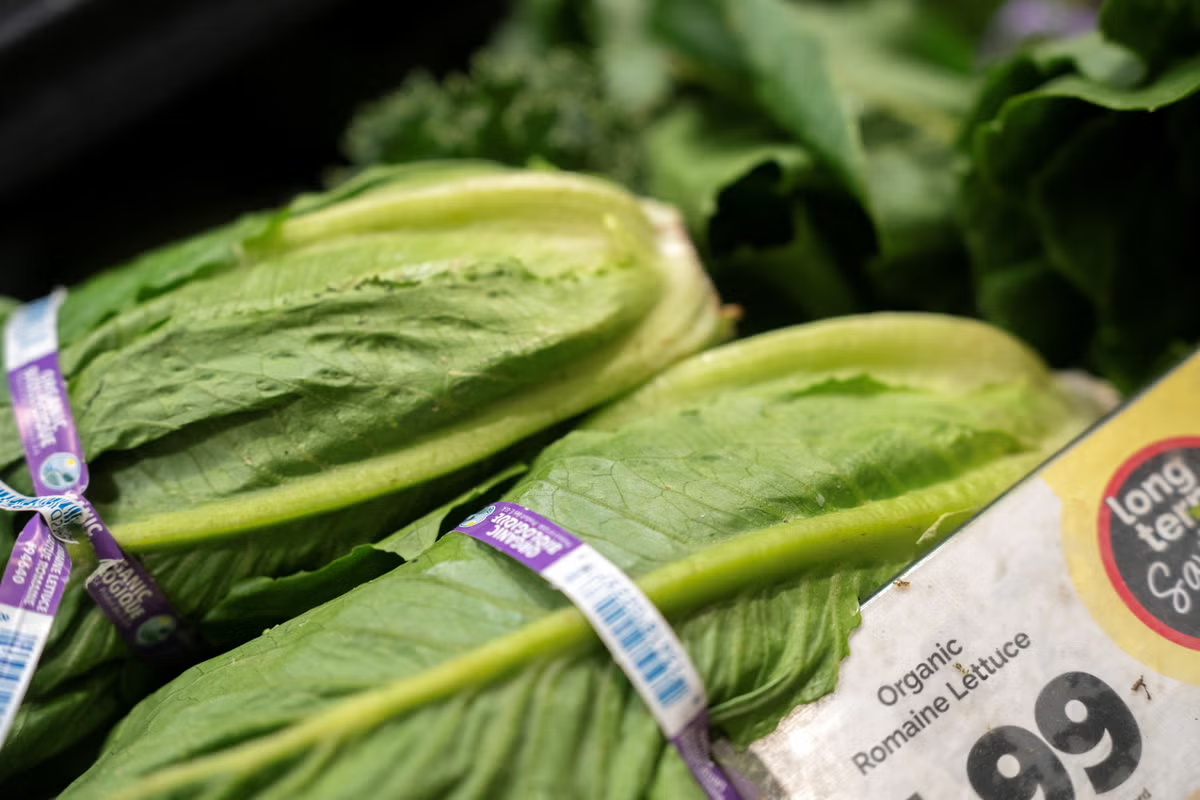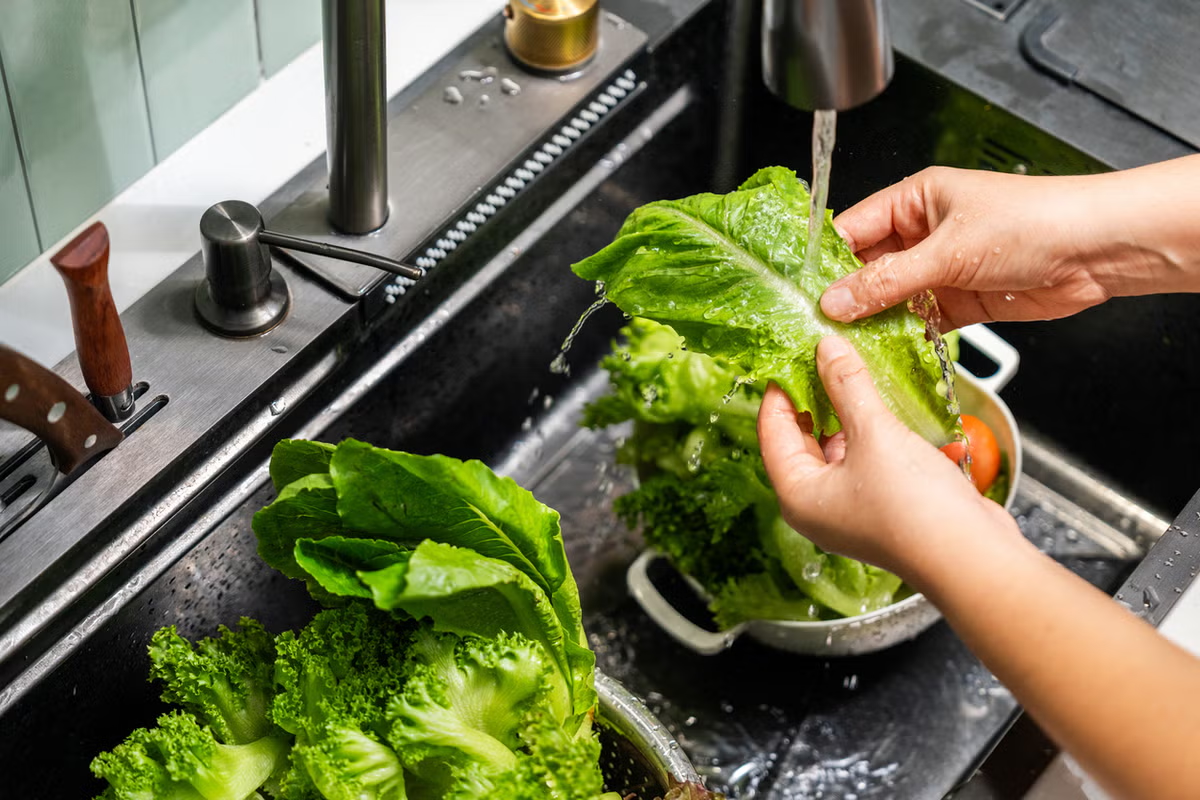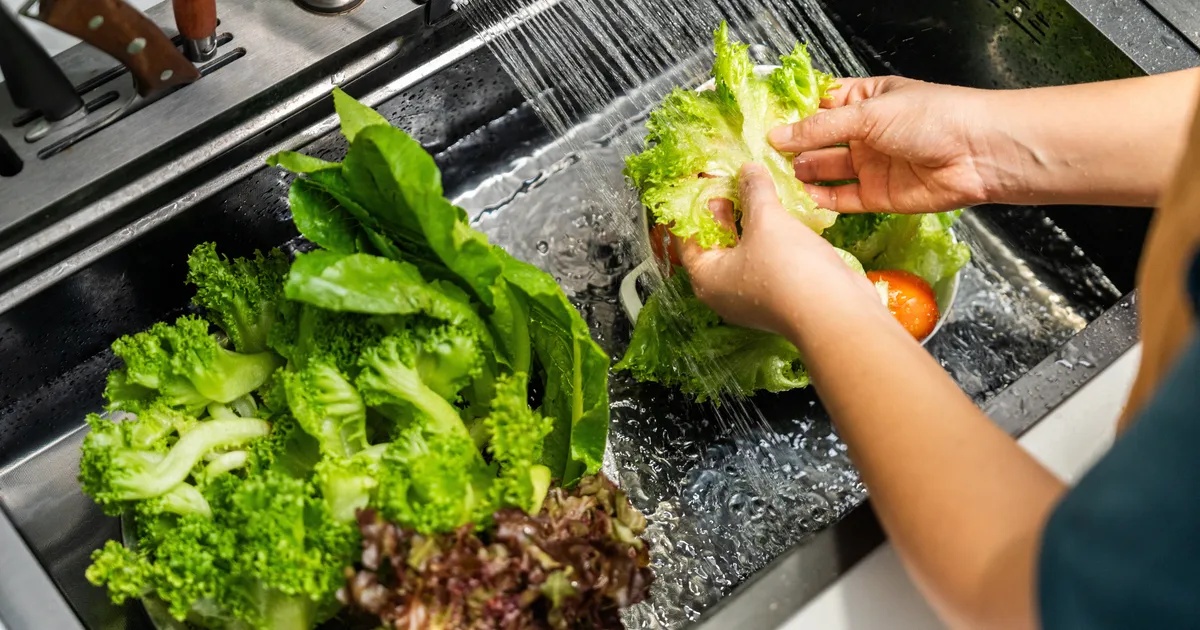
It’s a dark, dark time when even vegetables cannot be trusted. The leafy greens, it seems, have it out for us.At least that’s how this summer has felt, what with the Taylor Farms cyclosporiasis outbreak and subsequent panic over produce in general. Iceberg lettuce is the only product implicated in the Food and Drug Administration’s investigation, but it has heightened public concern about contaminated produce and sparked conversations about food safety more broadly.Amid all that, you may have heard the seemingly counterintuitive advice that not only do you not need to wash prewashed lettuce at home, but it’s better if you don’t. Why? Because washing lettuce at home can actually increase the risk of contamination. Might sound a bit like an old wives’ tale, but according to food safety experts, it’s true.chanakon laorob via Getty ImagesExposure to any surface is a possible chance for contamination, and since industrial washing methods are more thorough than what you’re able to do at home, washing at home just adds unnecessary risk. “Yes, triple-washed lettuce should not be washed at home due to the increased risks from cross-contamination in the home kitchen,” said Otto Simmons III, an area specialized agent in food safety based at North Carolina State University. He explains why.“Triple-washed lettuce is washed with clean water, rinsed with a sanitizer, then washed a third time during processing,” Simmons said. “It is considered a ‘ready-to-eat’ product when it is bagged and sold. If washed at home, there are contamination risks from the sink, cutting board, knife, etc.”Exposure to any surface is a possible chance for contamination, and since industrial washing methods are more thorough than what you’re able to do at home, washing at home just adds unnecessary risk.“Think about everything the lettuce might come into contact with during that second wash: our hands, the sink, faucet handles, a colander, countertops, cutting boards or utensils,” explained Indu Upadhyaya, associate extension professor of Poultry Science and Food Safety at the University of Connecticut. “Any of those can potentially transfer microorganisms onto a food that is going to be eaten raw, particularly if raw meat, poultry, seafood, or eggs have recently been prepared in the same area.”“It is not that putting clean water on lettuce somehow makes it unsafe,” Upadhyaya went on. “The lettuce has already gone through a commercial washing process, and washing it again at home adds another round of handling without necessarily providing an additional food safety benefit.”This echoes the FDA’s guidance on the matter. According to its website, “many pre-cut, bagged or packaged produce items are pre-washed and ready-to-eat. If so, it will be stated on the packaging, and you can use the produce without further washing.”“If you choose to wash produce marked as ‘pre-washed’ or ‘ready-to-eat,’” it goes on, “be sure that it does not come in contact with unclean surfaces or utensils. This will help to avoid cross contamination.”If you do wash your greens and don’t eat them immediately afterward, you’re introducing even more risk.“If washed and stored prior to consumption,” Simmons said, “the added moisture can lead to degradation of product quality as well as providing moisture to any microbial contaminants introduced during the handling and washing at home, allowing them to survive and possibly regrow on the lettuce.” That is, if your veggies do come in contact with some illness-causing bacteria in your kitchen, sticking it back in the fridge wet gives that bacteria the perfect opportunity to propagate.Upadhyaya shared another word of caution, with the parasite cyclospora specifically in mind: Washing a contaminated food isn’t a reliable way to make it safe for consumption. Washing is important, but it doesn’t necessarily remove all of the offending microorganisms.“Once the parasite is present on fresh produce, particularly something like leafy greens with an uneven and complex surface, it can be difficult to remove completely,” Upadhyaya said.“I think the simplest way to summarize it for consumers is that prewashed does not mean pathogen-free, but rewashing it at home does not solve that problem either,” Upadhyahya said. “And, specifically for cyclospora, washing fresh produce is still an important food safety practice when the product is not prewashed, but consumers should understand that washing cannot guarantee removal of cyclospora. If a product is recalled, washing it is not an alternative to discarding it.”If you have produce in your fridge that may be linked to an outbreak, err on the safe side and trash it. Foodborne illness is no joke. Live by the maxim: When in doubt, throw it out.
Washing This Popular Lettuce At Home Can Actually INCREASE The Risk Of Contamination
And if you do wash your greens and don’t eat them immediately afterward, you’re introducing even more risk.
748 words~3 min read