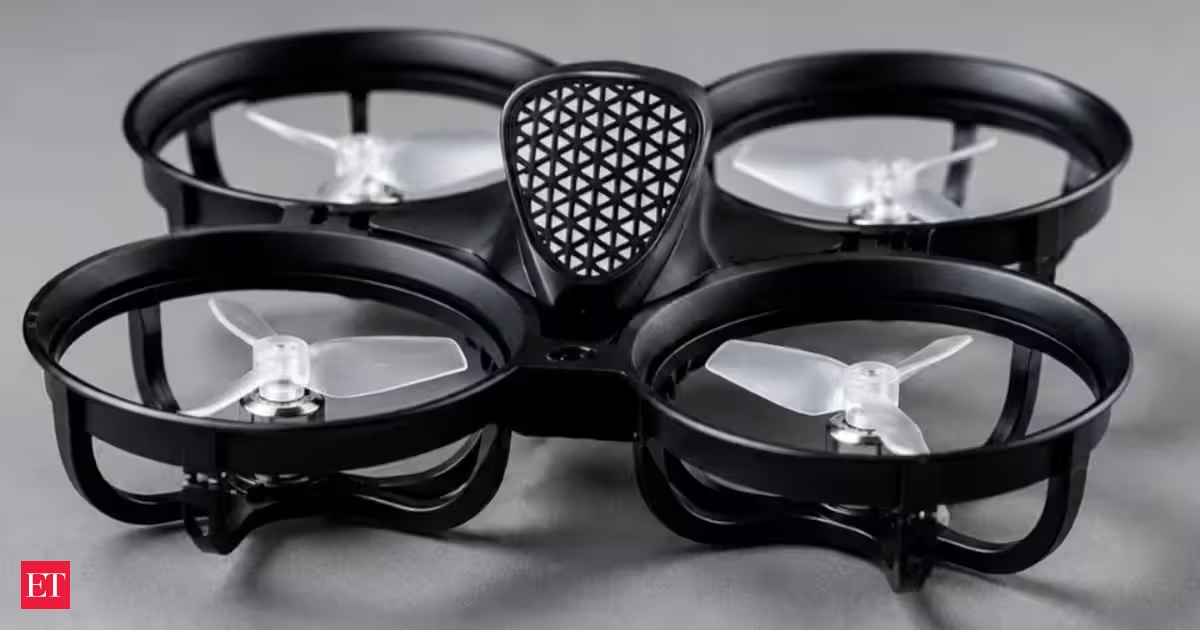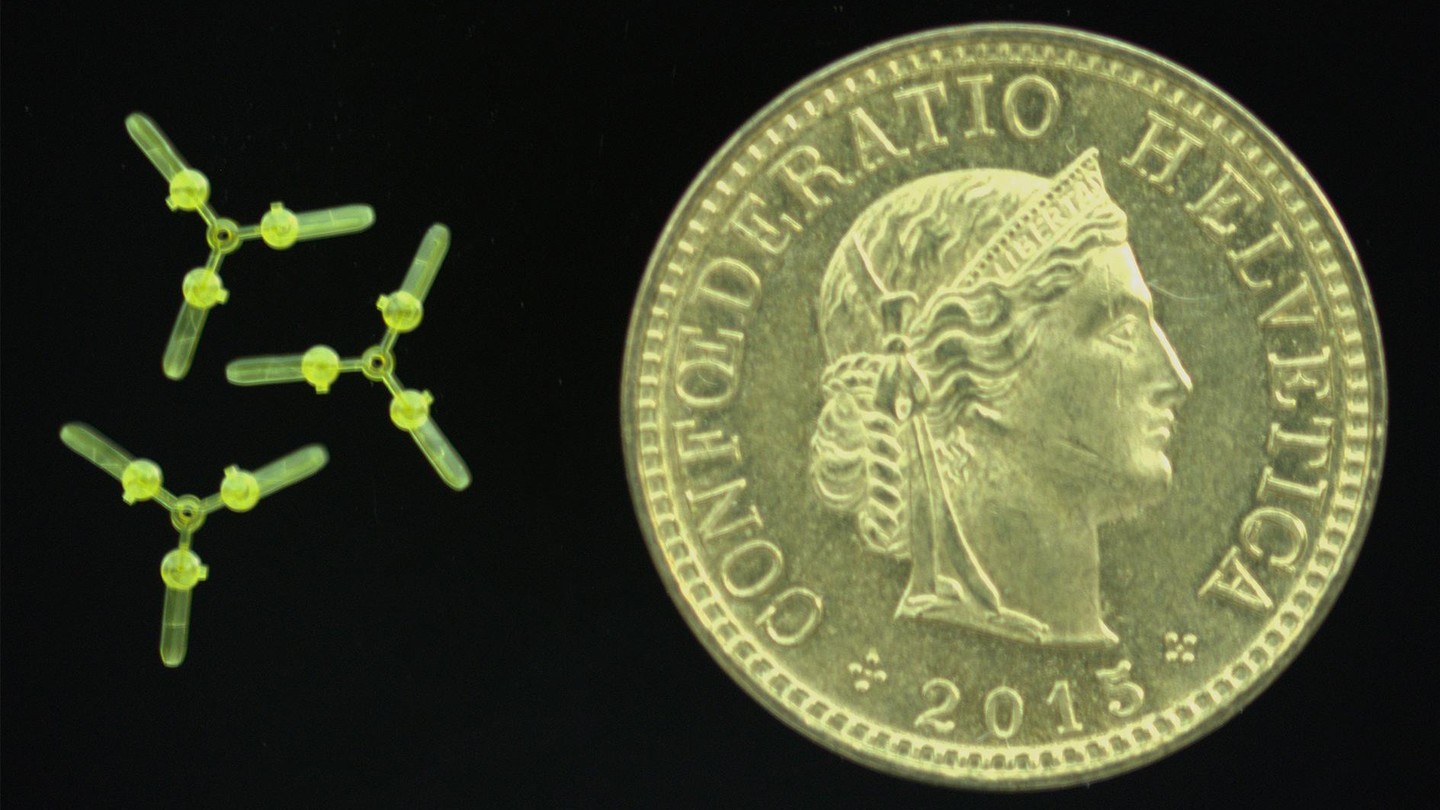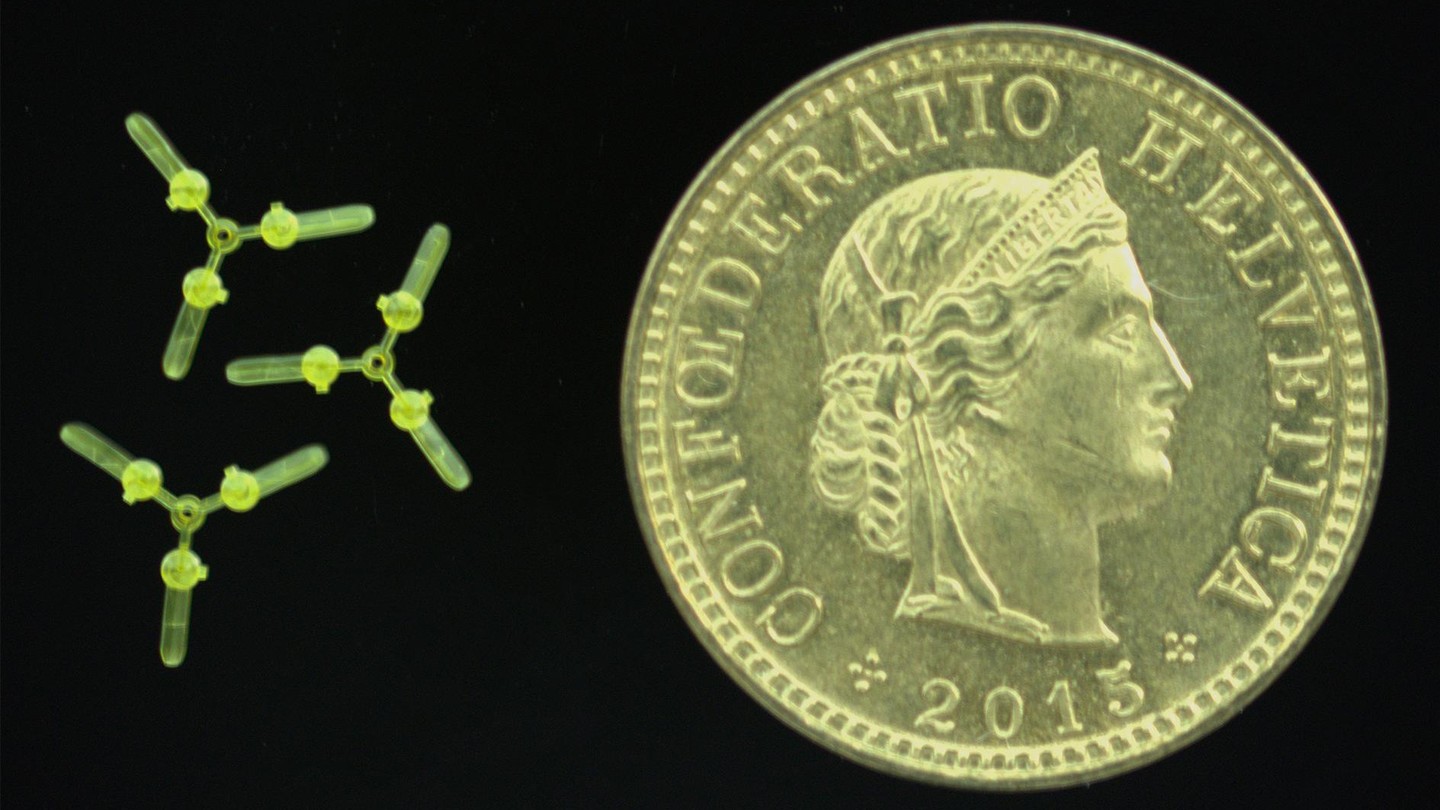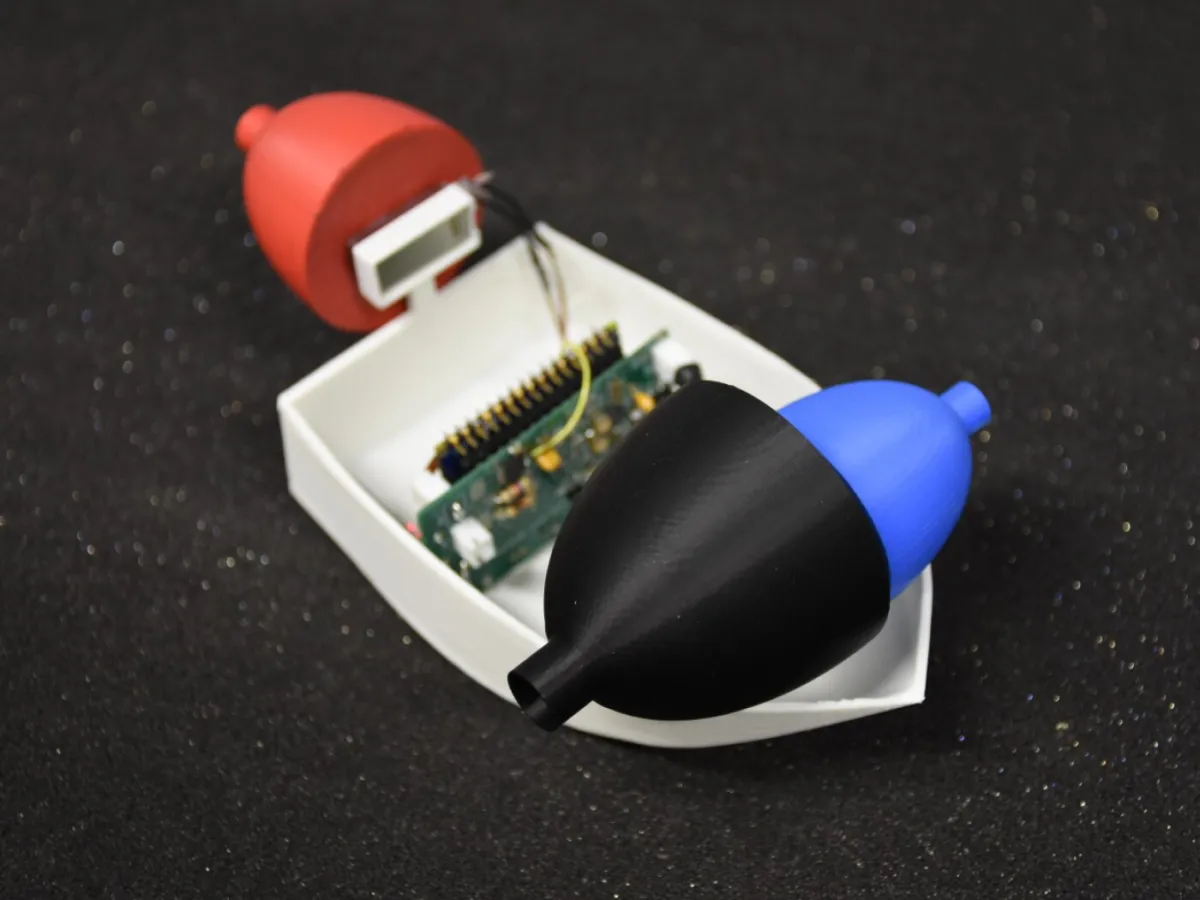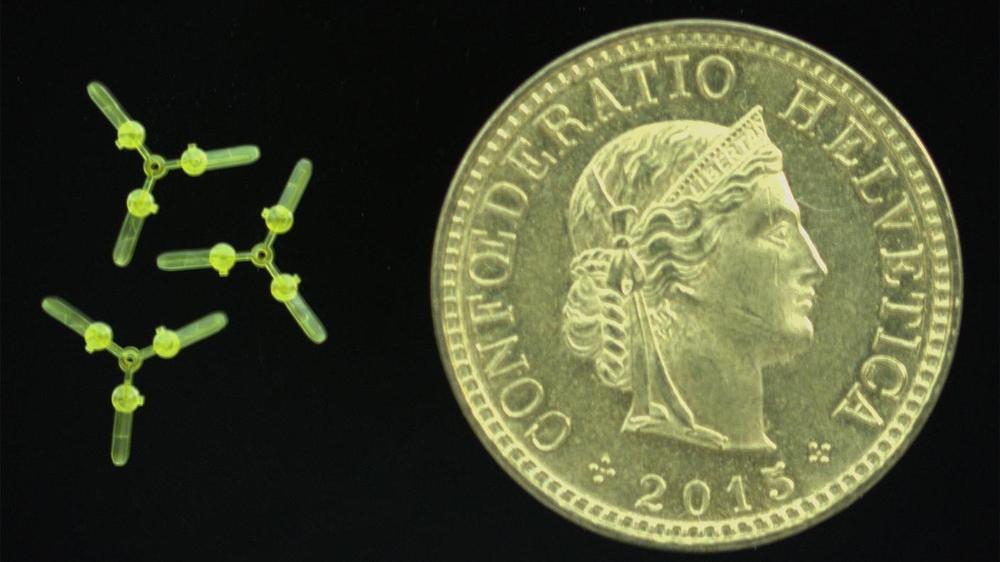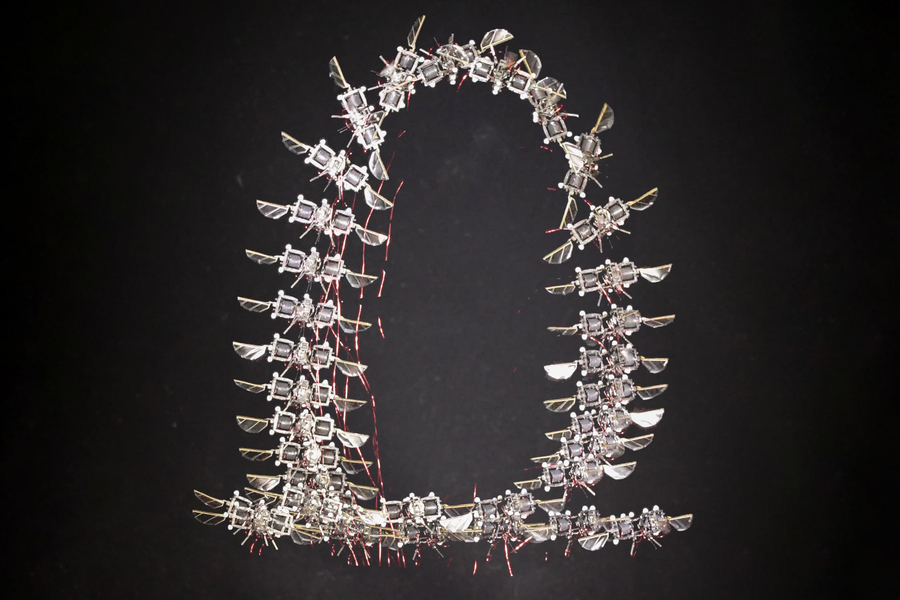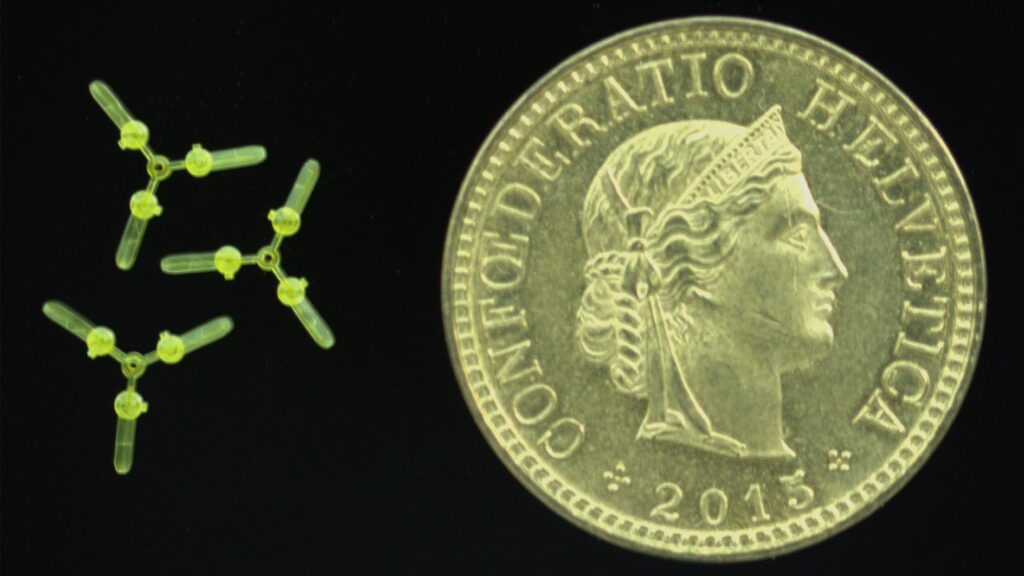
The MICROBS Lab’s microfliers. 2026 EPFL/MICROBS – CC-BY-SA 4.0.
By Celia Luterbacher
When you blow air across the neck of a bottle, you’re not just producing a pleasant tone: you’re also demonstrating a phenomenon called Helmholtz resonance. This occurs when airflow passing across an opening causes air trapped inside a cavity (like a glass bottle) to oscillate back and forth. At certain frequencies, these oscillations become much stronger, producing the familiar humming sound.
Now, researchers in the MicroBioRobotic Systems (MICROBS) Lab in EPFL’s School of Engineering have harnessed the physics behind this phenomenon to build hollow structures that act as miniature, sound-powered machines. The innovation has been published in Science Advances.
“Instead of pushing devices around with sound waves, we have created acoustic resonators that are tuned to harness sound at specific frequencies to generate directional thrust and controlled motion,” says lab head Selman Sakar. “Our work shows the feasibility of transforming a simple, cleverly designed mechanical piece into robotic matter.”