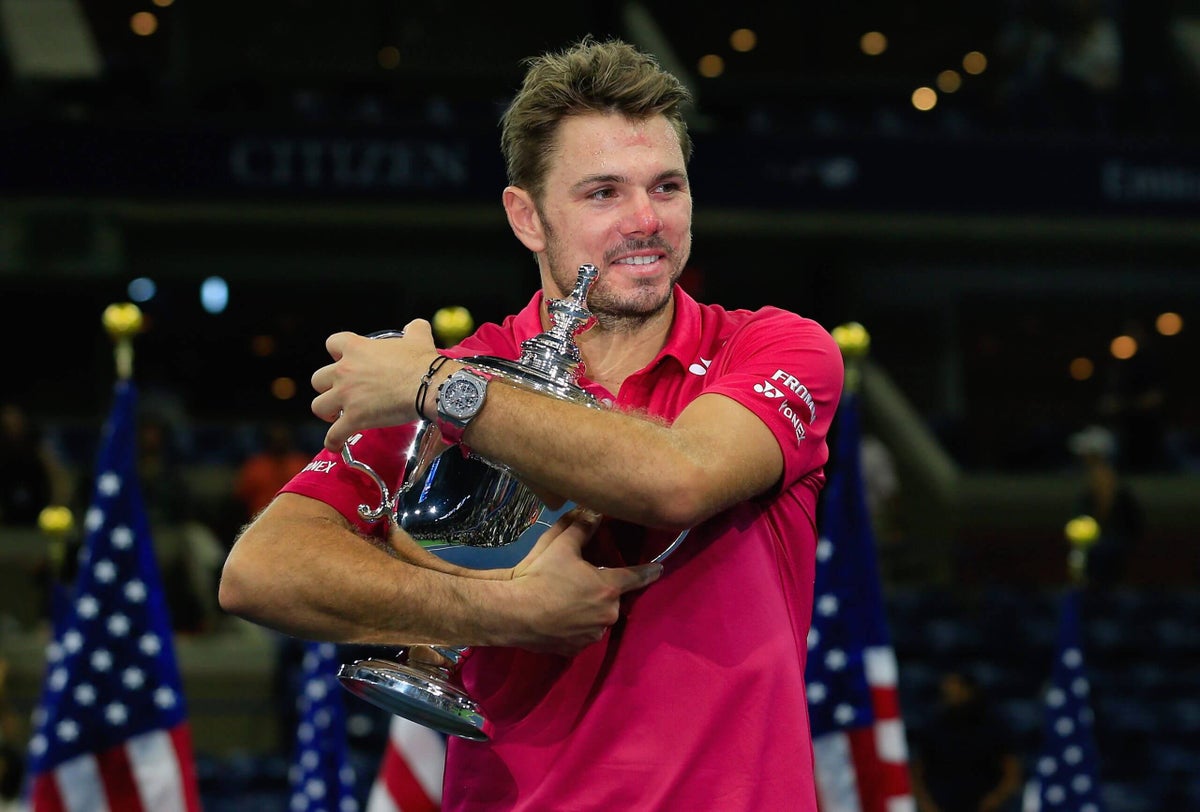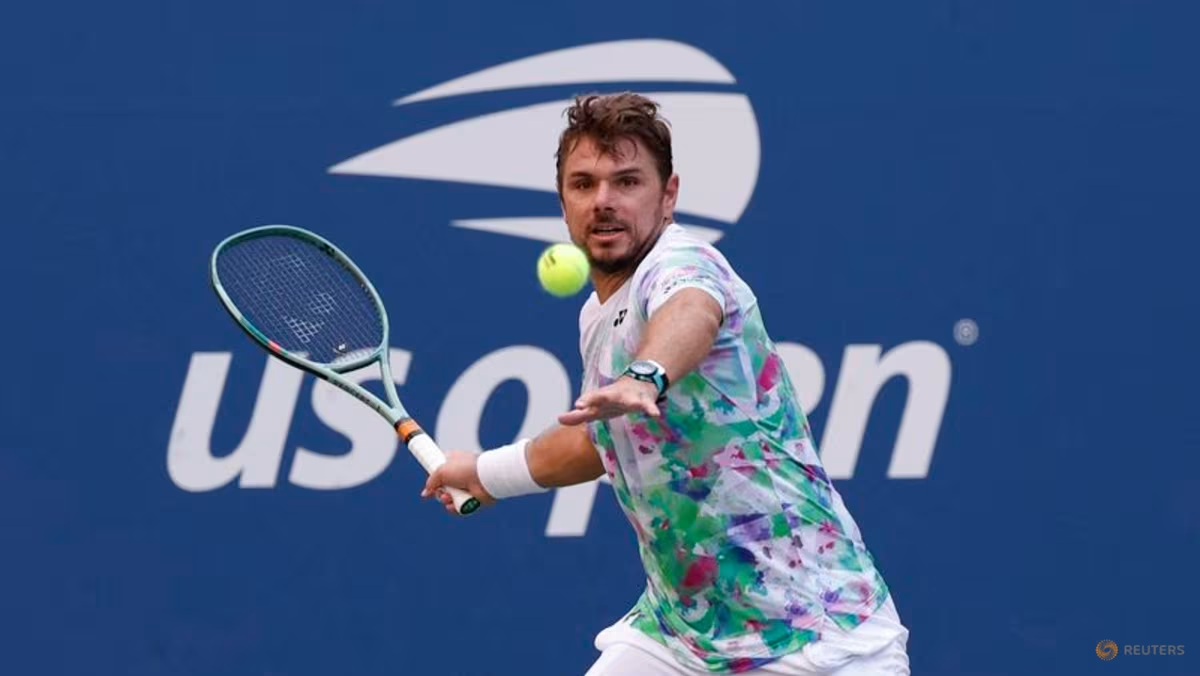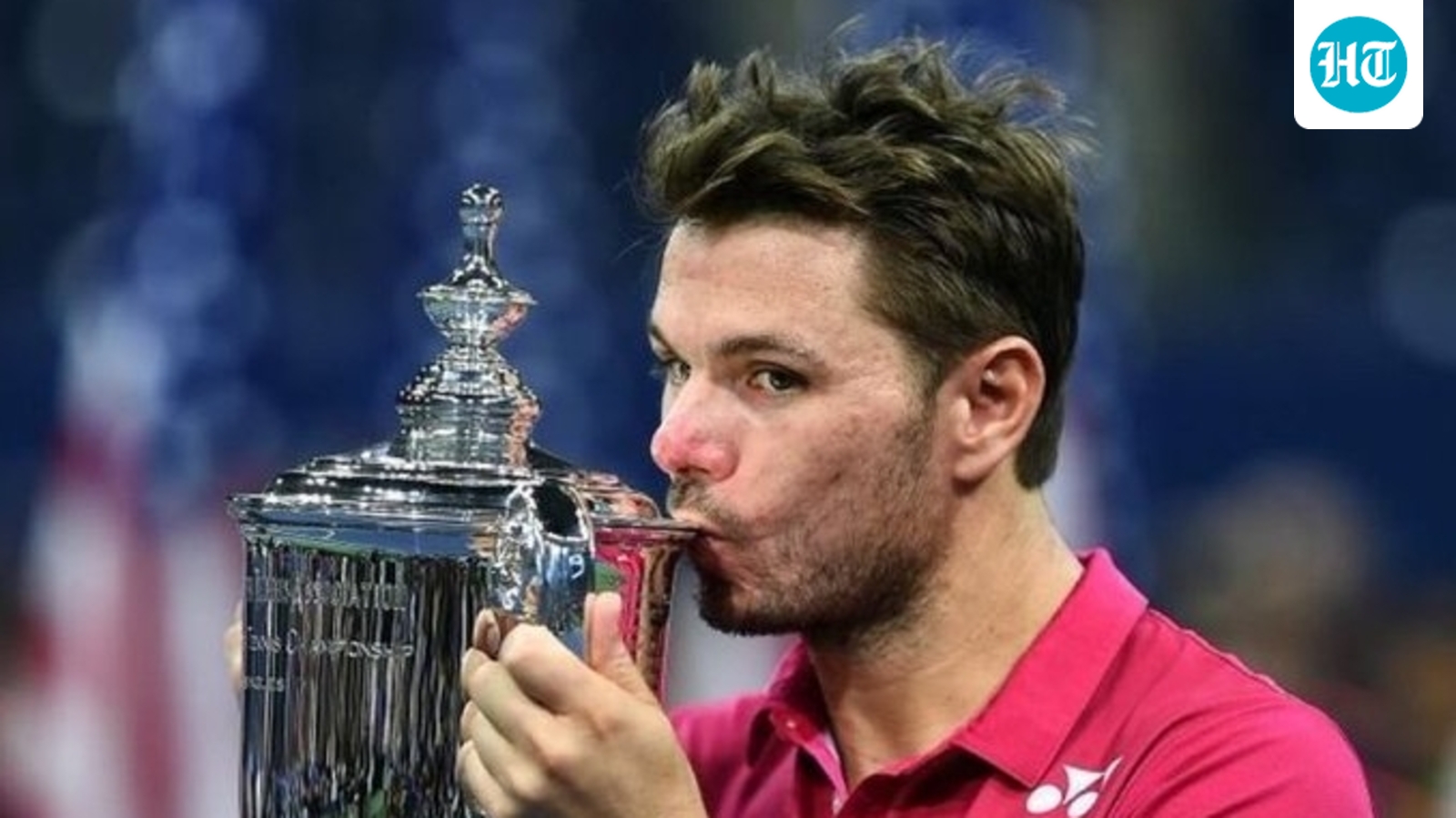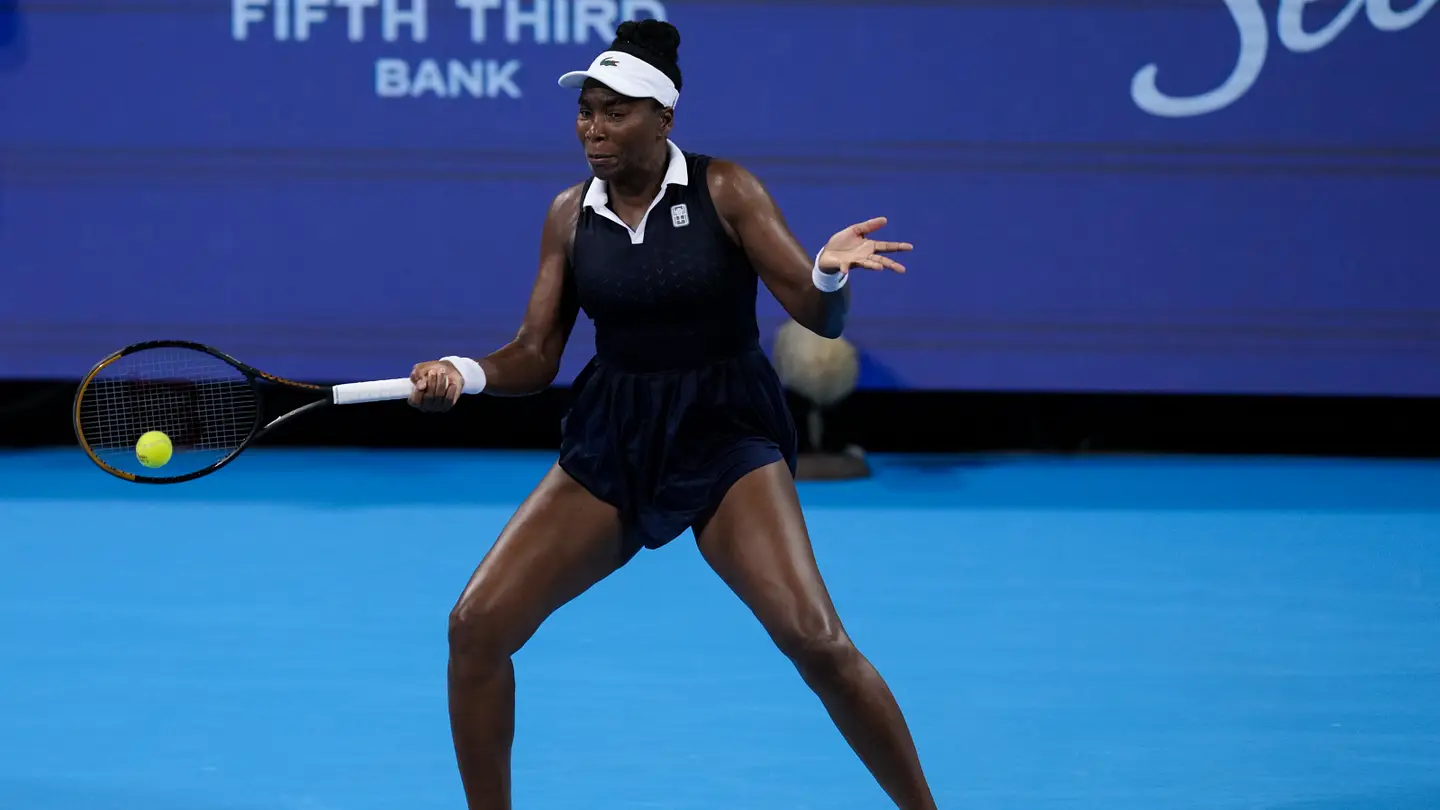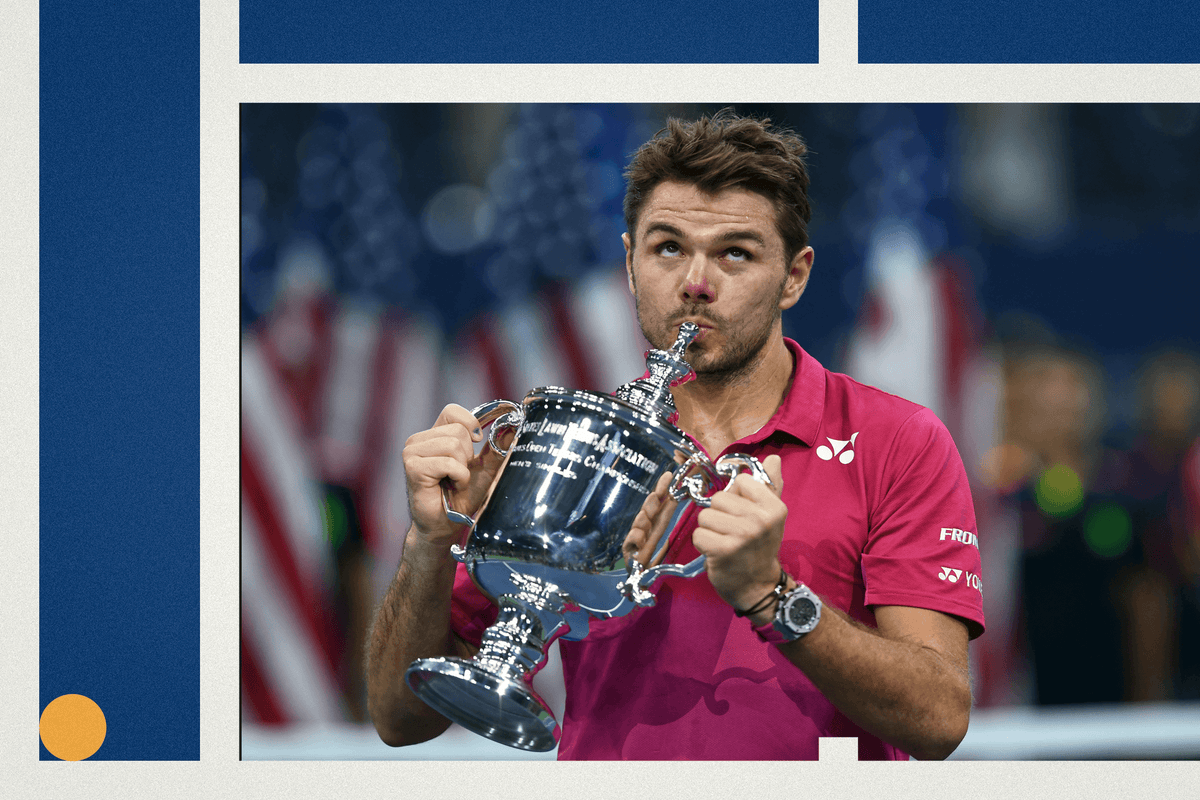
Welcome back to the Monday Tennis Briefing, where The Athletic will explain the stories behind the stories from the past week on court.This week, the U.S. Open’s wild cards came under more scrutiny, a world No. 1’s downturn continued and the top of a tour got even more exciting.If you’d like to follow our fantastic tennis coverage, click here.Why did U.S. Open wild cards cause more debate?The U.S. Open announced its final wild cards this weekend, adding fuel to the fire that is the everlasting debate over wild cards at Grand Slams.First, Serena Williams will not be playing singles at the U.S. Open. The wild-card slot seemingly being held for her instead went to Sofia Kenin, a former Grand Slam champion on the cusp of being able to enter on her own merit. If one more player withdraws from the women’s event, Kenin will get direct entry, and world No. 2 Elena Rybakina is sweating on the results of a scan on her left Achilles.More controversial was that the USTA did not award a wild card to three-time Grand Slam champion Stan Wawrinka. The 2016 U.S. Open champion will not get the chance to take a final Grand Slam bow in New York, despite having made a move for a wild card. He will not play qualifying.Wawrinka is slightly hampered in this case by the fact that he is from Switzerland, and not Australia or France, the hosts of two other Grand Slam tournaments that have a reciprocal wild card deal going with the USTA.Gaël Monfils, Wawrinka’s good friend and fellow retiring great, gets to continue his farewell tour in New York because he received a main draw wild card through the FFT. (Former U.S. Open finalist Kei Nishikori, who is also retiring, received a wild card into the qualifying tournament.)Carlos Alcaraz confirms U.S. Open returnAva Wallace and Lauren Morales-JonesThe USTA has not commented on the decision not to award Wawrinka a wild card. It also does not assign the reciprocal wild cards — it gives them to the French and Australian federations, which then decide who gets them.In most cases, the debate over Grand Slam wild cards feels futile because the concept is inherently unconcerned with fairness.There is no merit system for earning a wild card. Tournaments hand them out completely at will, often to young, up-and-coming players (in most cases, from one of the four power countries in tennis) under the guise of growing the game.Otherwise, tournaments afford wild cards to players whom they think will enhance their tournament, record be dammed, meaning they’ll attract fans and sponsors and ultimately, dollars. Fault the larger tennis ecosystem for the existence of wild cards in the first place, sure. But don’t necessarily expect a Grand Slam tournament — whose goal is, in large part, to make money — to use a wild card to do anything other than try to make more money.One might think, given the recent outcry over soaring ticket prices, the U.S. Open would’ve appreciated a shot of goodwill among the tennis community. Fans who turn against an event theoretically have the ability to affect its bottom line, too.— Ava WallaceWhat’s going on with the defending U.S. Open champion?Aryna Sabalenka has been the No. 1 seed at every Grand Slam this year, just as she was last year.But she’s going to enter the U.S. Open as a shakier No. 1 than she has been the past two years. For the majority of 2026, Sabalenka has been far from the irresistible force that she was at the start of this one, when she reached the Australian Open final and swept the Sunshine Double of the BNP Paribas Open at Indian Wells and the Miami Open.Since then it’s been messy. Ever since Hailey Baptiste saved match points against Sabalenka at the Madrid Open before beating her in three sets, the defending champion in New York has appeared more vulnerable, even from commanding positions. She has reached just one semifinal in her past seven events, and went out of the Cincinnati Open to rising Czech talent Sára Bejlek in a defeat that followed a now-familiar pattern. Sabalenka led the first-set tiebreak 5-1, but lost it largely to a series of errors.She led the second set 4-1, but lost that largely to a series of errors, too. Bejlek’s unbelievable court coverage and crafty manipulation of speed and spin took full advantage of Sabalenka’s vulnerabilities.Aryna Sabalenka has been vulnerable to losing matches from commanding positions in recent months. (Cal Sport via Associated Press)At first glance, there appears to be little to explain her recent defeats, because they often contain such extreme variations in level. But if a throughline emerges, it’s that Sabalenka has lost trust in the texture she added to her game in 2023 and 2024, the drop shots and softer methods of attack that won her tight matches, notably her 2024 and 2025 U.S. Open semifinals against Emma Navarro and Jessica Pegula respectively.Ever the protagonist, Sabalenka focuses on herself to such a degree that when errors compound, escaping the spiral seems impossible, with the world No. 1 seemingly unable to recognize what is happening on the other side of the net and what she might do to counter it.Last year, Sabalenka came into New York after heartrending Australian and French Open final losses to Madison Keys and Coco Gauff, and a Wimbledon semifinal defeat to Amanda Anisimova. She won the title. The city suits her down to the ground. She may yet play her way into form.Right now though, it just doesn’t look like she will.— Matt FuttermanWhy is the top of the WTA Tour in a thrilling crunch?What does a rankings glut look like? Four players fighting for world No. 1, and six players separated by about 1,100 points between No. 6 and No. 11.On the WTA Tour, the races for world No. 1 and the season-ending Tour Finals could hardly be more compelling.In the immediate term, incumbent world No. 1 Aryna Sabalenka goes into the U.S. Open with Elena Rybakina, Coco Gauff and Jessica Pegula all vying to supplant her at the top of the women’s game.In tennis, players are competing not just against each other, but against the version of themself from the season prior. Removing the points that each player won at last year’s U.S. Open, the top four looks like this:
U.S. Open wild cards cause more debate as former champion Stan Wawrinka misses the cut
The 2016 champion is playing his final season on tour at 41, but will not get a New York goodbye in the main draw, at least.
1,351 words~6 min read