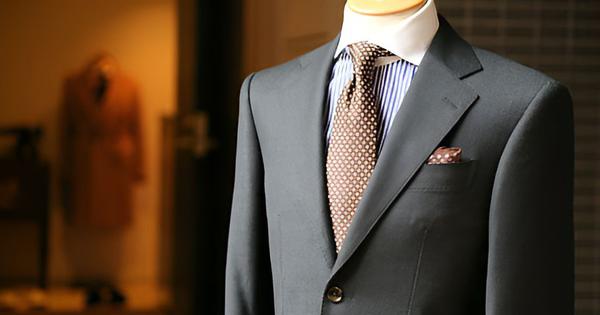
Clothes are not just fabric. They are the first sentence of every story you tell about yourself, written before you have opened your mouth, before anyone has heard your name or understood your intentions. Whether you are conscious of it or not, every morning when you open your wardrobe you are making a series of quiet decisions about how you wish to be received by the world that day. The question is not whether your clothes communicate. They always do. The question is whether what they are saying is what you mean.My grandmother never once dressed for an audience. She dressed for herself – with the same care and intention whether she was receiving visitors or spending a solitary afternoon in the garden. Her standards did not fluctuate based on who was watching. They were simply her standards, maintained because they reflected who she was rather than what she wanted others to think of her.This is the foundation of dressing with intention, and it is almost entirely the opposite of how most people approach getting dressed today. We live in an age of dressing for the photograph, the occasion, the comment section. We dress to impress, to signal, to perform. We dress to fit in or to stand out to project wealth or to project relatability, to communicate belonging to one tribe or distance from another. All of this is understandable. None of it is the same as dressing with intention. Dressing with intention means asking not, “What will people think?” but “Who am I today, and how do I want to honour that?” It means understanding the difference between dressing to be seen and dressing to be yourself. It means having standards that exist independently of an audience, because that independence, when genuine, is the very quality that makes a person truly well dressed. The most elegant people I have encountered across years of coaching and observation share one quality in their approach to clothing: they look like themselves. Not like a trend, not like a brand, not like an aspiration borrowed from someone else’s Instagram feed. Like themselves – considered, appropriate and at ease.There is a pervasive idea, particularly among younger people, that dressing appropriately is the same as dressing boringly – that convention is the enemy of self-expression and that rules about what to wear where are a form of social control best ignored.I understand the impulse. But I disagree with the conclusion. Dressing appropriately for a context is not a suppression of identity. It is a demonstration of social intelligence – the awareness that different spaces have different requirements, and that honouring those requirements is a form of respect. Respect for the occasion, for the people who have invited you into a space and for the shared understanding that makes social life function. When you attend a place of worship dressed as though you are going to a nightclub, you are not expressing your individuality. You are communicating – loudly and clearly – that your comfort matters more than the sanctity of the space and the feelings of everyone in it. When you arrive at a formal business dinner in clothes that belong at a Sunday market, you are not being refreshingly casual. You are signalling that you have not taken the occasion, or the people present, seriously enough to prepare. Appropriate dressing is simply this: reading a space correctly and responding with care. It is one of the most basic forms of social consideration. And when done well, when you walk into a room dressed exactly as the occasion calls for, neither overdressed nor underdressed, at ease in your clothes and therefore at ease in the room, it is quietly, powerfully impressive.Excerpted with permission from Everyday Etiquette: The Art of Mindful Living, Manik Kaur, Penguin India.
A new book suggests dressing consciously can be a practice in mindful living
An excerpt from ‘Everyday Etiquette: The Art of Mindful Living’, by Manik Kaur.
631 words~3 min read