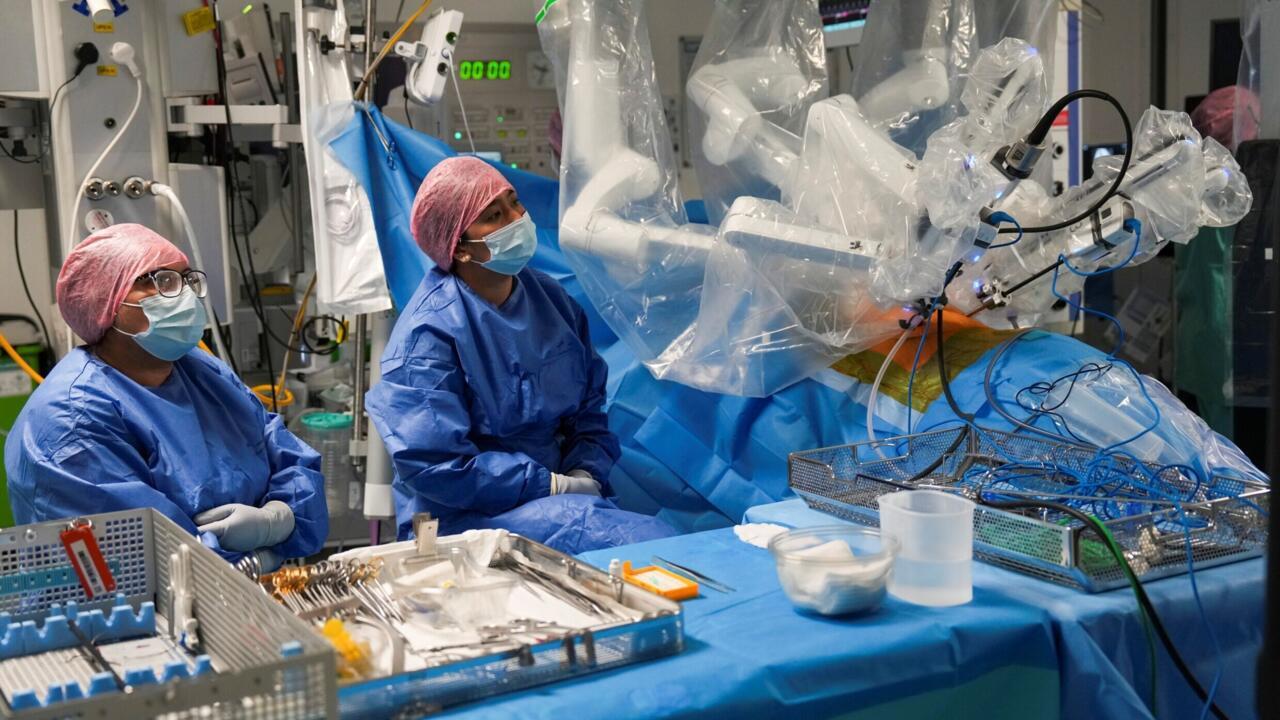
It was a decade ago when Pat Molloy was told something nobody ever wants to hear: he had cancer.“I wasn’t feeling fine, but I didn’t know what was making me feel a bit down. They figured out symptoms before I did,” he says of that time.When he underwent a blood test, the doctors noticed his haemoglobin levels were not as they should be. He was diagnosed with myelodysplastic syndrome, a group of bone marrow cancers.Now 75, Molloy says he’s been coming to St Vincent’s University Hospital (SVUH) in Dublin for “10 years now; they’re like family”.The Wicklow native gets a weekly blood transfusion and recently started a treatment called Azacitidine, a prescription chemotherapy medicine. He hopes it will reduce the number of transfusions needed.Despite the regular hospital visits, he is grateful for the additional years he’s been given. His focus is on living, not just surviving.“Six weeks ago I was out with Brad Pitt. I’ve been an extra in the Vikings. I have pigs that they use in the films sometimes. The work keeps me occupied so I don’t think about what’s wrong with me,” he says.“You like to get as much satisfaction out of life when you’re alive. You want to actually be alive. I used to always love the dancing and the jive. For years there wasn’t a band that played fast enough and now the slowest music is too much. But that’s the way life is, isn’t it?”Pat Molloy with nurse Ella Sweeney on one of his regular visits to St Vincent’s University Hospital, Dublin, where he receives ongoing care. Photograph: Dara Mac Dónaill/The Irish Times Molloy is one of thousands of people receiving treatment across the State’s cancer centres, which were established in a bid to centralise expertise, improve patient outcomes and to be on par with international standards.An estimated 44,000 people in Ireland get cancer each year, with the incidence rate increasing due to a number of factors, including Ireland’s ageing population. Over 220,000 people in Ireland are living with cancer or had it in the past – a 50 per cent increase compared to a decade ago. Consequently, the State recognised a need to move away from the fragmented delivery of cancer services, which resulted in inequity in the provision, availability and performance of services across various regions and social class.Now, eight hospitals have been designated as cancer centres. But some people working in the sector believe the State can take this a step further.Prof David Fennelly is clinical director of the UCD St Vincent’s Cancer Centre as well as clinical lead for cancer care in the HSE Dublin and South East region. He is seeking to set up a cancer network.Prof David Fennelly, clinical director of St Vincent’s UCD Cancer Centre at St Vincent’s University Hospital, Dublin. Photograph: Dara Mac Dónaill/The Irish Times A network would see hospitals, health groups and experts work together to share tools, skills and expertise to ensure the best outcomes for patients.“The advantage of a network structure is it won’t downgrade anywhere. It will support local hospitals. The benefit to the patient is huge, because there would be more clinical trials,” he said.“For a complex surgical procedure, outcomes are directly related to cancer volumes. The more times you do a procedure, the better you get at it.”But with these rising cases, problems are arising. “We don’t have enough beds,” he says, calling for “protected beds for cancer”.“We are the national centre for sarcoma, so if I have a 20-year-old down in Tullamore who I need to get into the national centre here, that patient in Tullamore is competing with the 75-year-old on a trolley in casualty.”Now that more people are surviving, and living with or after cancer, there is also a focus on life after the diagnosis.Michael Boland, an oncoplastic breast surgeon, said there have been advances in areas such as chemotherapy and other treatments for breast cancer, but there have also been surgical advances.Michael Boland, consultant oncoplastic breast surgeon at St Vincent’s University Hospital, Dublin. Photograph: Dara Mac Dónaill/The Irish Times “Historically, patients were offered a mastectomy, which is removal of the breast, or a lumpectomy, which is taking out the lump,” he says.“But we now try to offer patients an oncoplastic procedure which is the removal of the lump, and obviously that’s the primary focus, but doing that in a manner that allows us to put breast tissue back together in a cosmetic manner.”Boland says survival rates for breast cancer have improved. An increased focus has now shifted to the area of psychological recovery alongside physical recovery.“We want to make sure that the person has a really good outcome in terms of survival, but also in terms of quality of life. There’s loads of evidence to support that.”Continued progress towards these objectives requires additional time and staff, which he said will need to be resourced as demand continues to increase.“It’s just a matter of those procedures becoming standard for patients as opposed to offering them in a very limited basis,” says Boland.Surgical advances are not exclusive to breast cancer. Dr Nikita Bhatt, urological surgeon who specialises in robotic surgery, said the specialism has “pushed the boundaries in terms of what we can do”.Dr Nikita Bhatt (centre) with Dr Laurann Rabbitt and nurse Ping Zhang (right) at St Vincent’s University Hospital, Dublin.
Robotic surgery one of several developments ‘pushing the boundaries’ of Irish cancer care
As more people survive or live with cancer, expertise is focused on life after diagnosis as well as improving treatment options
1,419 words~6 min read