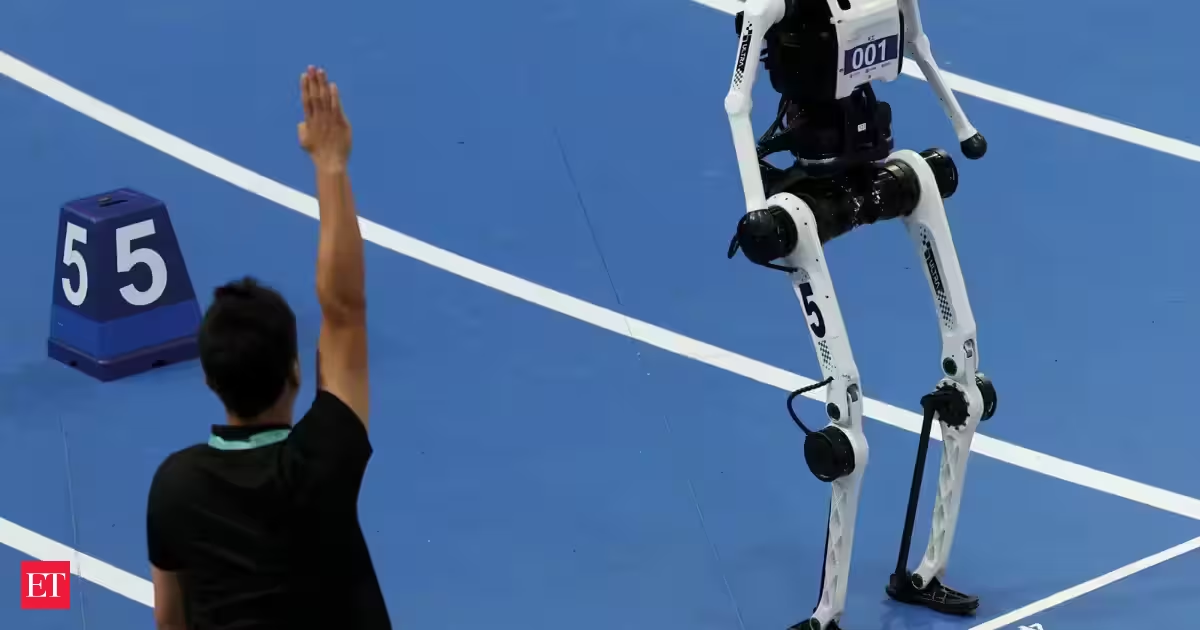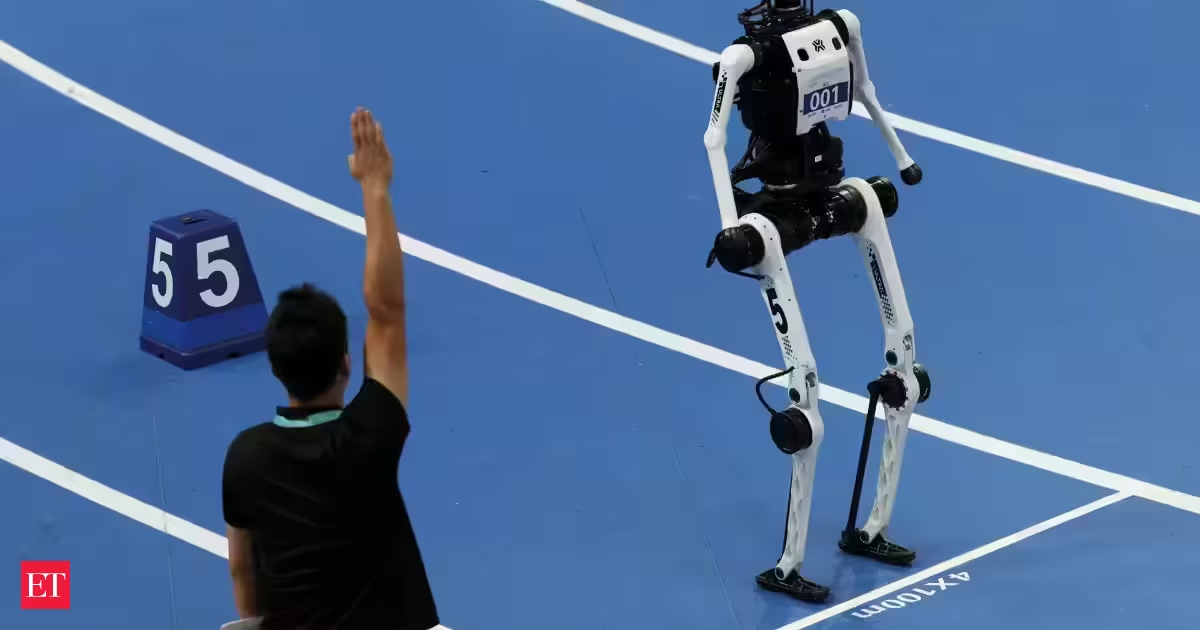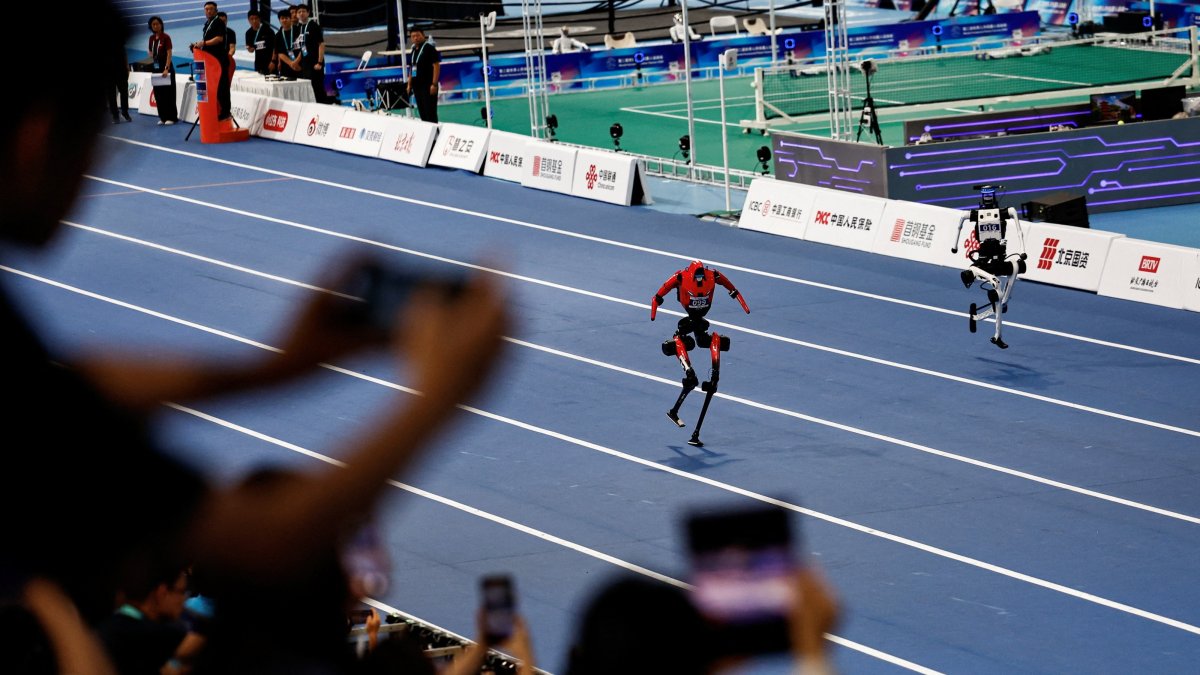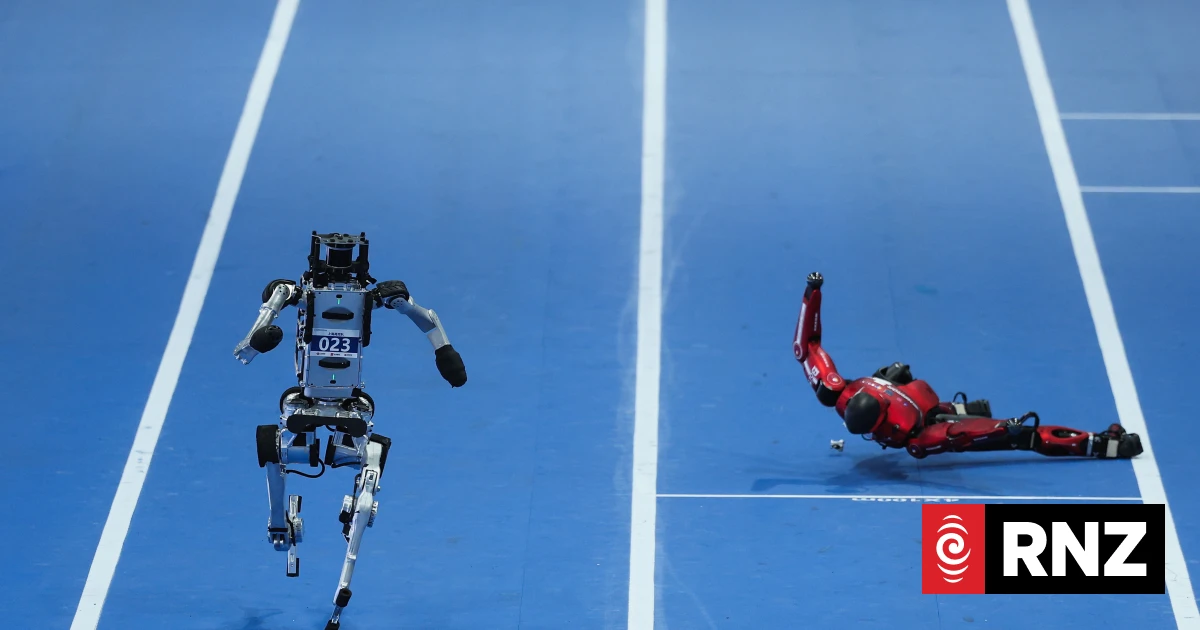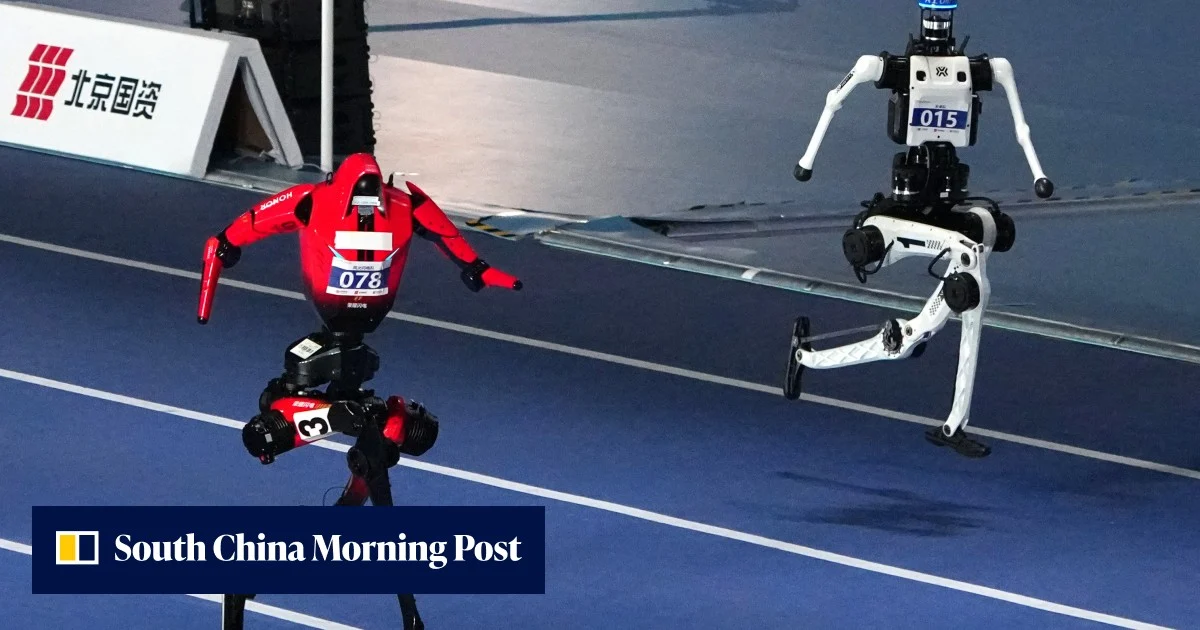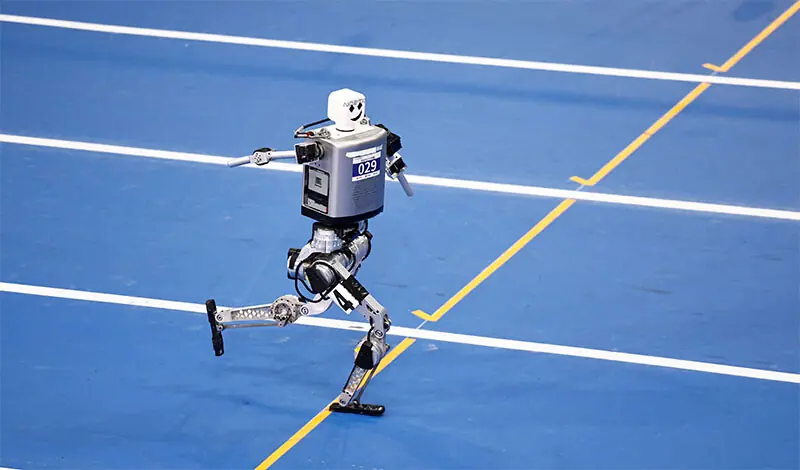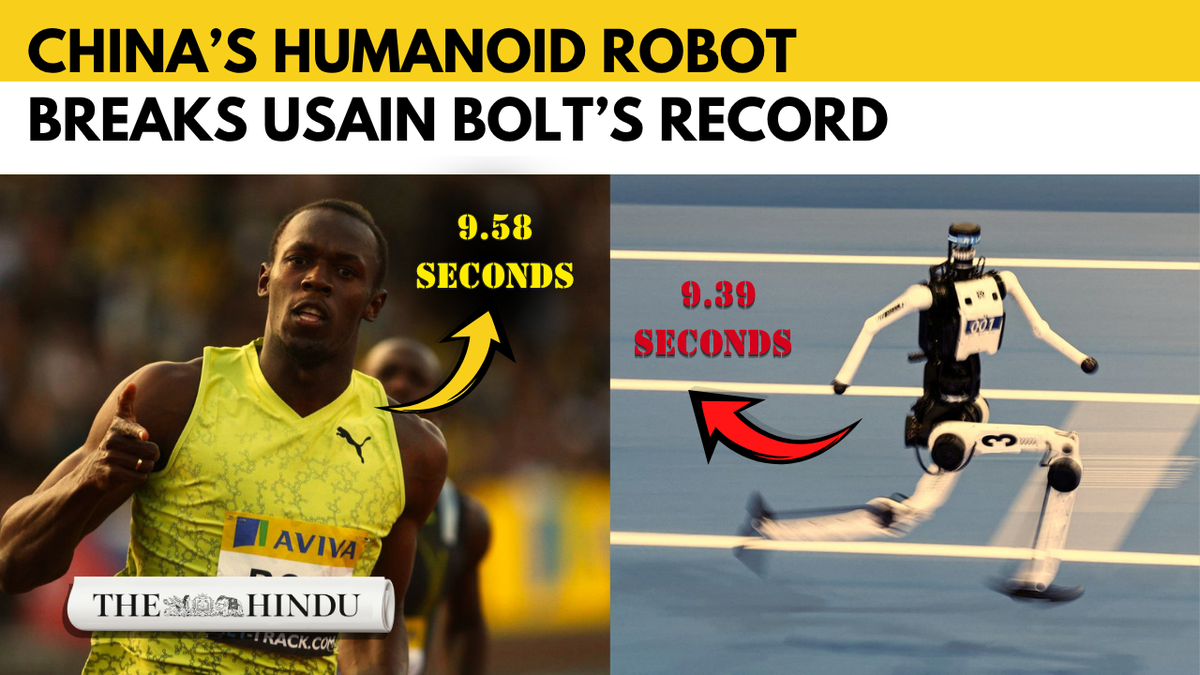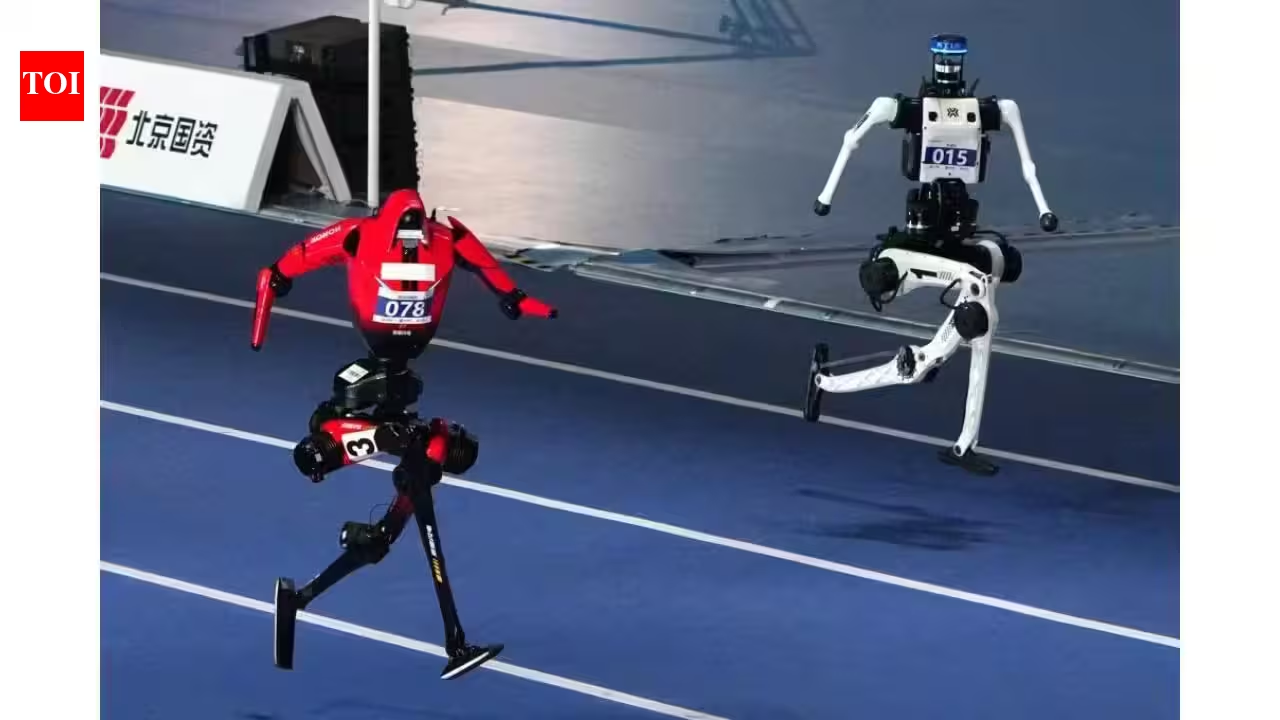
Image courtesy: South China Morning PostA Chinese humanoid robot named Tiangong Ultra has captured global attention after running 100 metres in 9.39 seconds, faster than Usain Bolt’s men’s world record of 9.58 seconds, according to a report by Reuters. Developed by the Beijing Humanoid Robot Innovation Center, Tiangong Ultra won its preliminary heat at the second edition of the World Humanoid Robot Games in Beijing, overtaking rival robot Lightning near the finish line.Rivalry with Honor’s lightningLightning, built by smartphone maker Honor, finished close behind in 9.47 seconds, also faster than Bolt’s record set at the 2009 World Athletics Championships in Berlin. Earlier tests showed Lightning clocking 9.32 seconds, reaching a peak speed of 14.5 metres per second. Despite their speed, both robots lacked Bolt’s finesse — Tiangong stumbled into the sidelines, while Lightning collapsed and had to be carried away on a stretcher.Rapid progress since last yearThe results mark a dramatic leap from last year’s inaugural games, when Tiangong Ultra won the 100m in 21.50 seconds. Tiangong also made history by winning the world’s first humanoid half‑marathon in Beijing in 2025. Lightning, meanwhile, claimed this year’s half‑marathon title in 50 minutes and 26 seconds, faster than the pace of the elite men’s human world record.Strategic industry for ChinaThe 100m sprint is one of 51 events at the games, which also feature football, dancing, and industrial‑task contests. China has designated humanoid robots as a strategic emerging industry, betting that advances in AI and hardware will accelerate their adoption in manufacturing, logistics, and consumer applications. Investor enthusiasm is evident: shares of Unitree, China’s best‑known humanoid robot maker, surged more than fivefold in their Shanghai debut this week, giving the company a market value of about $50 billion.Global participationThis year’s games, held at Beijing’s National Speed Skating Oval, have drawn 2,056 robots from 666 teams across 16 countries and six continents, a sharp increase from 280 teams last year.
Meet the Humanoid Robot winning hearts in China after running 100 meter in less than 10 seconds; faster than any men's world record
A Chinese humanoid robot named Tiangong Ultra has captured global attention after running 100 metres in 9.39 seconds, faster than Usain Bolt’s men’s world record of 9.58 seconds, according to a report by Reuters. Developed by the Beijing Humanoid Robot Innovation Center, Tiangong Ultra won its preliminary heat at the second edition of the World Humanoid Robot Games in Beijing, overtaking rival robot Lightning near the finish line.
316 words~1 min read