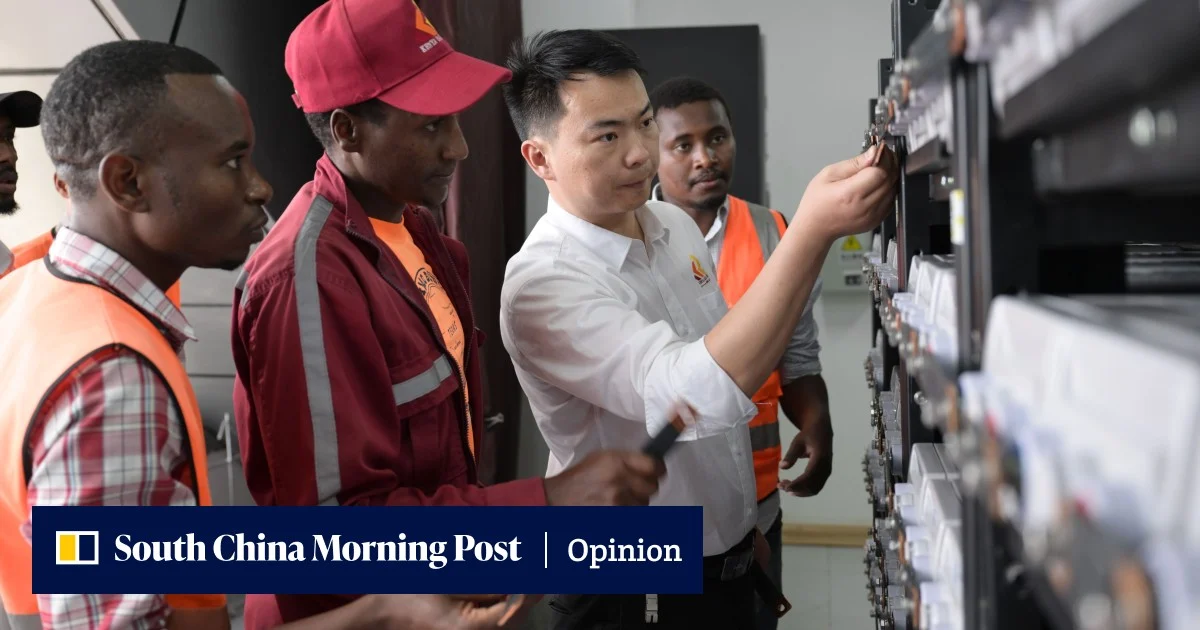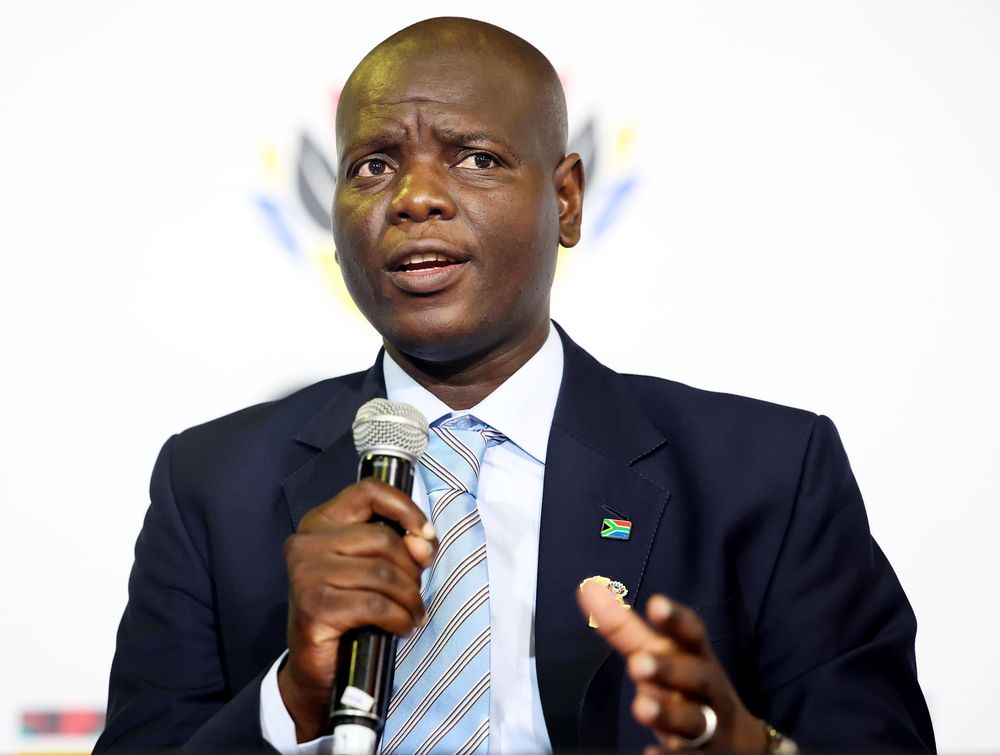
South African foreign policy commentary has spent the year fixated on Washington. The friction is real and the US “refugee” programme built on discredited security narratives has kept the political optics ugly. However, the optics are a distraction from the exposure underneath. The African Growth & Opportunity Act is a case in point. The US Senate voted 90-6 on August 8 to extend the programme to December 2028, and it must now be approved by the House before being signed off by President Donald Trump. Though the Senate vote buys time, it does not resolve the extraterritorial risk that Washington could withdraw preferences on political grounds. The programme is, by design, a condition rather than a commitment. Simultaneously, Washington is pairing tariff pressure with Silicon Valley’s control of the digital stack, while Beijing is exporting industrial overcapacity and onboarding African economies onto Chinese industrial and technological infrastructure. In both cases the dependency is built into the contract, the equipment and the operating systems before any political crisis arrives. The strategic priority should thus be to reduce single-point exposure. The question is whether South Africa’s pivot toward Beijing achieves that or merely relocates it. Great-power dependency At the China International Supply Chain Expo in June deputy president Paul Mashatile insisted that South Africa must not remain a mine for the world’s second-largest economy, yet the trade profile contradicts the aspiration. The Framework Agreement on Economic Partnership for Shared Prosperity, in force since May 1, gives South Africa the same duty-free access Beijing has already offered to 32 other African states. It is not a bespoke South African concession and it does not touch the underlying asymmetry of unprocessed ore leaving the country in one direction while high-value Chinese machinery and digital systems arrive in the other. Huawei has built the all-optical transmission backbone underpinning Transnet’s network, deploying technology across more than 140 equipment rooms and about 10,000km of fibre. ZPMC, a state-owned subsidiary of China Communications Construction Company, supplied ship-to-shore cranes, straddle carriers and rubber-tyred gantry cranes to Durban and Cape Town across a decade of contracts. This is the same manufacturer a March 2024 US congressional investigation found had installed undocumented cellular modems on port crane components at US facilities. A Beijing pivot from Washington merely exchanges dependency rather than reducing it. US cloud providers hold jurisdictional reach over South African data through the US Clarifying Lawful Overseas Use of Data (Cloud) Act. Huawei holds physical reach through the transmission layer it built and maintains. The mechanism differs, but the structural vulnerability is the same. Replacing dependency on Washington with dependency on Beijing is just rebranding. Regional anchor South Africa’s primary economic shield is its immediate neighbourhood. Addressing the Southern African Development Community (Sadc) council in Durban, international relations minister Ronald Lamola set two targets: more than double intra-Sadc trade from about 20% of the total to 50% and enforce critical mineral beneficiation at source. The Sadc region holds about 30% of global critical-mineral reserves, including about half the world’s cobalt and a fifth of graphite. The African Continental Free Trade Area gives South Africa a plausible route to being the industrial, financial and rules-setting hub for a $3.4-trillion market. A sovereign that has deepened regional trade and thickened supply chains across Sadc is more durable than one whose access to any market depends on the discretion of a foreign government occupied with a great-power rivalry. Two qualifications bear directly on whether this strategy can be executed: beneficiation and infrastructure. The classical argument against forcing local processing of minerals whose cheapest processing is elsewhere is not ideological. The cost difference is a deadweight loss borne by South African producers, and the jobs claimed for the protected sector come at the expense of output and employment in the export sectors that would have paid for imports. Two qualifications bear directly on whether this strategy can be executed: beneficiation and infrastructure. The defence requires showing that the targeted industry has a genuine path to competitiveness, meaning a time limit, a productivity benchmark, and a credible end state. South Africa’s beneficiation ambition has produced none of these. Without them, the policy is a subsidy to incumbents framed as industrial development. Durban was ranked last in the World Bank’s 2024 container port performance index, 403rd out of 403 ports globally. A trade target that runs through a port performing at the bottom of every global benchmark is not a strategy. External capital The credible frame is a portfolio where no single node, if withdrawn, collapses the whole. Gulf infrastructure capital is meaningful: United Arab Emirates bilateral trade sits above $9bn annually, with material foreign direct investment in energy and logistics. The India-Brazil-South Africa axis remains a working South-South channel, with Indian trade above $13bn and Brazilian agro-industrial technology transfers on offer. The EU is South Africa’s largest institutional investor and it shares South Africa’s exposure to US and Chinese technological monopolies. This gives it an incentive for partnership in sectors in Beijing and Washington. The Carbon Border Adjustment Mechanism (CBAM) generates real trade friction, and Pretoria is entitled to say so at the table rather than absorbing it quietly. The Africa Forward summit in Nairobi, co-hosted by France, and the €1.11bn in investment pledges secured during President Cyril Ramaphosa’s Paris visit suggest that equity co-investment, blended finance and first-loss guarantees for Sadc logistics and digital infrastructure are available. That is the shape of external engagement that builds South African capacity rather than substituting for it. The portfolio argument is not that diversification eliminates external dependency. It is that no single external partner should be able to halt South African development simply by withdrawing. Economic diplomacy is not tested by preference extensions in Washington or by warm receptions in Beijing. It is tested by whether domestic industrial output rises, regional trade thickens and supply chains stop routing through single points of failure. Future positioning should mean treating great-power access as one input among several, not as the plan. • Davhie is research associate at the Centre for Risk Analysis, focusing on political risk and foreign policy.Business Day
OFENTSE DAVHIE | SA’s economic sovereignty needs a multiplex strategy
China and the US offer different mechanisms but the same structural risks
1,012 words~5 min read