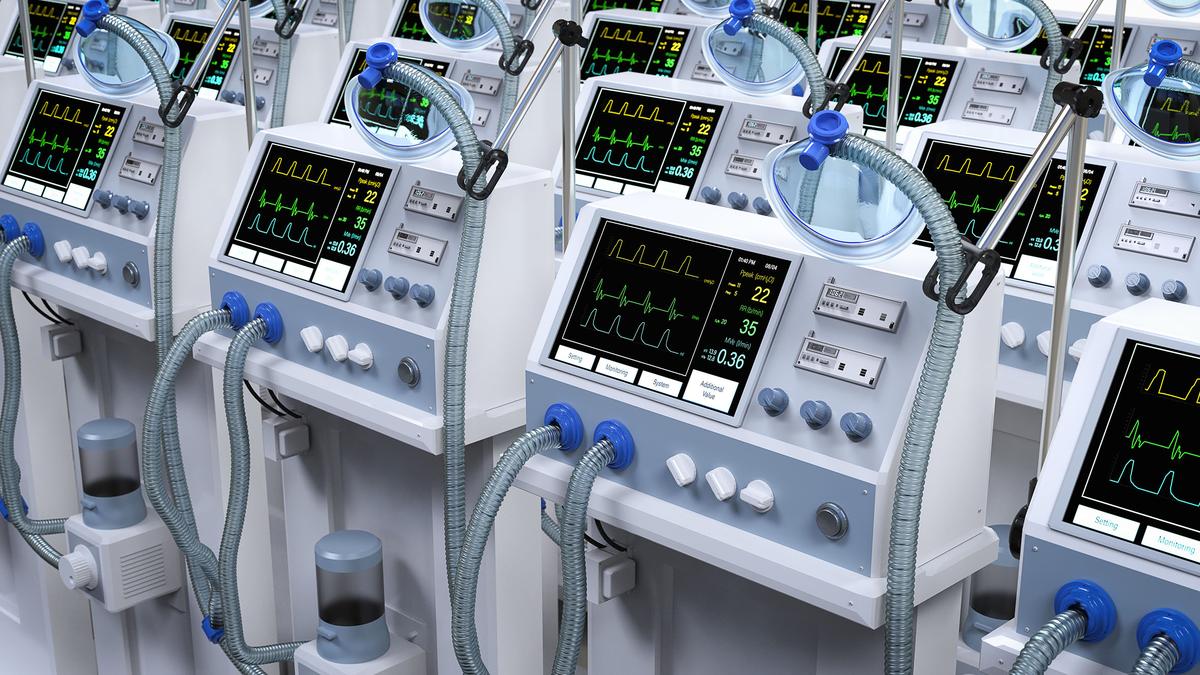
VITAL SIGNS. The global medtech market exceeds $600 billion
| Photo Credit:
PhonlamaiPhoto
For years, the conversation around medical device manufacturing in India has centred on one concern: our dependence on imports. India is one of the world’s largest healthcare markets, yet a significant share of the medical technologies used across hospitals and diagnostic centres has historically come from outside the country. Today, however, the conversation needs to move forward. Reducing imports is important, but it cannot be the final measure of success. The larger opportunity is to build medical technologies in India that the world wants to buy.The scale of this global opportunity is significant. India’s medical devices market is valued at around $16 billion, while the global market exceeds $600 billion. A strong foundation has already been laid for domestic manufacturing. Government initiatives such as Make in India, production-linked incentives, support for medical device parks and other measures to strengthen domestic manufacturing have encouraged many companies to invest locally. We are seeing more medical equipment manufactured and assembled in India. The next step is harder, but also far more rewarding: increasing the value created within the country.A medical device may carry a ‘Made in India’ label, but several critical components inside it could still come from overseas. This is especially true for sophisticated diagnostic and imaging technologies, where specialised electronics and other components require advanced manufacturing capabilities. We should, therefore, look beyond assembly. India must build a stronger medtech ecosystem of component manufacturers and specialised suppliers. Localisation should ultimately be measured not only by where a device is assembled, but also how much of the technology, engineering and economic value is created here.The second shift must be from manufacturing to innovation. India must create more intellectual property. This means investing consistently in R&D, product engineering, clinical validation and technologies such as AI-enabled diagnostics, advanced imaging and point-of-care solutions. India has an unusual advantage here. We have strong engineering talent, a large technology sector, capable clinicians and one of the world’s largest and most diverse healthcare ecosystems. Bringing these strengths together can create medical technologies that are affordable, scalable and relevant well beyond India.We must also make it easier for innovation to reach the market. India has a vibrant start-up ecosystem, and many young companies are solving genuine healthcare problems. But developing an idea is very different from building a globally successful medical device. Innovators need access to testing infrastructure, clinical validation, regulatory expertise, manufacturing capacity and international markets. Greater collaboration between start-ups, academic institutions, hospitals and established medtech manufacturers can help bridge this gap.Quality is equally important. When an Indian medical device enters another country, it is competing not simply on price but also trust. Hospitals and clinicians expect consistent performance, strong clinical evidence, reliable service and compliance with demanding international standards. Global quality benchmarks need to be built into products from the design stage itself.There are encouraging signs. India’s medical device exports increased from about $2.5 billion in 2020–21 to $4.1 billion in 2024–25. The challenge now is to move further up the value chain and increase the share of sophisticated, technology-intensive products within those exports. At the same time, self-reliance need not mean producing every component within India. Medtech is a globally interconnected industry. The smarter approach is strategic localisation: building capabilities where India can create technological and economic advantage while remaining connected to the best global technologies and supply chains.‘Make in India’ gave us an important starting point. The next ambition should be larger: innovate in India, create value in India, and make for the world.