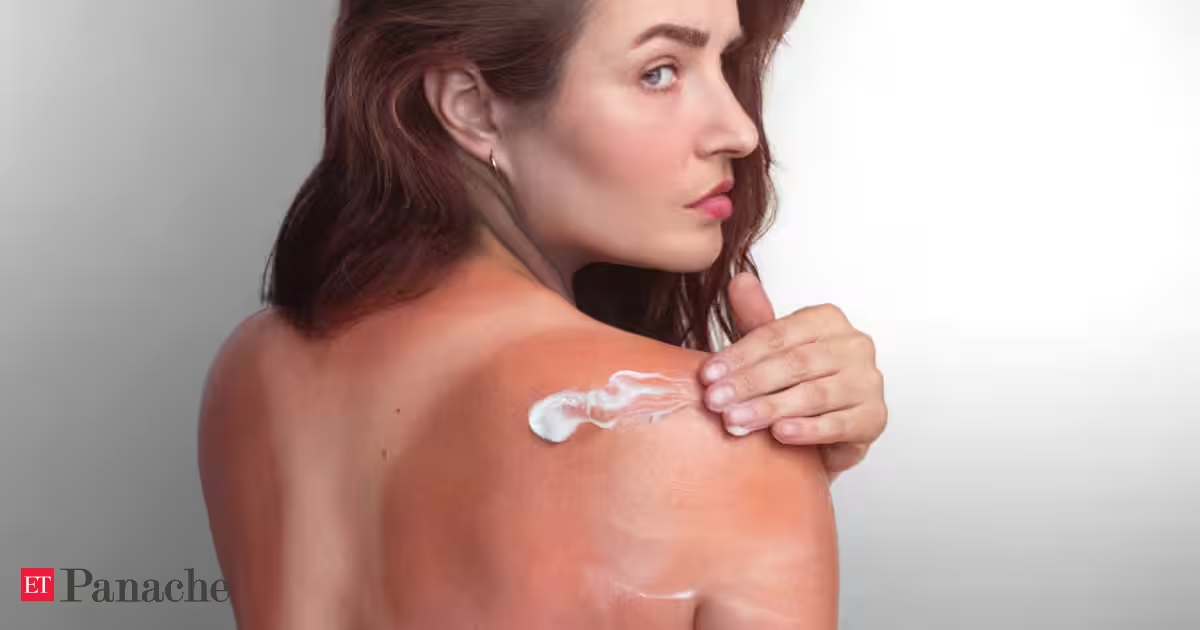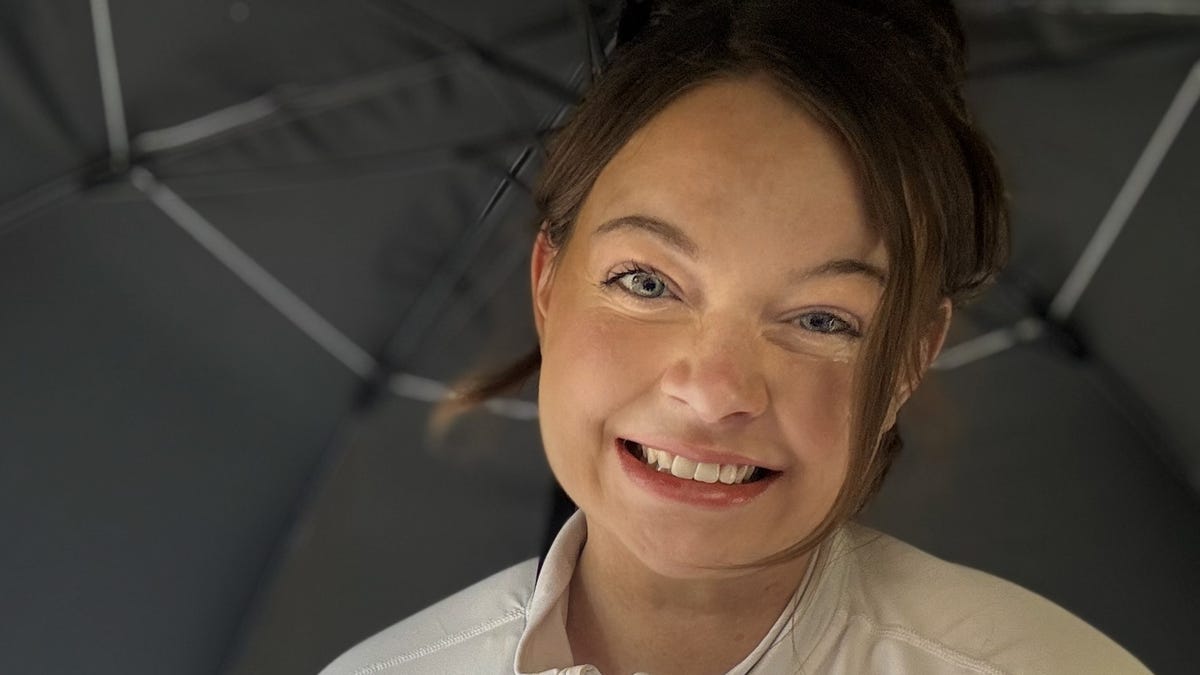
If you’ve struggled and grumbled through this summer’s heatwaves, I promise you – it could be far worse.In a few short months, the relentless glare of the sun and risk of burning will be a hazy memory for most. But, for me, the battle to protect myself against UV never ends – not even in winter.I’m 46 and suffer from a rare, life-changing skin condition that, strange as it sounds, makes me allergic to sunlight.This summer, I haven’t left the house unless I’ve absolutely had to. When I’m out, I’ll wear a panama hat, sunglasses, a silk scarf and lashings of sunscreen – and still feel ungodly fear. I’m simply not used to this level of intense sunshine and I can’t take the risk of burning.When it’s hot, I worry about sweating off the suncream – for me that would be a painful and punishing disaster.It hasn’t always been this way, though I’ve always struggled with ill health. As a child, I had such bad asthma and eczema that I was hospitalised two or three times a year. I’d be given heavy steroids and wrapped up in bandages impregnated with coal tar to reduce the itching and inflammation.When I was nine, I spent Christmas in hospital and will never forget waking up on December 25 surrounded not by family but by nurses and beeping machines. I felt scared and desolate. It was hard not to cry.Then in 1997, when I was 17, I developed a strange and painful new condition. My skin would become red raw, swollen, and blistered, seemingly for no reason at all. It was a complete mystery to doctors and it didn’t respond to treatment. I’m 46 and suffer from a rare, life-changing skin condition that, strange as it sounds, makes me allergic to sunlight, says Sonal KeayIn fact, it took a full year before I was diagnosed by a specialist dermatologist, who revealed I’d become allergic to all daylight, both UVA and UVB rays from the sun. For the next year, I was in a state of shock – it’s hard to grasp even now.The medical name for this is chronic actinic dermatitis, and it’s a severe overreaction of the skin’s immune system to sunlight and ultraviolet light. It’s also very rare – when I was diagnosed, only six other people in the UK had it.Even after diagnosis some people thought it was a load of nonsense. Although my parents were always fully supportive, some family members didn’t believe us, and some doctors didn’t think someone with Indian heritage could have a sensitivity to light in this way.Pre-diagnosis, within minutes of going outside, I developed hives wherever my skin was exposed to sunlight. If I went out in the heatwave we’ve just had, I’d last 30 to 60 seconds. In winter, up to five minutes.My severe allergic reaction looked like a horrendous burn – my face would swell and I’d feel so much pain and itchiness, I’d want to claw it off. When it peeled, scratching felt like intense relief. I felt existentially depressed and profoundly despairing. I also felt angry – why me?Post-diagnosis, I developed an absolute terror of going outside. In fact I feared all light, even lamp light. Even on an overcast day my skin would have the same horrific reaction, just more slowly. And if I ‘burned’, I’d have to spend days recovering in darkness.I’d lock myself in my room, not wanting even a chink of light to enter it, not even daring to walk past a window. I hid myself away from the world.Most sufferers never leave the house, the specialist dermatologist told me; they’re so beset by depression they don’t even try to live a normal life. I understand why – this condition is psychological torture. But I just couldn’t face a future of self-imprisonment.I carried on going to school – but was so paranoid about getting burned I’d apply sunscreen every half hour. That led to some bullying because, in those days, you could only buy white suncream. With my brown skin, I ended up looking purple.I didn’t socialise much, but it did solidify the friendships I had – I really valued those who stuck by me.It took me several years to adjust, mentally and physically. There was no counselling available, but the dermatologist warned my parents I was at increased risk of suicide.When first diagnosed I was offered azathioprine, a drug that dampens the immune system. But I’d have had to take it long-term and it can increase the risk of certain cancers, so I refused.I realised then: ‘Either I won’t have a life or I need to find a way to live with this.’ I had to overcome my fear and push myself.It took a few years of trial and error, but I learned to manage my condition. I did well in my A-levels and went to King’s College London to study German literature.Before the start of my second year, I went to Venice with a close friend from university. It was September – I’d never go away at the height of summer – and my first trip in a long time but in Venice I learned, very painfully, that light-coloured paving, and water, reflects and therefore doubles the dose of UV.My normal precautions didn’t adequately protect me and the day before my friend and I were supposed to fly home, I got an allergic reaction. My severe allergic reaction looked like a horrendous burn – my face would swell and I’d feel so much pain and itchiness, I’d want to claw it off After university, I did a law conversion course and, aged 25, became a criminal barristerI told my friend to go and extended my booking for three days. I couldn’t leave the hotel room. My skin was red raw and I knew exposing it to more damage would be catastrophic.When I eventually caught a flight home, I stayed covered up and sat well away from the window. (Nowadays I always book a window seat so I can pull the blind down myself rather than sit next to someone who won’t when I ask.)Despite such setbacks, I was determined my medical condition wouldn’t stop me flourishing.After university, I did a law conversion course and, aged 25, became a criminal barrister. I practised full-time for 15 years.Courts are darkened, wood-panelled rooms, usually with few or no windows – quite suitable for someone like me to work in!Even though I had to be vigilant travelling to and from work, I was able to safeguard my skin.Today, I’ve learned to manage my sunlight allergy with strict sun avoidance and big slicks of La Roche-Posay Anthelios Factor 50, even in winter. I wear a hat and, at home, we have anti-UV film on the windows – I can burn through glass. I live a normal-ish life.It did affect my love life, though. I was so afraid of someone accidentally wiping off a patch of suncream when they touched me, I shied away from any spontaneous shows of affection.When we were first dating, I had to tell my husband we couldn’t just kiss or hug whenever we wanted.Our wedding in 2013 was all indoors and I was grateful the church was so dark though, naturally, I did have to spend a few minutes outside to get there. I wore a lot of suncream and didn’t get burned. It was a wonderful day – nothing could spoil it for me.Our daughters were born in 2014 and 2017. When I was pregnant the first time, the suncream stopped working. No one knows why, but my dermatologist advised that my increased hypersensitivity was probably hormonal. It sent me into a frenzy of despair.What if my condition got worse? I could develop an allergy to all light – even artificial light. Other people have. Thankfully though, after I gave birth, it resolved immediately and it didn’t happen again. When the children were young, my condition could make things difficult. If we were out, it was hard for me to comfort them – little ones need cheek-to-cheek contact when they’re upset. I still get quite emotional when I see other parents soothing small children this way.My children know not to touch me when we’re out, but I make up for it when we’re at home.When we go on family holidays to Spain or France, I make sure the windows wherever we’re staying are covered at all times. I usually take blackout blinds and bring hair clips so I can fasten the curtains fully and ensure no light gets in.In an emergency I’ll buy aluminium foil or use a newspaper to plaster over the windows.I cover up my skin as much as I can, stay indoors every day between 11am to 3pm, and spend every other day indoors the whole day.Even if I’ve protected it, after time outside, my skin feels inflamed – tight, taut, uncomfortable and tingly and I know I need to remove myself to a darkened room. My family is used to me saying ‘I need to rest my skin.’I was terrified that my children would inherit this, and I still do worry – but they’re now 12 and nine, and so far there’s no evidence of it.I’ve never reached out to other people with my allergy – I don’t think there is a sizeable enough pool. There’s no research being done on this condition to my knowledge. Because it’s so rare, I imagine it would be hard to get funding.However, the scare during my first pregnancy drove me to investigate if there was anything further I could do.Over the years I’d realised that a silk scarf against my skin when it was inflamed made it feel better. I’d lay it across my pillow and sleep on it.I wanted to understand why, so I holed up at the British Library and dug into the scientific literature. There I discovered the amazing qualities of silk.Used since Ancient Greek times as a wound-healing agent, silk applied to the skin not only makes it heal faster, but the scar knits together more neatly.Silk is also a barrier and a protein, like our skin. Structurally and chemically it’s very similar, and our body recognises it.My research prompted me to change career and to create my multi-award winning skincare brand, This Is Silk. It was a nerve-racking move because starting any business is a risk – and I’d loved being a barrister and was good at it.It was a change in identity as well. My previous job was high stakes because I was responsible for people’s liberty. Now I was in the beauty industry, which appeared to be mainly about looks.But I focused on the health of our skin and discovered people with so-called ‘normal’ skin aren’t always served well by beauty. My skin condition might be rare, but many people can’t tolerate retinoids or acids, for example, which can cause irritation and increase sun sensitivity.The only skincare product I used before was Eve Lom cleanser to take off my suncream at the end of the day. I didn’t want or need to use any skincare until I hit my mid to late-30s. I never liked it or trusted it and my suncream served as moisturiser. It wasn’t until I started seeing the signs of ageing – fine lines, drier skin – that I started to look at it.I wanted an alternative to the anti-ageing skincare ingredients that would damage my skin, but I wasn’t interested in fancy marketing.I’m fussy, with high standards, so developing my skincare range – a face oil, cream cleanser, a concentrate (to boost your existing regime) and a rich cream – was a long, painstaking process. I worked with leading cosmetic and pharmaceutical scientists, and SF-VII®, our proprietary silk peptide ingredient was developed by Matteo Santin, Professor of Cellular Regeneration, who specialises in cell tissue repair and wound healing at the University of Brighton.No, it isn’t chopped up fabric in there! It’s a protein, engineered to deliver proven benefits for skin, including promoting synthesis of collagen, the protein that makes skin bouncy.Each product underwent rigorous trials at an independent laboratory. I wanted testers to have, ahem, no skin in the game. Ninety seven per cent reported smoother skin, and reduction of fine lines, but my favourite result was that 84 per cent experienced greater skin density – which basically means that the silk is laying down new skin cells. Skin is measurably plumper and firmer.I’ve been told it’s very likely I’ll have my allergy for life. But my products help maintain the health of my skin – and I truly believe they can do the same for anyone.I’m happy that my customers are happy, but it’s also brought great joy to my life. I wouldn’t be here if it weren’t for silk. thisissilk.comAs told to Anna Maxted
I suffered with sore skin. Then I found it was a little-known allergy
If you've struggled and grumbled through this summer's heatwaves, I promise you - it could be far worse.
2,134 words~10 min read