SpaceX is expected to begin expanding Starlink Mobile by late 2027, targeting a market that Bernstein estimates at more than $300 billion in annual U.S. mobility revenue. The problem is that connecting a normal smartphone directly to a satellite is much harder than connecting it to a nearby cell tower. “Distance, however, remains a stubborn physics problem, even at low-earth-orbit,” Bernstein analysts wrote.
A terrestrial cell tower may sit only a few kilometers from a phone, while a Starlink satellite can be hundreds of kilometers away. That weakens the signal and creates problems with upload speeds, indoor coverage, antennas, and battery life. Phones may also need to transmit at higher power to maintain a satellite connection, which can drain batteries faster.
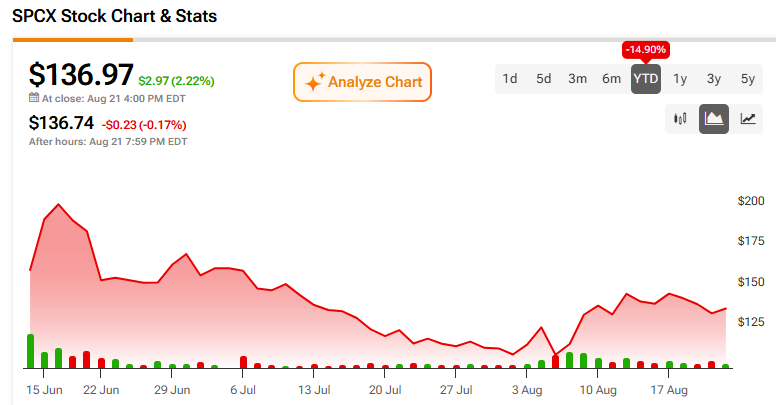
Meanwhile, SPCX shares rose 2.22% on Friday, closing at $136.97. The stock is still down about 15% since its June IPO.
Starlink V2 Should Help, but It May Not Be Enough
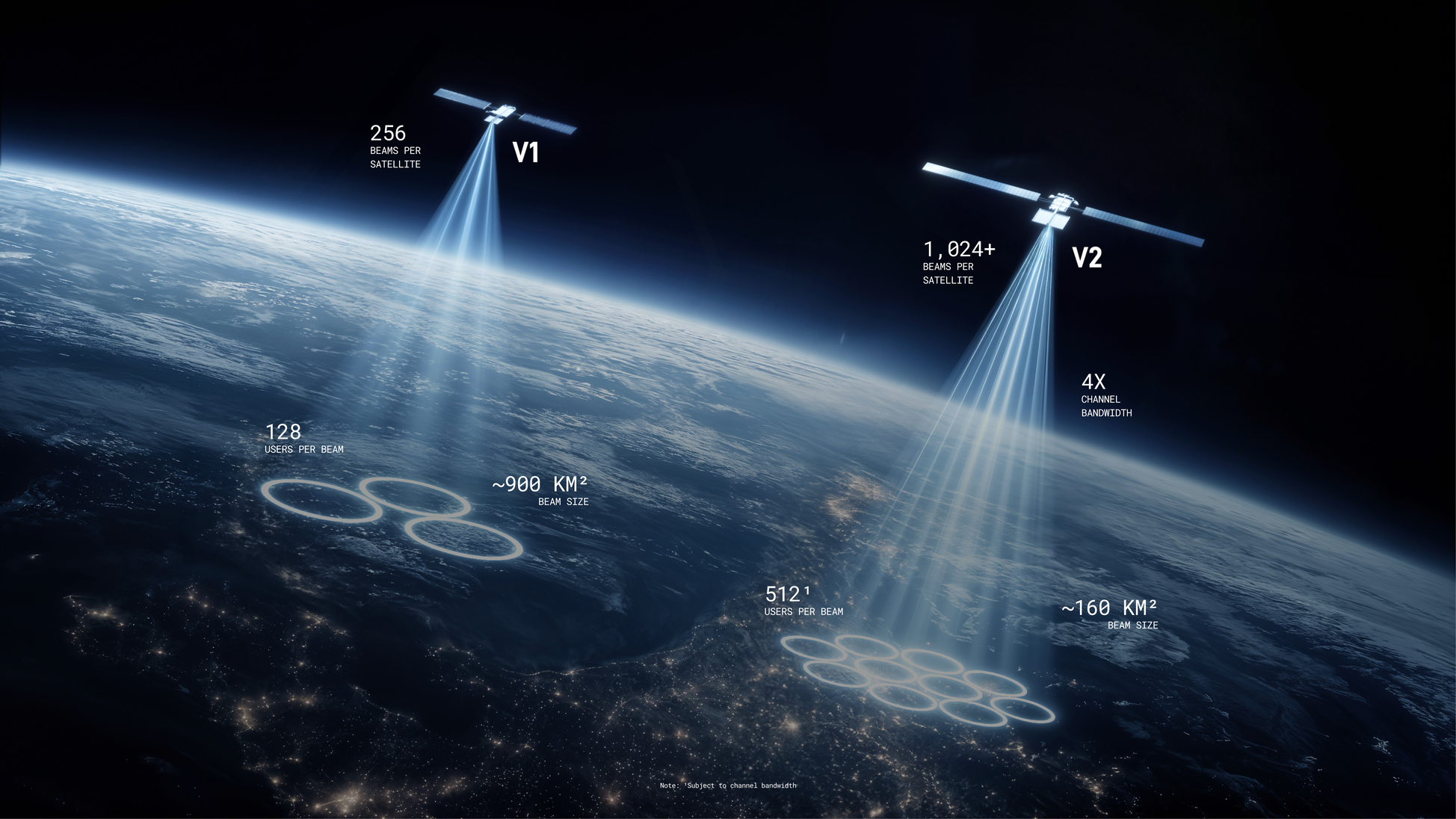
SpaceX’s upcoming V2 Mobile satellites should improve the service. Bernstein expects them to orbit at about 325 to 350 kilometers, down from roughly 525 to 535 kilometers for the current generation, while using stronger antennas. That should improve signal quality.