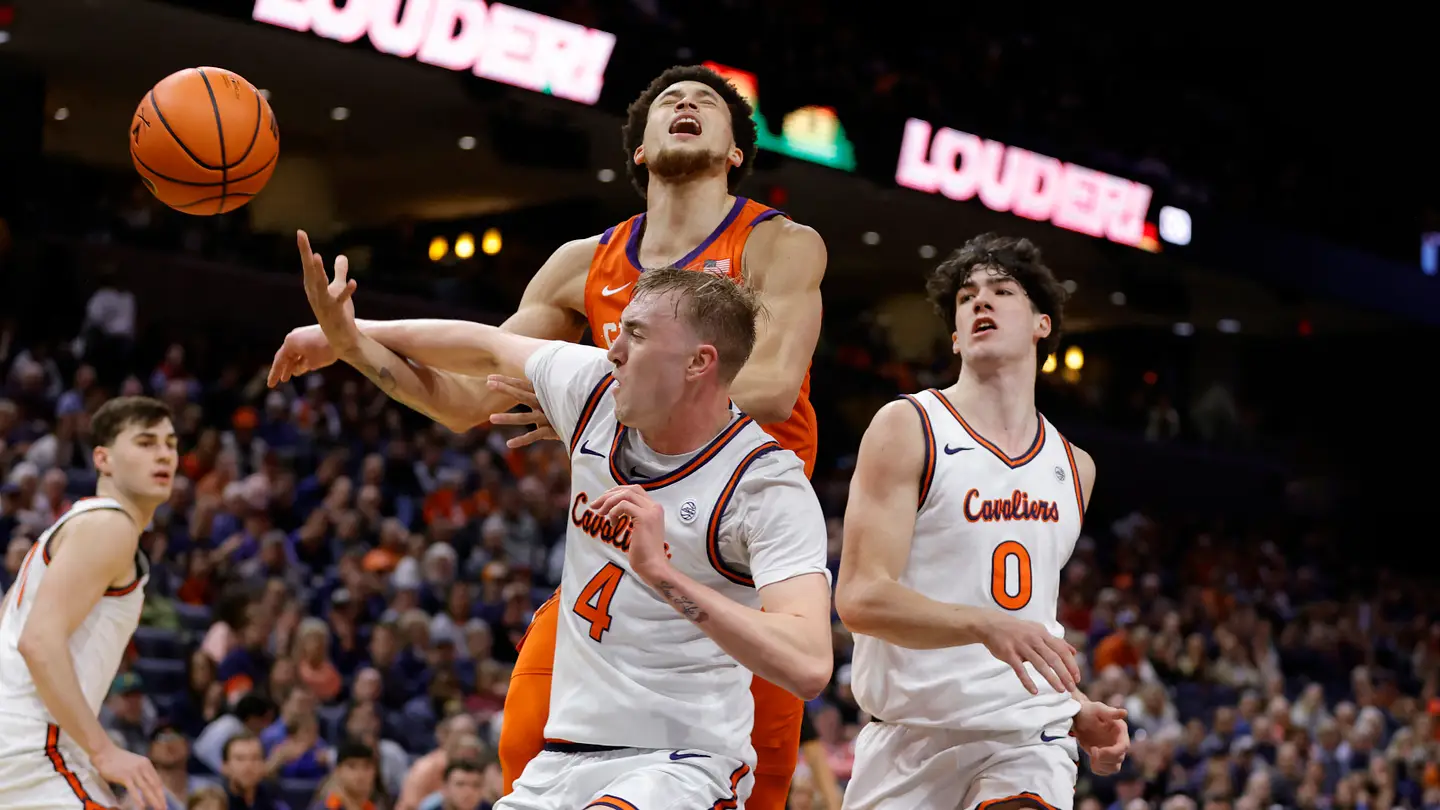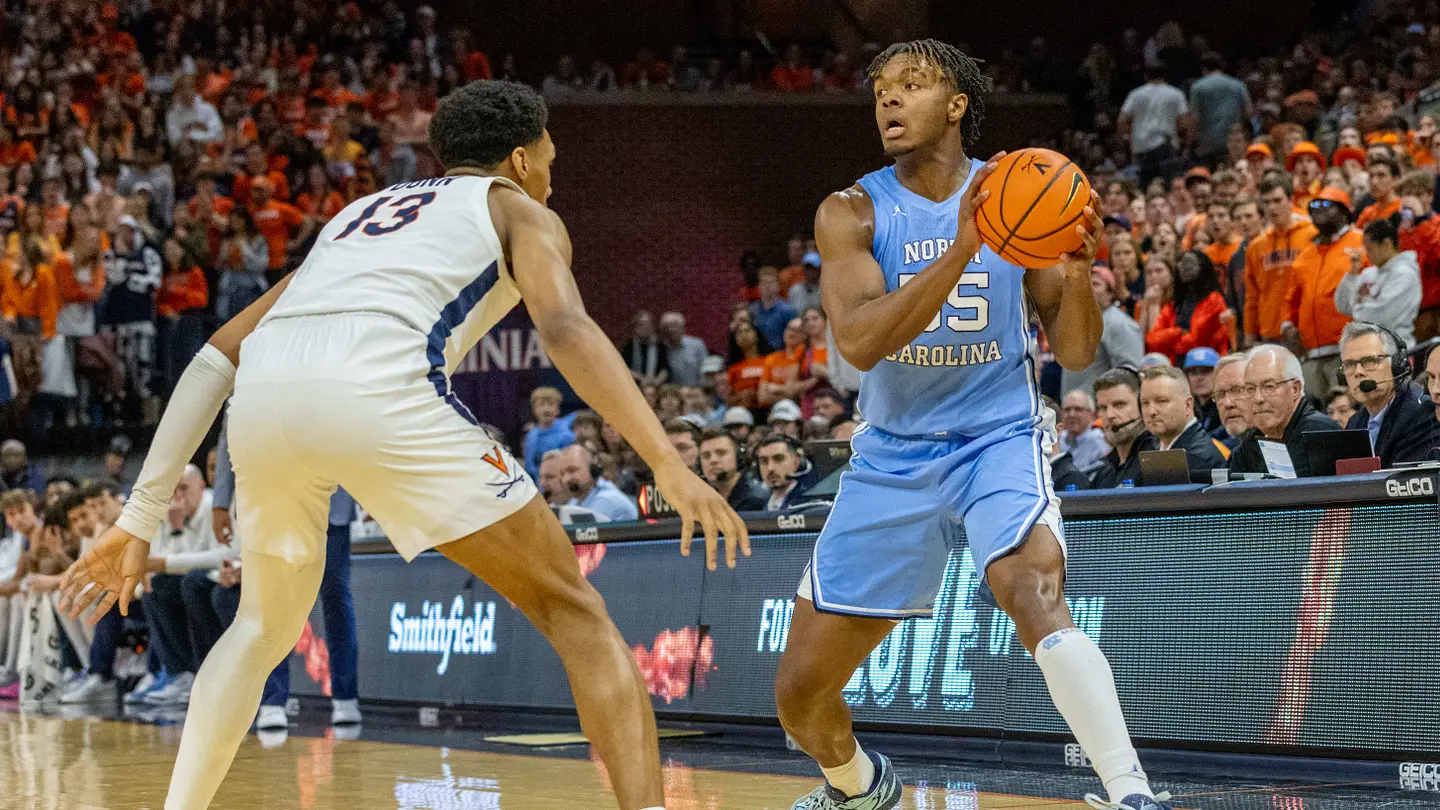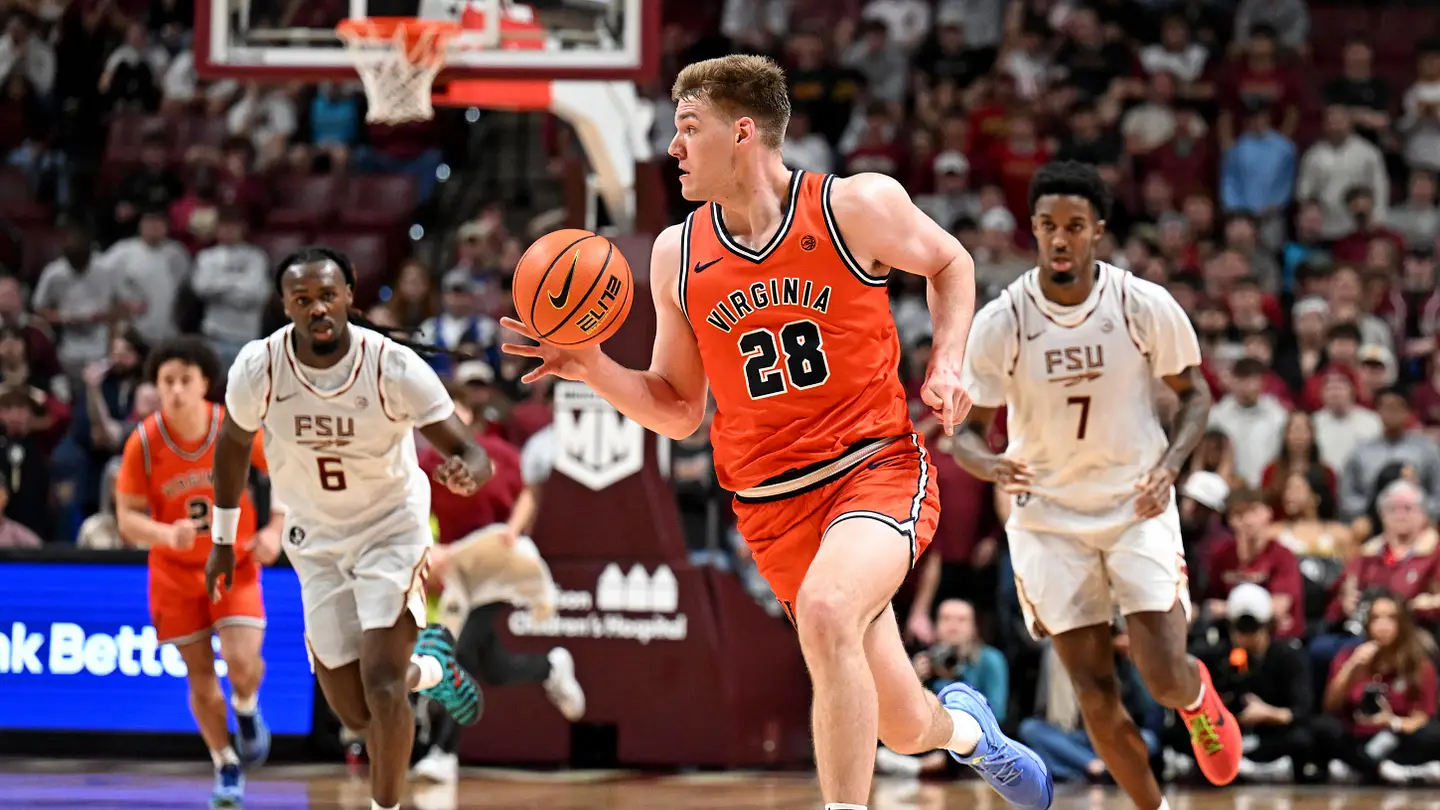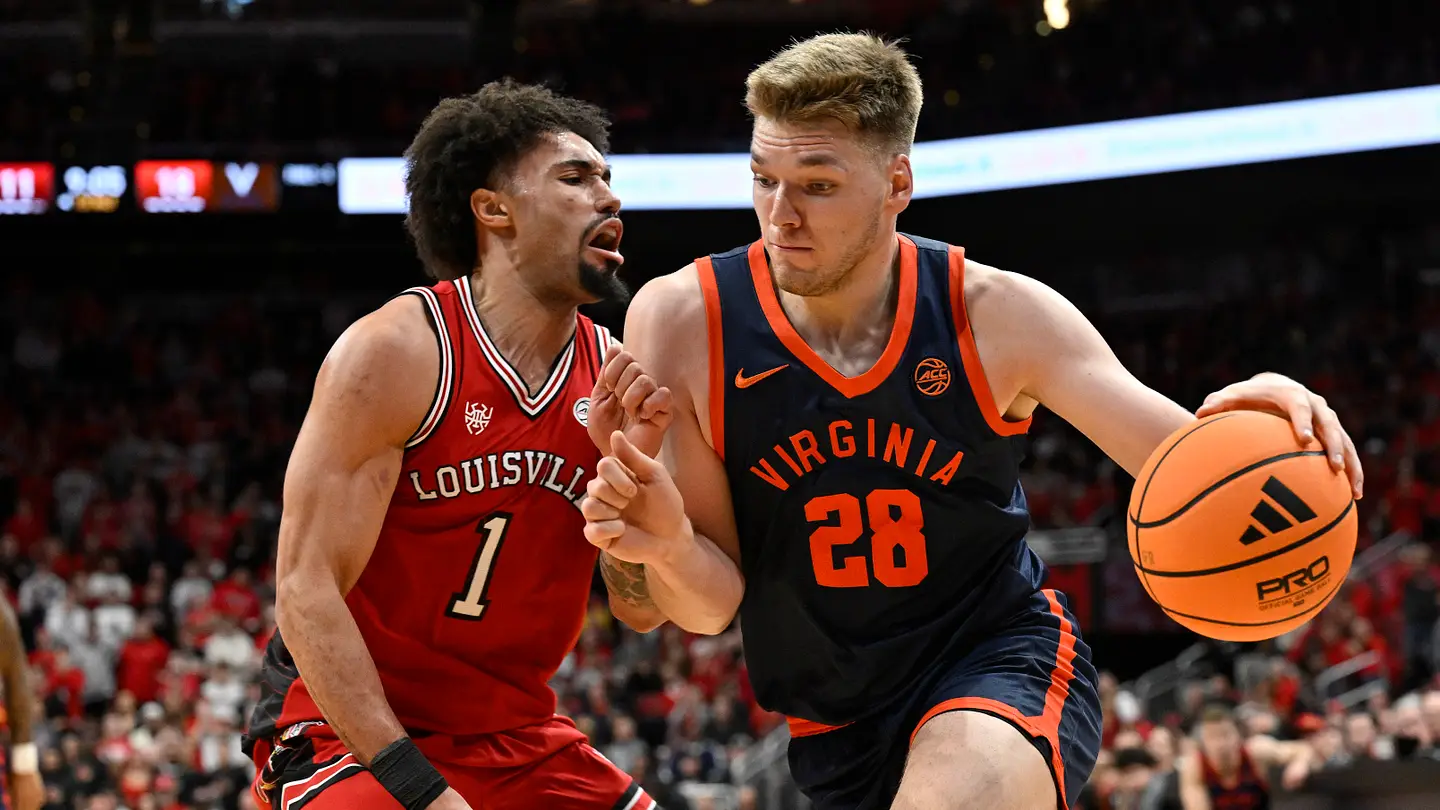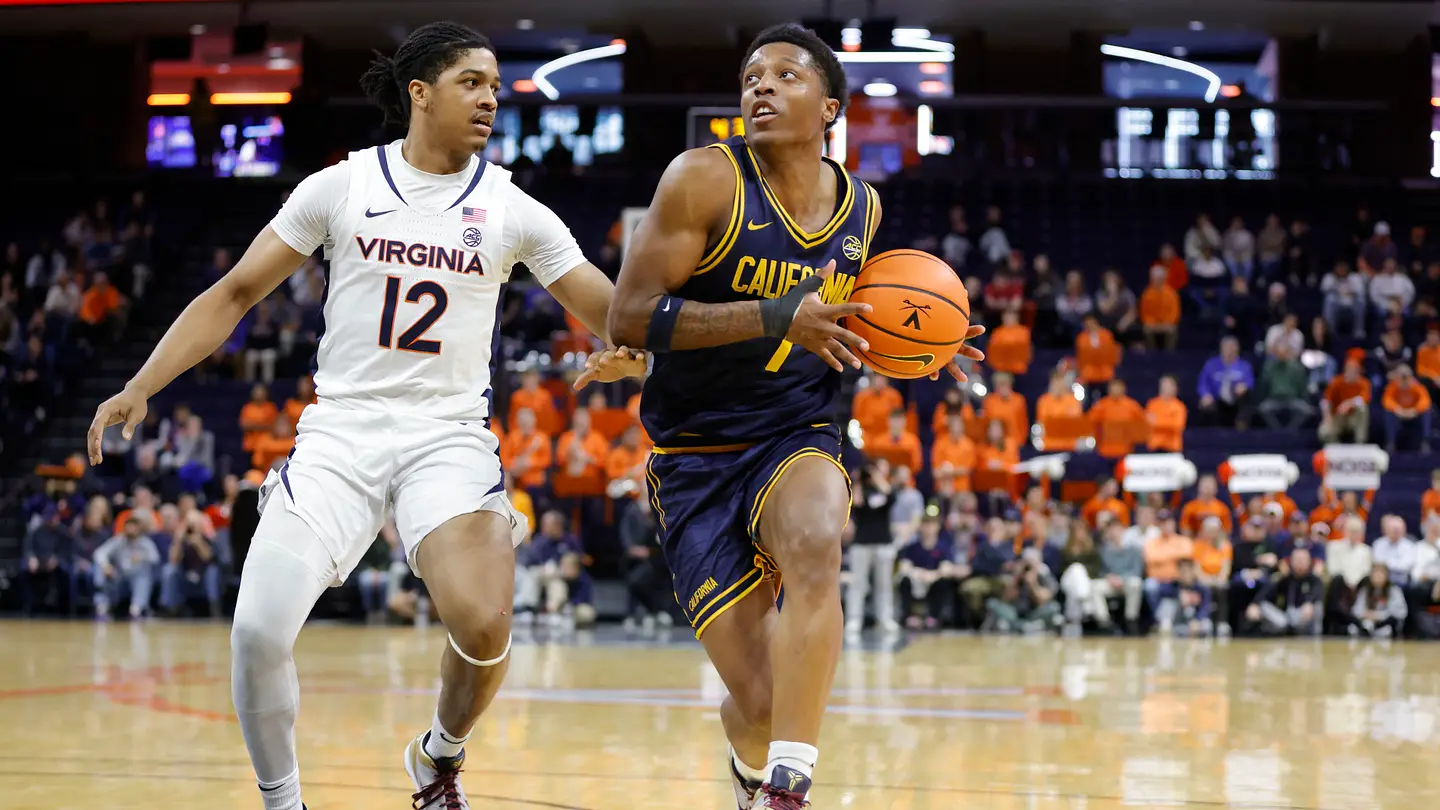
PREVIOUS: Duke, Louisville, North Carolina, Miami, NC State, Clemson,Virginia Tech, Florida State and SyracuseThis season, Virginia will make its second trip out to the Golden State to take on California (and Stanford). Last time against the Golden Bears, the Cavaliers won 84-60 in Charlottesville. Ryan Odom’s Virginia team had five players score 12 or more points.Here is how the two ACC teams match up this year.PG: Chance Mallory (So.) versus Michael Cooper (So.)Mallory’s 2025-26: 0 GS, 36 GP, 24.1 MPG, 9.3 PPG, 3.4 APG, 3.7 RPG, 42.2% FG, 34.5% 3PTCooper’s 2025-26 (Wright State): 15 GS, 31 GP, 26.3 MPG, 13.4 PPG, 2.2 APG, 2.7 RPG, 44.3% FG, 35.6% 3PTThis could be an extremely close matchup on paper — but when looking at shooting efficiency against elite teams, Mallory has the upper hand. Cooper played the Cavaliers in the first round of the NCAA Tournament, contributing 13 points, but he went 6-18 from the field and 1-6 from three. This should be revisited later, though.Advantage: Virginia SG: Jurian Dixon (R-Jr.) versus Jordan Ross (Sr.)Dixon’s 2025-26 (UC Irvine): 35 GS, 35 GP, 30.4 MPG, 15.9 PPG, 2.5 APG, 3.6 RPG, 43.0% FG, 38.5% 3PTRoss’ 2025-26 (Georgia): 25 GS, 32 GP, 20.9 MPG, 6.7 PPG, 2.3 APG, 2.5 RPG, 42.0% FG, 31.0% 3PTIt would be easy to point at the discrepancy in level of competition between these two transfers. But when digging deeper, Ross has simply been a reserve-caliber player at his time in the SEC and the West Coast Conference — where Dixon shined. Virginia has the better player, and one who could be more productive as a catch-and-shoot threat.Advantage: VirginiaSF: Sam Lewis (Sr.) versus Nojus Indrusaitis (Jr.)Lewis’ 2025-26: 35 GS, 36 GP, 25.4 MPG, 10.6 PPG, 1.4 APG, 3.6 RPG, 45.5% FG, 40.3% 3PTIndrusaitis’ 2025-26 (Pitt): 6 GS, 33 GP, 23.7 MPG, 9.1 PPG, 1.7 APG, 3.1 RPG, 40.3% FG, 38.7% 3PTIndrusaitis is capable of scoring 20-plus on any given night. It would not be all that surprising to see him emerge as the Golden Bears’ leading scorer. The key for Indrusaitis will be finding more consistency as a scorer — Lewis certainly has the advantage in that regard, and on defense. This will likely be revisited later, but for now, the Cavalier should be favored.Advantage: Virginia PF: Thijs De Ridder (So.) versus Jake Wilkins (So.)De Ridder’s 2025-26: 36 GS, 36 GP, 27.7 MPG, 15.6 PPG, 1.6 APG, 6.2 RPG, 50.8% FG, 35.7% 3PTWilkins’ 2025-26 (Georgia): 0 GS, 32 GP, 10.0 MPG, 4.9 PPG, 0.4 APG, 1.8 RPG, 46.6% FG, 21.1% 3PTThere is not much to say here. De Ridder enters 2026-27 as the best power forward in the ACC, and Wilkins is an unproven transfer who can rely on athleticism but not much else at the moment. Advantage: VirginiaC: Johann Grunloh (So.) versus Lee Dort (Gr.)Grunloh’s 2025-26: 36 GS, 36 GP, 21.0 MPG, 7.1 PPG, 0.6 APG, 5.2 RPG, 53.3% FG, 35.0% 3PTDort’s 2025-26: 26 GS, 27 GP, 23.0 MPG, 8.1 PPG, 0.9 APG, 7.8 RPG, 59.7% FG, 0.0% 3PTIn their matchup last season, Grunloh completely dominated — putting up 12 points, eight rebounds, two assists and a block in 21 minutes of efficient play. Dort was held scoreless in his 14 minutes of work, producing just one rebound, one block and a turnover. Advantage: VirginiaVerdict: Advantage VirginiaCal continues to lose talent to the transfer portal. The latest departure is Dai Dai Ames (yes, the former Cavalier) off to Tennessee. It is difficult to contend in the ACC when the Golden Bears have to replace transfer exits year after year. Virginia throttled Cal last year, and that will probably happen again this season.Add us as a preferred source on GoogleFollow
Five on five: Virginia should be heavily favored at Cal
PREVIOUS: Duke, Louisville, North Carolina, Miami, NC State, Clemson,Virginia Tech, Florida State and Syracuse This season, Virginia will make its second trip o
610 words~3 min read