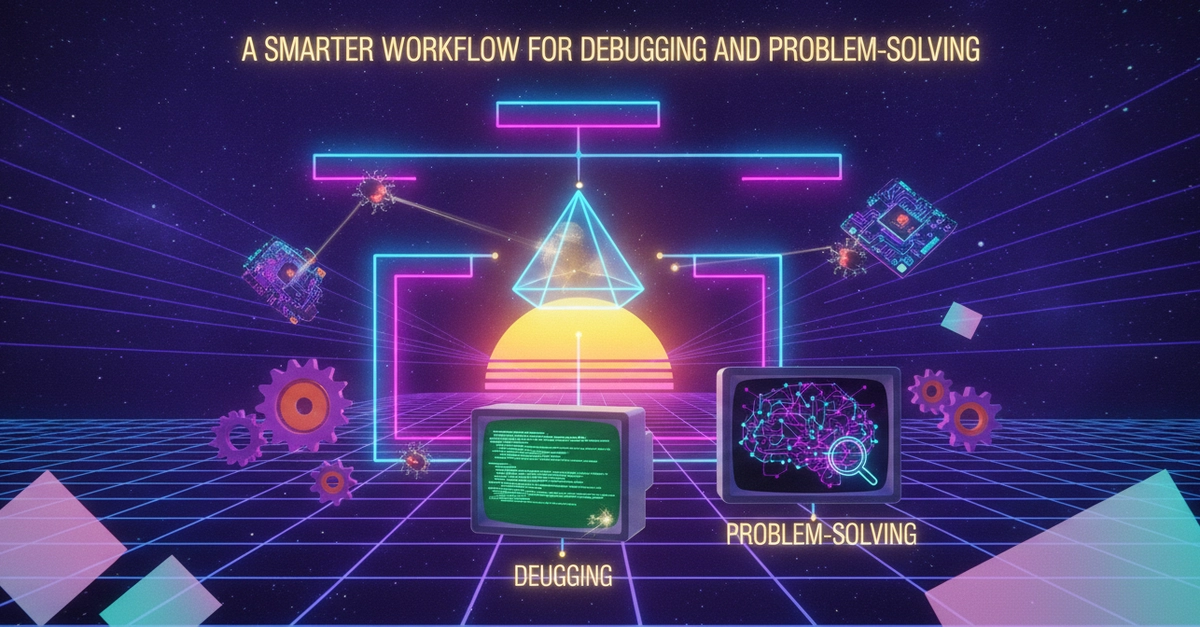
Most developers treat free model tokens as a code generation budget. They ask for snippets, refactors, and explanations, then wonder why the tokens disappear without making their codebase measurably better. I think the highest-leverage use is debugging. A model that reads your error logs and produces a ranked list of hypotheses can save you more time than any code snippet it generates, because debugging is where developers lose hours to tasks that are pattern-matching, not reasoning. This article shows a reproducible workflow for turning free model tokens into a debugging assistant, using an OpenAI-compatible endpoint and a few lines of Python.
The argument isn't that code generation is useless. It's that code generation produces artifacts you still have to review, test, and integrate, while debugging produces a diagnosis you can immediately act on. The marginal value of a correct diagnosis is higher than the marginal value of a correct snippet, because the diagnosis unblocks you and the snippet only starts your work.
Why Debugging Is the Right Job for Free Model Tokens
Debugging is fundamentally a pattern-matching exercise. You have a stack trace, a log message, and a set of known failure modes. The model has seen thousands of similar errors during training, so it can quickly map your symptoms to likely causes. That's a different skill from writing a feature from scratch, where the model has to invent something new.