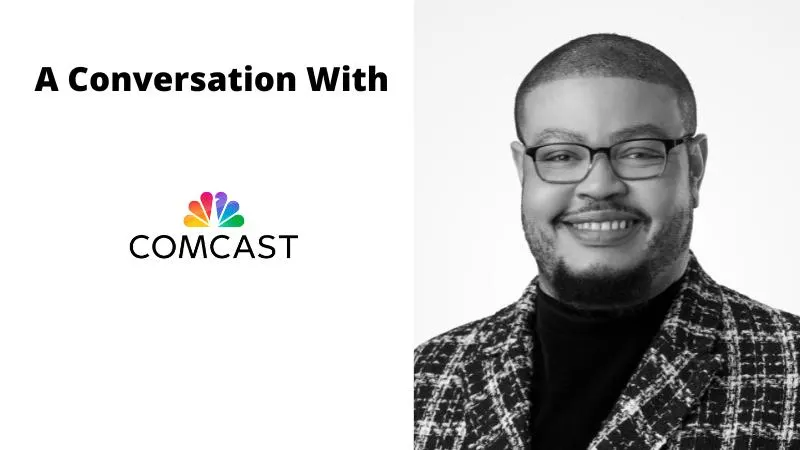
Christopher Thomas-Moore On Why Digital Is No Longer Just Part Of Organizational Transformation, But The Force Driving It ForwardBillee HowardTransformation used to be something organizations undertook periodically whether it was a major technology migration, a new operating model, a restructuring or a push to modernize the customer experience. Today, transformation is no longer an initiative with a beginning and an end. It is an organizational constant. AI is changing how work gets done, customer expectations are evolving in real time, new interfaces are reshaping discovery and commerce, and competitive advantage can emerge, or disappear, faster than traditional enterprise planning cycles can accommodate.That raises an increasingly important question for business leaders: Where does digital fit when virtually every part of the enterprise is already in motion?The answer may require executives to rethink digital itself. For years, digital was largely the recipient of transformation. A company changed its strategy, redesigned its customer journey or modernized its operations, and digital teams were charged with bringing that new vision to life through platforms, products and experiences. Increasingly, that relationship is reversing. Digital is becoming the driver of transformation—surfacing new customer behaviors, creating new business models and forcing organizations to reconsider how they operate, compete and create value. That imperative is becoming even more urgent as large language models begin changing one of the most fundamental behaviors in the customer journey: how people discover, evaluate and ultimately choose what to buy. The next era of digital transformation, therefore, may be less about becoming more digital and more about becoming intelligently adaptive.For all of these reasons, I wanted to speak to someone who sits at the frontlines of all of these critical changes, and who is acting as a pioneer in figuring out how to make digital a driving force of transformation, not just merely a part of it. Christopher Thomas-Moore is the Senior Vice President, Digital Experiences + Platforms at Comcast. He is a marketing visionary who has served as a senior advisor on digital and experience at leading organizations such as Domino's, while supporting client and organization boards for the likes of Google and the National Retail Federation. Following is a recap of our conversation:Billee Howard: Transformation is now an organizational constant, how does digital fit into the mix of all the moving parts of enterprise change?Christopher Thomas-Moore: Heraclitus famously said that you can never step into the same river twice, because the water is always flowing. The same is true in business. Businesses continuously evolve along with society, customer needs and the macro forces around us. And those that don't consistently evaluate their own evolution — including better ways of working and better delivery of goods and services — get left behind. The adoption of advanced technologies is one macro factor that is moving lightning fast right now. AI continues to cement its role in our everyday lives, influencing both how we live and how we function as businesses. What does this all mean for digital? In the past, digital's role was often an enabler of transformation. Today, it's the driver. We've reached a level of maturity and adoption that compels us as business leaders to lean into how these technologies are changing our relationships with shoppers and customers. Along with that comes rethinking our roles and how we work. As I speak with peers across different industries, we're all facing the same questions: How do things change? Where are the efficiencies? What are the tools and platforms I need to be successful? Unfortunately, there's no single approach we can all run with — the answers to these questions will be different for each business. What matters most is that we challenge the norms and keep asking the questions.Billee Howard: You told me digital used to be the recipient of transformation, but it is now driving it. Tell me what you mean and cite an example of how this is playing out at Comcast.Christopher Thomas-Moore: From how we deliver the most reliable WiFi to millions of homes across the country, to how we deliver digital commerce and service experiences to our customers, technology advancements continue to drive transformation across our business. We continue to lean into — and help define — new technologies that are changing how we deliver better experiences for our customers and future customers. For example, AI-powered workflows and tools are helping us deliver our technology faster and more resiliently, from defect identification to requirements buildout. One of our recent launches that we’re excited about is the new Customer Home Page, released earlier this month. Built as a modular and highly dynamic experience, it delivers more than 3,000 AI-powered states to personalize each customer's journey. The homepage has quickly become a valuable destination for customers to manage billing, discover relevant offers, receive service notices, and access important account information. It showcases the power of AI to deliver more relevant experiences through intelligent content presentation and data-driven decisioning.Billee Howard: How should AI be used to most effectively ladder up the business to have meaningful impact on things such as CX?Christopher Thomas-Moore: Three-plus years ago, I felt there was a rush to AI without a clear articulation of the why, or of what problem we were actually solving. Now I think the use cases have been refined and are really starting to address the true tensions that exist in the customer experience. For example, we’re seeing personalization at scale come to life through agentic AI. But AI isn't the solve for everything — it's costly, it requires a lot of handholding upfront, and it doesn't always produce the expected outcome. For these technologies to have the most meaningful impact, we still have to start with the right problem statement. From there, the next question is: what capabilities are needed to address that problem? The answer should generally span the full range from simple to complex solutions. Starting here helps ladder the solution to the tension or problem statement, so you're picking the right solution for what you're actually trying to address.Billee Howard: LLMs are having a huge impact on business in general, but particularly around search. You mentioned nearly 50% of people now use such platforms to shop and ultimately make purchasing decisions. Tell me more about this and how it is impacting business now but also, in the future as this thinking evolves.Christopher Thomas-Moore: The LLM space is fascinating, and it takes me back to the early days of search — we're back in the wild west of undefined territory. LLMs have steadily grown adoption across every generation of consumer and, as a result, have changed consumer shopping habits. We now have a new player in the equation that's driving recommendations and comparisons of our goods and services. And just as we spent decades refining our mastery of the SERP, we'll do the same with LLMs. The question of how to optimize for and influence this channel is a topic in boardrooms across the globe, and it's driving many leaders to reconsider how they market. On one hand, we’re seeing old tactics like keyword stuffing and content overloading creep back in, which just perpetuates poor approaches to gaining visibility. Really, the key to all of this is keeping the customer at the center of the wheel — the information and experiences that help them through their journey should be the foundation we build on to provide additional context for the machine. Addressing the simple conversations customers want is just as important as the elaborate technical conversations happening with machines. The LLMs will keep advancing and their ability to understand a customer-anchored approach versus an attempt to game the system is improving daily. It's an area that calls for a lot of testing and optimization, which is exactly what we're doing at Comcast.
A Conversation With Comcast's Head Of Digital Experiences + Platforms Christopher Thomas-Moore On Why Digital Is No Longer Just Part Of Organizational Transformation, But The Force Driving It Forward
Christopher Thomas-Moore On Why Digital Is No Longer Just Part Of Organizational Transformation, But The Force Driving It Forward
1,291 words~6 min read