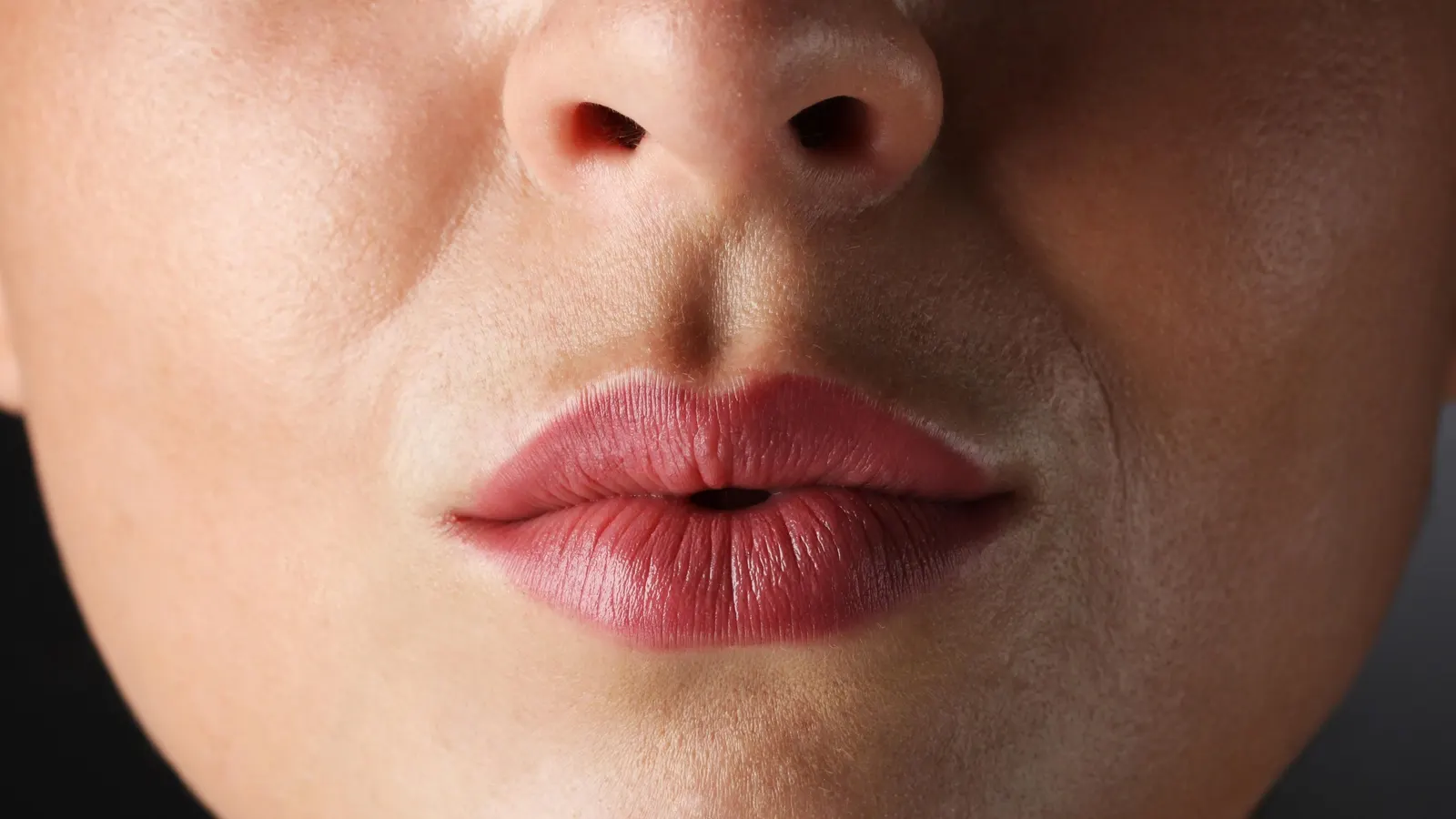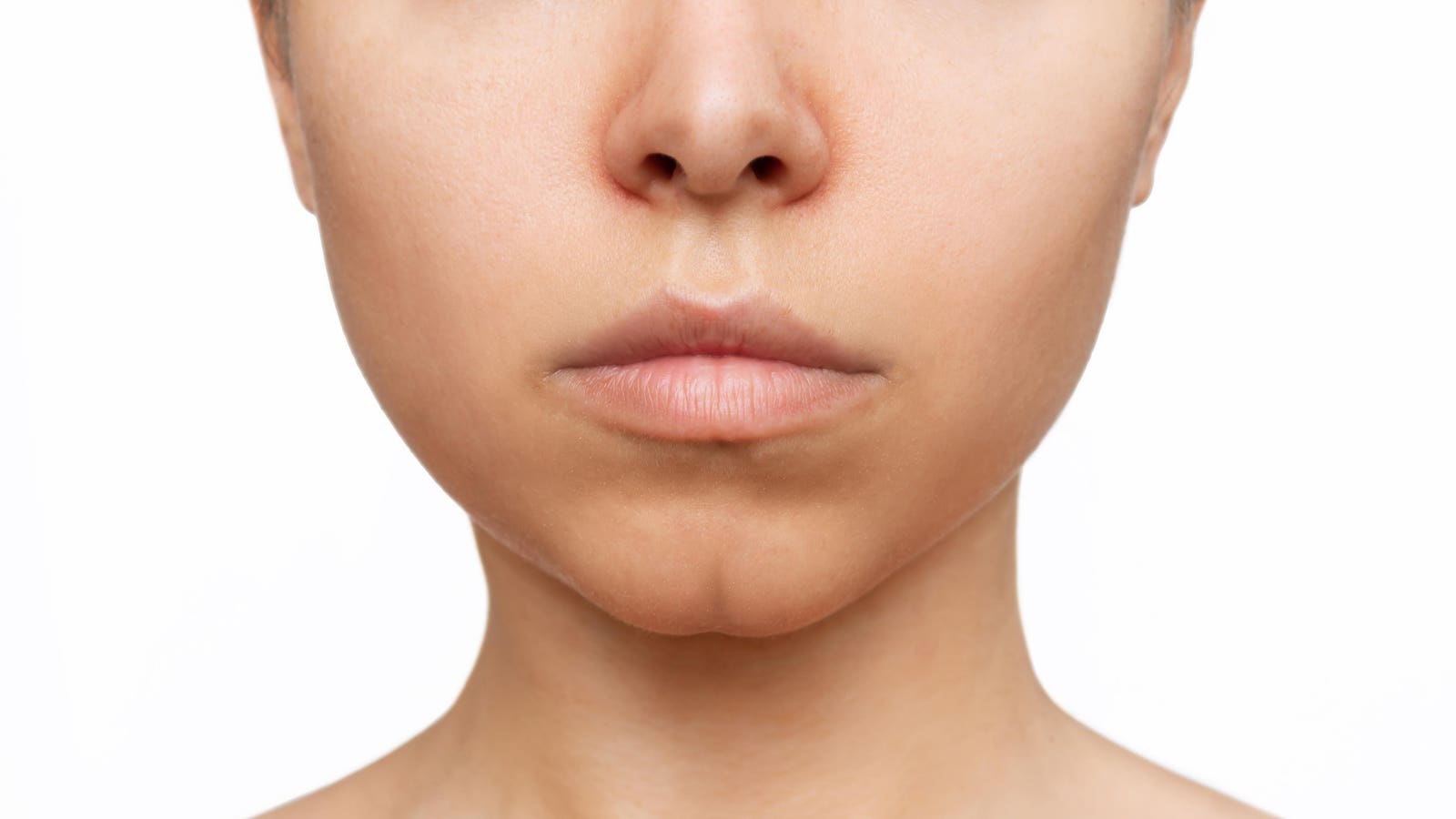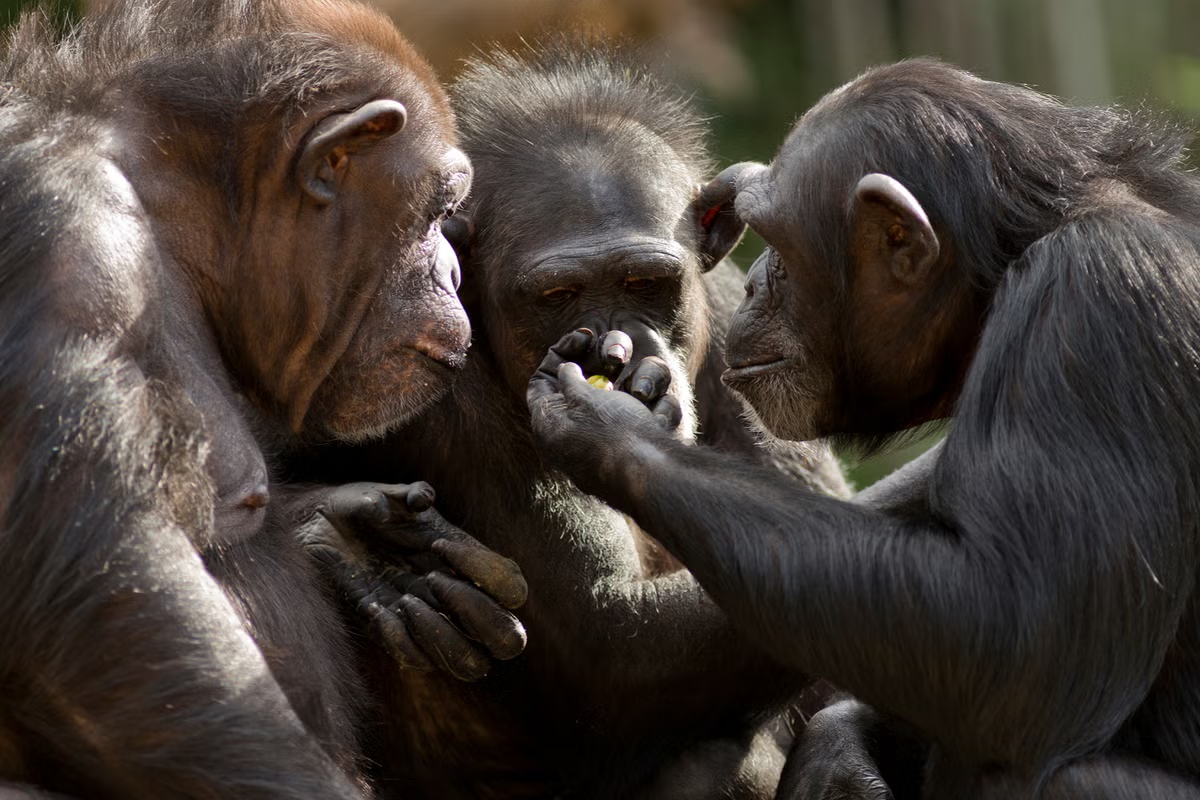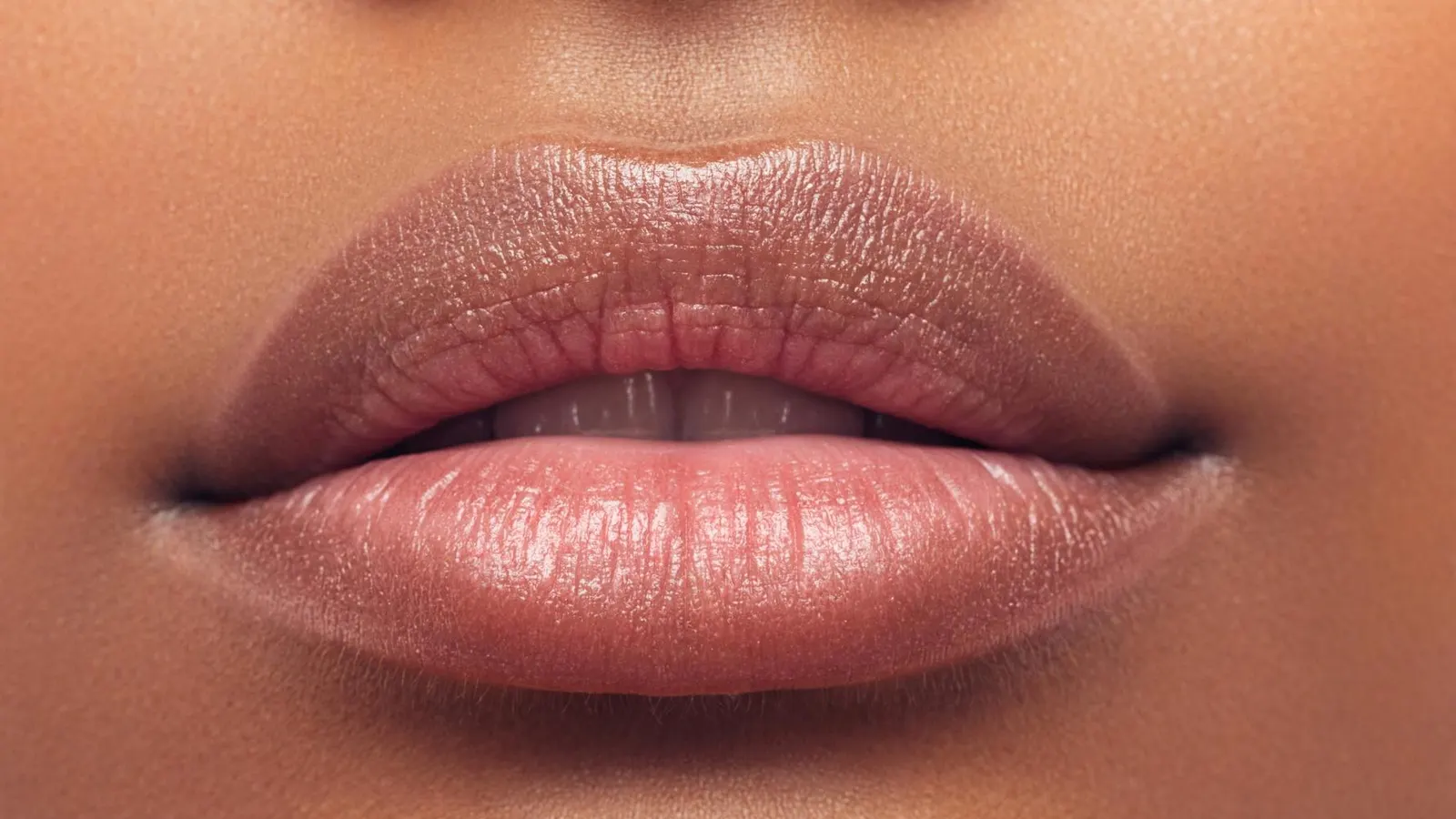
You have looked at your lips every day of your life and probably never once wondered why they're there.gettyMost of what makes humans anatomically strange is hidden from us. You can’t see your own pelvis tilt or the way your larynx sits low in your throat. Lips are the opposite. They’re on the front of your face, you’ve been looking at them since you were old enough to recognize yourself in a mirror, and that familiarity is exactly why the question never comes up. We tend to notice what’s unusual about other people, not what’s unusual about the species.So look at a chimpanzee’s mouth instead. It has lips. They’re muscular and mobile, and a chimp can do things with them that no human face can manage. What it doesn’t have is the part you see when you look at yourself, which is a band of pinkish-red tissue turned outward and left on permanent display.Anatomists call that band the vermilion. It’s the one spot on your body where the moist lining of the inside of your mouth folds outward and sits exposed to open air. Everywhere else on the body, that kind of tissue stays tucked out of sight. On your face, it's the first thing anyone looks at when you talk.It’s usually described as ours alone, and that’s roughly right, with one caveat worth stating plainly. A 2021 study published in Translational Research in Anatomy confirms that the vermilion border is exclusive to Homo sapiens among living hominids, though a few other primates have lip tissue that looks similar under a microscope, and how the human version came to be turned outward is still an open question rather than a closed one.Our Lip Color Isn’t Pigment, And It Costs Us SomethingLips are red because they’re thin. The outer layer is unusually shallow and the blood vessels underneath sit close to the surface, so what you’re seeing is your own circulation through a translucent window. That’s why lips go pale when you’re cold and flush when you’ve been running.That thinness has a price. Lips have no oil glands, so they get none of the protective film that keeps the rest of your face from drying out. They chap in winter and burn in summer, and the lower lip is a known trouble spot for long-term sun damage.This is the part that makes the question worth asking. Evolution doesn’t usually maintain a feature that’s fragile and exposed unless it’s paying for itself somewhere. The argument is over where.Three Explanations For Our LipsThe most practical explanation is feeding. Human infants nurse from a relatively flat breast rather than a protruding teat, and getting an airtight seal on one takes muscular lips that turn outward, working with the ring of muscle that circles the mouth. A better latch is worth a great deal when you’re a newborn.The problem is that other primate infants nurse without any trouble at all and none of them has a vermilion. Feeding might explain why human lips are so muscular without explaining why they’re inside out.The second explanation is speech. Your lips are the last valve the air passes through before it becomes a word. Every p, b and m requires closing them. A 2012 study published in Current Biology found that the lip-smacking monkeys use socially has a rhythm remarkably similar to the syllables of human speech, which supports the idea that the rhythms of speech grew out of primate facial gestures rather than primate calls. Add a reshaped human vocal tract and you get our range of sounds. But a chimp’s lips move beautifully too, and they stay the color of the rest of its face.The third explanation is the one aimed squarely at the redness. Humans lost most of their body hair and ended up with a bare face that other people read constantly. On a bare face, a strip of tissue whose color changes with blood flow becomes a signal, whether or not anyone intends it as one. Lip color shifts with cold, with age, with exertion, with health. Most evolutionary biologists consider social and sexual signaling a real contributor here while admitting it’s hard to test something that doesn't fossilize.One thing to set aside: lips did not evolve for kissing. A 2015 study published in American Anthropologist surveyed 168 cultures and found romantic kissing absent from a majority of them, which makes it something we do with lips rather than a reason we have them.There’s a final clue in how much of your brain your lips take up. A 2017 study published in the Journal of Applied Oral Science found that the tactile sensitivity of the lips approaches that of the fingertip, with both far outperforming the cheek or forehead, because the brain devotes a disproportionately large area of the sensory cortex to the mouth. Babies investigate the world with their mouths long before their hands are any good at it.That’s probably the honest ending. Lips sit at the exact point where eating, speaking, touching and being looked at all overlap, and there may be no single reason behind them. Evolution doesn’t keep its reasons tidy, and the piece of you that’s hardest to explain is the one you stopped noticing years ago.Now that you know why lips are one of humanity’s strangest features, test how much else you know about the anatomy that makes us human with this science-backed quiz: Human Anatomy IQ Test
A Biologist Explains Why Humans Have Lips (Hint: No Other Primate Has Them)
Humans are the only primates with true, everted lips — a biologist unpacks the competing theories for why, from feeding and speech to social signaling.
901 words~4 min read