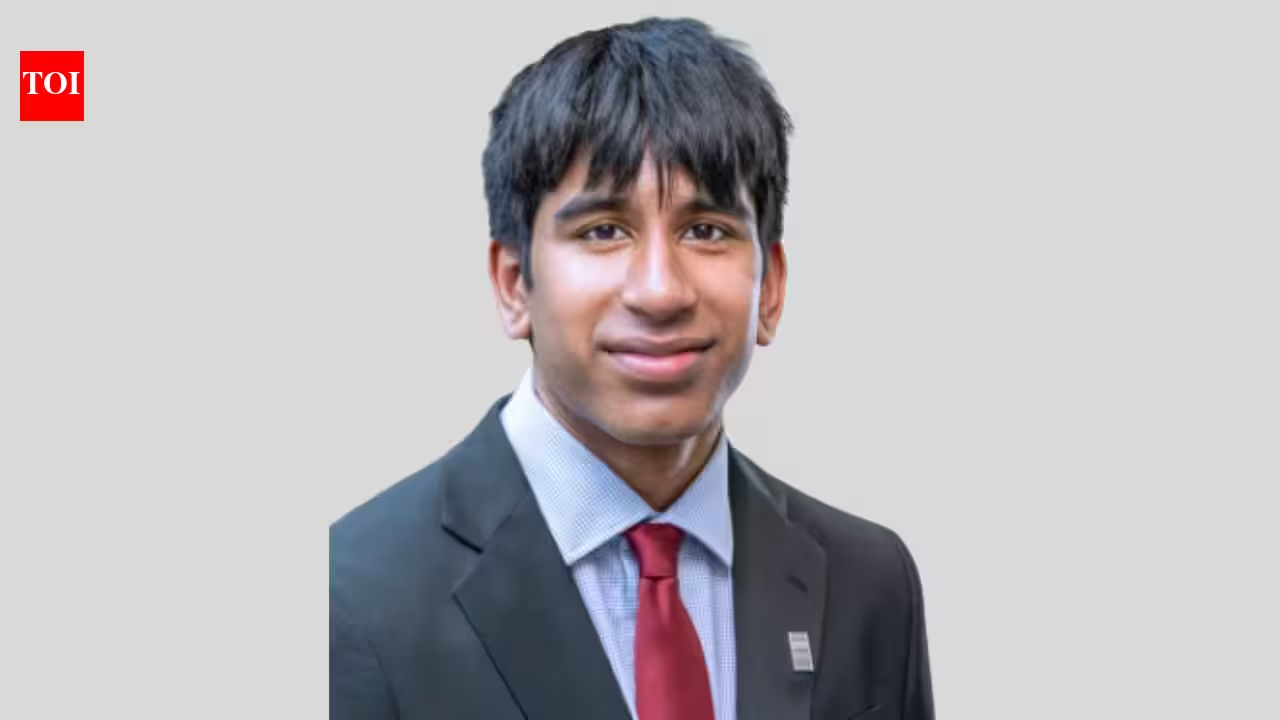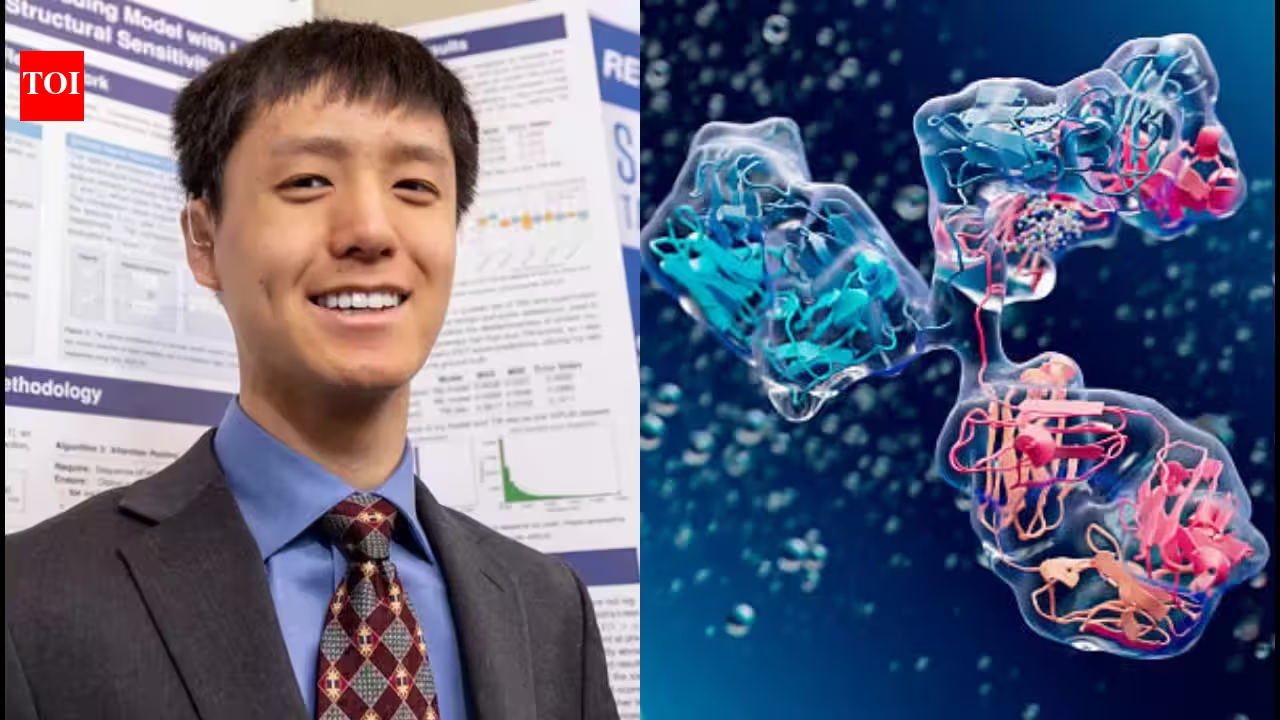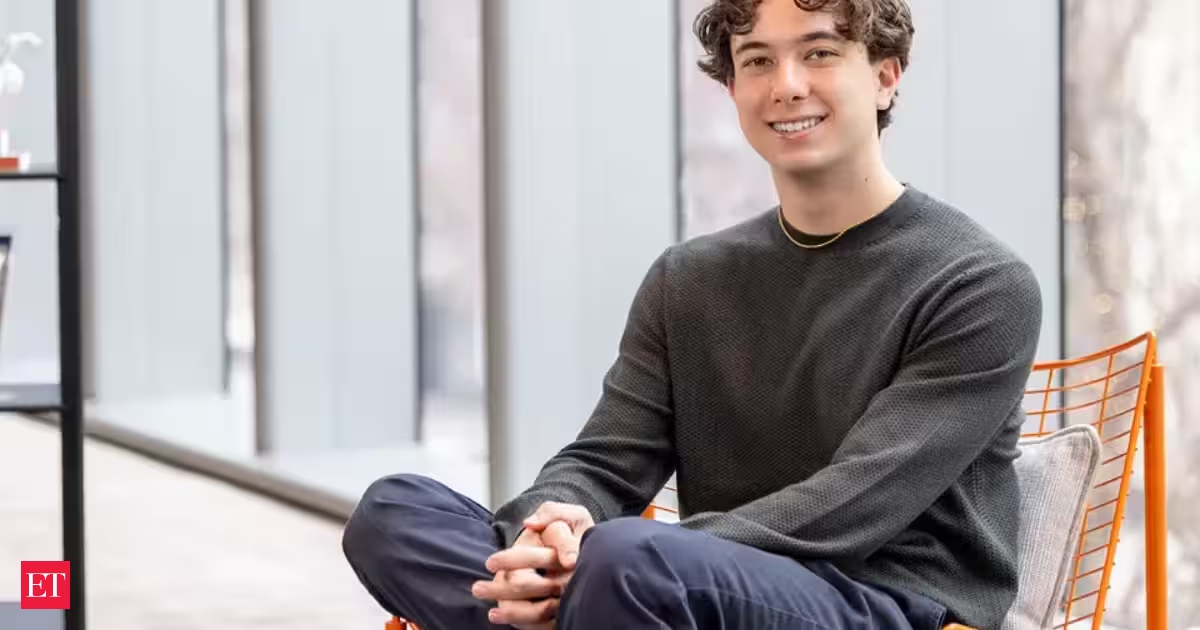
A 17-year-old high school student from Texas has earned one of the top honors in the 2026 Regeneron Science Talent Search after exploring an unusual question in cancer research: Could clams help scientists test potential blood cancer drugs?Iris Shen, of The Woodlands, Texas, won third place and $150,000 for her research into whether marine clams with naturally occurring blood cancer could serve as an alternative animal model for studying leukemia drugs.Her project focused on whether these marine animals could offer researchers a less expensive, faster and potentially more ethical way to conduct some early-stage cancer drug research.Iris Shen tested a cancer drug in clamsShen's Regeneron Science Talent Search project examined how clams responded to a potential cancer drug that targets proteins involved in keeping cancer cells alive.According to the Society for Science, she found that the drug produced effects in the clams similar to those seen in human cells. Fewer cancer cells survived, tumors contained a smaller proportion of cancer cells, and changes in the cells' fat levels were similar to those observed in human cancer cells.That finding is important because researchers often rely on animal models when studying potential cancer treatments before they can be evaluated in humans.She tested more potential cancer drugsShen did not stop with one drug. In a second experiment, she tested a combination of two other compounds in the clams. The treatment slowed tumor growth without causing negative effects on non-tumor cells, according to the Society for Science.The results suggest that the clam model could have potential for early drug discovery, although further research would be needed before it could become a widely used model for cancer research.Why clams could matter in cancer researchTraditional animal models can be expensive and time-consuming. They also raise ethical questions, particularly when large numbers of animals are required for experiments.Shen's research explores whether a marine bivalve with a naturally occurring blood cancer could provide another option for scientists investigating potential leukemia treatments.The Society for Science said her clam model “could help make early drug discovery more cost-effective and ethical.”Her project's full title is “Assessing Marine Bivalves as Novel Invertebrate Models for Targeting Anti-Apoptotic BCL-2 Family Proteins in Blood Cancer.”A major win at the 2026 Regeneron Science Talent SearchShen's $150,000 prize placed her third among the 2026 Regeneron Science Talent Search finalists.The competition's first-place winner, Connor Hill, received $250,000, while second-place winner Edward Kang received $175,000. The 40 finalists collectively received more than $1.8 million in awards.The 2026 competition marked the 85th anniversary of the Science Talent Search, which recognizes high school seniors for original research and scientific problem-solving.Beyond her cancer researchShen is a student at The Woodlands College Park High School. Outside her research, she is president of Teach 2 Learn, a nonprofit that organizes STEM events for local middle school students, including science-fair preparation and computer science workshops.She is also a pianist and artist, and her artwork has been auctioned to raise money for the Houston Livestock Show and Rodeo Educational Fund.For now, Shen's work is an early research finding rather than a proven cancer treatment. But her project demonstrates how unconventional biological models could potentially open new avenues for studying blood cancer and screening future drugs.
17-year-old Texas student Iris Shen wins $150,000 for testing potential cancer drugs in clams, in research that could open a new path for blood cancer drug discovery
17-year-old Texas student Iris Shen won $150,000 and third place at the 2026 Regeneron Science Talent Search for testing potential cancer drugs in clams. Her research found that one drug produced effects similar to those seen in human cells, while other drug combinations slowed tumor growth, suggesting clams could potentially serve as a new model for blood cancer drug discovery.
529 words~2 min read