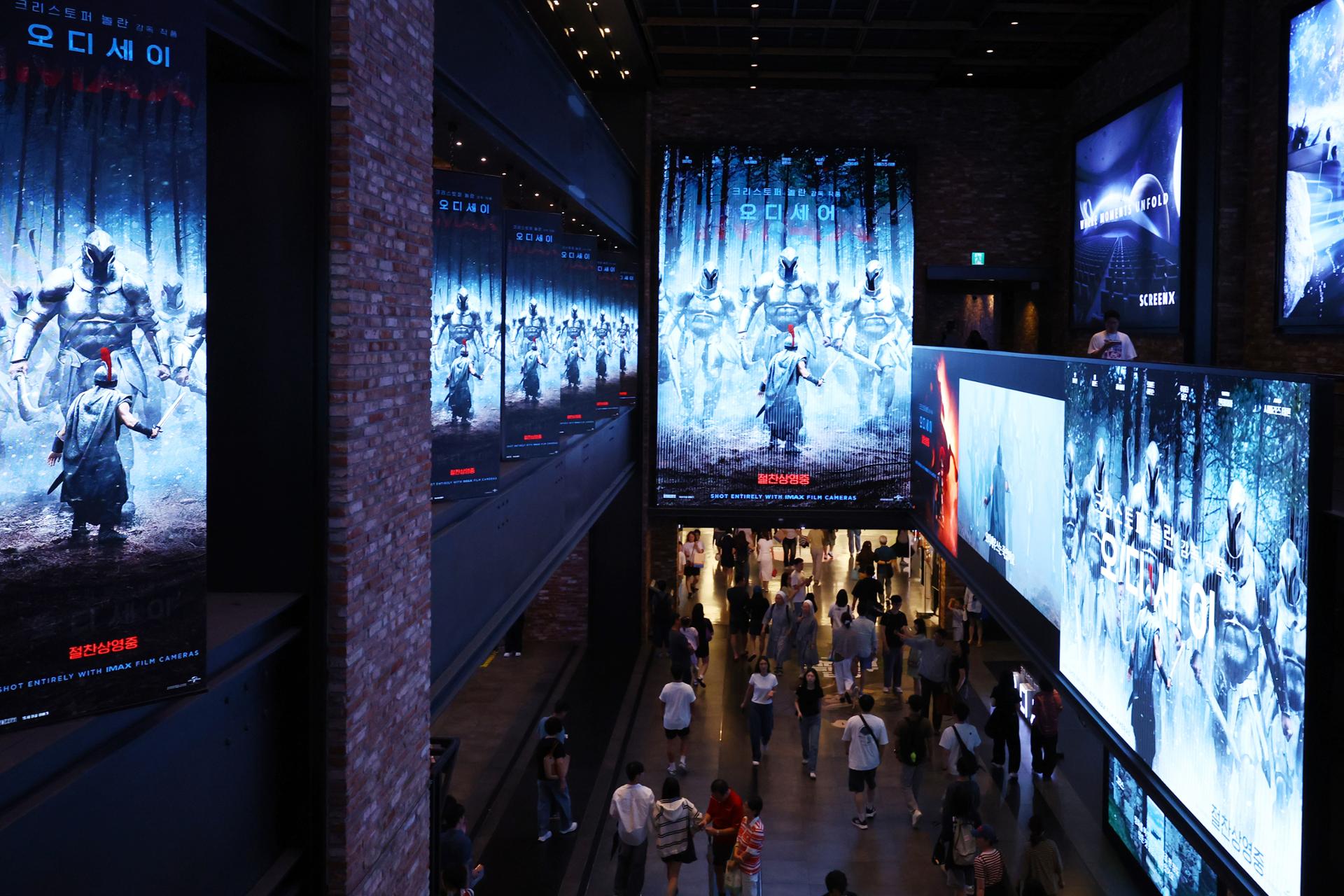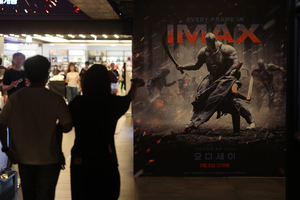
A movie theater in Seoul on Sunday screening Christopher Nolan’s “The Odyssey” on an Imax screen (Yonhap) Ahn, 37, watched “The Odyssey” at an Imax screen in Apgujeong and enjoyed the experience. She hopes to see it again at Yongsan with her husband, but they have been unable to secure tickets.As of Sunday, nearly all Imax screenings at Yongsan through Aug. 30 were sold out, except for accessibility seats.“I’m hoping to get one once the initial hype dies down,” she told The Korea Herald.But this might not happen. Although “The Odyssey” is attracting large audiences in South Korea, the country’s screen quota system may limit the time fans can see Christopher Nolan’s film on Imax screens.According to the Korean Film Council, “The Odyssey” had sold more than 6.04 million tickets as of Friday, its 17th day in theaters. More than 630,000 of those were Imax tickets, the highest number for any film released in South Korea this year.The film’s popularity on Imax screens stems in part from the fact that “The Odyssey” was shot entirely with Imax cameras, making the format especially sought after. Demand has been particularly strong at CGV Yongsan in Seoul, whose screen most closely matches director Christopher Nolan’s intended presentation. It is the largest Imax screen in Asia, the third-largest in the world, and the only one in South Korea capable of showing the full 1.43:1 Imax frame without cropping.Scalpers are now offering tickets on secondhand trading platforms.Under South Korea’s screen quota system, cinemas, including Imax and 4DX screens, must devote at least one-fifth of their operating days to Korean films, 73 days for cinemas operating year-round. The quota is applied separately to each screen.As of Friday, the Imax screen at CGV Yongsan had accumulated 35 days of Korean film screenings, leaving 38 days to meet its annual quota.With “Dune: Part Three” and “Avengers: Doomsday” set for release later this year, local media report that “The Odyssey” may remain in theaters for only about two more months at the longest.This situation has renewed calls to reform the quota system by counting Korean film screenings across entire theaters instead of individual screens. Supporters in the local film industry reportedly argue this change would give theaters greater flexibility to allocate screens according to demand.However, some industry experts caution that this change could be premature and might reduce Korean films’ access to specialized screens.
‘The Odyssey’ Imax run could end sooner than fans think
Ahn, 37, watched “The Odyssey” at an Imax screen in Apgujeong and enjoyed the experience. She hopes to see it again at Yongsan with her husband, but they have b
396 words~2 min read