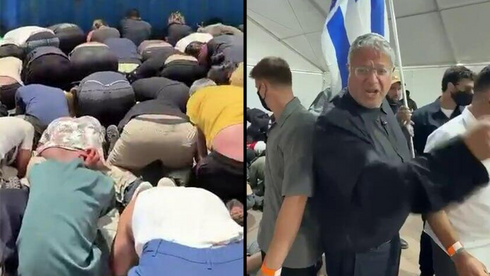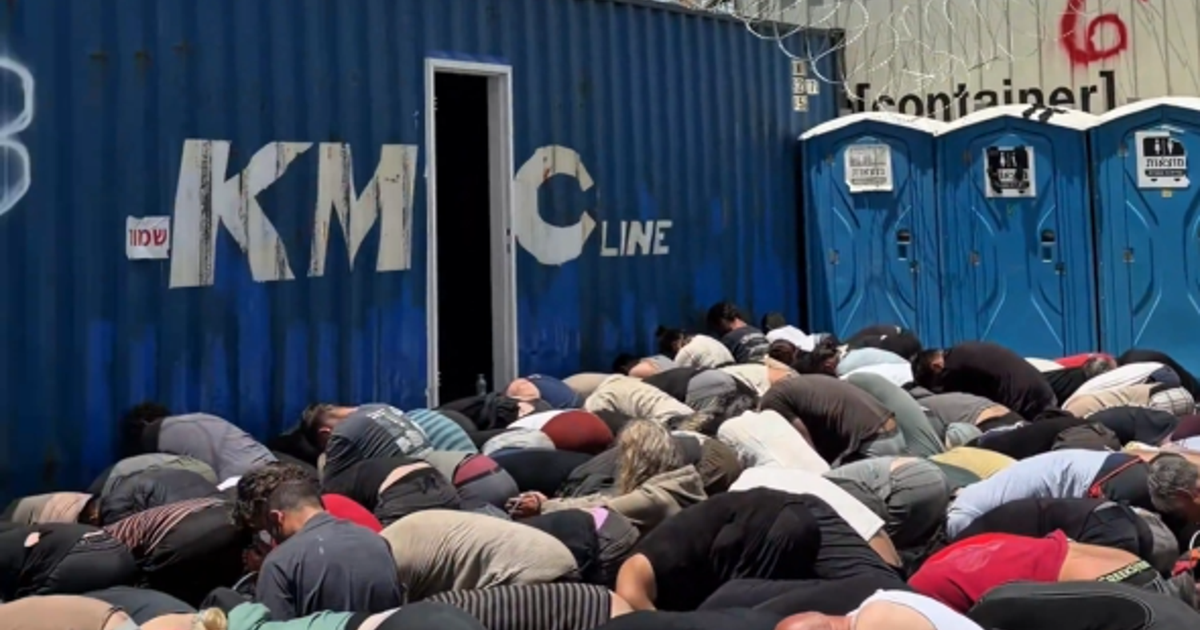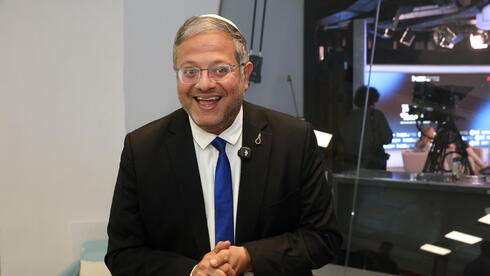
Opinion: Extreme rhetoric from Israeli leaders is fueling hostility abroad, forcing Diaspora Jews to defend views they reject, threatening careers and deepening divisions within Jewish communities already facing rising antisemitismI have written frequently in recent years about the deterioration of Israel’s image in Europe: the hypocrisy, the European media’s obsession with Israel, the false information flooding the public sphere, the spread of hostility and the dramatic rise in antisemitism on European streets.Much of the blame rightly falls on established European media outlets and social networks, where coverage of Israel is often distorted, obsessive and one-sided. That has played a significant role in fostering hostility toward Israel among the European public. But some of the blame must also be directed at representatives of the Israeli government, foremost among them National Security Minister Itamar Ben-Gvir.National Security Minister Itamar Ben-Gvir (Photo: Shaul Golan)Ben-Gvir’s extreme statements, including his call to “eliminate 30 to 40 Gazans every day,” his populist videos promoting the death penalty and his appalling treatment of European activists who took part in a flotilla to Gaza are causing enormous damage to Jews in Europe.Every tweet, statement or video he publishes can be amplified around the world within minutes, particularly across Europe. The revulsion they generate is increasingly directed not only at Israel, but at Jews wherever they live.Jewish community leaders across Europe have rushed to condemn Ben-Gvir’s extremist and racist remarks. European Jews increasingly find themselves caught between two pressures: They want to maintain their connection to Israel and the Israeli people, yet at the same time they are being attacked and forced to defend themselves amid the anger generated by Israeli policy on multiple fronts.Nor is the problem limited to Ben-Gvir or other ministers. When Israeli soldiers are filmed smashing a statue of Jesus, or, far more seriously, marking Palestinian detainees with numbers on their foreheads and arms, the international backlash intensifies. Images of violence against Palestinians in the West Bank, repeatedly circulated across Europe, hardly improve matters.Yet in Israel, there appears to be little understanding of just how damaging such images and statements are to the country’s standing abroad, and even less recognition of the burden they place on Diaspora Jews.A close friend of mine, a well-known singer and actor in Italy, has been subjected in recent days to an extraordinary wave of abuse. He is Jewish, liberal and supportive of Israel, but increasingly finds himself forced to defend himself against attacks on social media and in the press accusing him of failing to sufficiently condemn what critics call “genocide in Gaza.”At one recent performance, he wore a T-shirt featuring the veteran British band Culture Club, whose frontman Boy George has publicly expressed affection for Israel. My friend did not remotely associate the shirt with Israel. Yet simply wearing it was enough to trigger a personal backlash.He is deeply worried, as are many other Italian Jews. He says Jewish people in Italy are suffering because of the extreme statements made by Ben-Gvir and others, as though they themselves had made those remarks. Like many Jews across Europe, he now has to weigh every public comment he makes about Israel and the war.Increasingly, Jews are being “accused of Zionism,” as though Zionism itself were an indictment. The term has become, in some circles, a wholesale slur.European Jews are therefore finding themselves compelled to condemn racist and extremist statements made by senior Israeli officials so they are not seen as endorsing or identifying with them. They do so because those statements genuinely do not represent their views, but also because failing to publicly distance themselves from what is happening in Israel can put their careers at risk.The saddest consequence is that the pressure is also creating fractures within Jewish communities themselves.On one side are those who attack anyone who dares criticize Israeli government policy. On the other are Jews whose conscience simply cannot reconcile itself with the images and rhetoric emerging from Israel. Israel must recognize what is happening and act. It needs to rein in extremist rhetoric, repair what can still be repaired and acknowledge the very real danger in which Diaspora Jews increasingly find themselves.It must do so not only for Israel’s own standing, but also to avoid driving Jews abroad further away from a country that remains deeply important to them.
Diaspora Jews are paying the price for Ben-Gvir’s extremism
Opinion: Extreme rhetoric from Israeli leaders is fueling hostility abroad, forcing Diaspora Jews to defend views they reject, threatening careers and deepening divisions within Jewish communities already facing rising antisemitism
713 words~3 min read