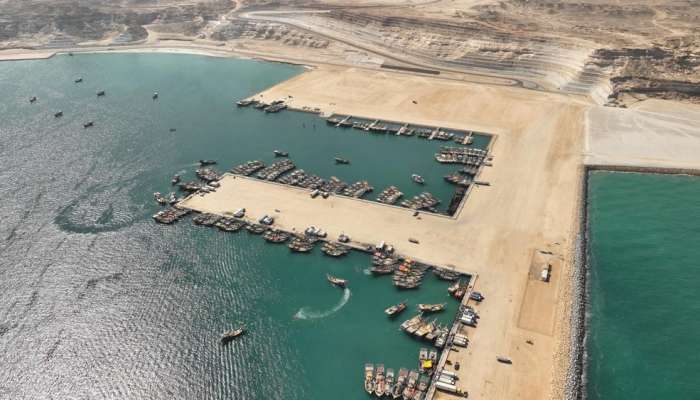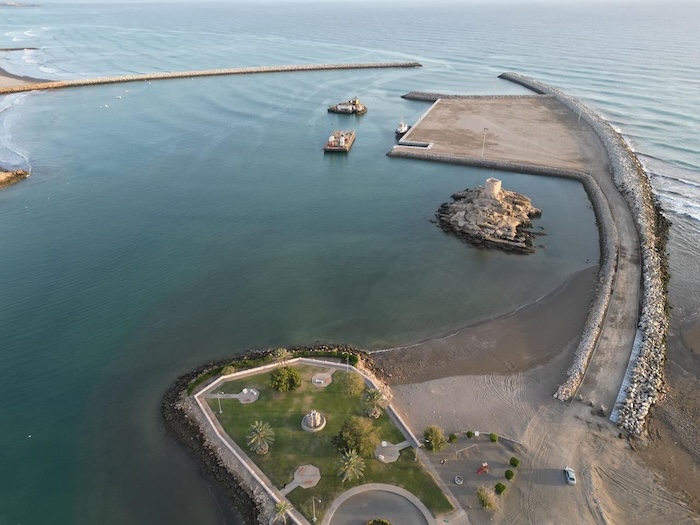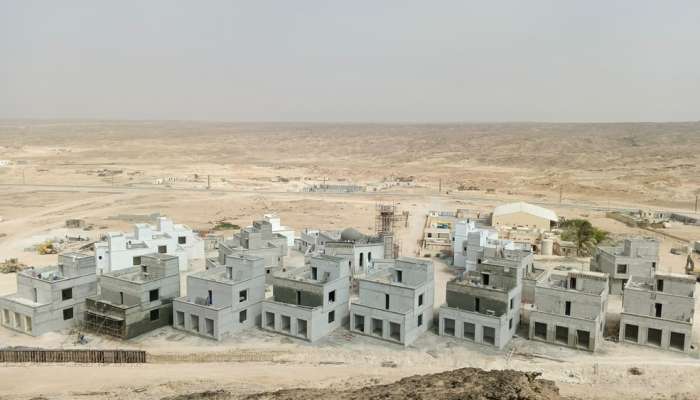
Duqm: The fishermen's villages represent a cornerstone project within the supporting infrastructure framework for the fisheries sector in the Sultanate of Oman. These villages play a pivotal role in providing stable residential and service environments for Omani fishermen in close proximity to high-yield landing sites and fishing grounds, thereby attracting fishermen, enhancing the sustainability of the fishing profession and revitalizing coastal communities.Asaad Salim Al Amri, Director of the Fisheries Department in Al Wusta Governorate, stated that the concept of fishermen's villages extends beyond the provision of housing to encompass the creation of integrated fishing communities equipped with the essential services required by fishermen in their daily lives and professional practice. This approach fosters stability, creates conducive conditions for sustained activity, and elevates productivity levels, he said. Al Amri told Oman News Agency (ONA) that Al Wusta Governorate ranks among the primary target areas for such projects, owing to its extensive coastline along the Arabian Sea, the diversity of its fishery resources, the multiplicity of fishing seasons and its rich fishing grounds. He noted that the governorate represents a promising region for the growth of economic activities linked to the fisheries sector.He explained that the establishment of fishermen's villages in Al Wusta Governorate constitutes an integral component of a comprehensive system for fisheries sector development. The initiative is not viewed merely as a housing project, but rather as a mechanism to attract Omani fishermen to production sites, stimulate activity at landing points and enhance the circulation and marketing of fish—thereby generating positive ripple effects across the entire fisheries value chain.He further highlighted that the model fishing village at Ras Madrakah in the Wilayat of Duqm exemplifies this strategic approach. The village, he said, comprises 19 residential villas, each containing 3 rooms, in addition to a mosque, 3 commercial outlets and an office for Ministry staff. The target occupancy capacity of the village is 228 fishermen.The current actual completion rate stands at 60 percent, surpassing the planned rate of 47.98 percent. He noted that construction work is progressing favorably, with the project now advancing into finishing phases, electromechanical works and the completion of facilities and services.Al Amri affirmed that the significance of fishermen's villages lies in their capacity to generate economic impact that extends beyond direct beneficiaries to encompass various fisheries-related activities—through increasing the number of active fishermen at production sites, invigorating fish landing operations, supporting transport and marketing services, creating new opportunities for small and medium enterprises, and strengthening ancillary industries and services supporting the sector.He stated that the proximity of fishermen to fishing and landing sites contributes to enhanced efficiency across the fisheries value chain, reduced distances and associated operational costs, and the transformation of fishing production sites into more dynamic and sustainable economic communities. He affirmed that this aligns with national strategic approaches to maximize the utilization of fishery resources and elevate their contribution to the national economy.
Fishermen's villages strengthen sector growth in Al Wusta
The current actual completion rate stands at 60 percent
479 words~2 min read