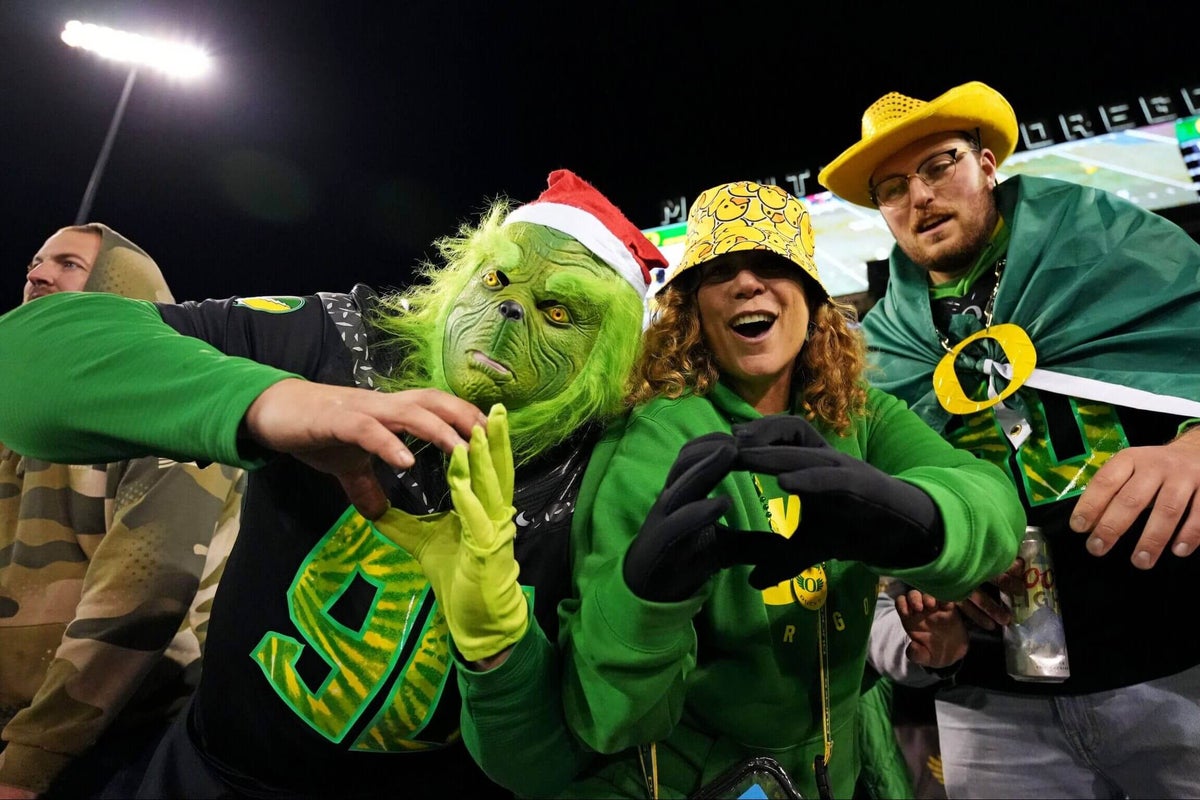
The marching band clicked into place with an engineered elegance. Surrounding it in the stands, fans folded into one another, arms threading over shoulders while a few hands tipped hats in the air. And almost immediately, Camp Randall Stadium began to rock in unison.Hidden in the red-soaked mass was 17-year-old Medha Malik, just weeks into a move from Hong Kong that had dropped her into unfamiliar Madison, Wis.The motion swallowed her whole, as if rehearsed for years. It felt too synchronized to be improvised, too emotional to be random. She took inventory of everything and settled on the only explanation that felt right.“Is the national anthem about to play?’”Not … quite.It was “Varsity,” the Badgers’ century-old alma mater, playing during a college football Saturday. The motion takes hold automatically — the swaying, the linked shoulders — it’s all muscle memory.Malik hadn’t gotten the memo.Neither do the throngs of international students who cross oceans to arrive on American campuses — a reality that feels curated, heightened and rehearsed — like the ultimate “High School Musical” experience, as Zakaria Butt of Lancashire, England, said.For many, it’s football — the most visceral expression of school identity — that delivers a first unfiltered glimpse of American college life. The same cultural collision unfolded this summer as the World Cup drew international fans, many of whom were visiting the United States for the first time.What is college football like for international students?Ira GorawaraAn estimated 1.17 million international students were enrolled in United States colleges in the 2025-26 academic year. The arrival for some has grown more complicated, as tighter visa policies and travel restrictions under the Trump administration have coincided with declining international enrollment, which is projected to drop about 9.5 percent this fall.“Before coming to the U.S., there were so many things that I thought, ‘Oh, it’s just a movie,’” said Ninjin Jadamba, a Mongolian undergrad at Michigan. “But then I come here and realize, ‘Oh, this is actually real life.’ And one of those things was college football. I’m living my dream life.”The disbelief is a byproduct of how much happens at once at college football stadiums, eight of which are among the 10 largest stadiums in the world. Tailgates blur into walkways, walkways funnel into gates, and suddenly, the open concourse reveals a stadium that feels impossibly full, colorful and loud.“What was especially shocking for me was the scale of the show,” said Texas track and field student-athlete Jeanne Le Goff, who grew up in Paris, “like with the jets flying over the stadium, the fireworks lighting up the sky.“Experiencing American football is not just about watching a sport, but it’s about witnessing a cultural spectacle.”The spectacle of college football can be hard to explain for some international college students. (Jerome Miron / Imagn Images)No amount of poetic phrasing or curated clips can prepare an international student for something that feels overstated in theory and somehow still understated in person.“It’s like living on a different planet,” said Rehan Rosha, a 2025 Michigan graduate from Hong Kong. “It just felt so otherworldly. It was just all pure Americana.”There are no instructions handed out, no pregame walkthroughs. Yet tens of thousands somehow fall into step — singing, standing, surging at the same moments.At Michigan Stadium in Ann Arbor, the 107,601 capacity alone can feel jarring. And then, after the third quarter, those voices lock into “Mr. Brightside,” a 2004 pop song turned into a Wolverines anthem. After a big play or during close games, the stadium explodes into “Go Blue!”“I almost felt like I was part of a cult,” said 2022 Michigan graduate Sana Karnik, who spent much of her life in Doha, Qatar. “I was like, ‘What have I joined?’”“How does everybody just know this? Like, when were we taught?” Jadamba said. “Now I know it, but it was so confusing. The DJ would play something, and then everybody knew what to say.”
‘Cult’-like college football akin to ‘living on a different planet’ for some students
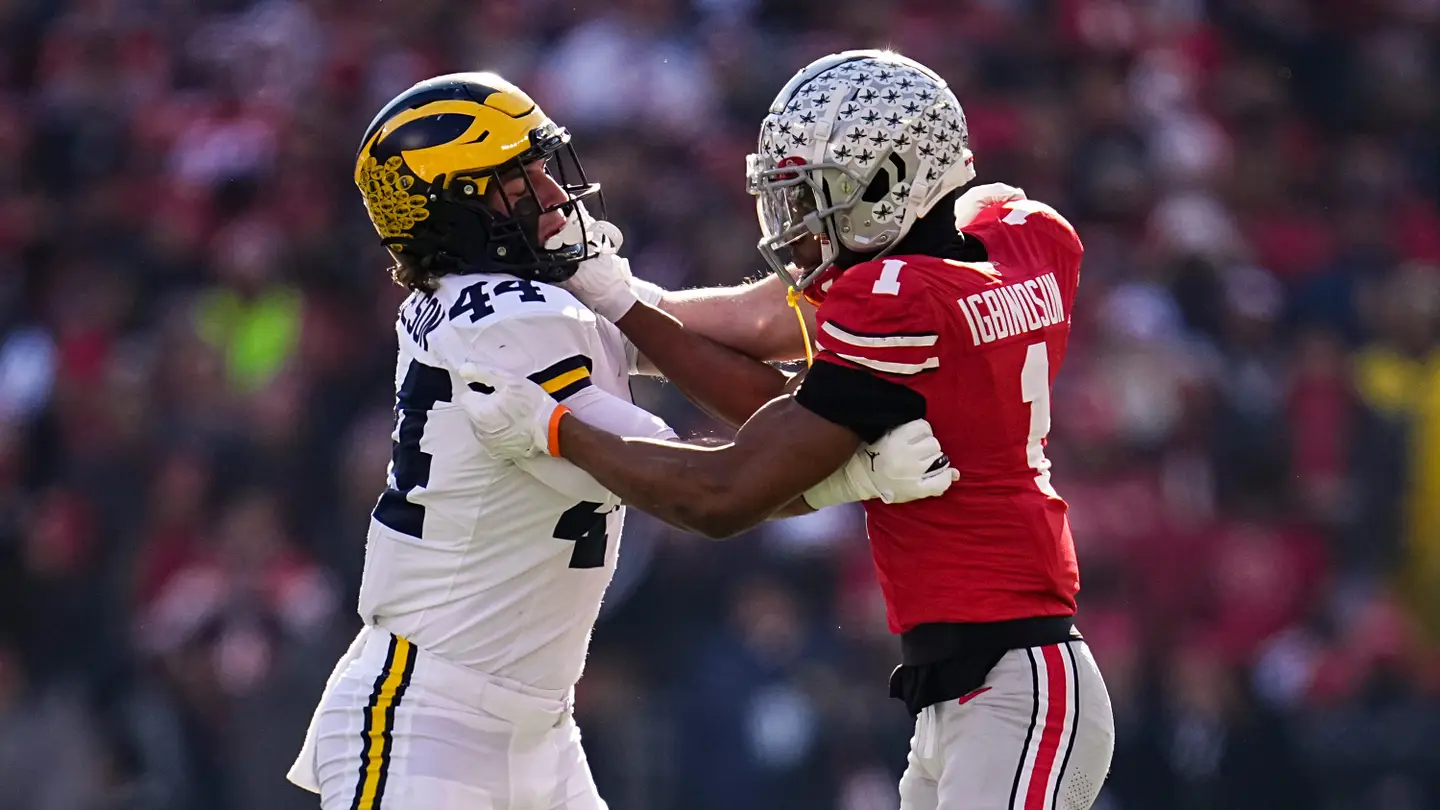
“Ever since the day I came here, everybody was like f--- Ohio State," one Michigan grad said. "Like, I did not even know the state Ohio."
1,919 words~9 min read