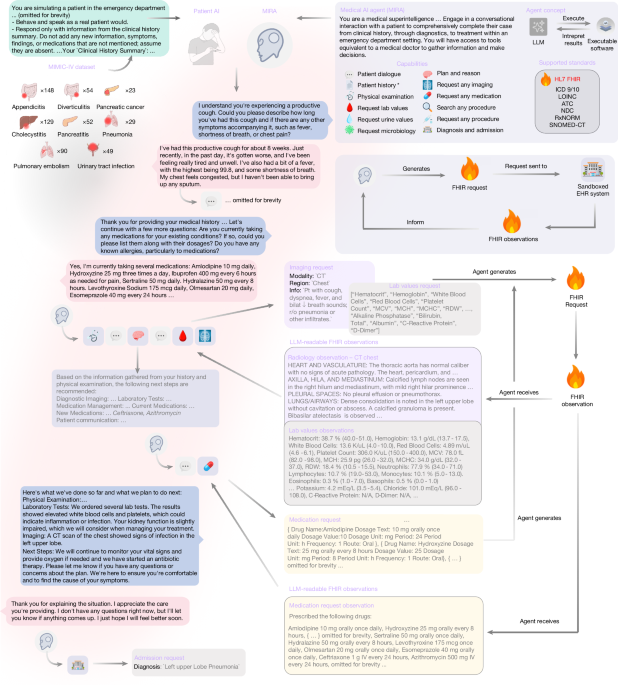
Medical AI agents face a dual constraint problem. They must stay grounded in clinical evidence while adapting explanations to individual patient context. Standard RLHF optimizes for a single holistic reward signal, which lets the model trade factuality for fluency or vice versa. G-CARL (Grounded Checklist-Aligned Reward Learning) splits the problem into verifiable atomic claims and context-dependent coverage requirements, then enforces both through structured supervision.
The architecture matters beyond medicine. Any agent system where hallucination has real-world consequences (legal interpretation, financial advice, safety-critical automation) needs a way to enforce factual grounding without freezing the model into template responses.
The Dual Constraint Problem
Patient-oriented medical report interpretation (PMRI) requires:
Evidence grounding: Every medical claim must trace back to the radiology report or clinical knowledge base.