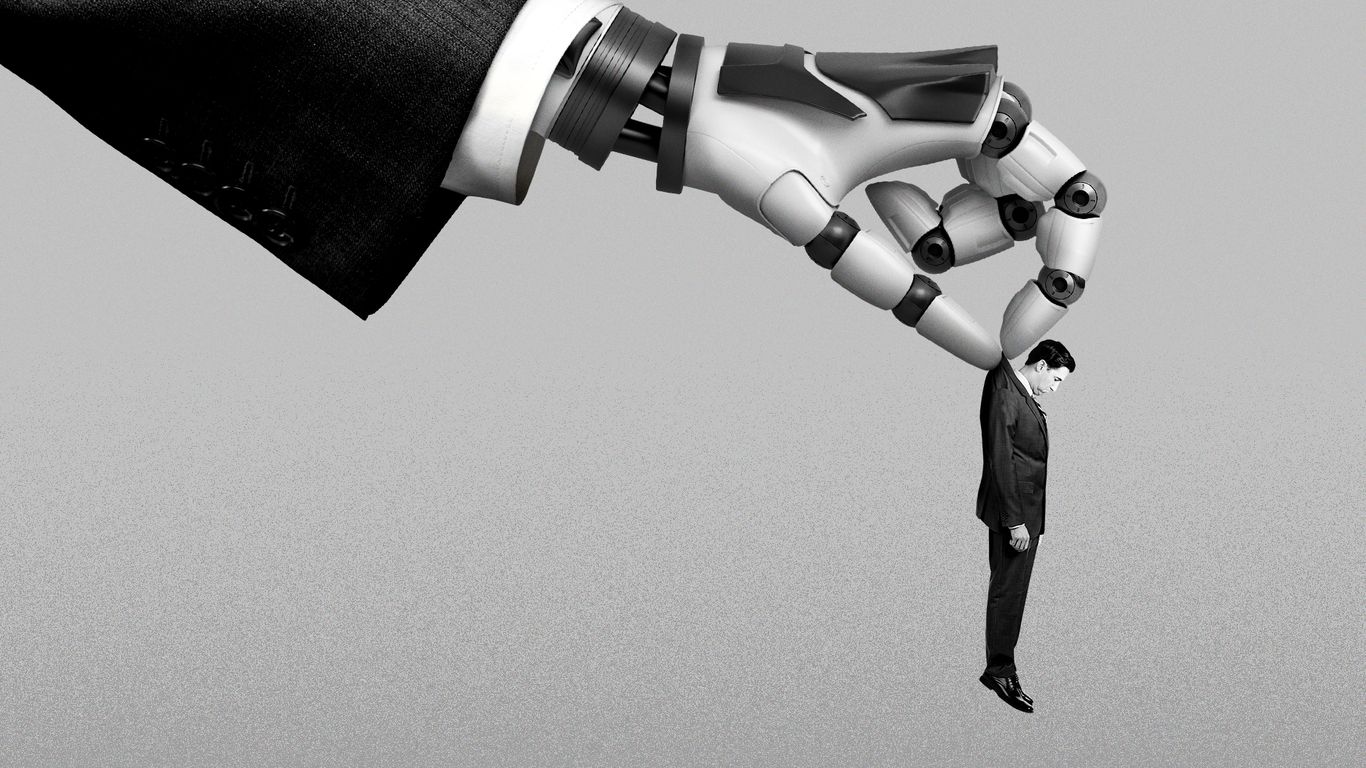
Amid the brutal job market and massive layoffs, learn the five signs that suggest you could be the next "disposable worker."gettyBy 2030, experts predict AI will have eliminated many careers. Could your job be one of them? Maybe you have a job, collect a paycheck and show up every day—and still wonder if there’s really see a future for you at your current company. That’s the unsettling idea behind a category of employees identified by MIT labor economist Paul Osterman: the “disposable worker.”Who Are The ‘Disposable Workers’?Osterman identifies three distinct categories of disposable workers: contractors, freelancers and marginal employees. He describes the marginal category as employees who are held at arm’s length by their firm―left without job security, skill training or opportunities for promotion. Many low-wage service workers toil in marginal jobs, but so do white-collar professionals such as adjunct university faculty and staff attorneys at law firms. When the three categories are added up, he explains that they account for more than 35% of the American workforce.Marginal workers aren’t necessarily freelancers, independent contractors or gig workers. They can be regular employees inside an organization. The difference is that their employers don’t expect to invest in them, develop them or move them up a career ladder. And they are far more common than you might think.In his new book, Disposable Workers: The Transformation of Employment, Osterman estimates more than 55 million members of the U.S. workforce fall into employment arrangements characterized by limited security, benefits or advancement opportunities. His research is based in part on an original survey of more than 6,000 workers.The number is startling because the conventional conversation about insecure work usually focuses on Uber drivers, DoorDash workers and other members of the gig economy. Osterman argues that something much bigger is happening. “We’re not becoming a gig economy; we’re becoming a disposable one,” he says.Meet The ‘Marginal Worker’Osterman estimates that about 17% of U.S. employees are marginal workers—roughly one in six employees. They are technically part of an organization but have little connection to its traditional career structure.Examples can include adjunct professors who are never headed toward tenure, staff attorneys handling routine legal work without a realistic path to partnership and part-time employees with few opportunities to advance. What separates these workers from traditional employees isn’t necessarily their performance or ability. It is the employer’s relationship with them.“Marginal workers are employees who have no career prospects at their organizations,” Osterman explains. That distinction could become increasingly important for anyone evaluating a job in 2026. The question is no longer simply, Do I have a job? It might be, Does this company see me as somebody worth developing? Those are two very different forms of employment.Why Companies Are Creating More ‘Disposable’ JobsFrom an employer’s perspective, the attraction is easy to understand. Permanent employees represent long-term commitments. They can require raises, benefits, training, career development and management resources. Contractors, freelancers, part-timers and marginal workers give businesses more flexibility to expand and contract without making the same commitments.Osterman’s research suggests companies have decided that flexibility and lower labor costs can outweigh the advantages of maintaining a highly committed workforce. But there can be a psychological and organizational price.Workers who believe their employer has no long-term investment in them have little incentive to make a long-term investment in the employer. Osterman found that contractors and marginal workers reported being less concerned about their organization’s success and less willing to contribute additional effort.It’s not difficult to understand why. Commitment generally works both ways. If employees sense they are interchangeable, expendable or permanently stuck on the sidelines, employers shouldn’t be surprised when loyalty disappears with the career ladder.AI Could Accelerate The ‘Disposable Worker’Artificial intelligence adds a new dimension to this trend. Much of the debate about AI and employment asks how many jobs the technology will eliminate. But the first major disruption may be subtler. AI could produce career detachment before mass unemployment. Millions of people could remain employed while fewer companies are willing to make long-term commitments to their careers.Osterman believes AI could accelerate disposable employment because companies remain uncertain about exactly how many workers—and which skills—they will need in the future. “I think this trend is going to be exacerbated by AI,” he says, because uncertainty over future staffing gives employers an incentive to rely on workers they can add or remove more easily.That argument becomes even more significant when considered alongside Deloitte’s State of AI in the Enterprise 2026 research. Deloitte reports that 36% of surveyed companies expect at least 10% of their jobs to be fully automated within one year, while 82% expect that level of automation within three years. Yet 84% have not redesigned jobs around AI capabilities.As I’ve written previously about the “human premium,” AI isn’t making human talent irrelevant. It’s making routine skills cheaper. As machines take over more cognitive tasks, distinctly human abilities such as judgment, curiosity, credibility, empathy, communication and critical thinking become more valuable. AI can generate options and flag risks, but a human still has to own the decision, the diagnosis or the outcome. The best protection is no longer simply performing today’s job well. It’s demonstrating the human capabilities an employer will continue to need as that job changes.5 Signs You’re Becoming A ‘Disposable Worker’Employees may want to pay closer attention to whether their job contains an actual future. Warning signs can include:Your responsibilities grow, but your career doesn’t. You take on more work without gaining a clearer path to advancement.Training and development go to other employees. You repeatedly get passed over for conferences, certifications, mentoring or high-visibility assignments.Nobody discusses your future. Performance conversations focus entirely on current output rather than where you could be in one, three or five years.You are excluded from important networks. Decisions, strategic conversations and relationship-building happen around you instead of with you.Your employer invests in your tasks, not your talent. Management seems primarily interested in what you produce today rather than what you could contribute tomorrow.None of these signs alone proves an employer considers you disposable. But repeated patterns deserve attention.Don’t Just Ask Whether Your Job Is SafeFor much of the past century, career security meant having a permanent position instead of temporary work. That definition is no longer sufficient. You can be permanent on paper and marginal in practice.That means you and should ask different questions: Does this organization promote from within? Who receives training? What happened to people previously in this role? How are career paths changing because of AI? What skills will make someone valuable here three years from now?The answers can reveal something a job title and salary don’t. The emerging workplace divide may not simply be between people who have jobs and people who lose them to AI. It could increasingly be between workers whose companies continue investing in their futures and those who are retained only for as long as they remain convenient. In the AI era, that could become one of the most important definitions of job security.
5 Signs You’re A ‘Disposable Worker’ And What To Do About It
Learn the five signs that suggest you could be the next "disposable worker" amid AI's creation of disposable jobs, a brutal hiring market and massive layoffs.
1,160 words~5 min read