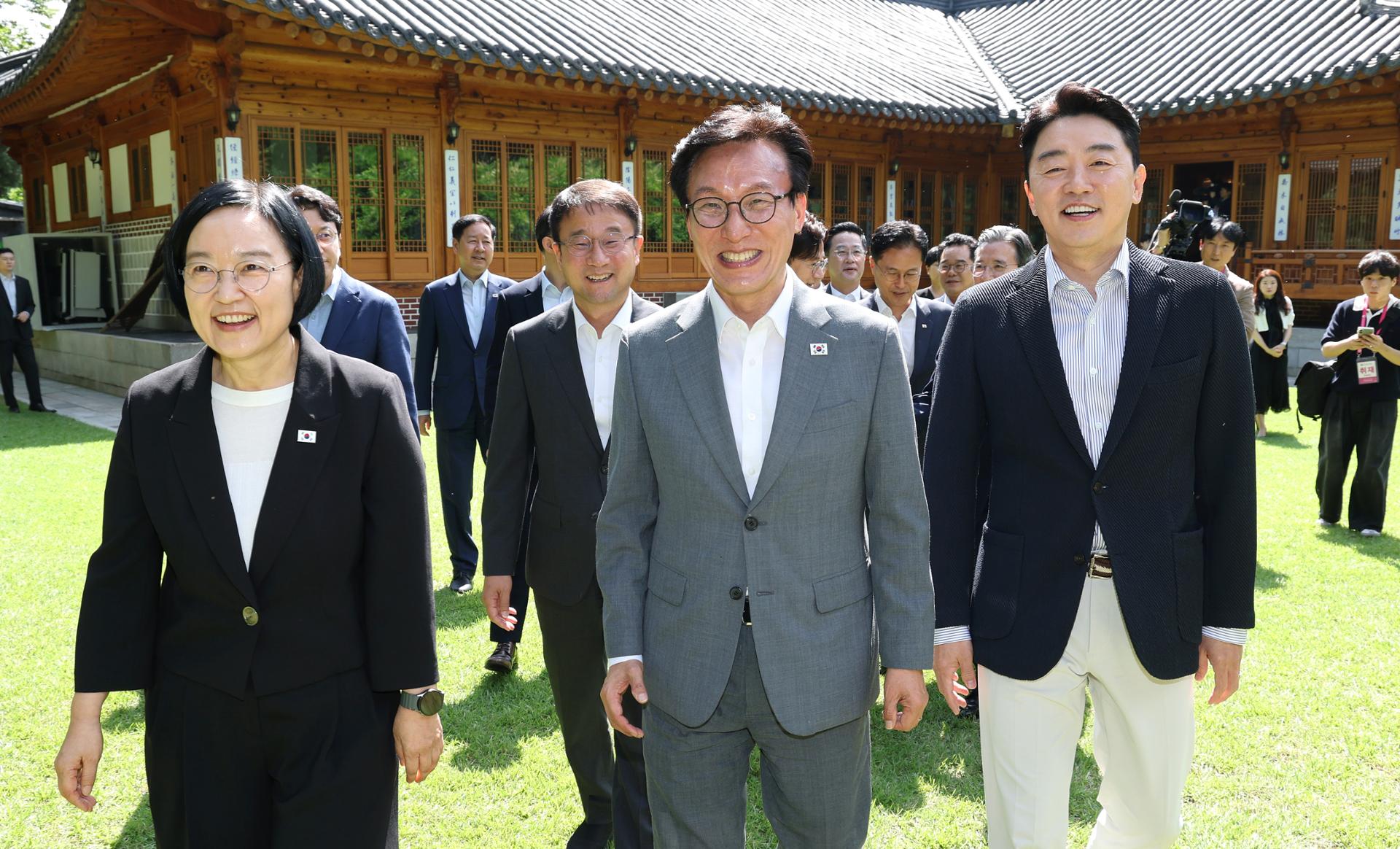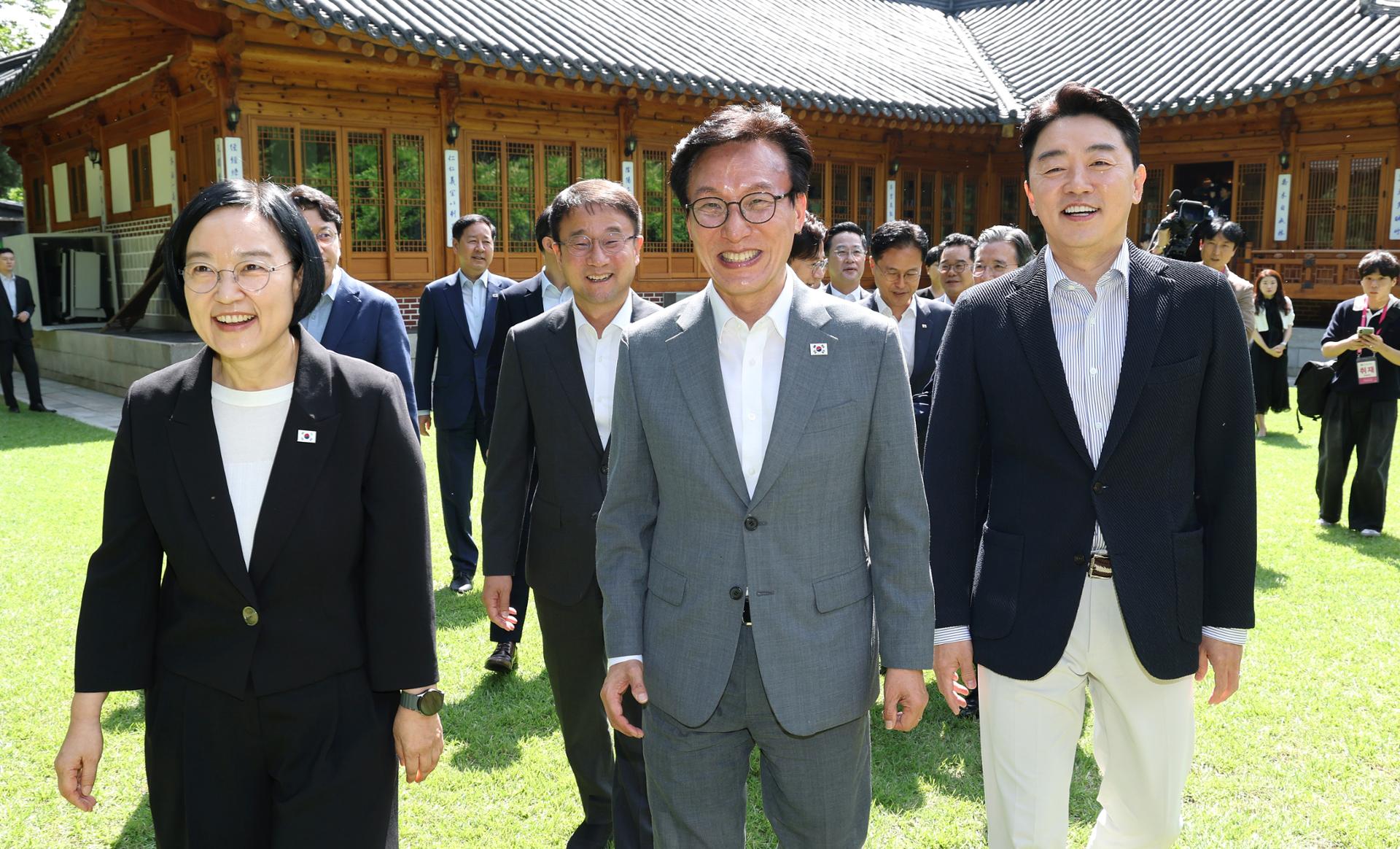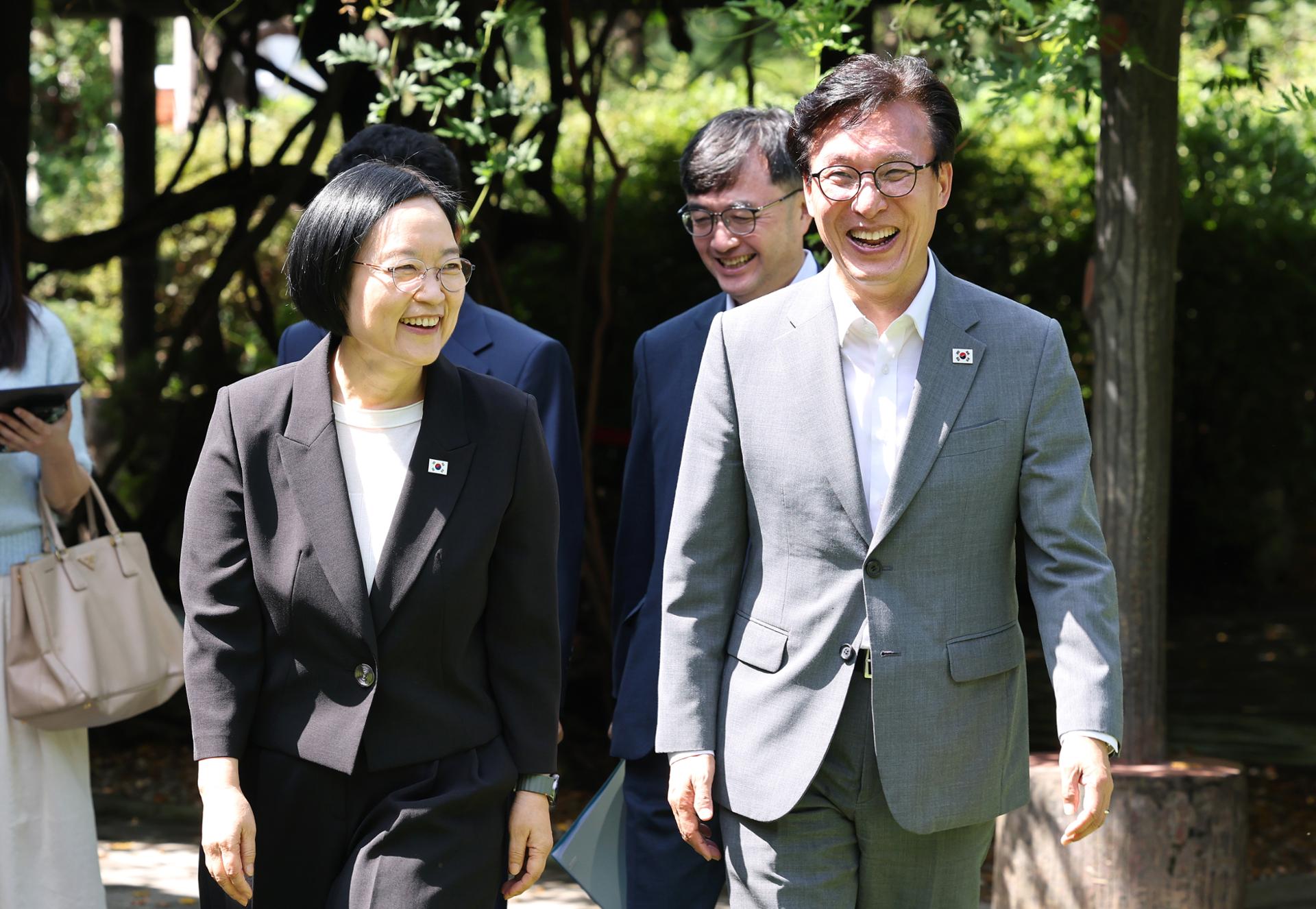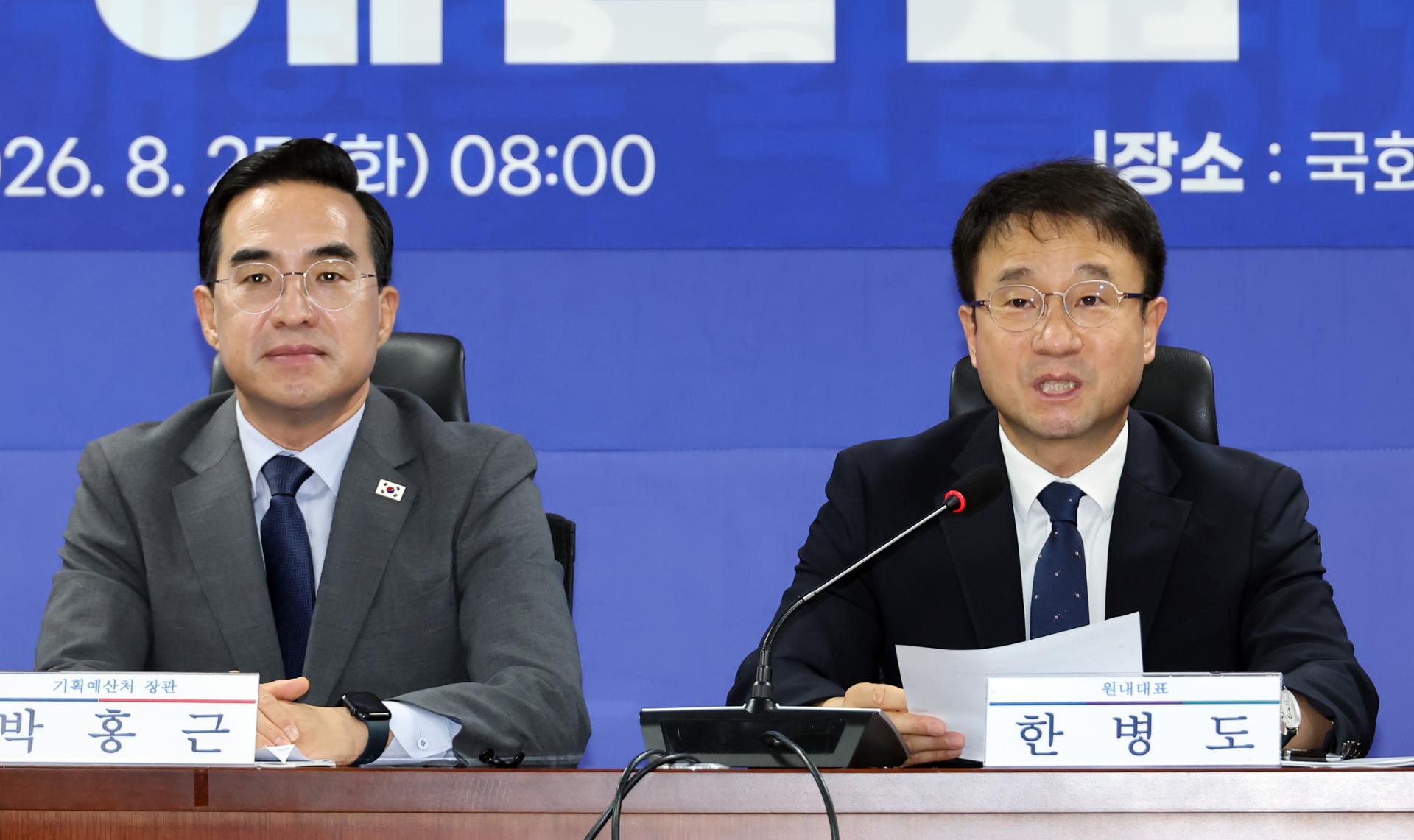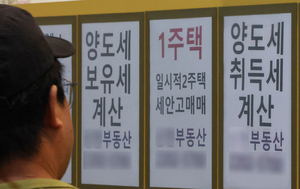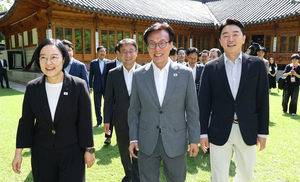
DP Chair Kim calls for 'more exceptions' to tax hike on homeowners who live elsewhere, signaling liberal bloc's leniency from govt. pressure on homeowners Prime Minister Han Seong-sook (from left, front row), Democratic Party chair Rep. Kim Min-seok and Cheong Wa Dae chief of staff Kang Hoon-sik are seen during a meeting of high-ranking officials of the ruling bloc in the prime minister's official residence in Seoul Sunday. (Yonhap) Plans to raise taxes on certain homeowners and accelerate the increase of housing supply in Greater Seoul, which includes Incheon and Gyeonggi Province, emerged as the first major policy issue to be coordinated within the ruling bloc, with the new ruling party chair pushing for changes to real estate tax policies.At the first meeting between newly elected ruling Democratic Party of Korea Chair Rep. Kim Min-seok and senior ruling bloc officials, including Cheong Wa Dae chief of staff Kang Hoon-sik and Prime Minister Han Seong-sook, Kim called for tax leniency for people who own a home but live elsewhere — an apparent gesture toward centrist voters amid mounting pressure on homeowners.Kim called for broader exemptions from the proposed tax rule, which would increase the comprehensive real estate holding tax on those who own homes valued at 900 million won ($649,000) or more."Various reasons inevitable in reality that forced homeowners to live elsewhere should be broadly taken into consideration," Kim said at the meeting held at the prime minister's official residence in Seoul.The four-term lawmaker also urged caution over the government's proposal to narrow eligibility for a long-term homeownership tax deduction from anyone who has owned a home for an extended period to those who have both owned and actually lived in the property. Kim raised concerns that the proposal could lead to higher housing rental prices."(The ruling party) will fiercely debate with the government without losing a healthy tension until a final conclusion is reached," he added.His remarks came as attention turns to what role Kim, a pro-Lee Jae Myung figure who formerly served as prime minister, will play in restoring trust within the ruling bloc after periods of friction between the administration and the party under its former leader, Rep. Jung Chung-rae.Expectations are also elevated as to how Kim will help navigate the liberal bloc out of its current difficulties. Democratic Party chair Rep. Kim Min-seok (left) and the party floor leader Rep. Han Byung-do are seen during a meeting of high-ranking officials of the ruling bloc in the prime minister's official residence in Seoul Sunday. (Yonhap) Kang Hoon-sik, presidential chief of staff, stressed that the administration remained open to further public input before moving ahead with the tax overhaul."The tax overhaul proposal announced earlier this month was not a unilateral announcement of a confirmed policy, but a proposal presented to gather public opinion," Kang said, pledging that the finalized tax reform plan would be "a more rational" one.After the meeting, Rep. Park Sung-joon, senior spokesperson for the Democratic Party, told reporters that the ruling bloc had "reached a consensus" on tougher taxation for homeowners who live elsewhere, while the party "strongly pushed" to retain tax deductions for those who have owned a home for a long period but have not lived there.Park also said the government's finalized tax code bill will be submitted to the National Assembly by Sept. 3.Kim and Kang were also on the same page over the liberal bloc's push to use vacant plots of land in Seoul to increase housing supply.Earlier in August, the government proposed placing a broader group of single-home owners who live elsewhere under heavier tax burdens and tighter loan restrictions.The practice of purchasing homes in neighborhoods where sharp price increases are anticipated has been blamed for the chronic overheating of Seoul's housing market, where the housing affordability crisis has worsened.The Lee administration has criticized people who own only one home but live elsewhere, in some cases financing their purchases partly with lump-sum deposits from tenants under South Korea's unique "jeonse" rental system, accusing them of pursuing investment gains and fueling housing market speculation. Before Lee's move, owners of multiple homes had been the primary target of measures aimed at addressing the housing affordability crisis.Lee's efforts to cool the overheated housing market and improve housing affordability for young people appear to have backfired politically.According to a Gallup Korea opinion poll released Friday, Lee's approval rating edged up to 45 percent from the previous week. However, among the 45 percent of respondents who disapproved of Lee, real estate policy was the most frequently cited factor. Additionally, among respondents who identified themselves as Seoul residents, Lee's approval rating fell from 42 percent to 32 percent over the course of just a week.
Housing policy first on block for reconciliation within ruling bloc
Plans to raise taxes on certain homeowners and accelerate the increase of housing supply in Greater Seoul, which includes Incheon and Gyeonggi Province, emerged
779 words~4 min read